.svg)
Why Modular Office Furniture Is the Smartest Choice for Startups and Growing SMEs

Discover why modular office furniture is the most practical and cost-effective choice for startups and growing SMEs in India. Expert guidance from AFC Furniture Solutions.
What Do Startups and SMEs Actually Need from Office Furniture?
Running a startup or a growing SME in India means making decisions quickly with limited resources and uncertain timelines. Every rupee spent on furniture is a rupee not spent on product, people, or marketing.
The furniture decisions made in the early stages of a business have consequences that extend well beyond the day the furniture arrives. Getting them right from the beginning saves significant money, time, and operational disruption later.
What startups and SMEs need most from their office furniture is not permanence.. It is practicality, flexibility, and the ability to grow alongside the business without requiring a complete replacement every time the team adds ten people.
How Are Startup Office Needs Different from Large Corporates?
A large corporate organisation typically knows its headcount, its floor plan, and its working style well enough to commit to a long-term fit-out with confidence. A startup or growing SME rarely has this clarity.
Team size can double in six months. A floor plan that suits fifteen people today needs to accommodate thirty in a year. A working style that was entirely open plan may evolve to more private spaces as the organisation matures and different functions develop distinct requirements.
This unpredictability makes the permanence and inflexibility of traditional fixed furniture a genuine liability rather than a sign of institutional seriousness.
Why Does Flexibility Matter More Than Permanence for Growing Businesses?
Permanence in office furniture means the furniture was built for a specific space in a specific configuration for a specific team size. When any of those three things change, permanent furniture becomes a problem.
Flexible office furniture, by contrast, accommodates change as a feature rather than resisting it as a limitation. For a business that is growing, relocating, or evolving its working practices, this flexibility is not a nice-to-have. It is a fundamental requirement.
The businesses that get their early office setup right are those that invest in systems designed to grow with them rather than systems designed to impress at a fixed point in time.
What Is Modular Office Furniture and Why Is It Different?
How Does a Modular System Work?
A modular system is a collection of standardised, interchangeable components including work surfaces, frames, storage units, and panel screens that are designed to connect with each other in multiple configurations.
Every component in the system is engineered to work with every other component. This means a workstation installed today can have additional bays added next month, panels added or removed next year, and storage units reconfigured whenever the team's needs change.
The system does not care how it is arranged today because it is designed to be rearranged tomorrow. This is what makes it fundamentally suited to the operational reality of a growing business.
What Makes It Fundamentally Different from Standard Furniture?
Standard furniture, whether freestanding desks or custom-built cabinetry, is designed for a single configuration. It looks good and functions well in the arrangement for which it was specified, and it becomes problematic the moment that arrangement needs to change.
A scalable workspace solution built on modular principles maintains its quality, coherence, and functionality regardless of how many times the configuration changes. Adding components does not create a patchwork appearance because every new component is part of the same system.
This consistency across configurations is what allows a startup that began with ten workstations to scale to fifty without the office ever looking like it was assembled from mismatched decisions made at different times.
Why Modular Furniture Makes Financial Sense for Startups
How Does It Reduce Upfront Investment?
A startup does not need to plan for its eventual scale on day one. A modular system allows the initial purchase to be sized precisely for the current team without compromising the ability to extend seamlessly later.
Buying ten workstations today and adding ten more in six months as a matching extension to the same system is straightforward. Buying furniture for twenty people when only ten are present wastes capital that an early-stage business needs elsewhere.
This ability to phase the investment in proportion to actual need is one of the most practically significant financial advantages that scalable workspace solutions provide for capital-conscious startups.
How Does It Protect Your Investment as the Business Grows?
Every furniture decision made in a startup is a potential sunk cost if the furniture cannot adapt to the business's evolution. A modular system converts that potential sunk cost into a durable asset that continues to serve the organisation through multiple stages of growth.
The components purchased in year one are still generating value in year five because they remain part of the same coherent system regardless of how many times the configuration has changed around them.
This asset durability is fundamentally different from the depreciation pattern of standard furniture, which loses both practical and resale value rapidly when it can no longer serve the space it was designed for.
How Does It Eliminate the Cost of Premature Replacement?
The most expensive furniture decision a startup can make is choosing furniture that needs to be replaced before it has worn out simply because the business has outgrown its configuration. This is an entirely avoidable cost that modular systems eliminate by design.
When the team grows from fifteen to forty, a modular system grows with it. When the office moves to a new floor, the system moves too. When the working style shifts from entirely open plan to a mix of open and private zones, the panels and configurations adjust accordingly.
None of these changes requires new furniture. They require additional components, which is a fraction of the cost of a replacement.
How Modular Furniture Supports Business Growth
How Easily Can It Be Extended as the Team Grows?
Extending a modular workstation system involves ordering matching components from the same range and connecting them to the existing installation. The new workstations integrate with the existing ones seamlessly in both function and appearance.
This is the most practical expression of the scalability advantage. A startup that began with eight desks and adds four more every quarter never has to rethink its furniture strategy. It simply orders more of the same.
The critical requirement is confirming with the supplier at the point of initial purchase that the specific range will remain available for future extension orders. This confirmation should be part of any modular furniture procurement conversation from the outset.
How Does It Handle Office Relocation?
Startups and growing SMEs relocate more frequently than established organisations. Outgrowing a space is a sign of success, but it creates an operational challenge when the furniture in the existing space cannot move to the new one.
A modular system dismantles cleanly into its component parts, transports without damage, and reinstalls in the new space with the same performance and appearance it had before. The furniture investment made in the first office travels to the second and the third.
This relocatability converts furniture from a space-specific sunk cost into a business asset that follows the organisation wherever it goes.
How Does It Adapt to Changing Work Styles?
The working style of a ten-person startup is rarely the working style of the same organisation at fifty people. What begins as a fully collaborative open environment often evolves to need more privacy zones, meeting spaces, and functional separation as different teams develop distinct working rhythms.
A modular system accommodates this evolution by allowing panels to be added for privacy, configurations to be rearranged for new team structures, and zones to be created or dissolved as the organisation's working culture develops.
Tip: When setting up your first modular office as a startup, deliberately leave ten to fifteen percent of the floor area unoccupied rather than filling every available space immediately. This reserved space becomes your first expansion zone and saves the disruption of needing to rethink the entire layout the first time you hire a new team member.
What Types of Modular Furniture Does a Startup Office Need?
Modular Workstations
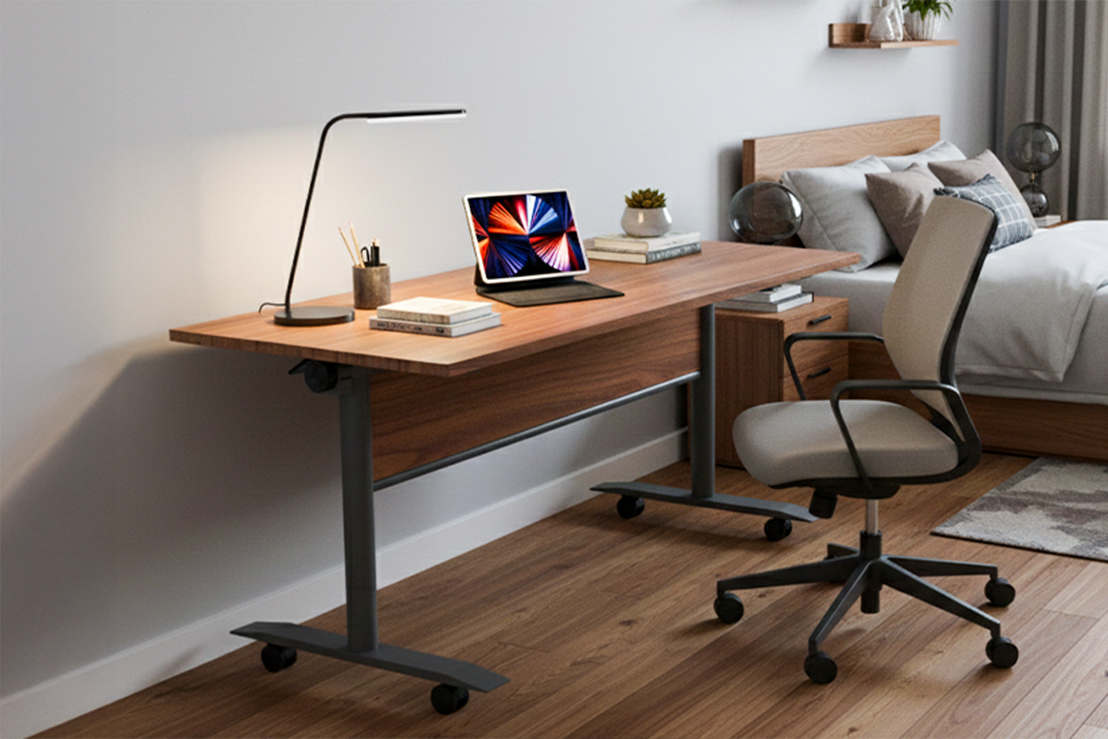
The workstation is where every member of your team spends the majority of their productive time. It deserves a clear specification that balances practicality, quality, and the scalability that a growing team requires.
Look for systems with integrated cable management, options for privacy panels at varying heights, and the ability to extend with matching bays as headcount increases. The startup office setup that gets this right avoids the disorganised, patchwork appearance that undermines the professional impression a young business needs to create.
Ergonomic Seating
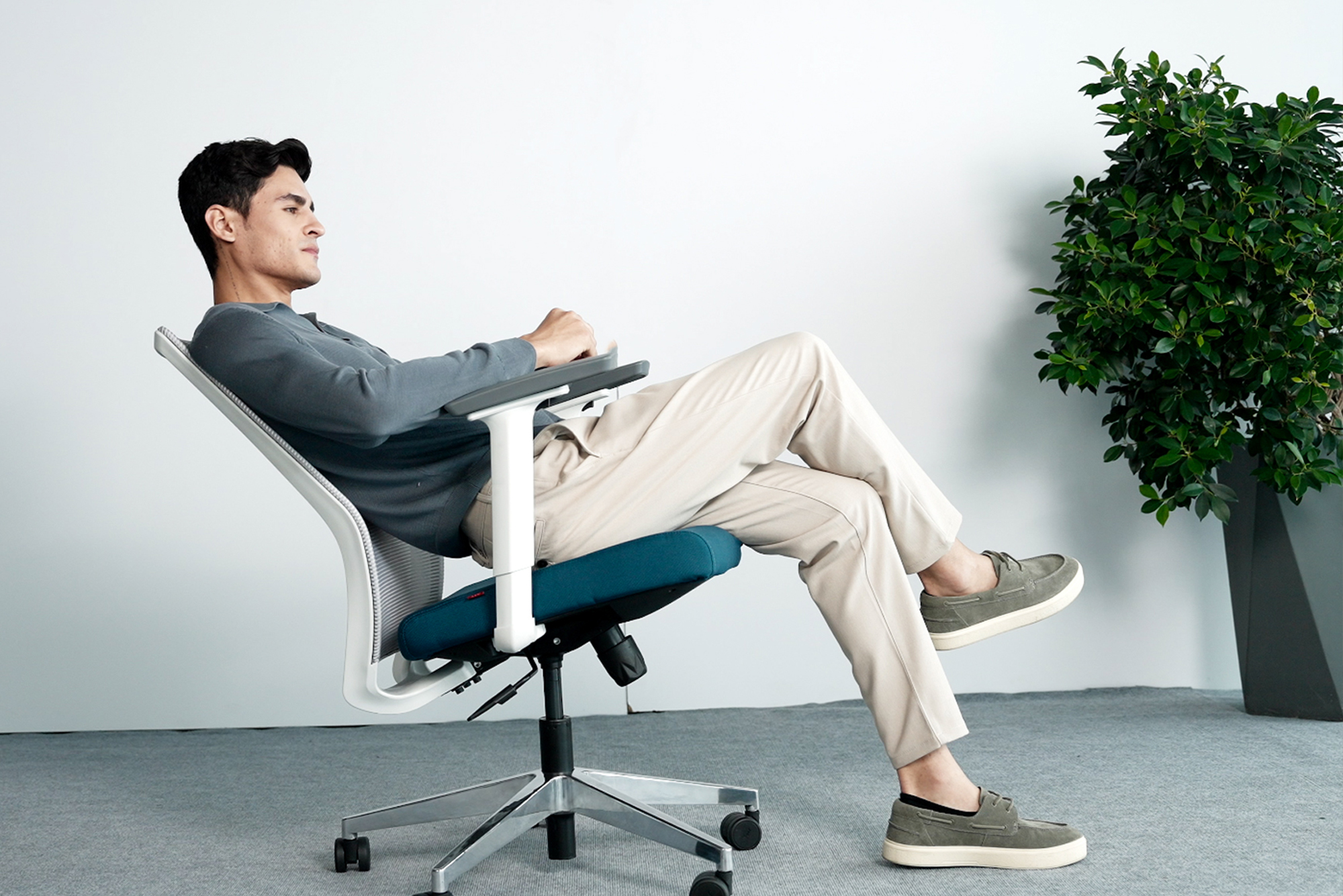
This is not an area where early-stage cost pressure should drive specification choices. A chair that causes back pain reduces the daily output of every person who sits in it, which is a cost that compounds across the team every working day.
Commercial-grade ergonomic chairs with adjustable lumbar support, seat height, and armrests are the correct specification regardless of team size. For Indian offices, mesh back chairs provide the breathability that makes them comfortable across long working sessions in warm conditions.
Modular Storage Solutions
Under-desk pedestals for personal items and a shared locker bank for bags and valuables address the storage needs of most startup teams without consuming significant floor space. Avoid over-specifying storage in the early stages, as digital working practices mean physical storage needs are typically lower than they appear.
Add shared storage capacity as the team grows and actual storage requirements become clear from use rather than assumption.
Meeting and Collaboration Furniture
Every startup needs at least one dedicated space for team meetings, client conversations, and focused collaborative work. A quality meeting table with integrated power access, sized for the typical meeting group rather than the maximum theoretical capacity, serves this need without consuming disproportionate floor space.
For very early-stage startups, a modular training table configuration that can be rearranged for different meeting formats provides flexibility that a fixed conference table cannot.
Breakout and Soft Seating
A breakout zone with a sofa, lounge chairs, and an occasional table creates the informal gathering space where spontaneous collaboration, brief mental resets, and casual conversations happen naturally. These interactions are disproportionately important in a startup environment where culture is still forming.
Even a modest breakout zone with well-chosen flexible office furniture communicates to employees and visitors that the organisation thinks about the full working experience rather than just the desk.

How to Plan a Modular Office Setup for a Startup or SME?
Step 1: Start with the Essentials Only
Resist the temptation to furnish for scale on day one. Identify the furniture categories that are genuinely essential for the current team size and working pattern, and specify those to a commercial quality standard before considering anything else.
Workstations, chairs, and basic storage are the non-negotiable foundation. Meeting furniture, breakout zones, and additional storage are the second phase, added when the team size and working patterns justify them.
Step 2: Choose a Scalable System
Before selecting any specific products, confirm that the system you are choosing can be extended with matching components in the same finish and configuration. Ask the supplier explicitly whether the range will remain available for the next three to five years.
A modular system that cannot be extended with matching components is not a modular system in any practically meaningful sense. Confirm scalability before committing.
Step 3: Plan for Your Next Hiring Milestone
Think not just about today's team size but about where the team will be in the next twelve to eighteen months. If you expect to hire ten more people within a year, plan the initial layout with those positions in mind even if they are not occupied yet.
Leave physical space for the additional workstations in the floor plan rather than filling every available metre. This avoids the disruption of needing to reconfigure the entire layout every time a new hire joins.
Step 4: Work with a Single Supplier
Managing multiple furniture suppliers creates coordination complexity, visual inconsistency, and accountability gaps when issues arise. Working with a single supplier who can provide workstations, seating, storage, meeting furniture, and breakout seating from one coherent range simplifies every aspect of the process.
It also means there is a single point of contact for installation, warranty claims, and future extensions, which reduces the management overhead that a startup team cannot afford to spend on furniture logistics.
Bonus Point: When placing your initial modular furniture order as a startup, ask your supplier to include a small quantity of spare components, specifically matching panel connectors, additional grommets, and spare levelling feet, in the delivery. These inexpensive components make it significantly easier to manage minor adjustments and extensions without needing to raise a new order for individual small parts.

Common Mistakes Startups Make When Buying Office Furniture
Buying Cheap Furniture That Fails Quickly
The instinct to minimise furniture expenditure in the early stages of a business is understandable. The consequence of acting on it by choosing the cheapest available furniture is that the furniture fails, needs replacing, and ends up costing significantly more over three years than a commercial-quality alternative purchased once.
Commercial-grade SME office furniture India is built for daily intensive use. Budget furniture is not. The difference becomes visible within months and costly within a year.
Choosing Custom-Built Furniture Too Early
Custom-built furniture is expensive, takes weeks to install, creates significant operational disruption during construction, and is permanently fixed to the space it was built for. For a startup that may relocate, grow significantly, or evolve its working style within two years, this is a poor allocation of early-stage capital.
Modular systems provide a professional, coherent workspace without any of these limitations. They are the right choice for an early-stage business precisely because they do not commit the organisation to a specific space, scale, or configuration.
Not Planning for Growth from the Start
The most common furniture planning mistake in startups is treating the current team size as the basis for all decisions rather than planning for the next stage of growth. The result is a series of reactive additions that look disjointed and require complete reorganisation every time a growth milestone is reached.
Planning the initial modular layout with the next twelve to eighteen months of growth in mind adds almost nothing to the upfront decision-making investment but saves significant cost, disruption, and visual inconsistency over the growth journey.
How AFC Furniture Solutions Helps Startups and SMEs Furnish Smarter?
What Modular Options Does AFC Offer for Startups?
AFC Furniture Solutions offers a complete range of scalable workspace solutions suited to startups and growing SMEs at every stage of their development. The Desking Series provides clean, open-plan linear workstation configurations ideal for early-stage teams prioritising space efficiency and collaborative working.
The Panel Series introduces privacy screens as the team grows and different functions require greater individual separation. The Height Adjustable Series allows individual positions to be upgraded to sit-stand configurations as the organisation's health and wellness priorities evolve.
Every series in the AFC Furniture Solutions workstation range is designed to integrate with the others, which means a startup that begins with the Desking Series can add Panel Series elements later without any visual mismatch.
Explore the full AFC Furniture Solutions Workstations range to compare configurations suited to startups and growing SMEs at different stages of their development.
What Quality Standards Back AFC Products?
AFC Furniture Solutions holds BIFMA Level 3 certification, the highest internationally recognised standard for office furniture quality, safety, and sustainability. Every product is manufactured at the Greater Noida facility with a production capacity of up to 18,000 workstations per month, ensuring consistent quality and reliable lead times for orders of any scale.
The commercial-grade specifications used across the AFC Furniture Solutions range mean that furniture purchased at a startup's founding stage remains in full-quality service as the organisation scales to SME and beyond.
You can also explore the AFC Furniture Solutions Seating range for ergonomic chair options suited to startup and SME environments across different working contexts and budget levels.
Frequently Asked Questions
Q1. How much should a startup budget for office furniture per person?
There is no single correct figure because costs vary by city, specification, and configuration. The most useful approach is to allocate the highest per-person spend to chairs and workstations, which have the greatest daily impact on productivity and health, and to phase investment in other furniture categories as the team and the business grow.
Q2. Can a modular office system really grow from ten people to fifty without needing replacement?
Yes, provided the initial system was chosen specifically for its scalability and the supplier has confirmed that matching components will remain available. A well-chosen modular system genuinely scales from small to large without requiring any replacement of the original components.
Q3. Is modular furniture suitable for a home office or very small startup space?
Yes. Single modular workstation units are available and work well in home office contexts. The scalability benefit is less relevant for permanent home offices, but the quality and cable management features of a commercial modular system are genuine advantages over residential furniture in any professional working context.
Q4. How do I avoid visual inconsistency when adding furniture in phases?
The simplest approach is to commit to a single supplier and a single product range from the outset and to add only matching components from that range as the business grows. Mixing products from different suppliers or different ranges is the primary cause of the visual patchwork that makes phased offices look disorganised.
Q5. What is the most important furniture investment for a very early-stage startup? Chairs. A team of five people spending eight hours a day in poor-quality seating loses productivity, accumulates physical discomfort, and develops the kind of low-level dissatisfaction with the working environment that affects culture before the startup even has a defined culture to protect.
Q6. Does AFC Furniture Solutions work with early-stage startups or only larger organisations?
AFC Furniture Solutions works with organisations of all sizes, including early-stage startups. The modular range scales from single workstation configurations to complete multi-floor corporate fit-outs, and the same quality standards apply regardless of order size.
Final Thoughts
The furniture decisions a startup or SME makes in its early stages are not just about filling a space. They are about building an environment that can grow, adapt, and move alongside the business without becoming a liability every time something changes.
Flexible office furniture built on a modular system is the only category of office furniture that meets this requirement by design. It protects the initial investment, accommodates growth without replacement, and relocates when the business does.
AFC Furniture Solutions has been helping Indian startups and SMEs make these decisions for over 15 years, with a complete modular range, BIFMA Level 3 certification, and the manufacturing capacity to support any scale of growth.
Explore Other Popular Blogs

Let’s build together
Tell us about your project and we’ll help you plan, design, and deliver at scale.
.jpg)
.svg)