.svg)
Training Table vs Conference Table: Which One Does Your Office Need?
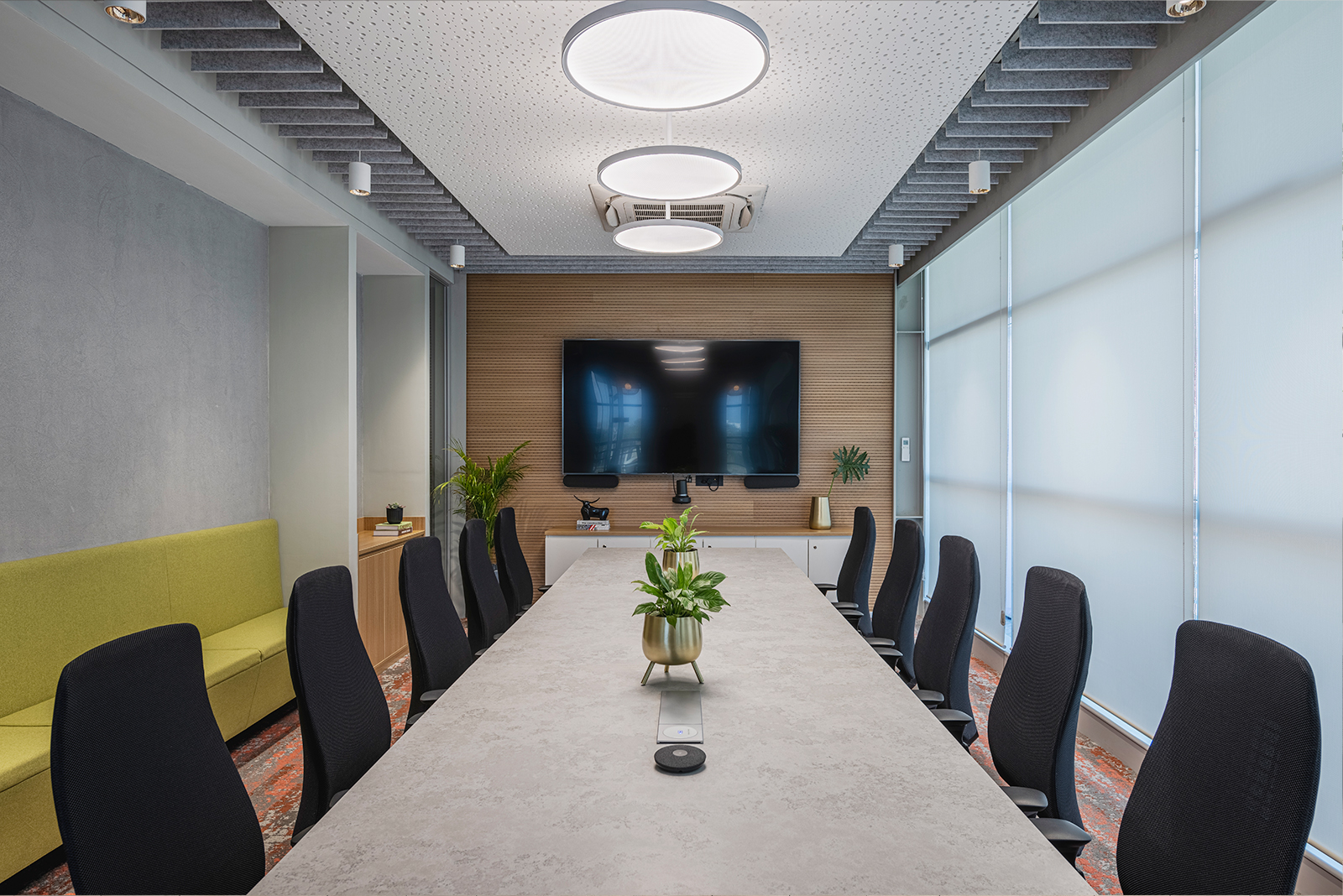
Confused between a training table and a conference table? This practical guide covers key differences, use cases, and expert guidance from AFC Furniture Solutions for Indian offices.
Why Does the Right Table Make a Difference in a Training or Meeting Room?
Most organisations spend considerable thought on what happens in their training and meeting rooms but very little on the furniture that shapes those experiences. The table is the physical centrepiece of every session that takes place in these spaces and it influences outcomes more directly than most people realise.
The wrong table for a training session limits participant engagement, restricts room reconfiguration, and creates the kind of physical awkwardness that quietly undermines the learning experience. The wrong table for a boardroom meeting communicates the wrong level of formality and authority for the conversations that need to happen there.
Getting the table right for each specific use case is one of the most practical and underappreciated improvements any Indian organisation can make to the quality of its training and meeting room environments.
How Does Furniture Affect Learning and Discussion Outcomes?
According to research published by the University of Salford in their landmark study on the impact of built environments on learning, physical classroom and meeting room design including furniture configuration, accounts for up to 25% of the variation in learning outcomes among participants in structured learning sessions.
The arrangement of tables in a training room determines whether participants can see each other, whether they can collaborate comfortably, and whether the facilitator can move through the room to engage with every participant equally.
A conference table arranged for boardroom-style seating creates a hierarchical dynamic that suits authority-driven formal meetings but actively suppresses the open participation that effective training requires.
What Happens When the Wrong Table Is Specified for the Space?
A fixed heavy conference table in a room that also needs to serve as a training venue creates an immediate and daily operational constraint. The room can only be used in the single configuration the table allows, which forces every activity that happens there into a format designed for formal meetings rather than the format that would best serve each specific purpose.
The reverse problem is equally limiting. A training room specified with lightweight folding tables that are not appropriate for formal client meetings creates an environment that looks and feels informal at precisely the moments when a professional impression matters most.
Matching the table specification to the actual primary and secondary uses of the room eliminates both of these constraints before they become daily operational frustrations.
What Is a Training Table?
A training table is a purpose-designed work surface intended for structured learning sessions, workshops, group exercises, and any room configuration where the layout needs to change regularly to serve different session formats and participant numbers.
The defining characteristic of a training table is its flexibility. It is designed to be rearranged, reconfigured, and in many cases folded and stored to allow the same room to serve completely different purposes across the same working day.
How Is a Training Table Designed?
Training tables are designed with reconfiguration as a primary engineering objective. Individual table units are sized to be manageable by one or two people without specialist equipment. Many designs include folding or nesting mechanisms that allow the units to be stored compactly when the room is used for non-table activities.
Worksurface dimensions are typically sized to provide adequate working space for one or two participants per unit, accommodating a laptop, a notebook, and writing materials simultaneously. This per-unit sizing is what allows the total seating capacity to be scaled by adding or removing units as required.
Cable management is increasingly built into training table designs to accommodate the device-heavy working patterns of modern training sessions, with power and data access built into the table surface or accessible without trailing cables across the floor.
What Are the Different Types of Training Tables Available?
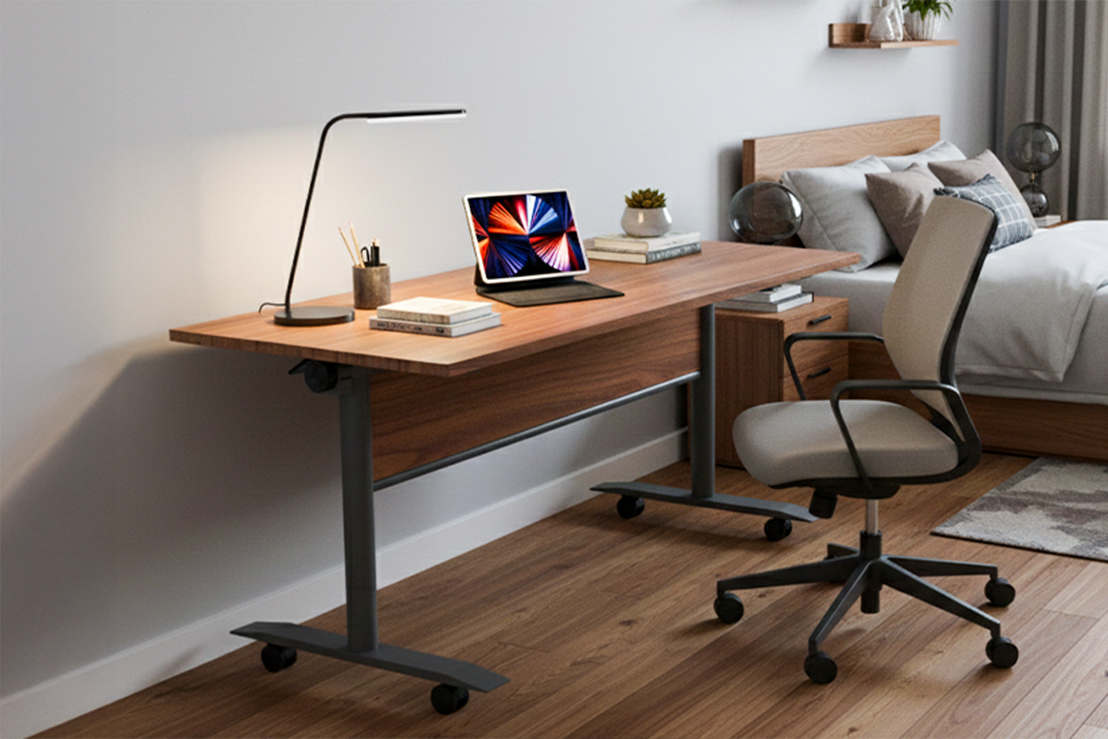
Flip-top training tables fold the worksurface vertically when not in use, reducing the storage footprint to the depth of the table base. They are the most space-efficient storage option and the most widely used specification in Indian corporate training rooms.
Nesting training tables roll on castors and nest under each other when stored, creating a very compact storage configuration from a large number of individual units. They suit high-frequency room reconfiguration requirements where speed of layout change is a priority.
Modular training tables connect to each other in multiple configurations including classroom rows, boardroom rectangles, U-shapes, and herringbone layouts, allowing a single set of table units to serve every conceivable session format from a single product specification.
What Is a Conference Table?
A conference table is a permanent or semi-permanent single-surface table designed to serve a defined number of participants in a fixed formal meeting configuration. It is the anchor piece of any boardroom, strategy room, or formal client meeting space.
The defining characteristic of a conference table is its authority. It is designed to create a specific, formal environment that communicates the seriousness and institutional quality of the organisation and the decisions made around it.
How Is a Conference Table Designed?
Conference tables are designed as single integrated surfaces in oval, rectangular, boat-shaped, or custom forms that allow all participants to see each other clearly and maintain eye contact across the full table length.
The surface finish is specified to a higher aesthetic standard than working furniture in other office areas. Premium laminate, veneer, or solid surface finishes communicate the quality and permanence appropriate to a boardroom or client meeting environment.
Integrated power and data modules built into the table surface are now a standard expectation rather than a premium feature. A conference table without device charging capability is functionally inadequate for the meeting patterns of modern Indian organisations.
What Are the Different Types of Conference Tables Available?
Rectangular conference tables are the most commonly specified format for Indian boardrooms. They create a clear head-of-table position and a structured seating hierarchy that suits formal decision-making meetings.
Oval or boat-shaped conference tables have no defined head position, creating a more egalitarian seating dynamic suited to collaborative strategy sessions and cross-functional leadership meetings.
Modular conference tables consist of individual sections that connect to form different total lengths depending on the participant number. They provide more flexibility than a fixed single-surface table while maintaining the formal aesthetic of a permanent installation.
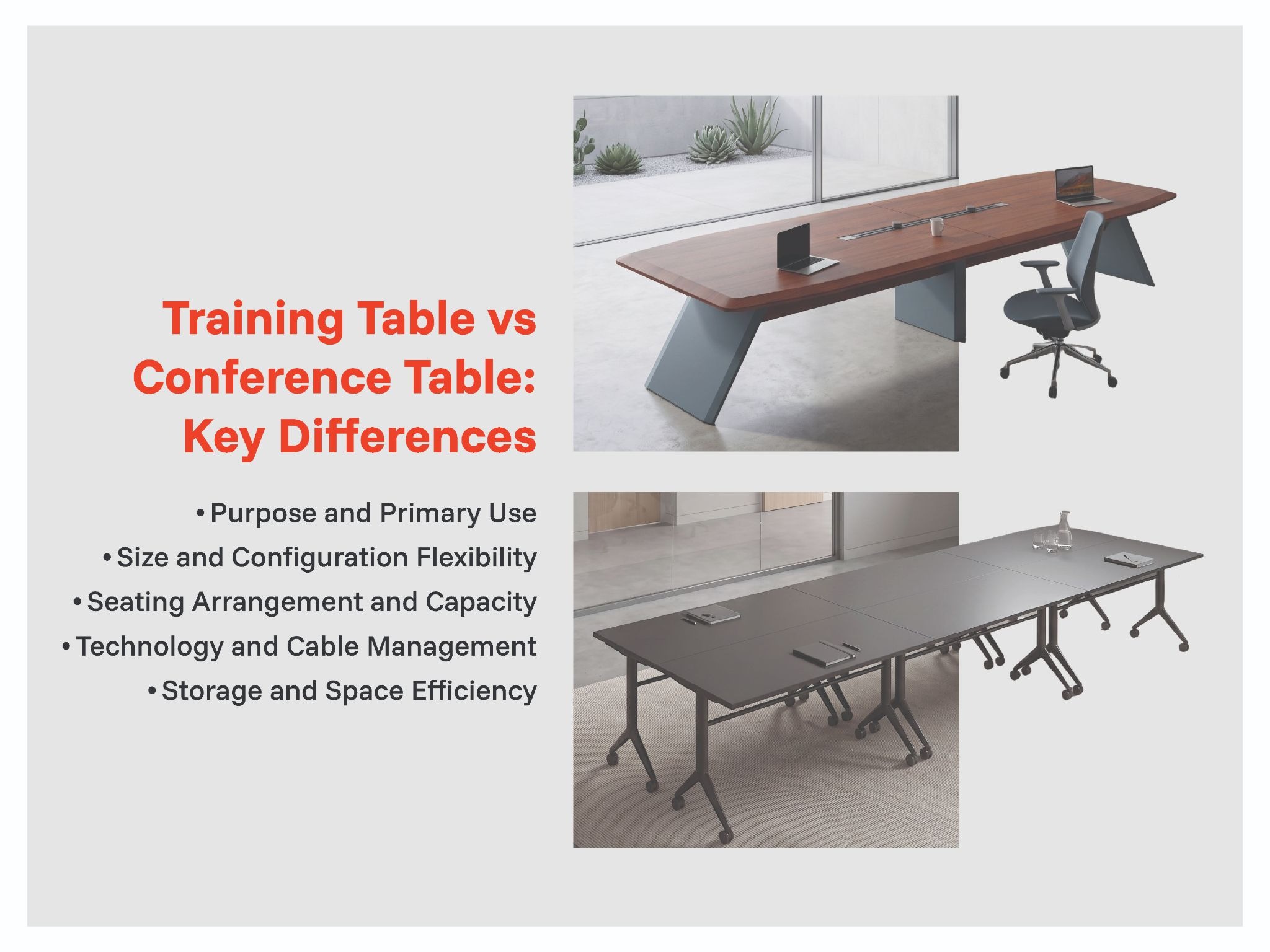
Training Table vs Conference Table: Key Differences
Purpose and Primary Use
A training table is designed for active, participatory sessions where engagement, movement, and reconfiguration are part of the working format. It serves learning, workshops, brainstorming, and flexible multi-purpose room use.
A conference table is designed for formal, structured discussions where the permanence and authority of the furniture reinforces the seriousness of the agenda. It serves boardroom meetings, client presentations, leadership strategy sessions, and formal decision-making.
Neither is a substitute for the other in their primary use context. Using a conference table for a training session creates the wrong environment for learning. Using training tables for a board meeting creates the wrong impression for the authority of the decision.
Size and Configuration Flexibility
Training tables are available in individual unit sizes from approximately 600mm by 1200mm to 750mm by 1800mm per unit, designed to be combined in multiple configurations. The total configuration size scales up or down by adding or removing units.
Conference tables are single surface structures typically ranging from 2400mm to 6000mm or more in length for larger boardrooms, designed for a fixed participant count in a defined room.
The flexibility difference is fundamental. A training table system can serve six participants or sixty in the same room across different sessions. A conference table serves one defined participant count in one defined layout.
Seating Arrangement and Capacity
Training tables support multiple seating arrangements including classroom rows, U-shape, horseshoe, herringbone, and boardroom rectangle, each of which creates a different participant dynamic suited to different learning objectives.
Conference tables support a single seating arrangement, with participants positioned around the perimeter of the table facing inward. This arrangement is optimal for formal discussion and decision-making but not for activities requiring individual participant workspace or flexible group interaction.
Technology and Cable Management
Modern training tables are increasingly designed with integrated power modules, cable management channels, and data access points built into the surface or the table frame. These features manage the device charging and connectivity requirements of a room full of participants working on laptops and tablets simultaneously.
Conference tables typically include more sophisticated integrated technology solutions including central power modules with multiple socket types, built-in display connectivity, and data routing infrastructure suited to video conferencing and presentation-heavy meeting formats.
Storage and Space Efficiency
Flip-top and nesting training tables can be stored compactly when not in use, recovering most of the room floor area for other activities. A training room with stored tables can serve as a presentation space, an assessment centre, a product demonstration area, or an all-hands gathering space.
A conference table is a permanent installation that always occupies its full footprint. It cannot be moved, folded, or stored to serve alternative room uses. The room is permanently committed to the single use the table supports.
How AFC Furniture Solutions Training Tables Compare to Standard Market Options
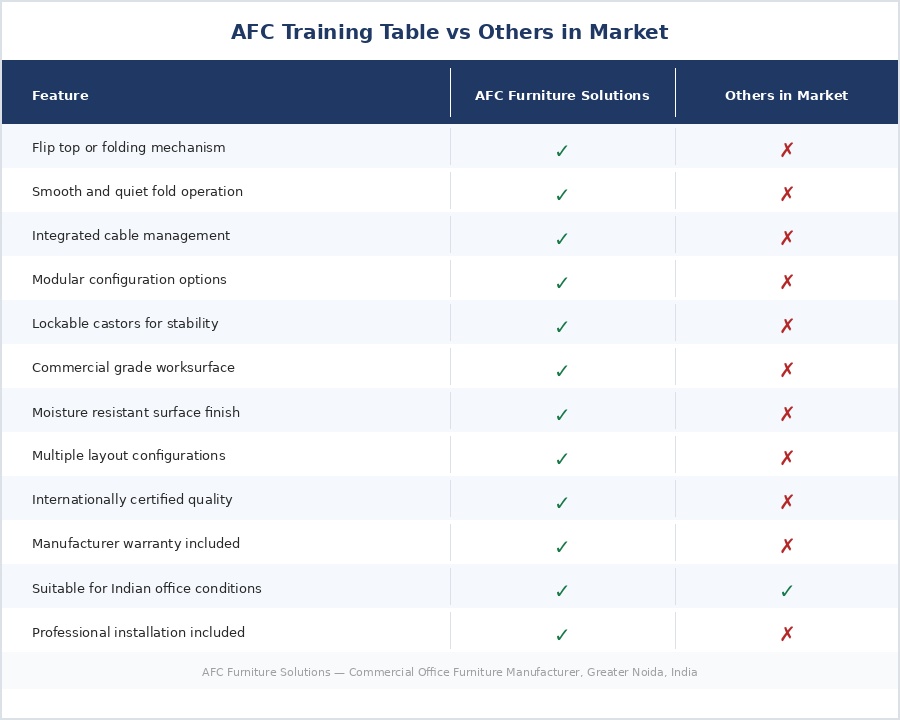
Others in Market reflects typical standard training table specifications commonly available in India. This comparison does not refer to any specific brand.
Tip: When specifying training tables for a new training room, always plan the layout in the smallest configuration you will regularly use as well as the largest. A set of training tables that works perfectly for thirty participants in a U-shape but becomes cramped and awkward for ten participants in a small workshop configuration has not been correctly sized for the full range of sessions the room needs to serve.
When Should You Choose a Training Table?
Training and Workshop Environments
Any room that primarily serves structured learning sessions, skills training, onboarding workshops, or facilitated group exercises should be specified with purpose-designed training furniture rather than adapted conference furniture.
The ability to change the room layout between sessions, within sessions, and across different training formats is what makes a training table system genuinely suited to this use context. A fixed conference table cannot provide this flexibility regardless of its quality or cost.
Multi-Purpose Rooms with Changing Layouts
For organisations where a single room needs to serve multiple different functions across the working week, a training table system is the only specification that genuinely accommodates this requirement.
The same room can serve as a training venue on Monday, a client briefing space on Tuesday, a workshop space on Wednesday, and an all-hands gathering on Thursday. Each configuration is possible within minutes of the previous one because the furniture supports rapid reconfiguration rather than resisting it.
Coworking and Flexible Office Spaces
Coworking operators and organisations with activity-based working arrangements use training table systems to create bookable flexible meeting and event spaces that can serve different community member needs across every working day.
The investment in a quality training table system delivers significantly more versatile space utilisation than any fixed furniture alternative in environments where flexibility is the primary spatial requirement.
When Should You Choose a Conference Table?
Formal Boardroom and Client Meeting Spaces
Any room designated as a primary boardroom or client meeting space should be specified with a quality conference table that communicates the institutional authority and visual quality appropriate to the meetings it hosts.
The permanence and visual presence of a well-specified conference table makes an impression on every client, investor, and senior external visitor who enters the room. This impression is part of the value the table delivers alongside its functional role as a meeting surface.
Senior Leadership and Strategy Discussions
Leadership meetings, strategy sessions, and executive committee gatherings benefit from the formal, structured environment that a conference table creates. The physical permanence of the table reinforces the seriousness of the agenda and the authority of the participants.
A training table configuration for these sessions would create the wrong environment, signalling flexibility and informality at a moment when stability and institutional authority are the appropriate message.
Video Conferencing and Presentation Rooms
Rooms designed specifically for video conferencing and formal presentations require the fixed, integrated technology infrastructure that a quality conference table supports. A permanent table surface with built-in power modules, display connectivity, and cable management provides the consistent, reliable technical environment that professional video conferencing demands.
Training tables can accommodate technology but typically require additional infrastructure that creates the trailing cables and adapters that look unprofessional in a video conferencing context.
Can One Room Have Both a Training Table and a Conference Table?
How to Design a Flexible Meeting and Training Room
Yes, provided the room is large enough to accommodate both use cases and the furniture selection is made deliberately to serve both. The most practical approach is a modular conference table specification that can be reconfigured between a formal boardroom rectangle and an open workshop layout.
For smaller rooms where both training and meeting uses are required, a quality training table system specified in a finish and design that is appropriate for formal meetings provides the best compromise. AFC Furniture Solutions' training table range includes models in premium finishes suited to formal meeting contexts as well as training environments.
What Furniture Combinations Work Best?
A modular conference table paired with a separate set of nesting or flip-top training tables stored against the room wall provides the cleanest solution for rooms with both formal meeting and training requirements.
The conference table serves its primary use as the permanent meeting surface. The stored training tables are deployed when the room needs to serve a training session, temporarily replacing the conference configuration with a training layout.
This approach requires slightly more storage provision within the room but eliminates the compromise that comes from trying to make a single furniture type serve two very different use contexts equally well.
Bonus Point: When designing a room that needs to serve both training and formal meeting purposes, invest in quality seating that works in both contexts. A well-specified meeting chair that is also comfortable for a three-hour training session means the seating does not need to change when the table configuration changes. This simplifies room setup significantly and maintains a consistent visual quality across both use contexts.
How AFC Furniture Solutions Designs Training and Meeting Tables for Indian Offices?
What Training Table Options Does AFC Offer?
AFC Furniture Solutions offers a comprehensive range of training room furniture designed specifically for the reconfiguration demands and commercial use intensity of Indian corporate training environments.
The Nex-Table provides a clean flip-top design suited to corporate training rooms requiring frequent layout changes between classroom, U-shape, and cluster configurations. The Impulse offers a robust modular specification suited to high-frequency commercial training environments with integrated cable management provisions.
The Uniflip provides a slim-profile flip-top design that nests compactly for space-efficient storage in rooms where the training configuration needs to give way to alternative uses quickly. The Weisner offers a premium finish specification suited to training rooms that also serve formal meeting purposes. The Modulus provides a modular system that connects in multiple configurations to serve the full range of training session formats from small workshops to large classroom setups.
What Conference Table Options Does AFC Offer?
The AFC Furniture Solutions Meeting Tables range covers the full spectrum of formal meeting room requirements. The Exquisite and Opus provide premium single-surface conference table specifications in finishes suited to boardrooms and senior leadership meeting spaces.
The Convesso offers a distinctive curved form suited to collaborative leadership sessions. The Crew provides a practical medium-format meeting table suited to team meeting rooms and smaller conference spaces. The Sleek-Meet, Desk-Meet, and Curvivo-Meet provide additional configurations across different size and format requirements.
Explore the full AFC Furniture Solutions office table to compare training table and conference table options suited to different room uses and organisational requirements.
What Quality Standards Back AFC Tables?
AFC Furniture Solutions holds BIFMA Level 3 certification, the highest internationally recognised standard for office furniture quality, sustainability, and safety. Every table in the range is manufactured at the Greater Noida facility and tested to BIFMA-compliant structural and durability standards appropriate for sustained commercial daily use.
AFC Furniture Solutions also holds ISO 9001, ISO 14001, and ISO 18001 certifications covering quality management, environmental responsibility, and occupational health and safety standards across the full manufacturing operation. The Greater Noida facility operates across 150,000 square feet with production capacity to support large-scale table orders for organisations across India.
You can also explore the AFC Furniture Solutions Training Tables specifically for flip-top, modular, and nesting configurations suited to corporate training rooms and multi-purpose meeting environments across India.
Frequently Asked Questions
Q1. What is the main difference between a training table and a conference table?
A training table is designed for flexibility, reconfiguration, and active participatory sessions. A conference table is designed for formal, structured discussions in a fixed layout. The primary difference is not size or price but the intended use context and the operational flexibility each provides.
Q2. Can I use training tables for a formal client meeting?
Yes, provided the training tables are specified in a premium finish and the configuration is set in a boardroom rectangle that creates a formal meeting dynamic. AFC Furniture Solutions' training table range includes models in premium finishes specifically suited to formal meeting contexts as well as training use.
Q3. How many participants can a training table system serve in a standard Indian office training room?
A standard training room of approximately 50 to 60 square metres can accommodate 20 to 24 participants in a classroom configuration or 16 to 18 in a U-shape using a quality training table system. The exact capacity depends on the individual table unit dimensions and the specific layout configuration.
Q4. What is the most versatile training table type for a multi-purpose room?
A flip-top or nesting training table with lockable castors provides the best combination of stability during use and speed of reconfiguration and storage. The modular system that connects in multiple configurations adds additional versatility for organisations with diverse session format requirements.
Q5. How long should a quality training table last in a commercial environment?
A commercial-grade training table from a reputable manufacturer should deliver eight to twelve years of reliable daily use under normal corporate training room conditions. The folding mechanism and castor assembly are the components most likely to require attention over this period and should be covered by the manufacturer warranty.
Q6. Does AFC Furniture Solutions supply both training tables and conference tables for complete room fit-outs?
Yes. AFC Furniture Solutions can supply both training and conference table specifications as part of a complete office fit-out, maintaining visual consistency across all room types through coordinated finish selections from the same manufacturing facility. Contact the AFC Furniture Solutions team for a complete room specification consultation.
Final Thoughts
The choice between a training table and a conference table is ultimately a choice about what the room needs to do and who needs to do it there. Both serve important and distinct roles in the modern Indian corporate office.
Getting this decision right means every session that happens in the room, whether a board meeting, a client presentation, a skills workshop, or a team training day, takes place in a physical environment that actively supports the purpose of that session rather than working against it.
AFC Furniture Solutions has been designing and supplying training and meeting room furniture for Indian organisations for over 15 years, with a complete range covering every table format from flip-top training configurations to premium boardroom surfaces, all manufactured to BIFMA Level 3 and ISO certified quality standards.
Explore Other Popular Blogs


Let’s build together
Tell us about your project and we’ll help you plan, design, and deliver at scale.
.jpg)
.svg)