.svg)
Meeting Room Furniture for Small Team Spaces: Compact Solutions That Work

Furnishing a meeting room for small team spaces? This compact solutions guide by AFC Furniture Solutions covers tables, chairs, and layouts.
Choosing the right meeting room furniture for small offices is a specific challenge that is entirely different from specifying a large boardroom or a corporate training room. A small team meeting space for 4 to 8 people needs to be efficient, comfortable, and functional in a fraction of the floor area that a larger room requires. This guide by AFC Furniture Solutions covers every key decision in specifying meeting room furniture that makes compact team spaces genuinely productive. For larger corporate boardrooms seating 10 or more people, see the complete boardroom furniture guide separately.
What Makes a Small Team Meeting Room Different?
A small team meeting room is a dedicated space for 4 to 8 people to meet for regular team standups, project discussions, client calls, and informal working sessions. It is the most frequently used meeting space in most corporate offices because the majority of daily meetings involve small groups, not large assemblies.
Unlike a large corporate boardroom, a small team meeting room is used multiple times a day by different groups. This places a premium on furniture that is durable, easy to reconfigure, practical to clean, and comfortable for meetings of varying length and formality.
The furniture specification for a small meeting room must work harder in a smaller footprint than boardroom furniture. Every centimetre of table and chair size has a direct impact on how comfortably the room seats its intended capacity and how much circulation space remains once everyone is seated.
Why Compact Meeting Room Furniture Matters
The most common problem with small team meeting rooms in Indian corporate offices is over-specification. A table that is 200mm too wide, or chairs that are 50mm too deep, can reduce a comfortable 6-person room to an awkward 4-person space where attendees cannot push their chairs back without hitting the wall.
Compact meeting room furniture is designed with precise dimensions that maximise seating capacity within limited floor area while maintaining the comfort and quality standards expected in a professional meeting environment.
The second common problem is under-specification — using folding tables and stacking chairs that look temporary and communicate a lack of investment in the meeting environment. Small meeting rooms are used for client calls, job interviews, and team decision-making. The furniture in them should reflect the professional standard of the organisation, not just the size constraint of the space.
Choosing the Right Table for a 4 to 8 Person Room
Table Size for 4-Person Rooms
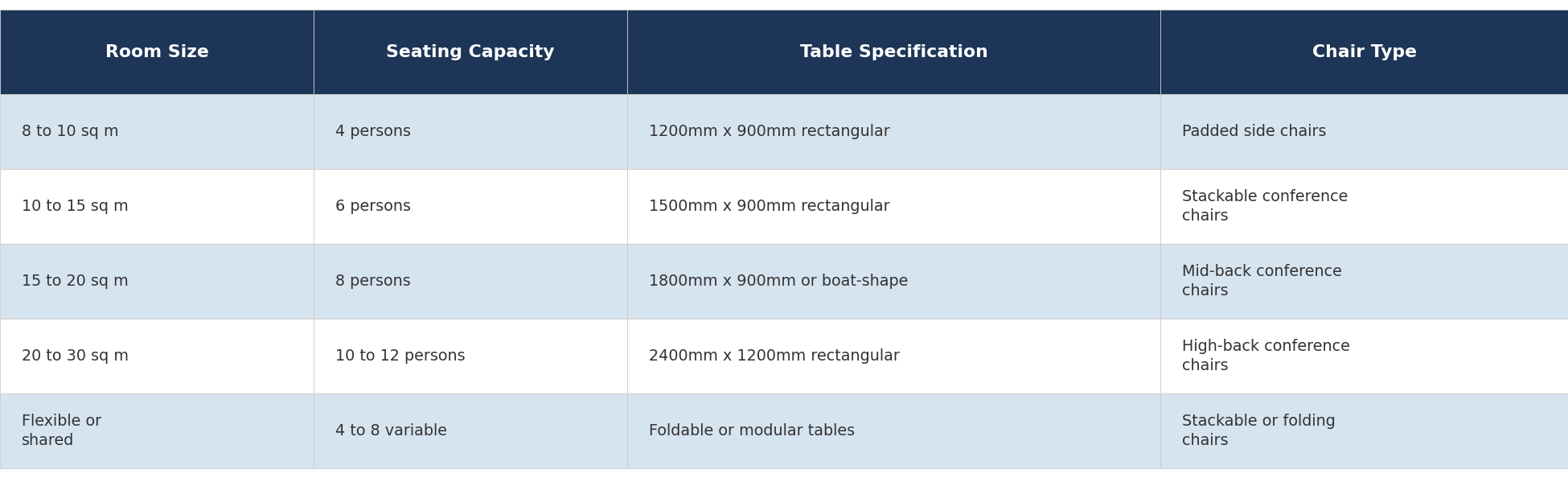
A 4-person meeting table should be specified at 1200mm x 900mm as a minimum. This provides two seats per long side at 600mm each, which is the minimum comfortable working width per person at a meeting table. A 1200mm x 900mm table in a room of 8 to 10 square metres leaves adequate circulation space on all sides for comfortable entry, exit, and movement during the meeting.
Table Size for 6-Person Rooms
A 6-person meeting table should be specified at 1500mm to 1800mm in length and 900mm in width. This seats three per long side at the minimum 600mm per person. In a room of 10 to 15 square metres, a 1500mm table leaves comfortable circulation without feeling cramped. A 1800mm table is better suited to rooms of 14 to 18 square metres.
Table Size for 8-Person Rooms
An 8-person meeting table should be specified at 2000mm to 2400mm in length. This seats four per long side and fits comfortably in a room of 18 to 25 square metres with adequate circulation on all sides. Beyond 2400mm, the table begins to feel like a small boardroom rather than a team meeting room.
Foldable and Modular Options
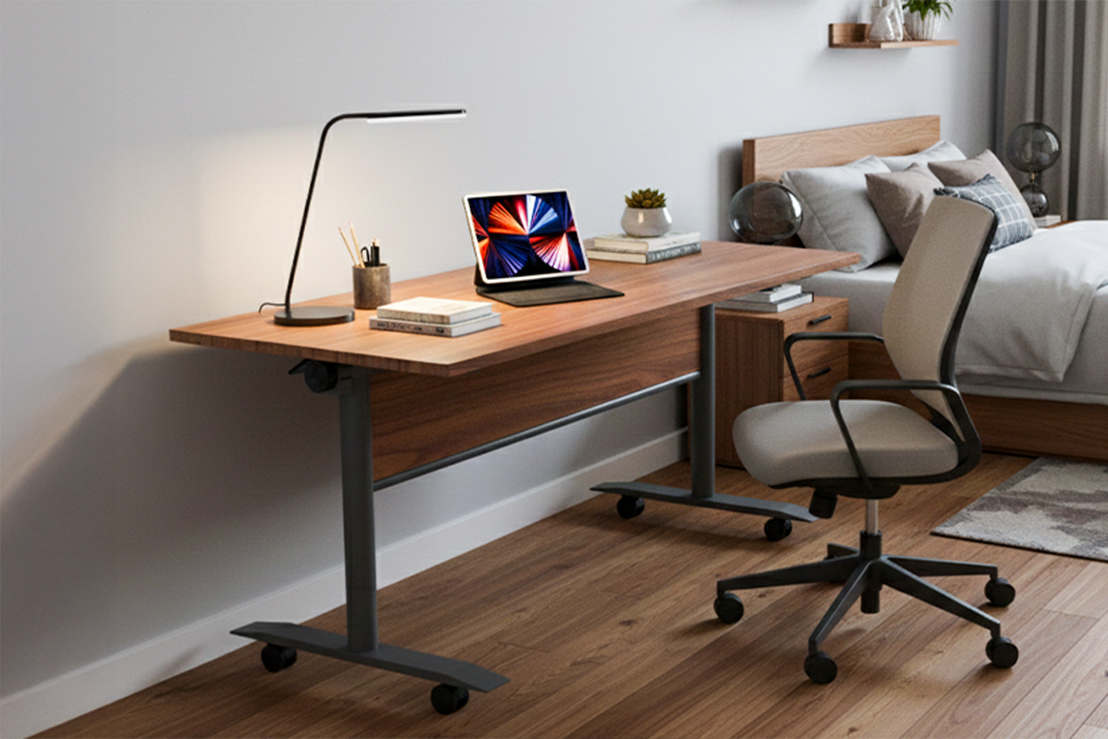
For rooms that serve multiple functions — team meetings, training sessions, and individual work sessions — foldable meeting tables with lockable castors provide the flexibility to reconfigure the room quickly. Foldable tables can be pushed to the wall or folded and stored when the space is needed for a different format. This flexibility comes at a modest cost in visual quality compared to fixed tables but is worth the trade-off for genuinely multi-use spaces.
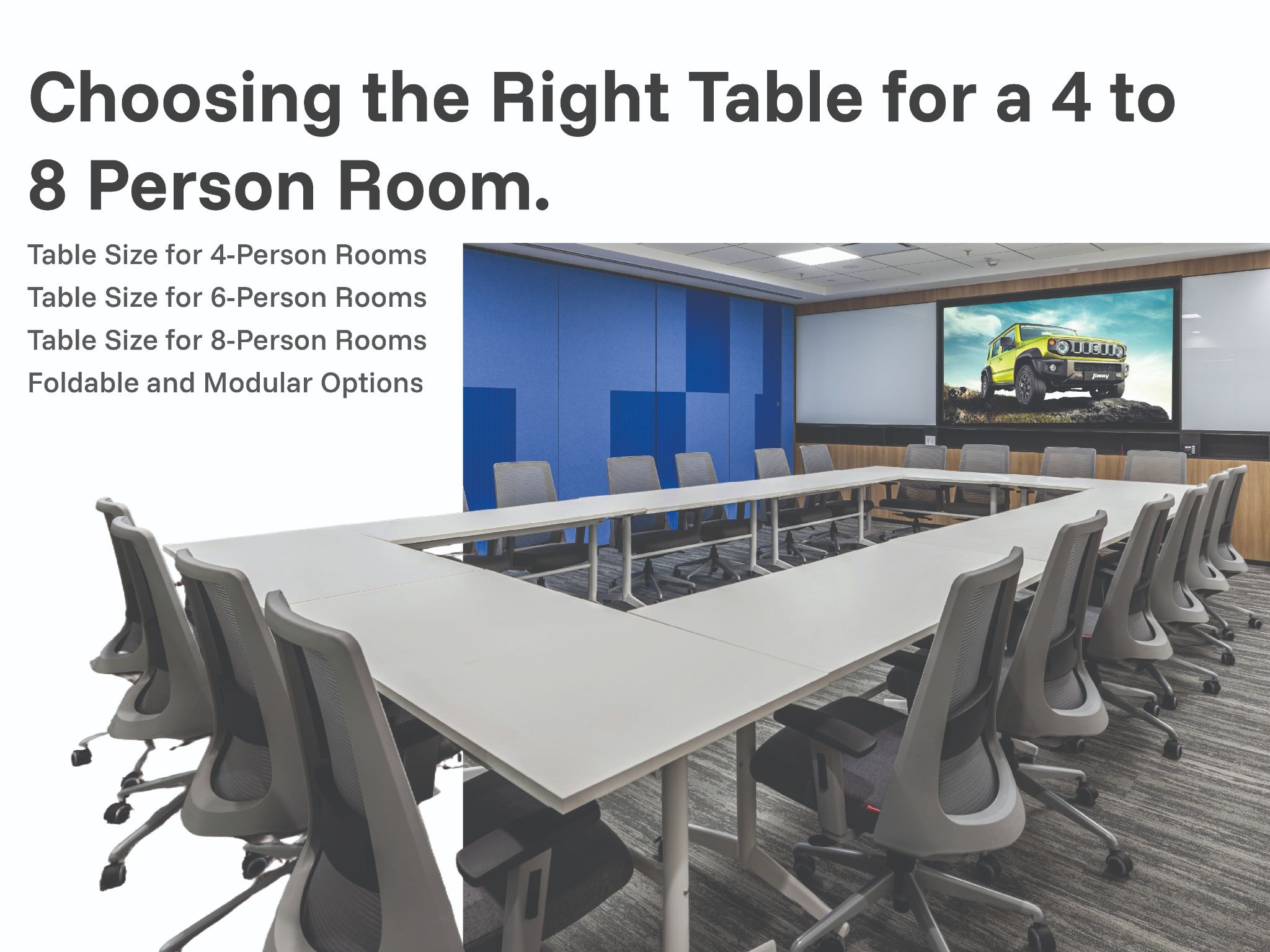
Table Shape Options for Small Meeting Rooms
Rectangular tables are the most space-efficient choice for small team rooms. They seat the maximum number of people per square metre of table footprint and align naturally with the rectangular floor plate of most meeting rooms.
Round and oval tables are excellent for small meeting rooms used primarily for collaborative discussions where equal participation is important. A round table seating four to six people in a room of 10 to 14 square metres creates a genuinely collaborative dynamic without the formal hierarchy of a rectangular layout. The trade-off is reduced seating capacity per square metre of table area compared to rectangular alternatives.
Boat-shaped tables — rectangular with a gentle barrel curve along the long edges — offer a visual quality step up from a straight rectangular table in the same footprint. They are appropriate for small meeting rooms that double as client meeting spaces where a modest visual premium is warranted.
Choosing the Right Chairs for Small Meeting Spaces
Chair specification has a bigger impact on the comfort and usability of a small meeting room than almost any other furniture decision. Compact meeting room chairs must provide adequate seated comfort for meetings of 30 to 90 minutes while taking up the minimum floor footprint both when occupied and when stored.
Padded side chairs without armrests are the most space-efficient specification for 4-person rooms where floor space is genuinely constrained. They take up significantly less space per seat than armchair configurations and allow tighter spacing around a small table when needed.
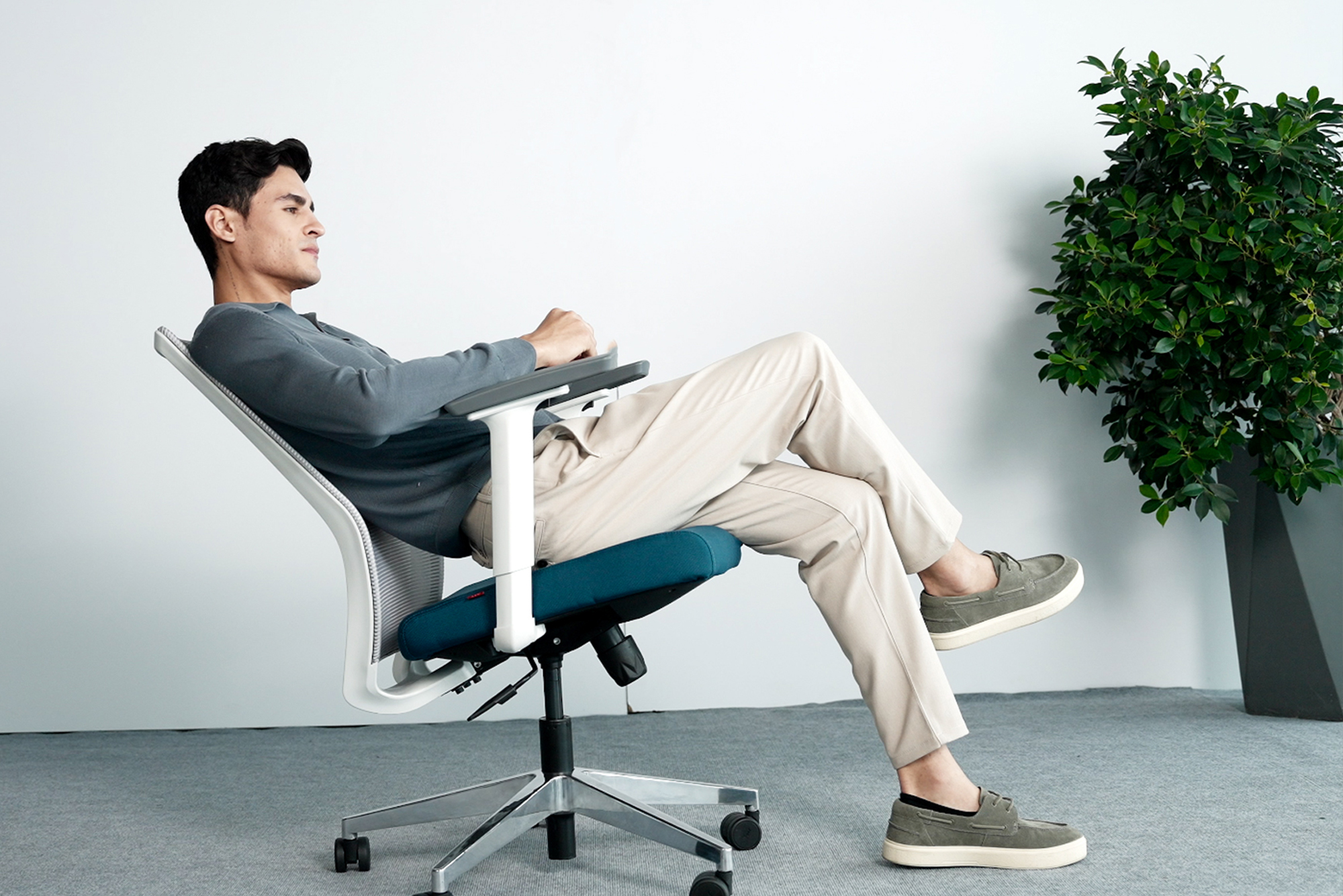
Mid-back chairs with armrests are the standard specification for 6 to 8 person rooms where slightly more space is available per seat. The armrest improves seated comfort for longer meetings and communicates a higher specification than an armless side chair.
Stackable chairs are worth specifying for any small meeting room that doubles as a training or presentation space. Stacking capability allows all chairs to be quickly cleared from the room and stored efficiently without requiring additional storage furniture.
Room Size vs Furniture Configuration Guide
Storage and Support Items in Small Meeting Rooms
Small team meeting rooms rarely require dedicated storage furniture, but two support items make a meaningful difference to how the room functions. A small credenza or low storage unit along one wall provides a surface for AV equipment, a phone, and meeting support items such as notepads and water. It also adds visual weight to the room that keeps it from feeling sparse.
A single mobile pedestal beneath the credenza surface provides lockable storage for meeting consumables and AV cables, keeping the surface clear and the room looking organised between uses.
Acoustic Considerations for Small Spaces
Small meeting rooms have a particular acoustic challenge that larger rooms do not. The close proximity of participants and the hard surfaces of a compact room create echo and sound reflection that makes conversations — especially video calls — feel uncomfortable and are picked up poorly by microphones.
Fabric-upholstered chairs contribute meaningfully to acoustic absorption in a small meeting room. A room with six fabric-back chairs absorbs significantly more reflected sound than the same room with six hard plastic or leather chairs. For small rooms used regularly for video calls, specifying fabric chairs over leather is a practical acoustic decision, not just an aesthetic one.
A fabric-wrapped pin board or acoustic panel on one wall of a small meeting room provides additional sound absorption and serves the dual purpose of a presentation and notes surface. This is a low-cost addition that measurably improves both the acoustic quality and the functional range of the space.
Common Mistakes in Small Meeting Room Furniture
Over-specifying table size: A table that is 200mm too wide for the room reduces comfortable seating capacity and leaves insufficient circulation space for occupants to push their chairs back. Always check table dimensions against the actual room footprint with 900mm clear circulation on all four sides before confirming the order.
Choosing chairs purely on appearance: High-back executive chairs look impressive but are proportionally wrong for a small meeting room. They take up too much floor space, make the room feel crowded, and create an awkward hierarchy in a space intended for team discussions.
Ignoring the acoustic impact of hard surfaces: All-glass, all-laminate, and all-leather room configurations create poor acoustic conditions for both in-person and video meetings. Specify at least one significant fabric surface in every small meeting room.
Not specifying power access: Small meeting rooms used for working sessions require power access at the table. Specify a compact in-table power module or a table-top power unit. Trailing cables from wall sockets across a small room are both hazardous and visually disruptive.
Frequently Asked Questions (FAQs)
These are the most common questions asked when specifying furniture for small team meeting rooms.
Q1. What is the ideal table size for a 4-person meeting room?
For a 4-person meeting room, a table of 1200mm x 900mm is the recommended specification. This seats two people per long side at the minimum comfortable 600mm per person and leaves adequate circulation space in a room of 8 to 10 square metres.
If the room is slightly larger (10 to 12 square metres), a 1500mm x 900mm table seats six people comfortably and gives the room more visual presence without sacrificing circulation.
Q2. Are stackable chairs suitable for a professional small meeting room?
Yes. Modern stackable meeting chairs are available in fully upholstered configurations that look indistinguishable from non-stackable alternatives when in use. Specifying stackable chairs for a small meeting room that doubles as a flexible space gives the facilities team the ability to quickly reconfigure the room without compromising on the meeting environment quality.
Avoid basic plastic stacking chairs in professional meeting rooms. The visual quality of padded stackable chairs in fabric or faux leather is entirely appropriate for a corporate team meeting space.
Q3. Do small meeting rooms need integrated power in the table?
Yes, for any small meeting room used for working meetings where participants bring laptops. A compact in-table power module with two to four sockets and USB ports is the minimum specification for a professionally furnished small team room.
Table-top power units that clip onto the table edge are a practical alternative for existing tables without built-in cable management. They are less visually refined than in-table modules but significantly better than trailing cables from wall sockets across the room.
Q4. How is a small team meeting room different from a boardroom?
A small team meeting room seats 4 to 8 people for daily working meetings, team discussions, and quick collaborative sessions. It is specified for high-frequency use, multi-format flexibility, and compact efficiency in a limited floor area.
A corporate boardroom seats 10 or more people for formal board sessions, senior leadership meetings, and high-stakes client presentations. It is specified for visual authority, premium materials, and a fixed formal configuration. For a complete guide to corporate boardroom furniture specification, see the AFC Furniture Solutions boardroom furniture guide separately.
Q5. Does AFC Furniture Solutions supply meeting room furniture for small offices across India?
Yes. AFC Furniture Solutions supplies a complete range of small meeting room furniture including compact rectangular and round tables, padded side chairs, mid-back meeting chairs, and stackable options for flexible spaces. All products are available in coordinating finishes for visual consistency with the rest of the office.
Contact AFC Furniture Solutions at +91 9999006933 or visit afcindia.in to discuss your small meeting room requirements and request a furniture recommendation.
Tips for Furnishing a Small Meeting Room
- Tip 1: Always check table dimensions against the actual room footprint before ordering. Measure the room, subtract 900mm on all four sides for circulation, and confirm the remaining space accommodates the table. Do this before ordering, not after delivery.
- Tip 2: Specify fabric chairs over leather or hard plastic for small meeting rooms used for video calls. The acoustic absorption of fabric upholstery meaningfully improves the sound quality of calls in small, hard-surfaced rooms.
- Tip 3: For multi-use small rooms, specify foldable tables with lockable castors and stackable chairs. The flexibility to reconfigure the space in under two minutes makes the room significantly more useful without compromising meeting quality when it is set up.
- Tip 4: Order two to four spare chairs beyond the table capacity at the initial purchase. Small meeting rooms frequently need extra chairs for occasions when the meeting size exceeds the standard configuration.
Bonus Points
- Bonus 1: AFC Furniture Solutions meeting tables and chairs are available in coordinating finishes that match the broader AFC workspace range, ensuring visual consistency between the small meeting room and the open plan floor it serves.
- Bonus 2: All AFC Furniture Solutions meeting room furniture is manufactured under BIFMA Level 3 certified production processes and carries a warranty of up to 10 years on structural components.
- Bonus 3: AFC Furniture Solutions provides pan-India delivery and installation for all meeting room furniture orders. Contact our team at +91 9999006933 to discuss your small meeting room requirements.
Conclusion
Meeting room furniture for small offices requires a more precise specification approach than almost any other office zone. Table dimensions must be matched exactly to the room footprint, chair selection must balance comfort with space efficiency, and the acoustic quality of the room must be considered alongside the visual specification. Getting these decisions right creates a small team meeting space that is genuinely productive for the people who use it every day.
AFC Furniture Solutions offers a complete range of small meeting room furniture including compact tables, meeting chairs, and flexible foldable configurations for every small team room footprint, manufactured to BIFMA Level 3 standards with full pan-India installation support.
Explore Other Popular Blogs

Let’s build together
Tell us about your project and we’ll help you plan, design, and deliver at scale.
.jpg)
.svg)