.svg)
Lumbar Support Office Chairs: Why They Matter and How to Pick the Right One

Discover why lumbar support office chairs matter for Indian workplaces and how to choose the right one. Complete guide by AFC Furniture Solutions.
A lumbar support office chair India is no longer a premium specification reserved for executive spaces. It is the standard specification for any corporate office where employees sit for more than four hours a day. Back pain is the leading musculoskeletal complaint among Indian office workers, and inadequate lumbar support is the primary furniture-related cause. This guide by AFC Furniture Solutions explains exactly what lumbar support does, why it matters, and how to choose the right lumbar support office chairs for your corporate workplace.
What Is Lumbar Support in an Office Chair?
Lumbar support is a structural feature in an office chair designed to fill and support the inward curve of the lower back, known as the lumbar curve or lumbar lordosis. It prevents the lower spine from rounding forward into a slouched position during prolonged sitting.
The lumbar region of the spine refers to the five vertebrae between the ribcage and the pelvis, labeled L1 through L5. This section of the spine bears the majority of the body's weight in a seated position and is the area most vulnerable to strain and injury when sitting posture is not adequately supported.
Effective lumbar support maintains the natural S-curve of the spine during sitting, reducing the compressive load on the lumbar discs and the muscular tension in the lower back that accumulates over long sitting sessions without support.
Why Lumbar Support Matters for Indian Office Workers
According to the Indian Journal of Occupational and Environmental Medicine, lower back pain is the most prevalent musculoskeletal disorder among white-collar office workers in India, affecting an estimated 60 to 70 percent of desk workers at some point in their career. Prolonged sitting without adequate lumbar support is consistently identified as the primary workplace contributor to this condition.
India's corporate workforce sits for longer average daily durations than many comparable global markets. A combination of long working hours, limited break culture in high-pressure industries, and historically low awareness of ergonomic seating requirements has contributed to a particularly high prevalence of lower back complaints among Indian office professionals.
The financial impact is measurable. Lower back pain is among the top three reasons for productivity loss and unplanned absenteeism in Indian corporate offices. Specifying chairs with adequate lumbar support is one of the highest-return ergonomic investments an organisation can make, with a direct positive impact on attendance, focus, and daily performance.
How the Spine Works During Prolonged Sitting
When a person sits upright without back support, the lumbar spine tends to flatten or reverse its natural inward curve within minutes. This flattening increases pressure on the intervertebral discs and stretches the posterior spinal ligaments, creating a cumulative strain that becomes painful over hours of exposure.
Research published in the journal Spine found that intradiscal pressure in the lumbar spine is significantly higher during unsupported sitting than during standing, and that this pressure is substantially reduced when lumbar support is correctly positioned and in contact with the lower back curve.
A chair with effective lumbar support maintains the lumbar curve passively, meaning the user does not need to consciously maintain posture. The support structure does the work of holding the lower back in its natural position, reducing the muscular effort and disc load that accumulate without it.
Types of Lumbar Support in Office Chairs
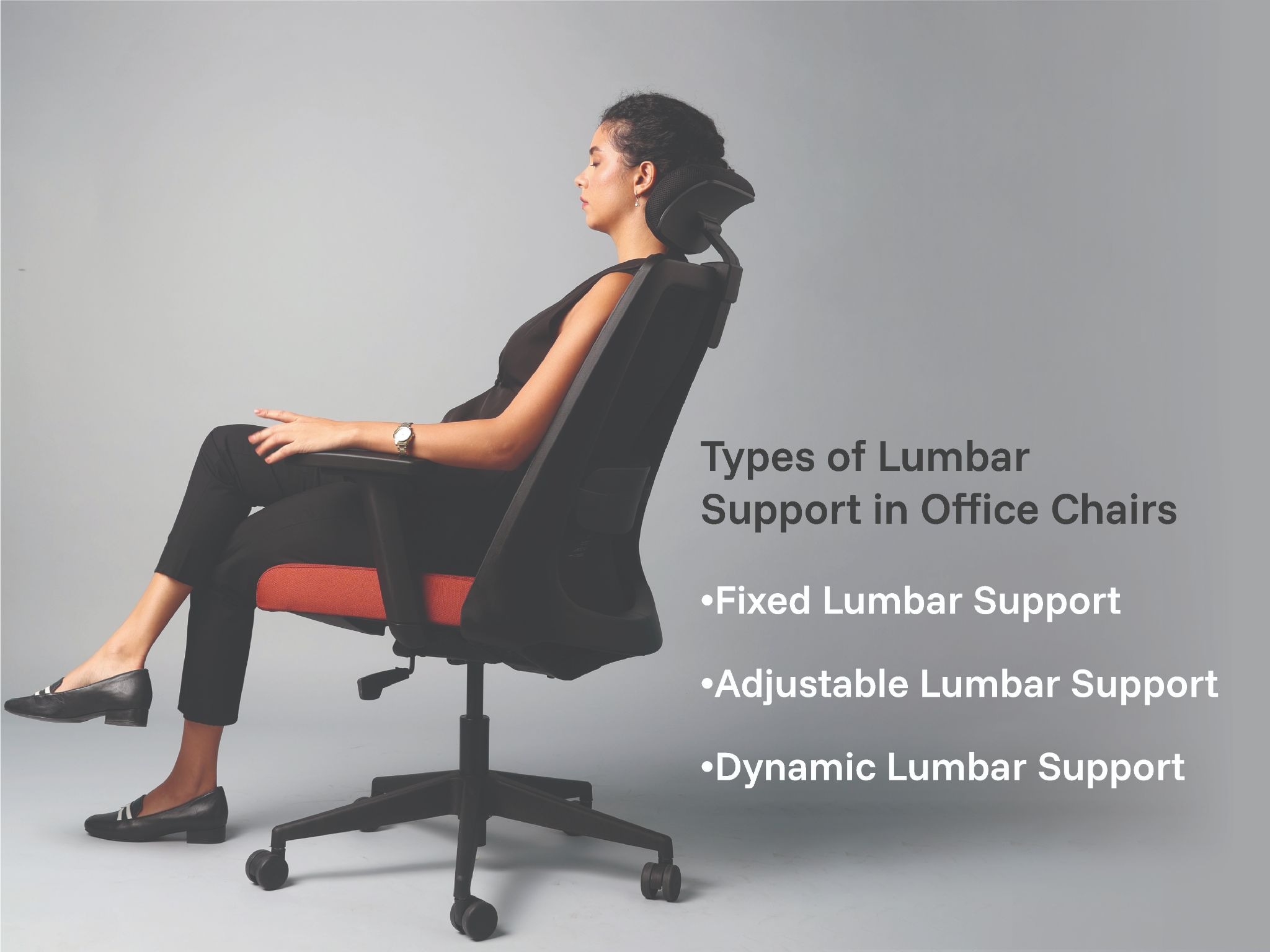
Fixed Lumbar Support
Fixed lumbar support is a contoured protrusion built into the backrest at a set height and depth. It is appropriate only when the chair is purchased for a single user of a specific height, because the fixed position will not align correctly with the lumbar curves of users of significantly different heights.
In corporate offices where chairs are shared across shifts or where the same chair model is specified for employees of varying heights, fixed lumbar support creates a problem for users whose lumbar curve sits above or below the fixed pad position.
Adjustable Lumbar Support
Adjustable lumbar support allows the user to move the lumbar pad up or down within the backrest to align it precisely with their individual lumbar curve height. Some models also allow forward depth adjustment, enabling the user to increase or reduce the pressure of the pad against their lower back.
For corporate bulk procurement across a diverse workforce, adjustable lumbar support is the correct specification. It accommodates the full range of user heights and body shapes within a single chair model, ensuring every user can achieve correct lumbar contact regardless of their individual dimensions.
Dynamic Lumbar Support
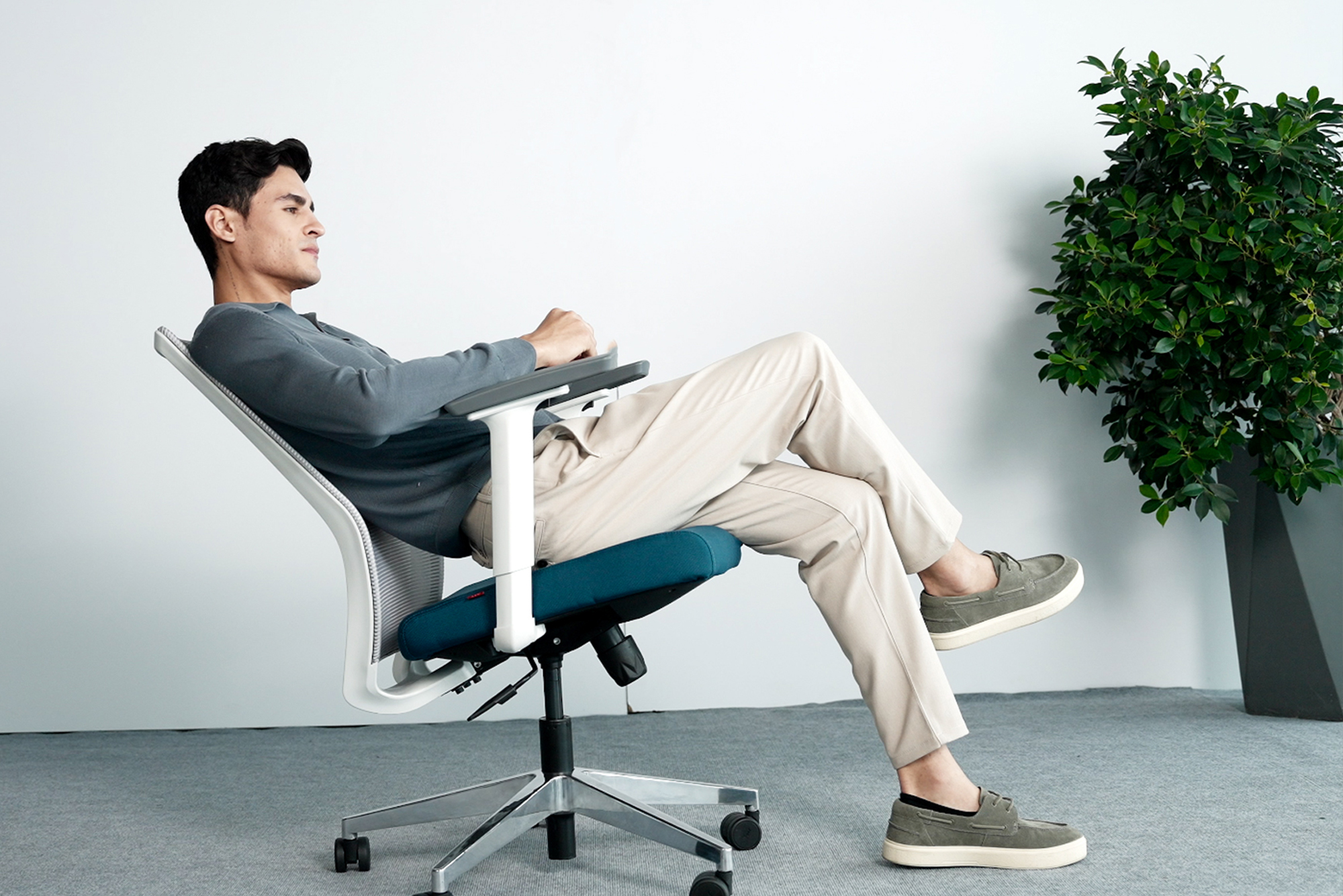
Dynamic lumbar support moves in response to the user's body as they shift posture during the working day. Rather than remaining in a fixed position, the lumbar mechanism follows the movement of the user's lower back, maintaining contact and support through recline, lean, and postural shift.
Dynamic lumbar support is the highest-performing specification for users who change posture frequently during long working sessions. It is found in premium ergonomic chairs and represents the most advanced approach to passive lumbar support currently available in the commercial seating market.
How to Check If Your Current Chair Has Proper Lumbar Support
Sit in the chair in your normal working position and place one hand behind your lower back between your back and the chair backrest. If there is a gap of more than one to two centimetres between your lower back and the backrest, the lumbar support is either absent, incorrectly positioned, or insufficient for your body dimensions.
A correctly positioned lumbar pad should make firm but comfortable contact with the curve of your lower back without pushing the spine into an exaggerated arch. If you need to slide forward in the seat or consciously arch your back to make contact with the lumbar pad, the pad is positioned too high or too far forward.
After sitting for 30 minutes, note whether your lower back feels fatigued or uncomfortable. Fatigue in the lower back within the first hour of sitting is a clear indicator that the lumbar support is inadequate for your working position.
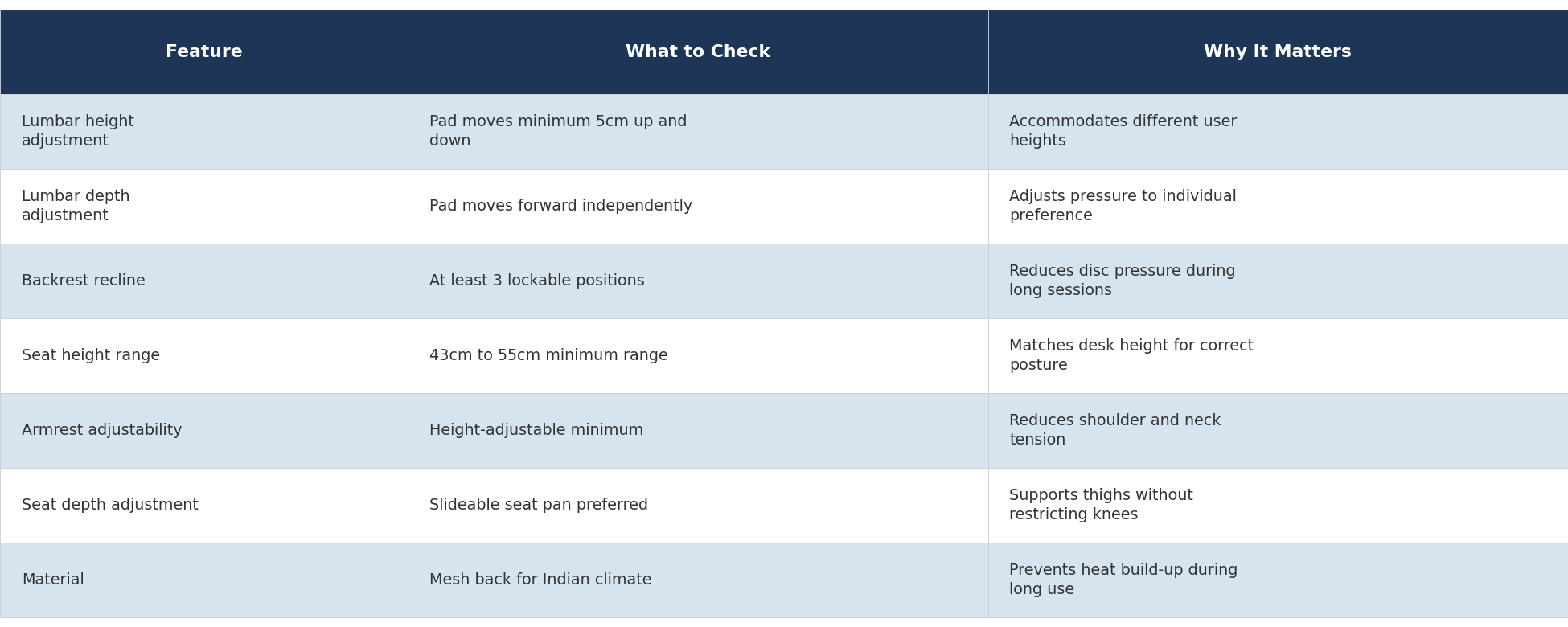
Key Features to Look for in a Lumbar Support Office Chair
Lumbar Support Chairs for Different Work Roles
Data Entry and Administrative Roles
Employees in data entry and administrative roles typically maintain a static, forward-facing posture for sustained periods with minimal postural variation. These roles benefit most from chairs with strong, adjustable lumbar support and a backrest that provides firm contact throughout the working day without requiring active postural management by the user.
For these roles, AFC Furniture Solutions recommends the Myel or Fluid mesh chairs, which combine adjustable lumbar support with a backrest geometry designed for sustained upright working positions.
Technology and Developer Roles
Technology professionals and software developers frequently lean forward toward screens and keyboards during periods of deep focus, then recline during review or collaboration. This variation in posture makes dynamic lumbar support or a highly adjustable lumbar mechanism particularly valuable for these roles.
The Spino and Breeze models from the AFC Furniture Solutions mesh chair range provide the backrest flexibility and lumbar adjustability suited to the varied postures of technology roles.
Management and Client-Facing Roles
Managers and client-facing professionals spend time both at their desk and in meetings, shifting frequently between different postures and seating environments. For the workstation chair, the priority is reliable lumbar support in a chair that also communicates appropriate professional status through its visual appearance.
The AFC Furniture Solutions mesh chair range provides professional aesthetics alongside ergonomic lumbar performance, making it appropriate for both open plan workstation areas and individual management offices.
How Lumbar Support Works with the Right Workstation
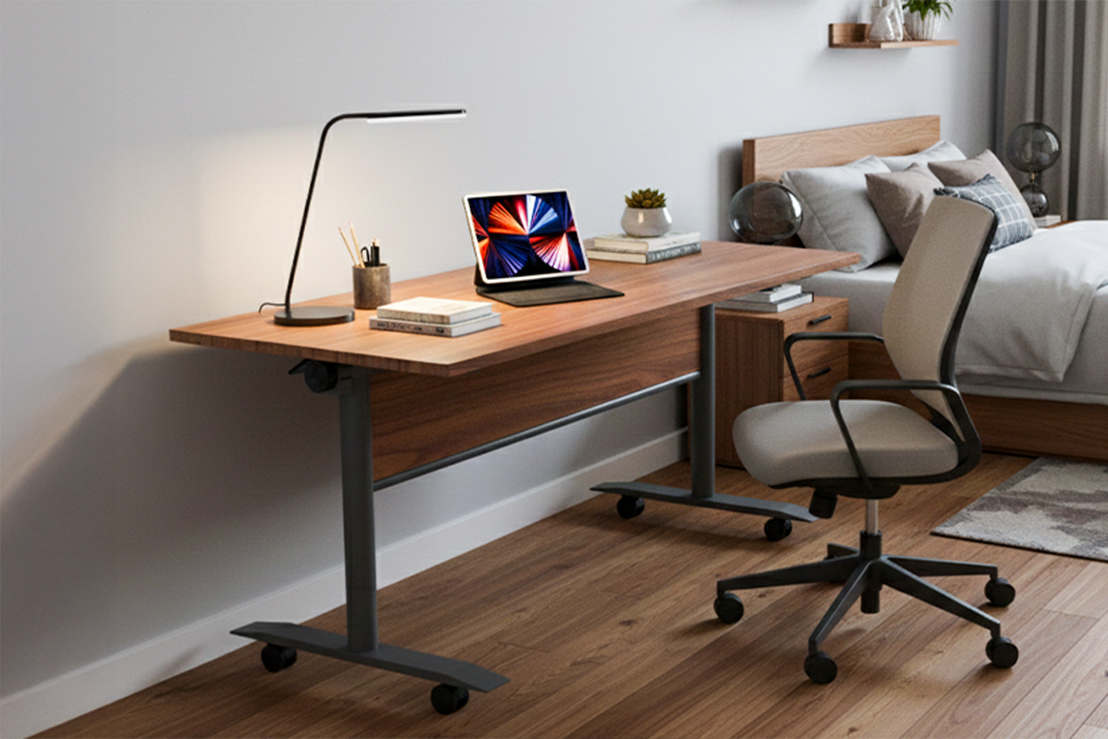
A lumbar support chair delivers its full benefit only when the desk and workstation dimensions are correctly matched to the chair. A user seated at a desk that is too high will raise their shoulders to reach the keyboard, pulling the spine forward and reducing the contact between the lumbar pad and the lower back. Specifying a height adjustable workstation alongside a lumbar support chair allows the desk surface to be set at the precise height required for the user's seated elbow position, ensuring the chair's lumbar support functions as intended throughout the working day.
Monitor height is equally important. A screen positioned too low causes the user to bend the neck and upper back forward, which pulls the lumbar curve out of the position the chair support is designed to maintain. Monitor arms that allow the screen to be raised to eye level without tilting the head are a valuable complement to a lumbar support chair specification.
AFC Furniture Solutions designs both its ergonomic seating range and its workstation systems to work together as coordinated ergonomic solutions, with dimensions and adjustment ranges that complement each other across the full range of adult user sizes.
Common Lumbar Support Mistakes in Corporate Offices
Buying a chair described as ergonomic without checking lumbar adjustability: The word "ergonomic" in a chair description does not guarantee meaningful lumbar support. Always confirm that the lumbar pad is adjustable in at least one dimension before accepting any chair as suitable for long sitting hours.
Setting the lumbar pad once and never adjusting it again: Lumbar support is only effective when positioned correctly for the individual user. In corporate offices where chairs are occasionally moved or shared, the lumbar setting needs to be confirmed and adjusted each time a different user sits in the chair.
Specifying the same chair for all roles regardless of daily sitting duration: A visitor chair in a meeting room and a primary workstation chair for an eight-hour shift have fundamentally different requirements. Applying a single chair specification across all office functions leads to under-specification in the highest-need positions.
Ignoring the desk height relationship: A lumbar support chair in isolation cannot correct a posture problem caused by an incorrectly sized desk. Desk height and chair height must be specified together for the ergonomic system to function as intended.
Frequently Asked Questions (FAQs)
These are the most common questions asked when specifying lumbar support office chairs for corporate workplaces.
Q1. What is the correct position for lumbar support in an office chair?
The lumbar pad should make firm contact with the inward curve of the lower back, which is located approximately 5cm to 10cm above the top of the seat cushion for most adult users. The pad should fill the natural gap between the lower back and the backrest without pushing the spine into an exaggerated arch.
To find the correct position, sit upright with your back against the backrest and adjust the lumbar pad height until it makes comfortable contact with the hollow of your lower back. The contact should feel supportive rather than intrusive.
Q2. Can a lumbar support cushion replace a proper lumbar support chair?
A lumbar support cushion can provide temporary relief when used in a chair without built-in lumbar support, but it is not an adequate long-term substitute for a properly designed lumbar support chair. Aftermarket cushions shift position during use, lose their shape over time, and cannot provide the dynamic or adjustable support built into a quality ergonomic chair.
For corporate offices where employees sit for six to nine hours daily, specifying chairs with built-in adjustable lumbar support is the correct approach. Lumbar cushions are appropriate only as a short-term solution while replacement seating is being procured.
Q3. Is lumbar support different from back support?
Yes. Back support refers to the overall contact and support provided by the entire backrest of a chair. Lumbar support is the specific support provided to the lower back section of the spine, between the base of the ribcage and the pelvis.
A chair can provide general back support through a tall, well-shaped backrest without having a dedicated lumbar support mechanism. However, general back support without a specific lumbar component is typically insufficient for users sitting for more than four hours daily.
Q4. How often should lumbar support office chairs be replaced in a corporate office?
A commercial-grade lumbar support office chair specified correctly for daily use should maintain its structural performance for five to eight years under normal corporate conditions. The first signs of deterioration are typically a reduction in foam density in the seat cushion and loosening of the lumbar adjustment mechanism.
AFC Furniture Solutions office chairs carry a warranty of up to 10 years on structural components, providing assurance that the chair will maintain its ergonomic performance across its expected service life.
Q5. Does AFC Furniture Solutions offer lumbar support chairs for bulk corporate orders?
Yes. AFC Furniture Solutions manufactures a complete range of ergonomic mesh chairs with adjustable lumbar support, including the Myel, Fluid, Spino, and Breeze models, for corporate bulk procurement across India.
All models feature adjustable lumbar support height and are manufactured under BIFMA Level 3 certified production processes with a warranty of up to 10 years. Contact AFC Furniture Solutions at +91 9999006933 or visit afcindia.in to discuss your corporate seating requirements.
Tips for Choosing a Lumbar Support Office Chair
- Tip 1: Always specify lumbar height adjustment as a minimum requirement for bulk corporate orders. A fixed lumbar pad that does not align with the lower back of taller or shorter employees provides no meaningful benefit and may actively worsen posture for those it does not fit.
- Tip 2: Request a trial unit before finalising any bulk corporate chair order. Sit in the chair for a minimum of 20 minutes, adjust the lumbar to your lower back position, and confirm that the support maintains contact without discomfort during a range of normal working postures.
- Tip 3: Train employees on correct lumbar adjustment at the time of installation. An adjustable lumbar mechanism that is never used provides no benefit. A brief briefing at installation — covering how to locate and adjust the lumbar pad for their individual height — significantly improves the actual ergonomic outcome of the specification.
- Tip 4: For offices in warm Indian climates, specify mesh backrests over foam or leather for primary workstation chairs. Mesh maintains the airflow that keeps the contact area between the back and the chair comfortable during long sessions, which encourages users to maintain proper back contact with the lumbar support throughout the day.
Bonus Points
- Bonus 1: AFC Furniture Solutions mesh chairs, including the Myel, Fluid, Spino, and Breeze models, feature adjustable lumbar support and are manufactured under BIFMA Level 3 certified production processes at the Greater Noida facility.
- Bonus 2: All AFC Furniture Solutions ergonomic chairs carry a warranty of up to 10 years on structural components, reflecting the commercial-grade durability of the materials and mechanisms used in each model.
- Bonus 3: AFC Furniture Solutions provides pan-India delivery and installation support for all corporate seating orders. Contact our team at +91 9999006933 to discuss your lumbar support chair requirements and arrange a product demonstration.
Conclusion
Lumbar support office chairs are the single most impactful ergonomic investment available to Indian corporate offices. By maintaining the natural lumbar curve of the spine during prolonged sitting, a properly specified lumbar support chair reduces back pain, improves focus, and reduces absenteeism and productivity loss associated with musculoskeletal complaints in the workplace.
AFC Furniture Solutions offers a complete range of ergonomic mesh chairs with adjustable lumbar support, designed for the demands of Indian corporate environments and manufactured to BIFMA Level 3 standards with full installation support and a warranty of up to 10 years.
Explore Other Popular Blogs

Let’s build together
Tell us about your project and we’ll help you plan, design, and deliver at scale.
.jpg)
.svg)