.svg)
How to Design a Professional Executive Cabin with the Right Furniture

Learn how to design a professional executive cabin with the right furniture. AFC Furniture Solutions covers desks, chairs, storage, and layout for corporate cabins.
The executive cabin furniture setup is one of the most visible expressions of a company's professional standards. A well-designed executive cabin communicates authority, attention to detail, and organisational seriousness to every visitor, client, and team member who enters. This guide by AFC Furniture Solutions covers every key decision involved in specifying executive cabin furniture for a professional corporate environment.
What Is an Executive Cabin?
An executive cabin is a private or semi-private office space designated for senior management personnel such as directors, senior managers, department heads, and C-suite executives. Unlike open plan workstations, the cabin provides a dedicated space for focused work, confidential conversations, and client meetings.
The furniture in an executive cabin serves a dual purpose. It must be functional enough to support intensive daily use, and it must project the appropriate level of professional status that the role demands. Getting this balance right is the central challenge of executive cabin furniture specification.
AFC Furniture Solutions designs and manufactures executive cabin furniture systems for corporate clients across India, covering everything from the executive desk and chair to storage, visitor seating, and cabin accessories.
Why Executive Cabin Furniture Matters
The furniture in an executive cabin directly shapes how the space is perceived by every person who enters it. A poorly furnished cabin with mismatched or low-quality pieces communicates a lack of attention to the details that matter, which is a message that is quickly absorbed by clients and senior stakeholders.
Well-specified executive cabin furniture projects confidence, stability, and professionalism. These are exactly the qualities that senior leaders need to communicate in their workspace, particularly when the cabin is used for client meetings, vendor negotiations, or internal leadership conversations.
Beyond perception, the right furniture also has a direct impact on productivity. An executive who is comfortable at their desk, working with the right storage within reach and the right seating for focused sessions, operates more effectively than one who has to work around furniture that was not designed for their role.
The Executive Desk
The executive desk is the centrepiece of the cabin and the first thing a visitor notices when they enter. Its size, material, finish, and configuration communicate the character of the space immediately.
Size and configuration
Executive desks for corporate cabins typically range from 1600mm to 2000mm in width. A standard straight desk at 1800mm wide provides ample working surface for a desktop or laptop, documents, and desk accessories without dominating the room.
L-shaped executive desks are common in larger cabins. The return section provides a secondary workspace for documents, a second screen, or a printer, while keeping the primary desk surface clean and focused. The return also allows the executive to shift orientation within the cabin, which can be useful for changing the dynamic of a conversation with a visitor.
Material and finish
Executive desks are available in a range of materials including high-pressure laminate, veneer, solid wood, and glass-topped frames. For corporate environments, high-pressure laminate with edge banding is the most practical specification. It provides the visual richness of a premium surface with the durability and ease of maintenance that a daily-use commercial desk requires.
Veneer and solid wood finishes carry a premium visual quality appropriate for top-tier executive spaces but require more careful maintenance and carry a higher cost per unit than laminate alternatives.
Cable management
An executive desk in a corporate cabin must include built-in cable management for power, data, and device charging. A desk surface cluttered with exposed cables undermines the professional impression the cabin is intended to create. Specify desks with integrated cable trays, grommet holes, and in-desk power modules as standard components of the cabin specification.

The Executive Chair
The executive chair is the second most visible piece of furniture in the cabin and the one that the occupant interacts with for the longest period each day. It must combine ergonomic performance with a visual presence appropriate for a senior management space.
High-back executive chairs with PU leather or genuine leather upholstery are the most commonly specified option for corporate cabins in India. The high backrest supports the full length of the spine and creates a strong visual profile when the occupant is seated or when the chair is viewed from the visitor's side of the desk.
An ergonomic executive chair for a corporate cabin should include adjustable lumbar support, height adjustment, and a recline mechanism with tilt tension control. These ergonomic components ensure the chair supports the executive effectively during long working sessions, not just during the brief periods when it is visible to visitors.
Avoid specifying purely decorative executive chairs that look impressive but have no adjustability. An executive who is in pain or uncomfortable by mid-afternoon because their chair provides no meaningful support is not well-served by the aesthetics of the piece.
Storage and Shelving in the Cabin
Executive cabins require a combination of closed and open storage to function effectively. Closed storage keeps confidential documents, files, and personal items secured and out of sight. Open shelving provides accessible space for reference materials, books, and display items that contribute to the character of the space.
Behind-desk storage
A credenza or a low storage unit positioned behind the executive desk is a standard component of a well-specified cabin. The credenza surface provides a secondary workspace and a location for meeting support items such as a tea or coffee service. The storage below keeps frequently used files accessible without cluttering the desk surface.
Tall storage and wardrobes
Tall storage units or built-in wardrobes along one wall of the cabin provide capacity for files, equipment, and personal items that need to be kept out of the main sightline. These units should align in height and finish with the other furniture in the cabin to create a cohesive visual appearance.
Open shelving
A wall-mounted bookshelf or open shelving unit adds depth and character to an executive cabin. It provides a location for books, framed items, and curated display objects that reflect the professional identity of the occupant. Open shelving should be specified with adjustable shelf heights so the configuration can be adapted as needs change.
Visitor Seating in the Executive Cabin
Every executive cabin requires visitor seating positioned on the opposite side of the desk from the executive. The visitor chairs must be comfortable enough for meetings that last 30 to 60 minutes, and they must align visually with the standard of the other furniture in the space.
Two visitor chairs in front of the executive desk is the standard configuration for most cabin sizes. For larger cabins used frequently for group meetings, a small meeting table with four chairs positioned to one side of the desk creates a more appropriate setting for group conversations than seating visitors directly across the desk.
Visitor chairs for executive cabins are typically specified in foam with fabric or PU leather upholstery. They should have a fixed or minimally adjustable specification, as visitor seating does not need the range of adjustability required for primary workstation chairs. The visual priority for visitor chairs in this setting is alignment with the overall cabin aesthetic.
Layout and Space Planning for Executive Cabins
The layout of an executive cabin directly affects how the space functions for both the occupant and their visitors. Poor layout creates awkward sightlines, insufficient circulation space, or a power dynamic that does not serve the intended purpose of the cabin.
The desk-facing-the-door arrangement: The most common executive cabin layout. The executive faces the door with their back to the window or a wall. This gives the occupant full visibility of everyone entering the space and creates a strong, authoritative sightline from the visitor's perspective.
The side-desk arrangement: The desk is positioned along one wall, with the executive seated facing the wall rather than the door. This creates a more casual, collaborative dynamic when visitors enter and can be effective for executives whose work involves extended screen time rather than frequent visitor meetings.
Regardless of layout, ensure a minimum 900mm of clear circulation space on all sides of the desk and visitor seating. This prevents the cabin from feeling cramped and allows comfortable movement during entry, exit, and conversation.
Finishing Details That Complete the Look
The large furniture pieces set the standard for the cabin, but the finishing details determine whether the space feels considered and complete or assembled without a clear vision.
Desk accessories including a pen holder, document tray, and desk pad should be specified in a consistent material and finish that complements the desk surface. Mismatched accessories in different materials and colours reduce the visual coherence of the space significantly.
Lighting in the cabin should include task lighting at the desk in addition to overhead ambient lighting. A good desk lamp reduces eye strain during document work and adds a layer of warmth to the cabin that overhead lighting alone cannot provide.
A small indoor plant positioned on the credenza or a corner shelf adds life to the space and is consistently cited in workplace design research as contributing to a positive impression of a professional environment.
Common Mistakes in Executive Cabin Design
These are the most frequent errors made when specifying and furnishing executive cabins in corporate environments.
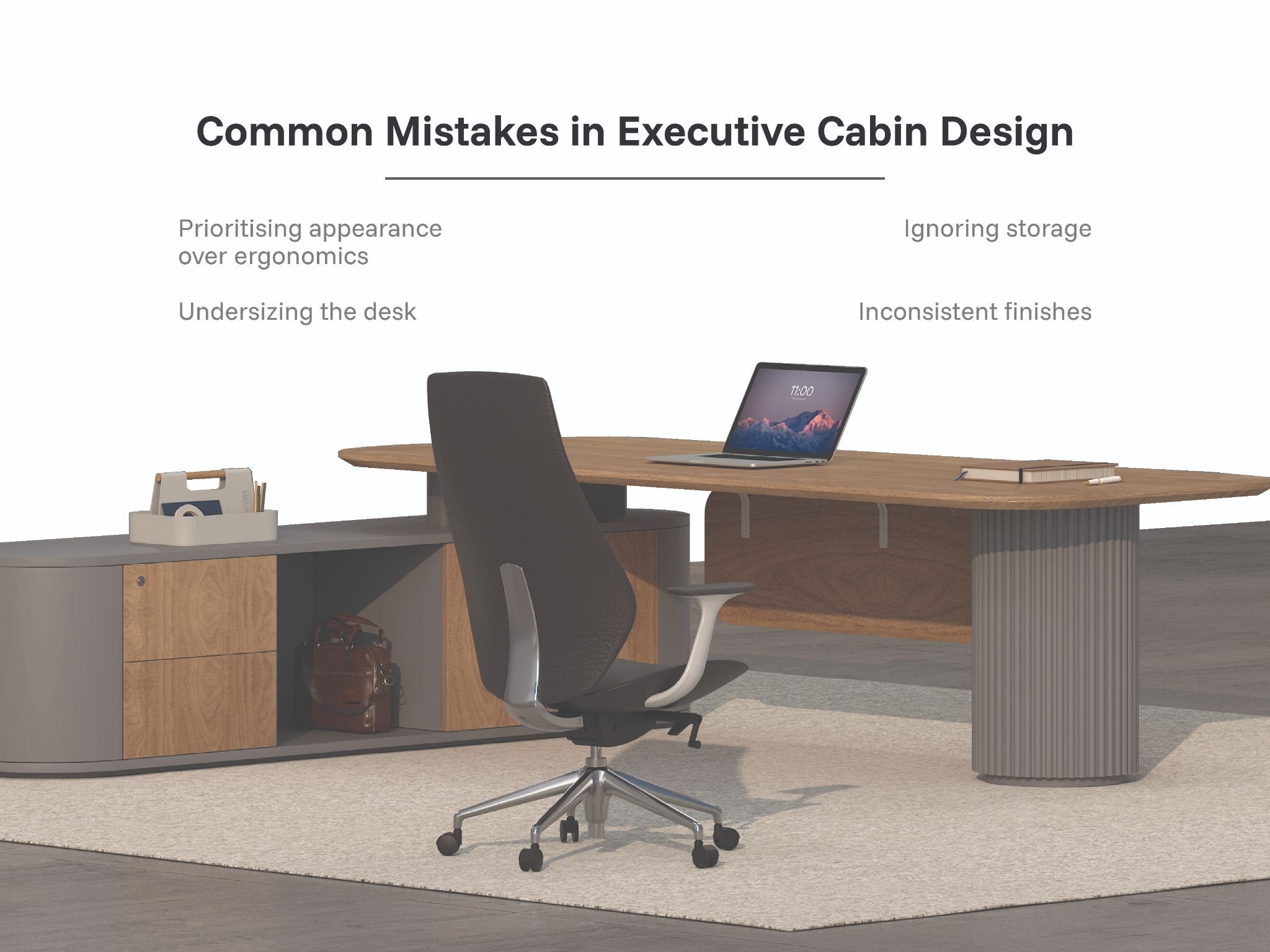
Prioritising appearance over ergonomics: Specifying a visually impressive chair that provides no lumbar support or adjustment. An executive who is uncomfortable by midday is not well-served by the aesthetic of their chair.
Undersizing the desk: A desk that is too small for the executive's daily work creates a cluttered surface and reduces the professional quality of the space. Always specify desk width based on the actual equipment and documents the occupant uses daily.
Ignoring storage: Cabins without adequate storage result in files and equipment accumulating on the desk surface and floor, undermining the professional appearance the cabin is intended to project.
Inconsistent finishes: Specifying furniture pieces from different manufacturers in different finishes, even when similar, creates a lack of visual cohesion that is immediately apparent to visitors. Always specify the full cabin as a coordinated set.
Frequently Asked Questions (FAQs)
These are the most common questions asked when planning executive cabin furniture for a corporate office.
Q1. What is the standard size of an executive cabin?
A standard executive cabin for a senior manager or director typically ranges from 120 to 200 square feet (11 to 18 square metres). This provides sufficient space for a full executive desk setup, visitor seating, and storage without feeling disproportionately large.
C-suite cabins such as MD or CEO offices are often larger, ranging from 200 to 300 square feet, to accommodate a separate meeting area with a table and chairs in addition to the primary desk setup.
Q2. What furniture is essential for an executive cabin?
The essential furniture pieces for a professional executive cabin are: an executive desk (1600mm to 2000mm wide), a high-back ergonomic executive chair, a credenza or rear storage unit, two visitor chairs, and at least one closed storage unit for files and personal items.
Supplementary pieces such as a side meeting table, open shelving, and a lamp add to the quality of the space but are not required for a functional baseline specification.
Q3. What is the best desk material for an executive cabin?
High-pressure laminate with edge banding is the most practical specification for corporate executive desks. It provides a premium visual surface in a wide range of finishes, is highly durable under daily commercial use, and is easy to maintain.
Veneer and solid wood finishes offer a higher visual premium but require more careful maintenance and carry significantly higher costs per unit. These are typically specified for top-tier executive spaces where the visual statement justifies the additional investment.
Q4. How should visitor chairs be specified for an executive cabin?
Visitor chairs for executive cabins should be specified in foam with fabric or PU leather upholstery, with a visual profile that complements the executive desk and chair. Fixed-height or minimally adjustable chairs are appropriate for visitor use, as they do not need the ergonomic range of a primary workstation chair.
Two visitor chairs positioned across the desk are standard for most cabin sizes. For cabins used frequently for group meetings, a small side table with four chairs provides a more appropriate setting for collaborative conversations.
Q5. Does AFC Furniture Solutions design and supply complete executive cabin setups?
Yes. AFC Furniture Solutions manufactures and supplies complete executive cabin furniture sets for corporate clients across India. Our range includes executive desks, high-back chairs, credenzas, visitor seating, storage units, and open shelving, all available in coordinated finishes for a cohesive cabin specification.
Contact the AFC Furniture Solutions team at +91 9999006933 or visit afcindia.in to discuss your executive cabin requirements and request a layout consultation.
Tips for Designing an Executive Cabin
- Tip 1: Always specify the full cabin as a coordinated furniture set from a single manufacturer. Consistent finishes, materials, and proportions across all pieces create a cohesive, professional result that mismatched individual pieces cannot achieve.
- Tip 2: Plan for cable management before the furniture is ordered. An executive desk with no provision for cable routing will have exposed cables running across the surface, which immediately undermines the professional appearance of the space.
- Tip 3: Do not underestimate storage requirements. A cabin that looks well-designed when empty becomes cluttered and unprofessional within weeks if insufficient storage was specified at the outset.
- Tip 4: Request a scaled layout drawing from your furniture supplier before confirming the order. A layout drawing confirms that all pieces fit the room with sufficient circulation space before any furniture is manufactured or delivered.
Bonus Points
- Bonus 1: AFC Furniture Solutions offers executive cabin layout planning as part of the furniture specification process. Our team can produce a scaled floor plan showing furniture placement before the order is confirmed.
- Bonus 2: All AFC Furniture Solutions executive cabin furniture is available in coordinated finish options, ensuring visual consistency across desks, storage units, and credenzas regardless of which pieces are specified.
- Bonus 3: AFC Furniture Solutions provides pan-India delivery and installation for executive cabin furniture orders. Contact our team at +91 9999006933 to discuss your cabin specification and timeline.
Conclusion
Designing a professional executive cabin with the right furniture requires careful decisions across the desk, chair, storage, visitor seating, and layout. Each piece contributes to the overall impression the cabin makes on everyone who enters it, and to the daily comfort and productivity of the person who works there.
AFC Furniture Solutions offers a complete range of executive cabin furniture designed for India's corporate environments, with coordinated finish options, layout planning support, and pan-India installation service.
Explore Other Popular Blogs

Let’s build together
Tell us about your project and we’ll help you plan, design, and deliver at scale.
.jpg)
.svg)