.svg)
How to Choose the Right Modular Office Furniture Near You
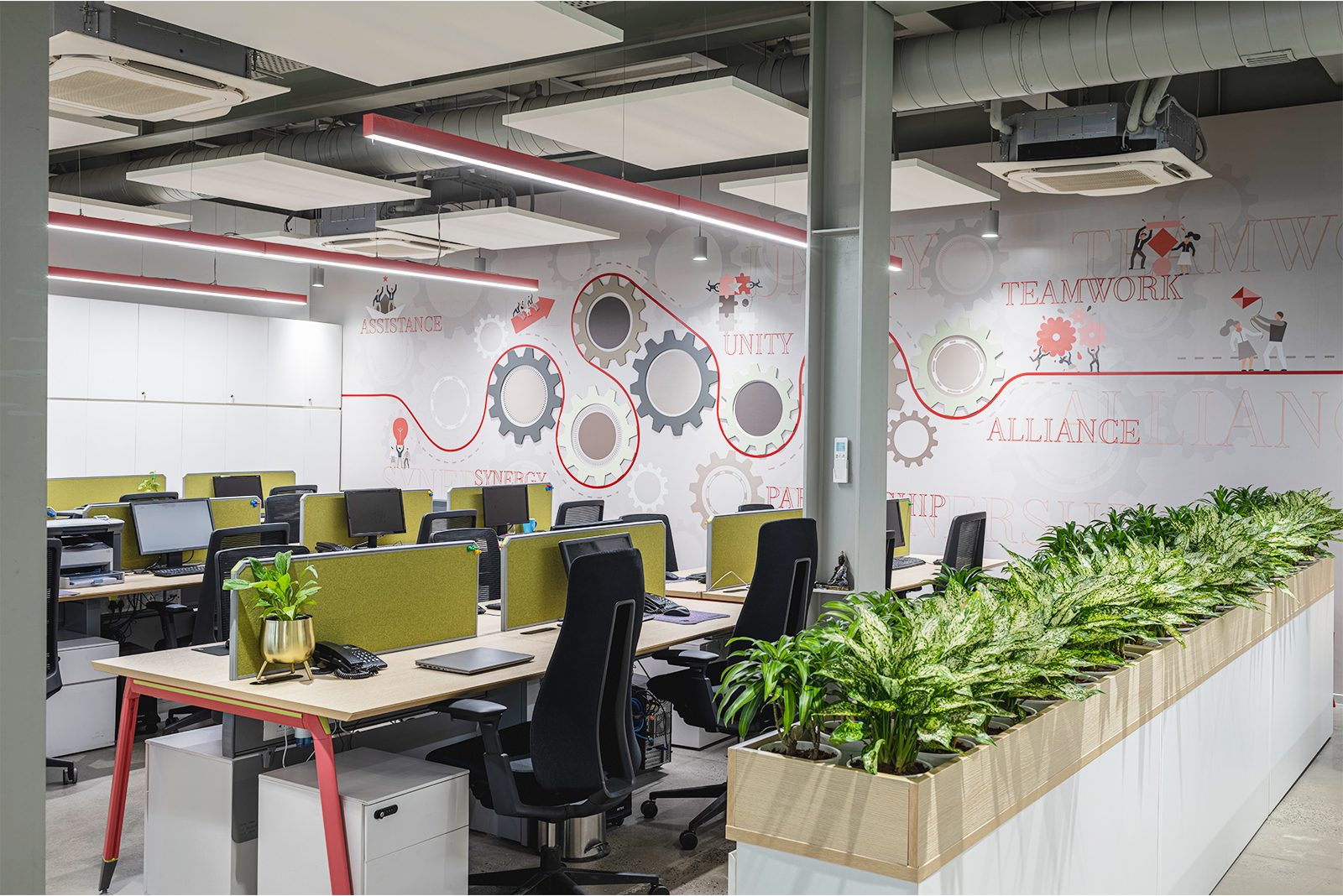
A practical expert guide to choosing modular office furniture covering layouts, materials, workstations, storage, and what to look for in a reliable local supplier.
Setting up an office is one of the most consequential decisions a business makes, not just financially, but in terms of the daily experience of every person who works there. Whether you are fitting out a new workspace for a small team or reconfiguring an established floor for a growing organization, the furniture you choose will shape how people work, collaborate, and feel every single day.
Modular office furniture has become the dominant choice for Indian businesses of all sizes, and for good reasons that go well beyond aesthetics. At AFC Solutions, we've been helping organisations across India make these decisions for over 15 years. This guide shares what we have learned about choosing the right modular furniture for your specific space, team, and budget.
What Is Modular Office Furniture, and Why Does It Matter?
The main feature of modular office furniture is that it consists of parts like worksurfaces, leg frames, storage pedestals, screen dividers, and cable management accessories that can be easily connected and rearranged to fit your changing needs.
This is a fundamental departure from traditional built-in carpentry, where furniture is constructed in place, fixed to the floor or walls, and effectively permanent. If your team grows, if you relocate, or if your working style evolves, built-in furniture becomes a liability. Modular workstation systems become an asset — they adapt.
The practical advantages are significant. Modular furniture can be installed in hours rather than days. It can be dismantled and relocated without damage when you move premises. Individual components can be replaced without replacing entire units. And because it is manufactured in controlled factory conditions to consistent specifications, it delivers predictable quality that site-built carpentry cannot match.
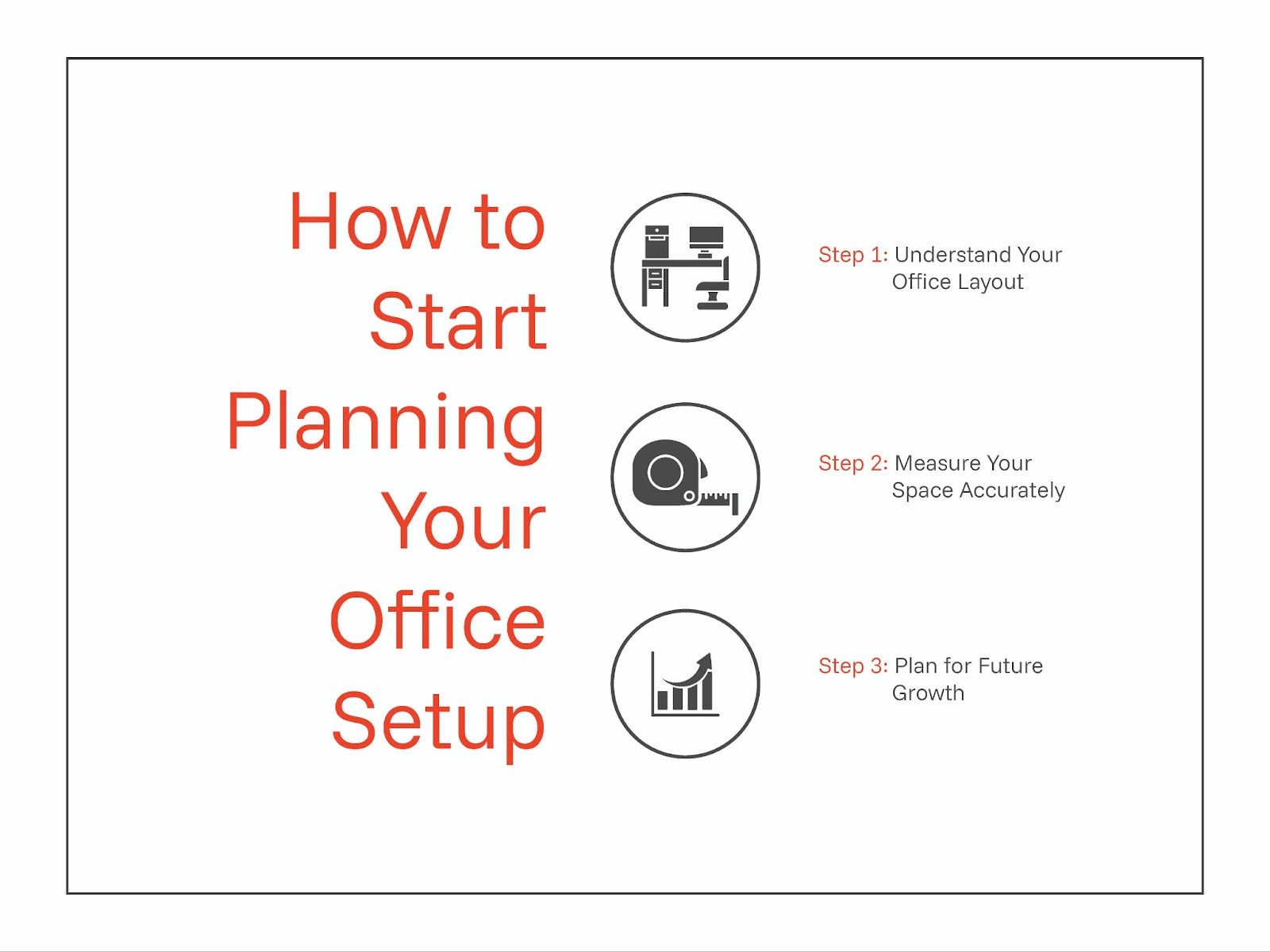
How to Start Planning Your Office Setup
The most common and costly mistake in office furniture procurement is purchasing before planning. The right furniture for the wrong layout delivers poor results regardless of its quality. Start with the space, not the product.
Step 1: Understand Your Office Layout
Before approaching any supplier, map your space on paper. Mark the positions of doors, windows, columns, and electrical sockets. Then consider how your team actually works:
An open-plan layout with continuous modular workstations arranged in clusters or rows suits teams that collaborate frequently and benefit from easy visual and verbal communication. It maximises the number of workspaces per square meter and creates an energetic, connected atmosphere.
Private cabin configurations using panel systems or full-height dividers to create enclosed individual spaces suit roles that require sustained concentration, frequent confidential conversations, or a senior professional context where separation from the open floor is appropriate.
Meeting rooms and breakout areas are necessary in almost every office regardless of the primary layout. Even in a fully open-plan environment, people need enclosed spaces for client meetings, sensitive discussions, and focused individual work.
Step 2: Measure Your Space Accurately
In modular furniture systems, dimensions matter precisely. A workstation that is two inches wider than anticipated can obstruct a fire exit or prevent a door from opening fully. Before speaking to any supplier, measure the length, width, and ceiling height of every room you intend to furnish. Note the positions and heights of every window and the location of every electrical socket and data point.
A reputable modular office furniture supplier will be able to use your measurements to produce a scaled floor plan often in 2D or 3D visualisation software showing exactly how the proposed furniture fits the space before any order is placed. This step eliminates the most common and expensive procurement errors.
Step 3: Plan for Future Growth
One of the most valuable characteristics of a well-designed modular workstation system is scalability. If you are a team of eight today but anticipate growth to twenty within two years, specifying a system that can be extended with matching components protects your initial investment and avoids the cost and disruption of a complete refurnish when headcount increases.
When evaluating systems, always ask whether additional units in the same configuration and finish will remain available from the same manufacturer over the next three to five years. Discontinuation of a product line mid-project is a more common problem than it should be.
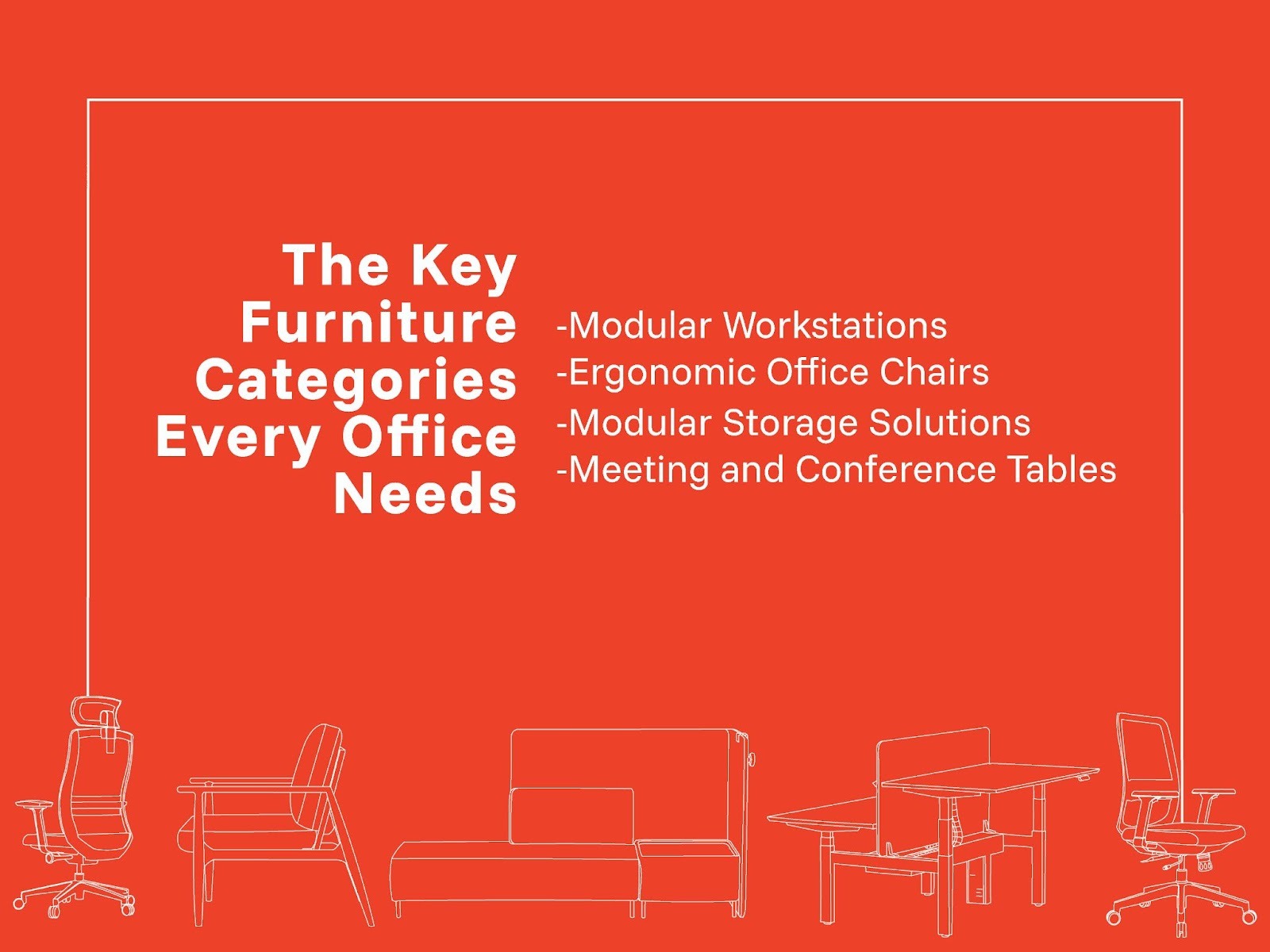
The Key Furniture Categories Every Office Needs
Modular Workstations
The workstation is the primary environment where productive work happens, and it deserves the most careful specification. A well-designed office workstation provides adequate surface area for the tasks being performed, a stable and appropriately sized leg structure, and integrated wire management channels, grommets, or under-surface cable trays that keep power and data cables completely out of sight.
Visible cabling across a workstation floor immediately reduces the perceived quality of the environment and creates a genuine trip hazard. Integrated cable management is not a luxury feature — it is a basic requirement of any professionally specified modular desk system.
AFC Solutions' Workstations collection covers the full range from the Height Adjustable Series for organisations prioritising employee health and movement to the Desking Series for clean open-plan environments and the Panel Series for spaces that need to balance openness with individual privacy.
Ergonomic Office Chairs
The chair is the most consequential individual purchase in any office furniture project, and it is the one where reducing specification most reliably creates downstream problems. A chair that causes back pain or neck strain is not saving money; it is generating a hidden daily cost in reduced focus, increased fatigue, and eventual health issues that affect both the individual and the organisation.
For most Indian office environments, mesh chairs are the practical first choice. The breathable mesh back allows continuous air circulation, which is a genuine comfort advantage across long working days in India's climate. Key specifications to verify are adjustable lumbar support, seat height range, armrest adjustability, and the quality of the gas lift mechanism.
Explore AFC Solutions' full Seating range covering mesh chairs, leather executive chairs, training chairs, and café chairs to find the right specification for each zone of your office.
Modular Storage Solutions
Even in predominantly digital working environments, physical storage needs persist; personal belongings, printed reference materials, stationery, and shared resources all require organised accommodation. The right approach is to specify storage that is proportional to actual need rather than aspirational and to integrate it into the workstation layout rather than treating it as a separate afterthought.
Under-desk pedestals are compact drawer units that sit beneath the work surface and handle personal items efficiently without consuming floor space. Locker banks are increasingly popular in offices where not everyone has a fixed assigned seat, providing secure personal storage in a format that suits flexible working patterns. Compactor storage systems serve organisations with significant physical file requirements and a footprint far smaller than conventional filing cabinets.
Meeting and Conference Tables
Every office, regardless of its primary working style, needs dedicated space for group discussion, client meetings, and collaborative work. For smaller offices, a round or square meeting table that seats four to six creates an informal but purposeful setting. For larger organisations, a long rectangular conference table with integrated power access sockets and USB ports built into a central power module allows participants to work through extended sessions without cable management becoming an issue.
The specification of the meeting table should reflect the seniority and formality of the meetings it will host. A client-facing boardroom warrants a different level of material quality and finish than an internal team huddle room.
Why Choosing a Local Office Furniture Supplier Makes a Difference
The decision to work with a local or regional modular furniture supplier rather than a distant one has practical implications that extend well beyond delivery logistics.
Reduced transit risk. Modular furniture components, particularly large work surfaces and glass elements, are vulnerable to damage in transit. Shorter delivery distances mean fewer handling events and meaningfully lower risk of components arriving damaged or misaligned.
In-person product evaluation. Photographs and specification sheets communicate some of what you need to know about a piece of furniture. The density of the foam, the smoothness of the drawer mechanism, the stability of the frame under load, and the tactile quality of the surface finish are things you can only assess by visiting a showroom and physically evaluating the product. A local supplier makes this straightforward; a distant one makes it impractical.
Responsive after-sales support. A drawer that stops closing properly three months after installation, a gas lift that begins to sink, or a castor that starts to scratch the floor are all issues that require a technician visit to resolve properly. Local suppliers can dispatch a technician quickly. Remote suppliers create a logistics problem that often goes unresolved for weeks.
What to Check Before Making a Purchase Decision
Approaching any supplier conversation with a structured checklist produces better outcomes and makes it easier to compare options fairly.
Board grade and edge treatment. For modular desk systems using engineered wood work surfaces, ask specifically about the board specification. BWR (Boiling Water Resistant) or BWP (Boiling Water Proof) grade boards are significantly more resistant to the humidity and moisture exposure that degrades cheaper materials in Indian conditions. PVC edge banding on all exposed board edges prevents chipping and moisture penetration at the most vulnerable points.
Warranty coverage and terms. A manufacturer confident in their product will back it with a meaningful warranty. For commercial-grade modular furniture, three to five years is a reasonable expectation. Verify what is specifically covered: the frame, the gas lift mechanism, the work surface finish, the storage hardware, and the process for making a warranty claim.
Customisation capability. Most offices have at least one awkward dimension: a structural column in an inconvenient position, a room that is not quite square, or a requirement for a specific finish that matches existing elements. A capable modular furniture supplier should be able to accommodate these requirements within their system without requiring entirely bespoke manufacturing.
Wire management specification. Please provide details on how power and data cables will be routed through the proposed workstation system. The answer tells you a great deal about the quality of the overall design. A well-engineered system will have a complete and considered answer. A poorly engineered one will not.
How Modular Furniture Delivers Long-Term Value
The economics of modular office furniture are frequently misunderstood. The relevant comparison is not the purchase price of a modular system against the purchase price of the cheapest available alternative; it is the total cost of ownership over ten years, accounting for replacement, maintenance, relocation, and the productivity impact of the working environment the furniture creates.
Factory manufacturing consistency eliminates the dimensional variation and quality unpredictability of site-built carpentry. Every component meets the same specification, which means the system performs consistently, and individual components can be replaced on a like-for-like basis when needed.
Relocatability is a meaningful financial asset for any growing business. When you move premises, as most growing businesses eventually do, modular furniture moves with you. The cost of relocating a modular workstation system is a small fraction of the cost of replacing it.
Resale value exists in ways that built-in furniture never can. A well-maintained modular office furniture system retains meaningful market value and can be sold or redeployed if your requirements change significantly.
Common Mistakes to Avoid
Prioritising the unit price over the total value.
The chair that costs 30% less than the ergonomically sound alternative will make that saving Back pain, reduced focus, and eventual replacement. The relevant calculation is always total cost over the expected service life, not purchase price in isolation.
Underspecifying walking space.
A common and significant error is trying to fit as many workstations as possible into a given floor area without adequate thought for circulation. There should be a minimum of three to four feet of clear walkway between rows of desks, enough for two people to pass comfortably and for evacuation routes to remain unobstructed.
Ignoring natural light direction.
The position of workstations relative to windows affects both comfort and screen visibility. Screens positioned directly facing a window suffer from glare that makes them difficult to read. Screens positioned with a window directly behind the user create backlight that makes the display appear dim. Workstations positioned perpendicular to windows — with natural light falling from the side provide the best balance of ambient light and screen visibility.
Skipping the site visit.
No specification document, product photograph, or virtual tour substitutes for physically visiting a showroom, sitting in the chairs, opening the drawer units, and evaluating the work surface finish in person. This step should be treated as non-negotiable for any significant furniture investment.
Different Working Styles, Different Furniture Needs
The right modular furniture configuration depends significantly on the nature of the work being done.
Technology and software companies typically require wide worksurfaces to accommodate dual monitors, robust wire management for extensive cabling, and layouts that support both focused individual work and spontaneous collaboration. Height-adjustable desks are increasingly standard in these environments.
Call centres and customer support operations benefit from compact, defined workspaces with acoustic screen dividers at appropriate heights to manage ambient noise. The density of seating relative to floor area is higher than in other office types, making efficient space planning particularly important.
Creative agencies and design studios often favour long communal tables and open-plan layouts that encourage visual communication and the spontaneous sharing of work. Fixed assigned seating is less common; flexible hot-desking configurations with shared storage are more appropriate.
Legal, financial, and advisory firms have significant physical file and document storage requirements and frequently host confidential client meetings. Their furniture specifications typically include more enclosed individual workspaces, more storage per person, and higher-specification meeting room furniture than other office types.
The Installation Process: What to Expect
Understanding the installation process helps you plan your fit-out timeline and avoid disruption to ongoing operations. visit;
A professional modular furniture installation begins with a site visit a technician visits the space to take final measurements and confirm that the proposed layout remains viable given actual site conditions. This step catches discrepancies between the planned layout and the real space before manufacturing begins.
Design approval follows: the supplier presents a finalised floor plan, typically in 2D and 3D visualisations, for your sign-off before production commences. Manufacturing for a standard modular workstation order typically takes one to three weeks depending on specification and volume. Delivery brings the components to the site in protective packaging. Installation by a professional team typically takes one to two days for a complete office floor, followed by cleaning and protective covering removal.
Always obtain a confirmed delivery and installation date in writing before any order is placed, and ensure your workspace is clear and accessible for the installation team on the agreed date.
Maintenance Tips to Protect Your Investment
Worksurface care.
Clean laminate work surfaces with a lightly damp microfibre cloth. Avoid harsh chemical cleaners and abrasive materials, which progressively dull the laminate finish. Wipe spills immediately; standing liquid on an unsealed edge can cause swelling and delamination over time.
Chair maintenance.
For mesh chairs, use a soft brush or low-suction vacuum attachment to remove dust from the mesh periodically. Verify and tighten any loose adjustment mechanisms at regular intervals. For leather chairs, use a dedicated leather conditioner every few months to prevent surface cracking and maintain the material's appearance.
Moving furniture.
When repositioning modular desk components, always lift rather than drag. Dragging places lateral stress on the leg joints and floor levellers and scratches flooring, particularly polished stone and hardwood surfaces. For significant reconfigurations, engage the supplier's installation team rather than attempting to dismantle and reassemble complex systems without the appropriate tools.
Frequently Asked Questions
Q1. What is the difference between a manufacturer and a dealer, and which should I prefer?
A manufacturer produces furniture in their facility and controls the quality of every component. A dealer sells products sourced from various manufacturers, often with limited ability to address quality issues or provide meaningful after-sales support. Working with a supplier who manufactures directly or has a direct and verifiable relationship with the manufacturer gives you better transparency on materials, more reliable warranty support, and more consistent product quality.
Q2. Can modular office furniture be used effectively in a home office?
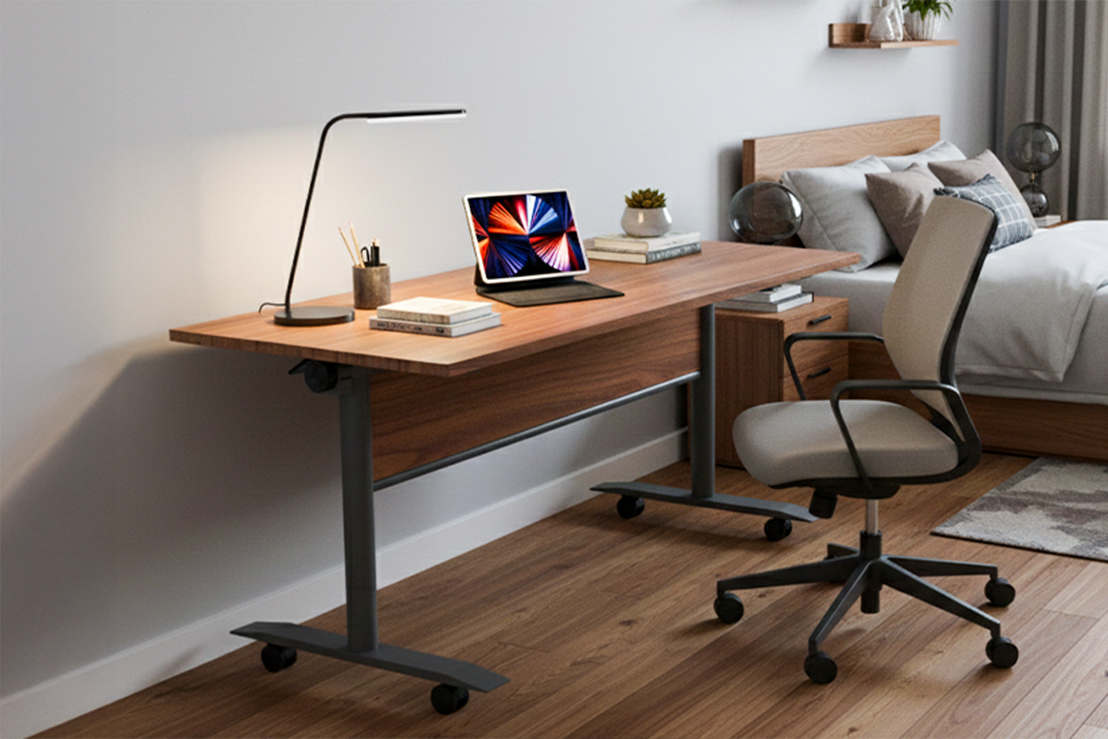
Yes. The scalability that makes modular systems valuable in large commercial offices applies equally to smaller home office setups. A single modular workstation with integrated storage can be configured to fit a defined corner or alcove and extended later if needed, without requiring any permanent construction.
Q3. Should I attempt to assemble modular furniture myself?
Single-user items, like a chair or a small desk, can typically be self-assembled with reasonable confidence. Complete modular workstation systems for multiple users involve the precise alignment, levelling, and interconnection of components that benefit significantly from professional installation. Incorrectly assembled workstation systems can be structurally unstable and difficult to correct after the fact.
Q4. What finishing colours work best for Indian offices?
White, light grey, and warm oak tones are the most consistently effective choices for Indian offices. They make spaces feel larger and brighter, work well with a wide range of interior colour schemes, show age, and wear more gracefully than darker finishes. Accent colours in chair upholstery, screen dividers, or breakout furniture add personality without committing the primary surfaces to a colour that may date quickly.
Q5. My office floor is uneven. Will modular furniture still work?
Yes. Most modular desk systems include adjustable levelling feet at the base of each leg small plastic feet that can be extended or retracted to compensate for floor irregularities. A properly installed modular workstation should be perfectly level and stable regardless of minor floor variation.
Q6. How long does it take from order to installation?
For standard specifications from stock, delivery and installation can often be completed within two to five working days. For custom specifications, specific finishes, non-standard dimensions, or large volumes, lead times of three to four weeks are typical. Please confirm the lead time in writing as part of your order confirmation.
Final Thoughts
The right modular office furniture does more than fill a space. It creates conditions in which your team can work effectively with adequate space, good ergonomic support, organised storage, and a professional environment that reflects well on your organization.
The investment is significant, and it deserves the same careful evaluation you would apply to any major business decision. Take the time to understand your space, specify thoughtfully for your team's actual working needs, and choose a supplier with the manufacturing capability, local presence, and after-sales commitment to support you over the full life of the furniture.
AFC Solutions has been helping Indian businesses make these decisions for over 15 years, with an in-house manufacturing facility producing up to 18,000 workstations per month and Experience Centres across Noida, Gurugram, Mumbai, Pune, Bengaluru, Hyderabad, and Chennai where you can evaluate our full range in person.
Contact Us
📧 Email: customercare@afcindia.in
📞 Phone: +91 9999006933
🌐 Website: www.afcindia.in
Head Office: Plot No. 33, Ecotech 12, Greater Noida West, UP – 201310
Experience Centres: Noida · Gurugram · Mumbai · Bengaluru · Hyderabad· Punei
Explore Other Popular Blogs


Let’s build together
Tell us about your project and we’ll help you plan, design, and deliver at scale.
.jpg)
.svg)