.svg)
Educational Furniture for Libraries, Hostels and Auditoriums: What You Need to Know
A practical guide to choosing the right educational furniture for school libraries, student hostels, and auditoriums. Expert guidance from AFC Furniture Solutions.
Why Does Furniture Matter Beyond the Classroom?
When most school administrators think about furniture procurement, classrooms come to mind first. Libraries, hostels, and auditoriums are often treated as secondary considerations, furnished with whatever remains in the budget after the main classrooms are addressed.
This approach creates spaces that feel incomplete, uncomfortable, and unworthy of the time students spend in them. And students spend a great deal of time in these spaces.
Getting the furniture right across every institutional space, not just the classroom, is one of the most impactful investments a school, college, or university can make for the daily experience of its students.
How Does the Right Furniture Support Learning Outside Classrooms?
A library with comfortable, well-proportioned reading tables encourages students to spend more time reading and learning independently. A hostel room with a properly specified study desk supports productive evening study rather than turning it into a physical strain. Similarly, an auditorium equipped with quality seating keeps students physically comfortable during long assemblies, examinations, and cultural programmes, directly influencing their attentiveness, engagement, and overall experience throughout the event.
The furniture in each of these spaces supports the purpose of the space and or quietly works against it. The difference is felt by every student who uses the institution every single day.
What Happens When Institutional Furniture Is Poorly Specified?
Poorly specified library chairs cause discomfort during extended reading sessions, which reduces the time students voluntarily spend in the library. Over time, this shapes a culture of avoidance rather than engagement with independent study.
Hostel furniture that does not provide adequate study space forces students to study on their beds or in common areas, which is neither comfortable nor conducive to focused work.
Auditorium seating that is structurally inadequate or visually worn creates a poor impression at the institution's most public events, including annual days, parent meetings, and examination sessions.
What Makes Good School Library Furniture?
What Does a Well-Designed Library Need?
A well-designed school or college library serves multiple types of users simultaneously. Some students come for quiet individual study; others come for group research projects.
The furniture should support everyone without a common pattern disrupting the focus for individual or collective study or group readings. Individual study carrels provide focused personal space. Group reading tables accommodate collaborative research. Comfortable lounge seating near the shelves invites browsing and casual reading.
Mixing these configurations thoughtfully within the available floor area creates a library that feels genuinely useful and welcoming to the full range of students who use it.
What Should Be the Specifications for Library Reading Tables and Chairs?
Library reading tables should provide enough surface area for an open textbook, a notebook, and writing materials simultaneously. A surface that is too small forces students to stack materials awkwardly and creates the kind of minor physical frustration that shortens study sessions.
The chair paired with a library reading table needs to support extended sitting without causing discomfort. A student who is uncomfortable will not voluntarily spend two hours in the library, regardless of how good the collection is.
For secondary school and college libraries, chairs with basic lumbar contouring and appropriate seat depth for adult or near-adult proportions are the right specification. For primary school libraries, age-appropriate sizing is the non-negotiable priority.
What Should Be The Library Bookshelf Structure?
Library bookshelves must be structurally stable under the sustained weight of a full book collection. A shelf that bows or wobbles is both a safety risk and a visual signal of poor institutional quality.
The height of the shelving should match the age group using the library. In a primary school library, shelves above a child's eye level make independent browsing impossible and defeat the purpose of an accessible collection.
Steel shelving with adjustable shelf heights is the most practical specification for Indian institutional libraries. It handles weight without bowing, resists termite damage, and allows the shelf configuration to be adjusted as the collection grows and changes over time.
Tip: When planning library furniture for a new school building, always allocate more floor area to seating than seems immediately necessary. Libraries that feel spacious and comfortable are used more frequently. A crowded library with insufficient seating quickly develops a reputation as a place to avoid rather than a place to learn.
How to Choose the Right Student Hostel Furniture?
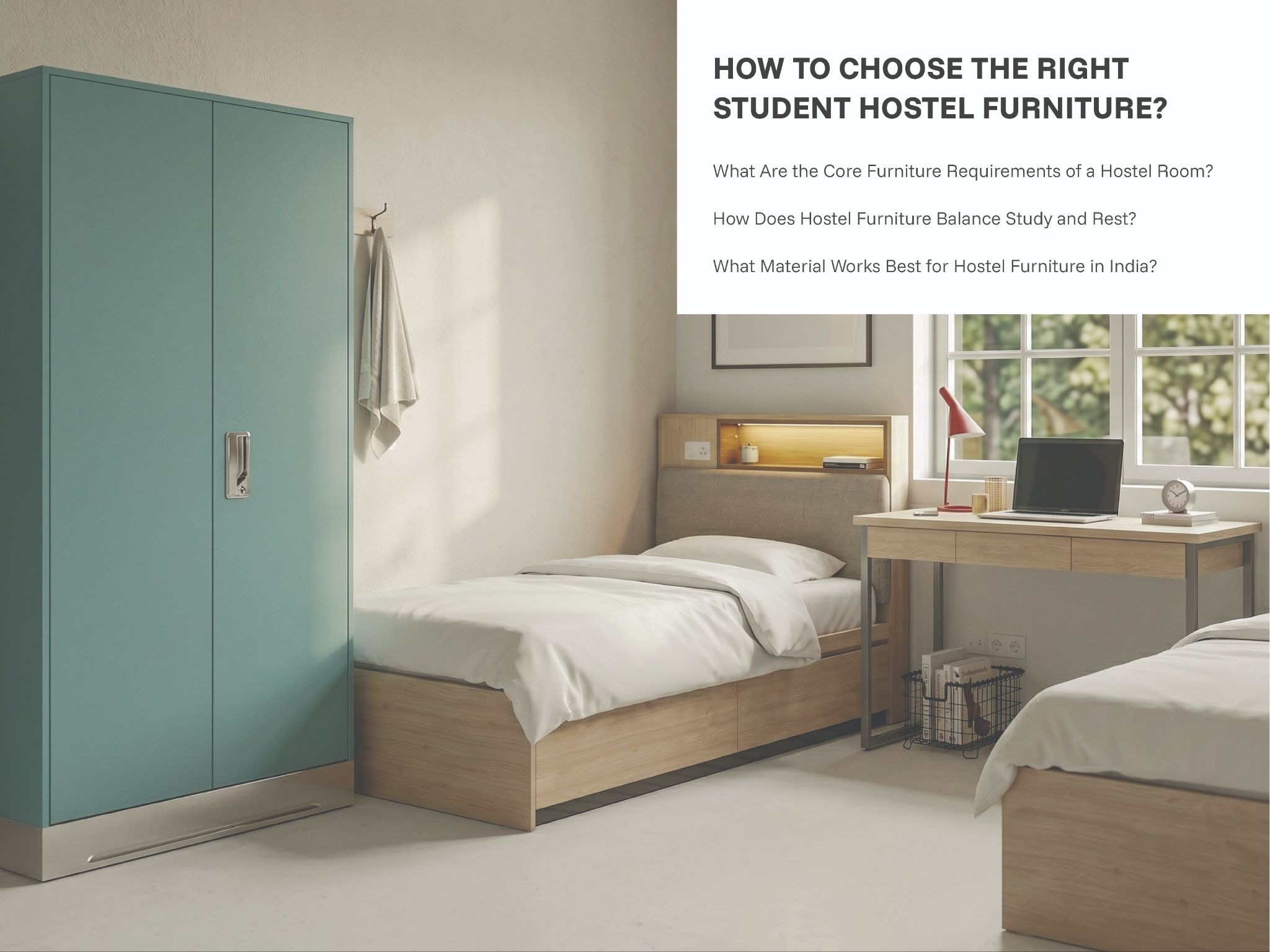
What Are the Furniture Requirements of a Hostel Room?
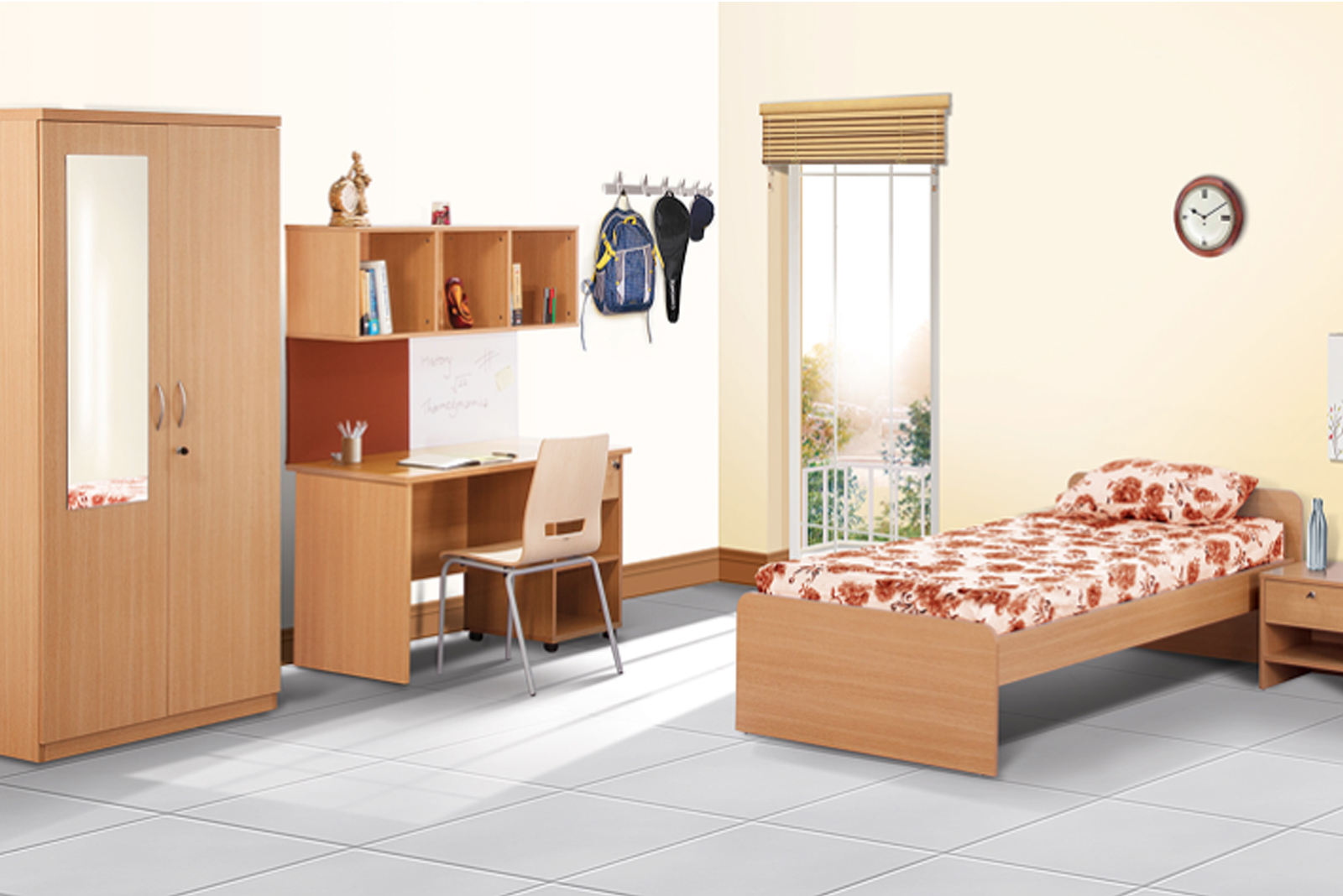
A student hostel room must serve as a sleeping space, a study space, and a personal storage space within a very limited floor area. Every piece of furniture must justify its presence in terms of both function and floor footprint.
The core requirements are a structurally sound bed with adequate under-bed storage, a study desk with sufficient surface area for a laptop and reference materials simultaneously, a wardrobe for clothing and personal belongings, and a chair suited to extended study sessions.
Every item should be specified with the assumption that it will be used intensively by successive student cohorts across many academic years, not just by a single occupant in a residential context.
How Does Hostel Furniture Balance Study and Rest?
The challenge of hostel furniture design is that the same small room needs to support very different activities. Sleeping, studying, and personal organisation all require different physical setups and the furniture must accommodate all three without any one compromising the others.
Beds with integrated storage drawers beneath the frame free up floor area that would otherwise be occupied by separate storage units. This recovered floor space becomes available for study chair movement and general room circulation.
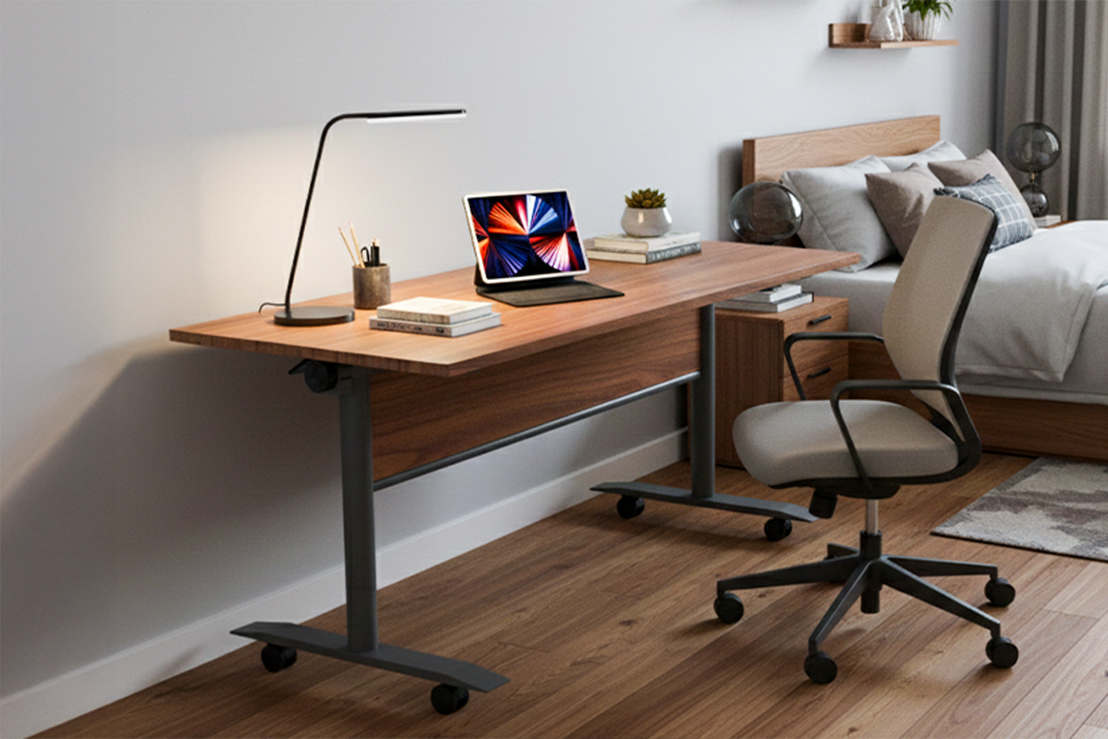
A study desk positioned near the room's natural light source, with adequate surface area and a nearby power socket, makes the study zone genuinely functional rather than a nominal provision that students end up avoiding.
What Material Works Best for Hostel Furniture in India?
For hostel beds and storage units, a combination of powder-coated steel frames and pre-laminated board surfaces is the most practical specification for Indian conditions. Steel resists termite damage and maintains its structural integrity across years of heavy institutional use.
Pre-laminated board with PVC edge banding on all exposed edges resists the moisture and humidity that can degrade cheaper board materials in many Indian hostel environments, particularly in coastal cities and regions with high seasonal humidity.
Avoid purely wooden furniture for hostel applications in India. The termite risk and moisture sensitivity of solid wood make it a poor long-term investment in a shared institutional environment.
Bonus Point: For hostel rooms that accommodate two students, specify bunk beds with a study desk and wardrobe integrated into the same unit frame. This single-frame configuration uses floor space far more efficiently than separate pieces and creates a more organised, less cluttered room environment that directly benefits the students living in it.
What Should You Look for in Auditorium Seating?
What Makes Auditorium Seating Comfortable for Long Sessions?
School and college auditoriums host events that can run for two,three, or more hours, including annual day programmes, examinations, cultural performances, and guest lectures. The seating must support comfortable sitting across these durations without causing restlessness that disrupts both the audience and the event.
A padded seat and backrest in a fabric or leatherette finish is the minimum comfort specification for auditorium chairs intended for extended use. Bare plastic seats are appropriate only for very short-duration settings.
The seat depth and backrest height should match the primary age group using the auditorium. University auditorium seating requires adult proportions. School auditorium seating used primarily by younger students benefits from slightly different dimensional specifications.
What Safety and Structural Features Matter in Auditorium Chairs?
The folding mechanism is the most frequently used moving component in any auditorium chair and the one most likely to require maintenance over time. It should operate smoothly and quietly, with a controlled return that does not create a sharp noise when the seat folds back up.
The chair frame should be constructed from powder-coated steel that remains structurally sound under the sustained load of many successive occupants across years of daily institutional use. A frame that flexes or develops instability under normal use is a safety concern in a high-occupancy public space.
Row connections between adjacent chairs are important for auditorium stability. Properly connected rows are significantly more resistant to tipping and movement than individual freestanding chairs placed in rows, which is a meaningful safety consideration in any occupied auditorium.
How Does Auditorium Seating Affect the Overall Experience?
The auditorium is the most publicly visible space in any educational institution. It hosts the events that parents, guests, and the wider community attend, and it creates the impressions that shape external perceptions of the institution's quality and values.
Worn, visually tired, or structurally compromised seating communicates institutional decline at precisely the moments when the school or college is most visible to the community it serves.
Quality auditorium seating that looks professional, functions reliably, and remains comfortable throughout long events communicates the opposite. It tells every visitor that the institution invests in the experience of the people who use it.
How to Plan Furniture for Each Space in an Educational Institution?
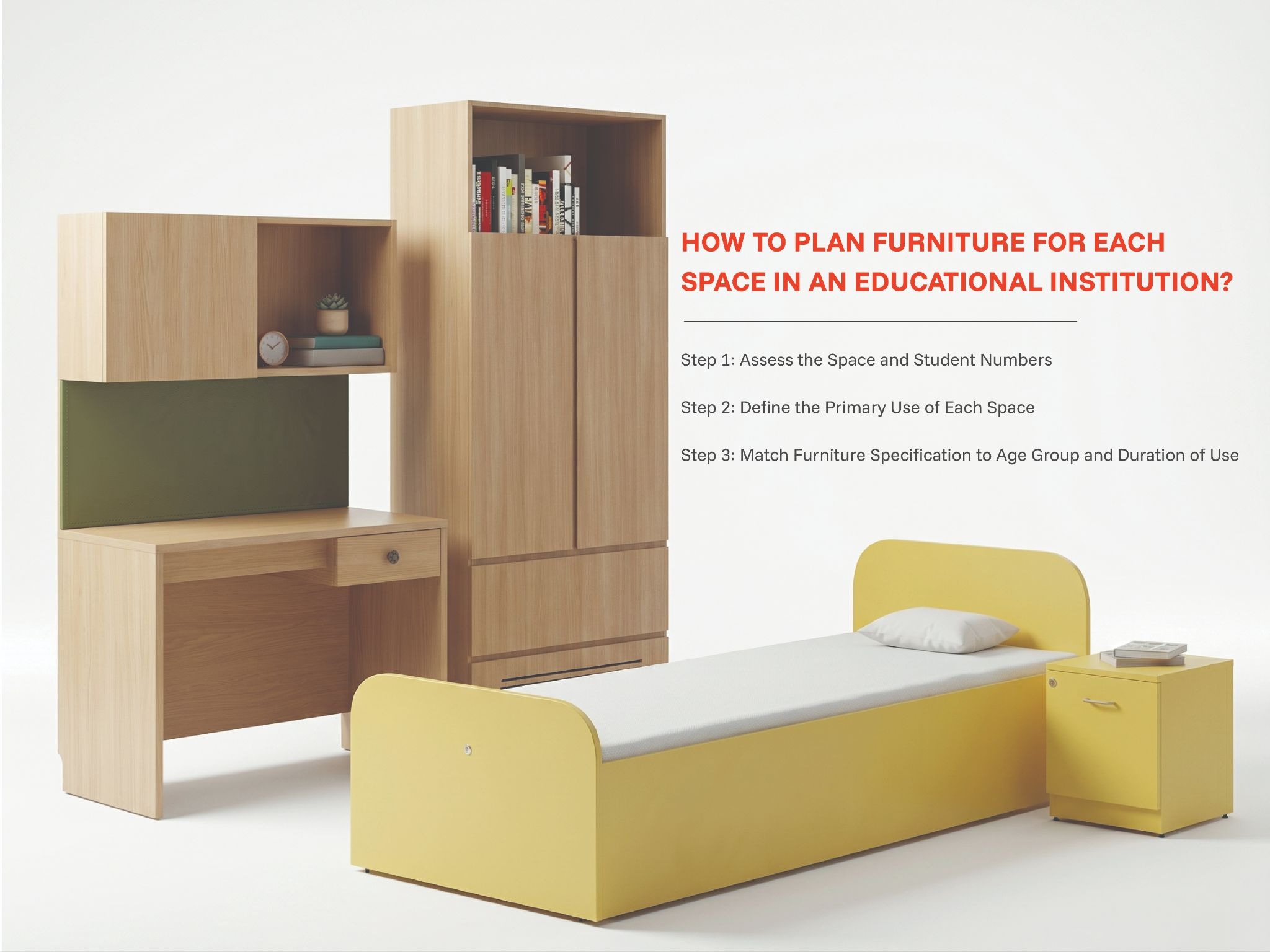
Step 1: Assess the Space and Student Numbers
Begin with accurate measurements of every space and a clear count of the number of students each space needs to serve. Library capacity, hostel room allocations, and auditorium seating requirements all flow from these baseline figures.
Do not plan for current numbers only. Build in a reasonable growth allowance that accounts for the institution's expected enrolment trajectory over the next five years. Furniture that becomes inadequate within two years of installation is a planning failure that could have been avoided.
Step 2: Define the Primary Use of Each Space
Every space serves a primary purpose, and the furniture specification should reflect that purpose clearly. A library primarily serves independent study. A hostel room primarily serves a combination of rest and study. An auditorium primarily serves seated audience.
Secondary uses matter too, but should not drive the primary specification. A library that also occasionally hosts small group discussions is primarily a study space and should be furnished accordingly, with group seating as a secondary provision rather than the dominant configuration.
Step 3: Match Furniture Specification to Age Group and Duration of Use
The physical dimensions and ergonomic requirements of a ten-year-old using a primary school library and a twenty-year-old using a university reading room are fundamentally different. The furniture specification must reflect this.
Duration of use is equally important. Furniture used for fifteen minutes a day in a secondary space can be specified at a lower comfort standard than furniture used for two to three hours daily in a primary study or rest space.
What to Check Before Buying Educational Furniture in India?
Material Quality and Safety Standards
For any furniture used by children, all edges must be fully rounded with no exposed sharp metal or plastic corners. This applies to library tables, hostel desks, auditorium chair arms, and every other surface that students contact regularly.
BWR grade engineered wood with PVC edge banding is the correct worksurface specification for Indian institutional environments. It handles humidity far better than standard MDF and resists the daily wear of intensive shared use more reliably than cheaper alternatives.
Powder-coated steel frames across all furniture categories provide the structural strength and surface durability that institutional daily use demands. Always verify the frame specification with any supplier before placing a significant order.
Durability for Institutional Use
Institutional furniture is not used by one person occasionally. It is used by many people intensively, every day, for many years. The durability standard required is significantly higher than that of classroom, library, conference room furniture and meaningfully higher than standard office furniture in many cases.
Ask any prospective supplier specifically about the expected service life of the products you are considering under institutional daily use conditions. A manufacturer confident in their products will answer this question clearly and back it with a warranty that reflects their confidence.
Commercial-grade institutional furniture from an established manufacturer should deliver ten to fifteen years of reliable daily use under normal conditions. Products that cannot meet this standard are not suitable for institutional procurement, regardless of their upfront price advantage.
Customisation and Brand Alignment
Every educational institution has its own identity, colour palette, and visual standards. The furniture across every space should reflect this coherently rather than looking like a collection of unrelated procurement decisions made at different times.
A quality institutional furniture supplier should offer frame colour options, worksurface finish choices, and upholstery colour selections that allow the furniture to align with the institution's visual identity across all spaces.
Warranty and After-Sales Support
For large institutional orders covering libraries, hostels, and auditoriums simultaneously, the warranty terms and after-sales support quality are as important as the product specification itself.
A warranty of three to five years covering all major structural components is a minimum reasonable expectation for institutional furniture from a reputable manufacturer. Verify what the warranty covers in practice, including which components are included and what the claims process involves.
How AFC Furniture Solutions Supports Educational Institutions Across India?
What Educational Furniture Does AFC Offer?
AFC Furniture Solutions offers a complete range of institutional furniture specifically designed for the educational furniture requirements of Indian schools, colleges, and universities.
The Library range covers reading tables in multiple configurations, ergonomic library chairs suited to extended study sessions, and steel bookshelving systems with adjustable shelf heights appropriate for primary through university-level collections.
The Hostel range provides bed frames with integrated under-bed storage, study desks sized for laptop and reference material use simultaneously, wardrobes in compact configurations suited to standard hostel room dimensions, and durable study chairs for evening study sessions.
The Auditorium range delivers padded fixed seating with smooth folding mechanisms, powder-coated steel frames, and upholstery options in fabric and leatherette suited to the public-facing context of school and college assembly spaces.
Explore the full AFC Furniture Solutions Educational furniture range covering library, hostel, and auditorium solutions for institutions across India.
What Quality Standards Back AFC Educational Products?
AFC Furniture Solutions holds BIFMA Level 3 certification, the highest internationally recognised standard for furniture quality, safety, and sustainability performance. Every product in the educational range is manufactured at the Greater Noida facility and tested to BIFMA-compliant standards.
All materials used across the educational range meet verified safety standards appropriate for institutional environments occupied by children and young people, including non-toxic powder-coat finishes and low-emission board materials.
You can also explore the AFC Furniture Solutions Library furniture range specifically for reading tables, library chairs, and bookshelving options designed for Indian school and college library environments.
Frequently Asked Questions
Q1. What is the most important furniture specification for a school library?
Comfort for extended sitting is the single most important factor. A student who is uncomfortable will not voluntarily spend time in the library regardless of how good the collection is. Reading chairs with appropriate seat height and basic lumbar support for the intended age group are the non-negotiable priority.
Q2. What type of bed is best for student hostels in India?
A steel-framed bed with integrated under-bed storage drawers is the most practical specification for Indian student hostels. Steel resists termite damage, handles institutional daily use reliably, and the integrated storage maximises the usable space within a small hostel room.
Q3. How many seats should a school auditorium have?
The auditorium should seat at least the largest single student cohort that regularly uses it, typically the full secondary school student body for most Indian schools. Build in a ten to fifteen percent additional capacity for staff, guests, and parent attendance at public events.
Q4. Can library furniture be used in hostel common rooms?
Some overlap is possible, particularly reading tables and chairs. However, it is better to specify furniture for the primary use of each space. Common room furniture benefits from slightly more relaxed, comfortable specifications than library study furniture, which is optimised for focused individual work.
Q5. How long should institutional educational furniture last?
Commercial-grade institutional furniture from a reputable manufacturer should deliver ten to fifteen years of reliable daily use under normal conditions. This assumes correct material specification for the Indian institutional environment, regular maintenance, and prompt repair of minor issues before they develop into structural failures.
Q6. Can educational furniture be customised to match the school's colours?
Yes. AFC Furniture Solutions offers customisation across frame colours, worksurface finishes, and upholstery options to align with institutional brand guidelines and interior design requirements across all educational furniture categories.
Final Thoughts
Libraries, hostels, and auditoriums are not secondary spaces in an educational institution. They are the environments where students study independently, rest and recover, and gather as a community for the events that define institutional life.
Getting the furniture right in each of these spaces is a direct investment in the quality of the student experience that the institution provides. It shapes how students feel about where they learn, whether they choose to use the spaces available to them, and the impression the institution makes on everyone who visits.
AFC Furniture Solutions has been designing and supplying institutional furniture for schools, colleges, and universities across India for over 15 years, with BIFMA Level 3 certification and a complete range covering every educational space.
Explore Other Popular Blogs

Let’s build together
Tell us about your project and we’ll help you plan, design, and deliver at scale.
.jpg)
.svg)