.svg)
How We Helped a Corporate Office Get a Complete Modular Office Furniture Setup: A Case Study
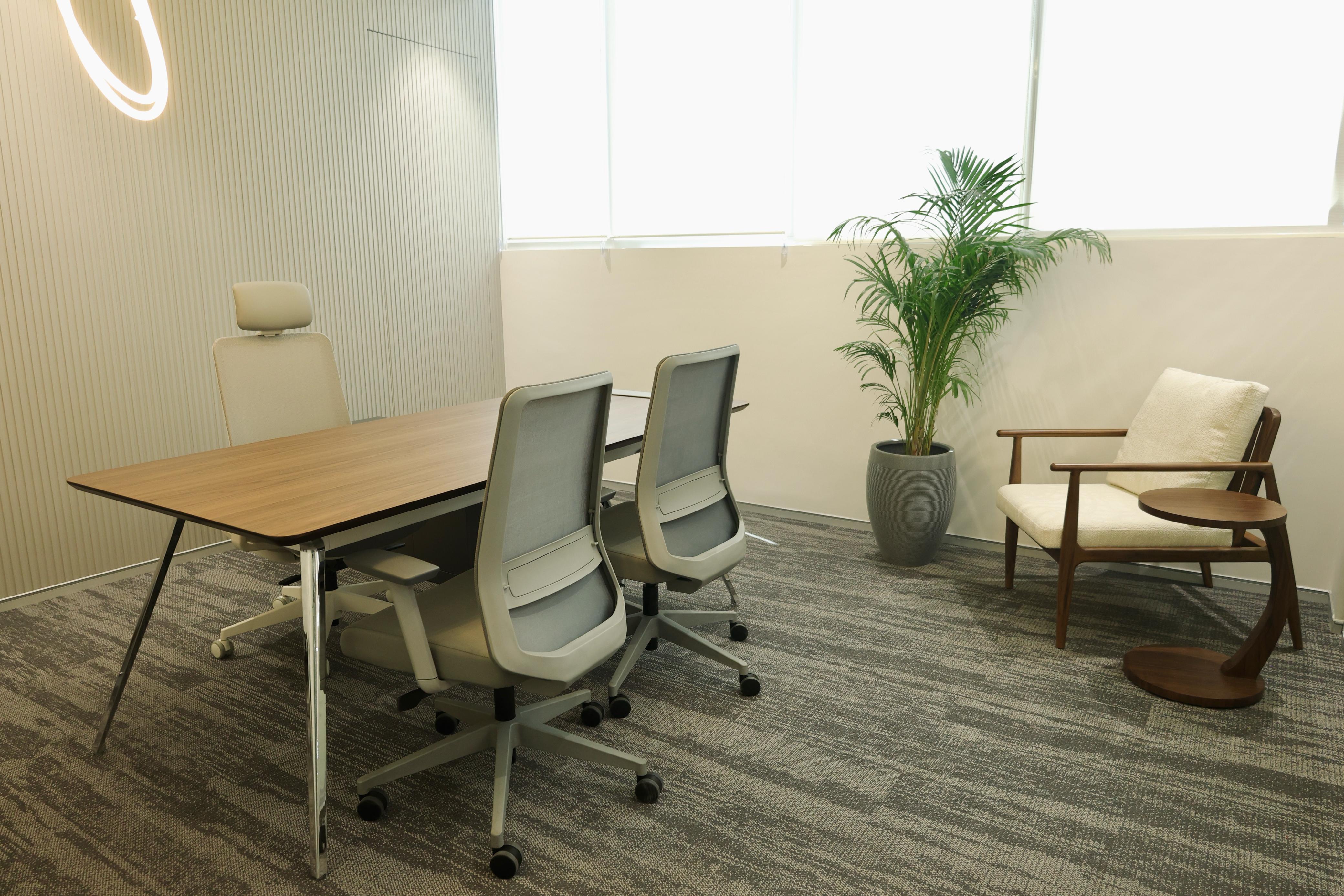
Read how AFC Furniture Solutions helped a corporate office achieve a complete modular office furniture setup. A practical case study covering planning, installation, and results.
About the Client and the Challenge
Who Was the Client?
The client is a mid-sized technology services company based in Delhi NCR with a growing team of approximately 120 employees across two floors of a commercial office building in Noida.
The organisation had been operating from the same premises for four years. During that time, the team had grown from 40 to 120 people, with furniture added incrementally as headcount increased rather than planned as a cohesive system.
The result was a workspace that had grown organically but not strategically, and the operational and environmental consequences of that approach had become impossible to ignore.
What Problems Were They Facing?
The most visible problem was visual inconsistency. Because furniture had been sourced from multiple suppliers over four years, the office had no coherent aesthetic. Desks of different heights, chairs in different styles, and storage units of varying colours and finishes made the space look disorganised and unprofessional.
The more operationally significant problem was spatial inefficiency. Early furniture purchases had used a simple open-desk configuration that made sense for a team of forty. For a team of 120, the same configuration was cramped, noisy, and insufficient for the organisation's current working needs.
There was no dedicated breakout seating, no structured storage system, and the two meeting rooms had been provisionally furnished rather than properly specified, creating an environment that was inadequate for client meetings and internal reviews.
What Were Their Key Requirements?
The client had four clear requirements when they approached AFC Furniture Solutions. They needed a complete modular office furniture solution that would cover every zone of both floors from a single supplier.
They required a scalable system that could accommodate further team growth to 150 or 160 people within the next eighteen months without requiring a second complete fit-out.
They needed the installation to be completed over a single weekend to minimise disruption to their ongoing operations. The team was working on active client projects and could not afford extended operational downtime.
Finally, they required a consistent, professional aesthetic across both floors that would reflect the quality of the organisation and create a positive impression on the technology clients they regularly hosted for meetings.
Why Did the Client Choose Modular Office Furniture?
What Made Modular the Right Solution?
The client had initially considered a custom-built fit-out managed by an interior contractor. After receiving the proposal, they found that the timeline was eight weeks of on-site construction work, the cost was significantly higher than a modular alternative, and the result would be permanent furniture that could not be extended or relocated.
Given their growth trajectory and the realistic possibility of a premises change within three to five years, a permanent custom-built solution carried a level of inflexibility and sunk cost risk that was not acceptable to the management team.
Modular office furniture addressed all three concerns simultaneously. It offered a faster and less disruptive installation, a lower total cost of ownership over the furniture's lifecycle, and the scalability and relocatability that the organisation's growth plans required.
Why Did They Choose AFC Furniture Solutions?
The client evaluated three modular furniture suppliers before selecting AFC Furniture Solutions. The deciding factors were in-house manufacturing capability, BIFMA Level 3 certification, and the ability to supply every furniture category required for the complete fit-out from a single source with the fastest delivery timeline.
They also visited the AFC Furniture Solutions experience centre in Noida, where they could physically evaluate the workstations, chairs, storage units, and soft seating they were considering specifying. This in-person evaluation confirmed the quality and finish consistency across the range.
The AFC Furniture Solutions workspace consultant assigned to the project produced a scaled 3D floor plan within three working days of the initial site visit, which gave the client a clear and detailed visualisation of the proposed layout before any order was placed.
How Did We Plan the Complete Office Furniture Setup?
Step 1: Understanding the Space and Team Structure
The AFC Furniture Solutions workspace consultant began with a full site survey of both floors, measuring every room precisely and documenting the positions of all structural columns, electrical sockets, data points, fire exits, and natural light sources.
Equally important was the team structure analysis. The client's 120 employees were divided across several functions with very different working styles. The technology and development teams worked in long, concentrated sessions with minimal interruption. The sales and client success teams communicated frequently and needed an open, accessible layout.
Understanding these distinctions was the foundation of a furniture specification that would genuinely serve each team rather than applying a single compromise configuration across the entire floor.
Step 2: Creating the Floor Plan and Layout
Using the site measurements and team structure data, the AFC Furniture Solutions team produced a detailed 2D and 3D floor plan for both floors. The layout categorized each floor zone by working style, placing high-concentration functions in areas with better acoustic separation and collaborative functions in more open configurations.
The floor plan was reviewed with the client's management team and HR director in a structured presentation session. Several adjustments were made based on their feedback, including repositioning the breakout zone on the second floor to take better advantage of natural light and relocating the reception area storage to improve visitor flow.
The final approved floor plan became the binding specification document for the entire project, ensuring that every component ordered was precisely what the layout required.
Step 3: Selecting the Right Furniture for Each Zone
With the floor plan confirmed, the AFC Furniture Solutions consultant worked through each zone of both floors with the client, selecting the appropriate furniture from the range for each specific application.
The selections balanced the client's quality requirements, aesthetic preferences, and budget across the different zones. Higher specification products were allocated to client-facing spaces. Efficient, well-specified commercial-grade modular furniture was selected for the main working floor.
Every material finish, colour, and configuration was confirmed against physical samples at the experience centre before any order was finalised. This step eliminated the risk of colour or finish mismatches that commonly arise when selections are made from digital catalogues alone.
What Furniture Was Specified for Each Zone?
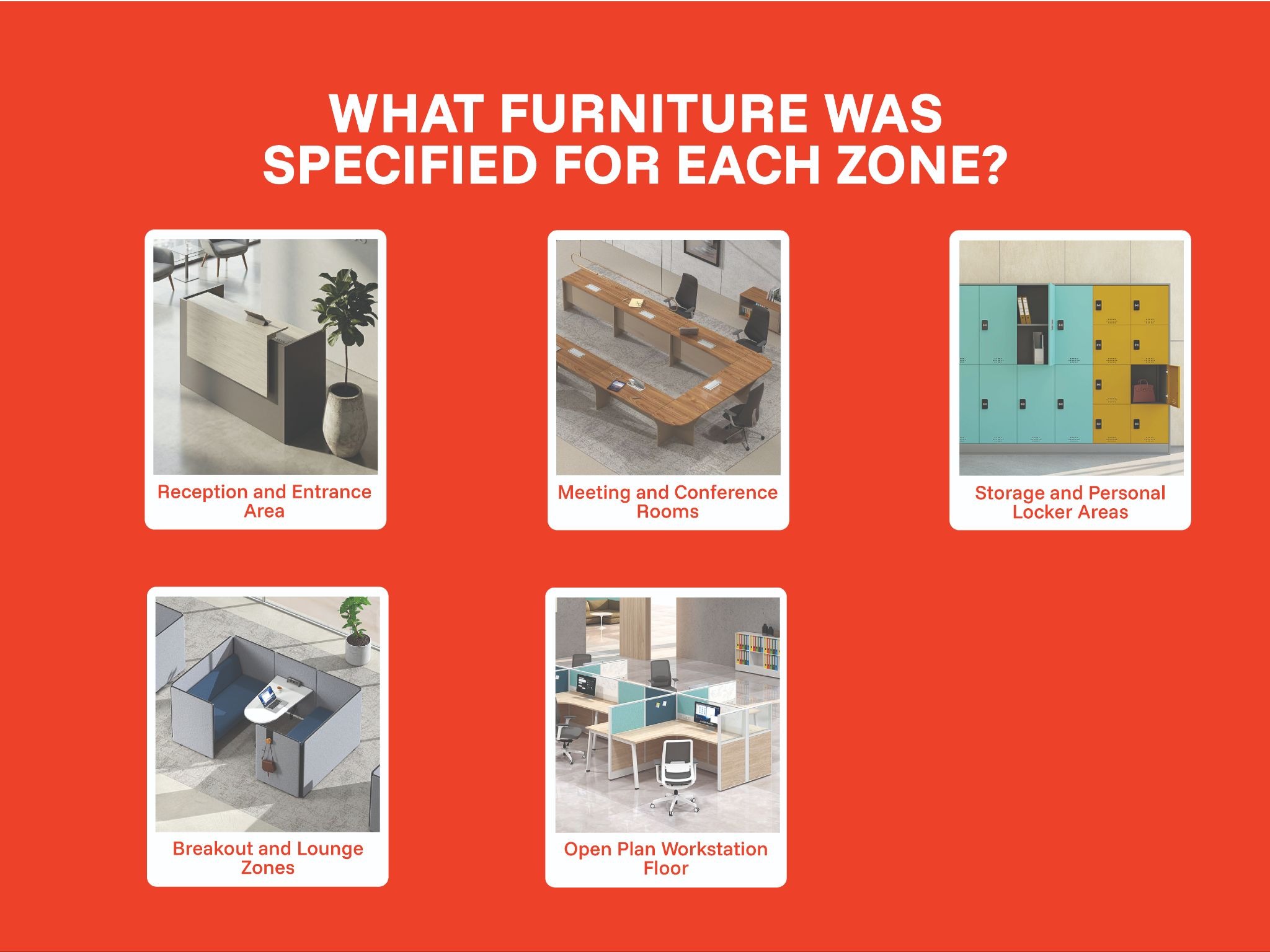
Open Plan Workstation Floor
The primary working floors were specified with AFC Furniture Solutions' Panel Series modular workstations. The configuration used a back-to-back layout with mid-height privacy screens between facing positions, providing visual separation for focused work without creating an enclosed or isolating environment.
Each position included an integrated cable management system routing all power and data cables through internal channels from floor boxes to the desktop surface. Every position had a dedicated under-desk pedestal for personal storage, keeping the worksurface consistently clear.
For the development team area where sustained individual focus was the primary requirement, slightly higher panel screens were specified. For the sales team area, lower screens maintained the visual openness that supported their collaborative working style.
Tip: When specifying modular workstations for a mixed-function corporate floor, always zone by working style before deciding on panel height. The same panel height across the entire floor will either over-isolate collaborative teams or under-support focused ones. Matching the panel specification to the actual working needs of each team yields significantly better results.
Meeting and Conference Rooms
Both meeting rooms were specified with AFC Furniture Solutions meeting tables in configurations appropriate to their different functions. The primary boardroom received a ten-person conference table with integrated power modules, providing charging access for every participant without surface cabling.
The smaller meeting room used a six-person training table configuration that could be rearranged for different formats, including workshop layouts, one-on-one sessions, and small team reviews.
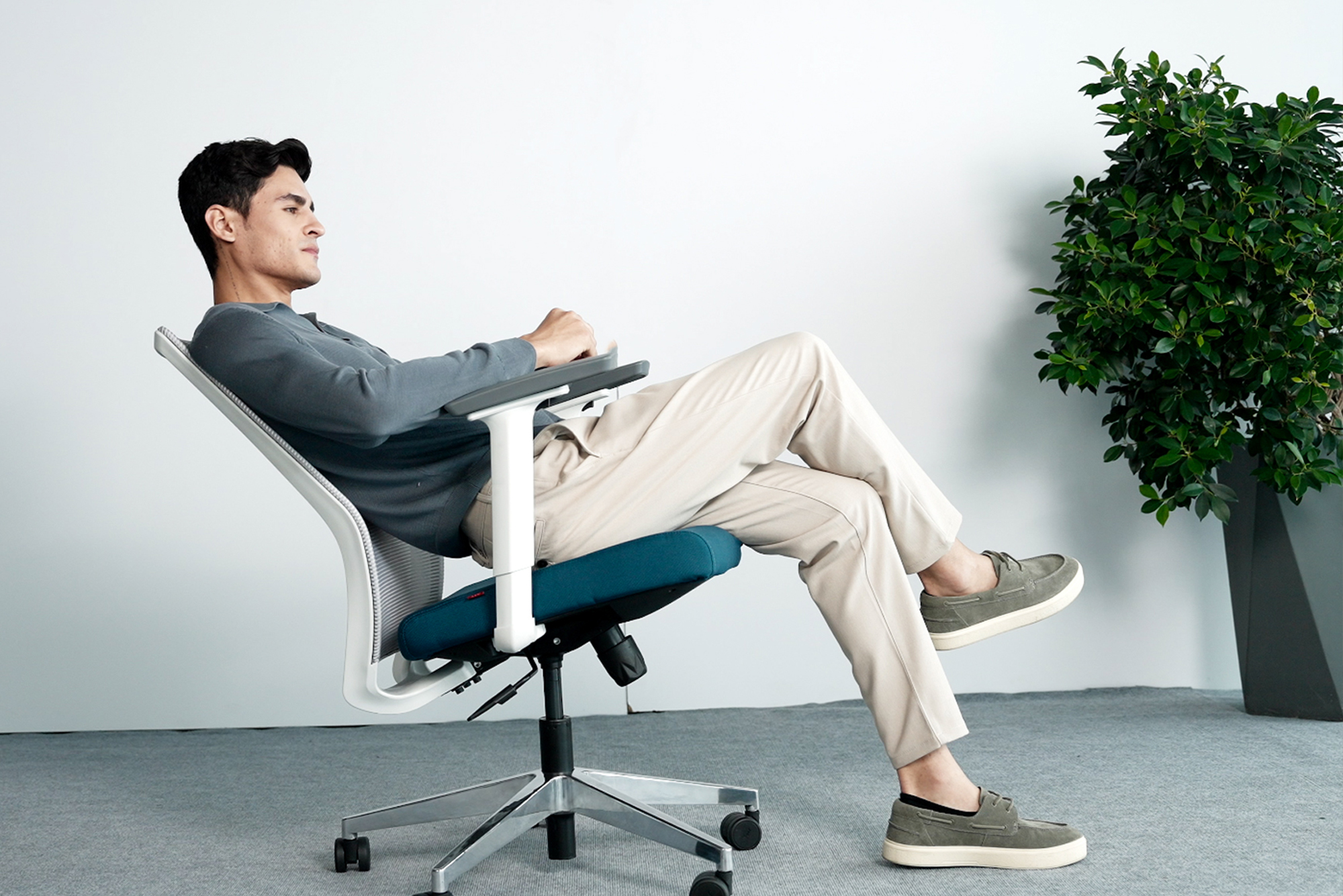
Both rooms were furnished with ergonomic meeting chairs that provided comfort for sessions of up to two hours without the full adjustability of a task chair, keeping the rooms looking clean and cohesive rather than like extensions of the open-plan floor.
Reception and Entrance Area
The reception area received a three seater sofa from the AFC Furniture Solutions soft seating range in a deep charcoal fabric that aligned with the client's brand colour palette. Two single seater lounge chairs were positioned at angles to create a conversational grouping for small client delegations.
A low occasional table in the centre of the arrangement provided a functional surface for visitors. The reception desk itself was specified as a modular reception unit in a warm oak worksurface finish with white frame components, creating a welcoming and contemporary first impression.
The entire reception zone was designed to communicate the organisation's quality and professionalism before any conversation began. The client specifically noted during the design review that they wanted visiting clients to feel they had arrived at a serious and well-organised company.
Breakout and Lounge Zones
Each floor had a dedicated breakout zone near the pantry and away from the primary workstation floor. The zone on the first floor used a modular collaborative seating configuration that could be arranged for group discussions or separated into individual use positions.
The second-floor breakout zone was specified with a more relaxed aesthetic using a two-seater sofa, two lounge chairs, and pouffes that could be repositioned freely. Both zones included occasional tables at appropriate heights for laptop use.
The brief for both breakout zones was to create spaces that felt genuinely different from the desk environment so that the mental reset function of the breakout was achieved by the physical context change as much as by the break itself.
Storage and Personal Locker Areas
A metal locker bank was specified along one wall of each floor to provide every employee with a personal secure storage compartment for bags, helmets, and personal valuables. The lockers were specified in a two-tier configuration, maximising storage capacity per metre of wall space.
Each workstation position included an under-desk pedestal for daily personal storage. Shared team storage was addressed with tall metal storage cabinets at the end of each workstation run, providing filing and shared resource storage without consuming additional floor area.
The entire storage specification was designed around one principle: every item that an employee brings to the office has a defined place to live, and the desk surface is reserved exclusively for the work in progress.
How Was the Installation Managed?
What Was the Installation Timeline?
The installation was completed over a single weekend, beginning early on Saturday morning and concluding by Sunday evening. The AFC Furniture Solutions installation team of twelve worked across both days to complete the full two-floor fit-out within this timeframe.
Component delivery was managed across the two days preceding the installation weekend, with all furniture stored securely in the building's loading bay and staged by zone and floor to ensure the installation team could work systematically without time lost to sorting and locating components.
The project manager assigned to the installation maintained a running completion checklist against the approved floor plan, ensuring that every position on both floors was assembled, positioned, and verified before the installation was signed off.
How Was Disruption to Operations Minimised?
The installation was deliberately scheduled over a weekend to eliminate any impact on the client's working week. All delivery logistics were handled during standard business hours on the days preceding the installation, with access coordinated through the building management team.
The AFC Furniture Solutions project team provided the client with a detailed pre-installation checklist three weeks before the installation weekend. This included guidance on what existing furniture needed to be cleared, how data and power infrastructure needed to be prepared, and what the client's IT team needed to complete before the furniture installation began.
This preparation meant that when the installation team arrived on Saturday morning, the floors were clear, the infrastructure was ready, and the installation could proceed without any dependency delays.
What Did the Handover Process Look Like?
On Sunday evening, the AFC Furniture Solutions project manager conducted a complete walk-through inspection of both floors with the client's facility managers. Every workstation position, every meeting room, every locker bank, and every breakout zone was checked against the approved floor plan.
Minor adjustments identified during the walk-through, including two workstation positions that needed slight repositioning to clear a fire exit path and one meeting room chair configuration that the client wanted adjusted, were completed before the handover was signed off.
The client received a complete set of documentation, including the final as-built floor plan, assembly instructions for all modular components, maintenance guidelines, and warranty documentation for every product category in the installation.
What Were the Results After Installation?
How Did the New Setup Improve the Working Environment?
The immediate visual impact of the completed installation was striking. Where there had been a disorganised collection of mismatched furniture in varying states of wear, there was now a coherent, professional workspace with consistent materials, clean lines, and a deliberate aesthetic that reflected the organisation’s quality and brand identity.
The cable management system across all workstations eliminated the visible wiring that had made the previous setup look cluttered, regardless of how well individual desks were organised. Every surface was clean, and every cable had a defined path.
The zone layout matched each team's working style more precisely than the previous uniform open-plan configuration. The development team reported an immediate improvement in their ability to sustain focused work. The sales team appreciated the more connected, energetic environment of their open-plan zone.
What Was the Client's Feedback?
The client's Chief Operating Officer described the completed installation as "exactly what we needed to look and feel like the company we actually are." The previous workspace had been a source of mild embarrassment when hosting client visits. The new one became something the organisation was actively proud of.
The HR team reported that several employees mentioned the new office positively during the first week, with particular appreciation for the breakout zones and the personal locker storage. The sense that the organisation had invested in their daily experience was clearly felt across the team.
The facilities manager specifically noted the quality of the installation process, commenting that returning to a finished workspace on Monday morning after a weekend installation was a "genuinely impressive" operational achievement.
What Measurable Outcomes Were Achieved?
The new modular office furniture configuration accommodated all 120 existing employees with room for 35 additional positions without any reconfiguration of the existing layout. This satisfied the client's growth requirement for the next eighteen months from the initial installation.
The workstation density per square metre increased by approximately 15% compared to the previous layout, achieved through the efficient use of shared panel infrastructure in the modular system rather than the individual desk spacing of the previous configuration.
The client reported a reduction in the frequency of meeting room availability complaints within the first month, attributed to the improved quality and functional specification of the meeting rooms, making them more genuinely suitable for the range of meetings they needed to support.
Bonus Point: When planning a complete modular office furniture fit-out for a corporate floor, always build a 10-15 percent expansion capacity into the initial floor plan, even if the current headcount does not require it. Adding positions to an existing modular workstation run later is straightforward. Redesigning the entire floor layout to accommodate growth is not. The foresight costs nothing, and the flexibility it creates is invaluable.
Key Lessons from This Project
Why Planning Before Purchasing Matters
The single biggest difference between this project and the client's previous approach of adding furniture incrementally was the planning investment made before any order was placed.
The site survey, team structure analysis, and floor plan development consumed approximately two weeks before a single product was specified. That investment paid for itself many times over in the precision of the installation and the quality of the result.
Every procurement decision made without this planning foundation creates a risk of misfit, waste, and the kind of incremental disorder that had characterised the client's previous workspace for four years.
Why Single-Source Supply Simplifies Large Projects
Managing a complete corporate fit-out from a single modular furniture supplier eliminated every coordination problem that arises when different suppliers deliver different categories of furniture to the same project.
There was a single point of contact for all queries. There was a single delivery schedule. There was a single installation team with authority over the entire floor. And there was a single warranty and after-sales relationship for everything in the installation.
For large commercial projects, the operational simplicity of single-source supply is itself a significant value that is easy to underestimate when comparing individual product prices across multiple suppliers.
Why Quality Specification Pays for Itself
The client was initially uncertain about specifying commercial-grade modular furniture across the entire installation rather than a mix of commercial and more economical alternatives in lower-visibility areas.
The AFC Furniture Solutions consultant explained the total cost of ownership argument: commercial-grade furniture maintained its quality for seven to ten years, while budget alternatives typically required replacement within two to three years, making the cheaper option more expensive over the planning horizon.
The client accepted this reasoning and specified consistently across the installation. Two years after completion, the furniture looks and performs exactly as it did on day one. No replacements have been required. The original investment continues to deliver its full value.
Is Your Office Ready for a Similar Transformation?
If any of the challenges described in this case study feel familiar, your office is likely ready for the same kind of structured, planned approach to modular office furniture that delivered these results.
Whether you are managing an overcrowded floor that has grown beyond its original furniture plan, preparing a new office for a growing team, or relocating to new premises and starting from scratch, the planning process that produced this result is available to you.
AFC Furniture Solutions workspace consultants are available for a no-obligation site visit and consultation. We will assess your space, understand your team structure, and produce a scaled floor plan with a complete furniture specification before you make any commitment.
Frequently Asked Questions
Q1. How long does a complete modular office furniture installation typically take?
For a project of this scale, approximately 120 workstations across two floors, the full installation was completed over a single weekend. Larger projects of 200 or more workstations may require three to five days, depending on configuration complexity.
Q2. Can the entire process be managed without disrupting our working week?
Yes. AFC Furniture Solutions routinely manages installations over weekends and outside standard business hours specifically to eliminate operational disruption. Careful pre-installation planning and logistics management ensure the team returns to a finished workspace on the first working day after installation.
Q3. What if our team grows faster than the furniture plan anticipated?
A well-designed modular office furniture layout includes expansion capacity that accommodates growth without redesigning the floor. Additional workstation bays can be added to existing runs with matching components. AFC Furniture Solutions confirms product range continuity for a minimum of five years to support this.
Q4. Do you provide a 3D floor plan before we commit to an order?
Yes. Every AFC Furniture Solutions commercial project begins with a site survey and a scaled 2D and 3D floor plan that shows the proposed layout in detail before any order is placed. This visualisation is included as part of the project consultation at no additional cost.
Q5. What warranty is provided on the furniture in a project like this?
AFC Furniture Solutions offers category-specific warranties across its product range. Modular furniture comes with a warranty of up to 10 years, soft seating is covered for 2 years, and chairs carry a warranty of up to 5 years, valid under standard commercial use. Full warranty documentation is included in the project handover pack, along with maintenance guidelines and assembly instructions for all modular components.
Q6. Can the furniture be relocated if we move offices in the future?
Yes. Every component of the modular office furniture installed in this project is fully dismantlable and relocatable. The client's entire furniture investment will move with them if and when they change premises, with no loss of quality and minimal relocation cost compared to a complete refurnish.
Final Thoughts
This case study demonstrates what can be achieved when a modular office furniture project is approached with the planning, specification, and installation quality it truly deserves.
The client transitioned from a disorganised, incrementally assembled workspace that no longer served their team to a cohesive, professional, and scalable environment, one they are genuinely proud of. The transformation itself took just one weekend to install, backed by two weeks of thoughtful planning.
The investment in furniture is secured for the next decade. The workspace supports the current team while allowing room for future growth. Most importantly, the organisation now operates within a physical environment that reflects the quality of its work.
AFC Furniture Solutions brings this same level of planning rigour, product excellence, and installation capability to every commercial project it undertakes across India.
Explore Other Popular Blogs

Let’s build together
Tell us about your project and we’ll help you plan, design, and deliver at scale.
.jpg)
.svg)