.svg)
Affordable to Premium: Office Furniture for Every Budget in India.
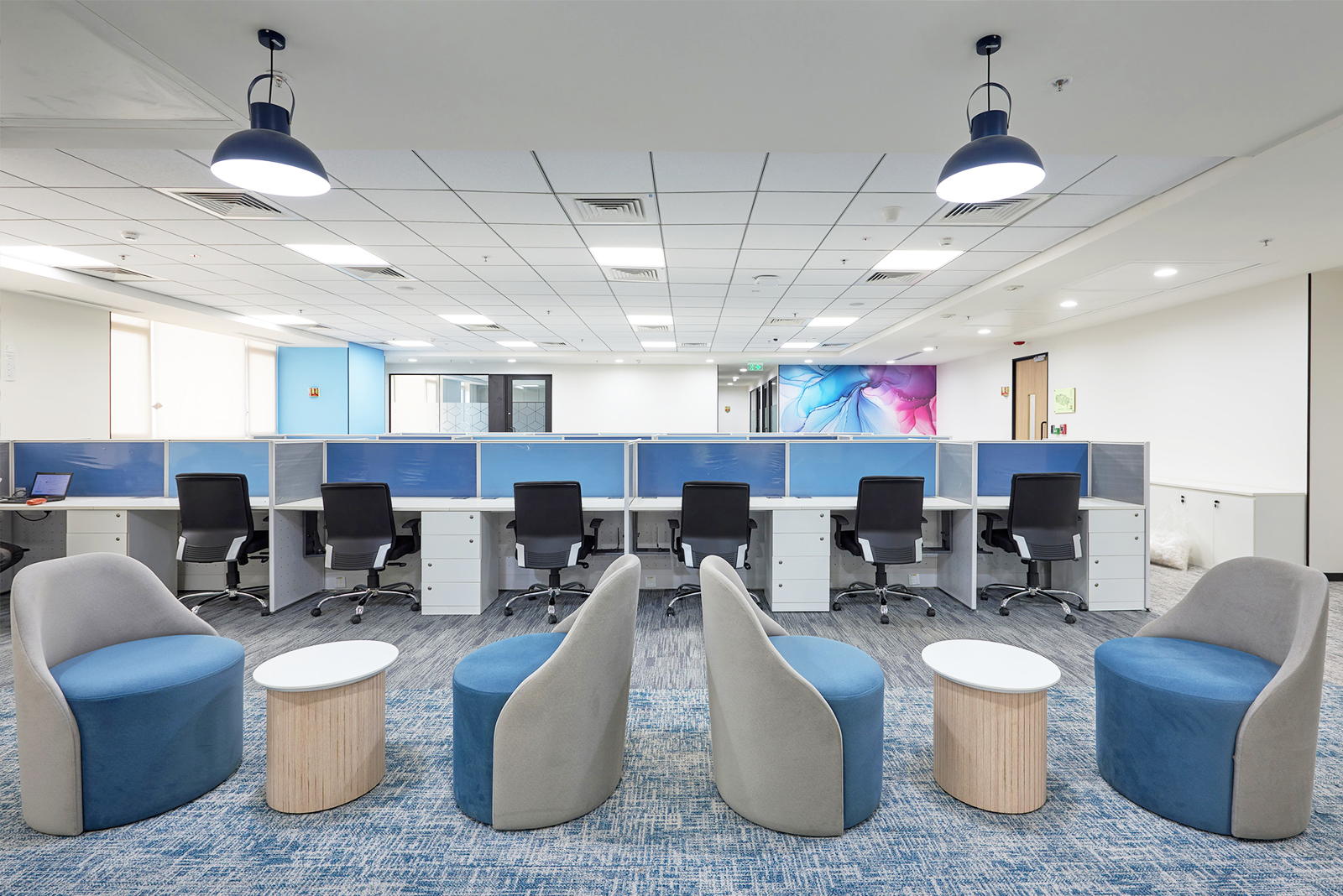
A practical guide to choosing the right office furniture at every budget level from startups to large enterprises. Expert advice from AFC Solutions
Creating a workspace that looks professional, functions efficiently, and fits within your budget is one of the most practical challenges any business owner in India faces. Whether you are fitting out a first office for a ten-person team or upgrading the executive floor of a large corporate headquarters, the furniture decisions you make will shape the daily experience of everyone who works there.
Having worked with organisations across India, from early-stage startups to listed enterprises the team at AFC Solutions has seen firsthand how the right office furniture investment pays for itself many times over and how the wrong one creates ongoing costs and frustrations that are difficult to undo.
This guide walks through the full spectrum of office furniture options, from entry-level through to premium, to help you make decisions that serve your business well for years to come.
Why the Right Office Furniture Matters
The Indian workplace has changed significantly over the past decade. Open collaborative layouts have replaced rigid cubicle grids. Employee wellbeing has moved from a peripheral concern to a central one. And the physical office environment is now widely recognised as a direct contributor to productivity, retention, and the impression a business makes on clients and prospective hires.
Good office furniture does several things simultaneously. It protects the physical health of the people using it, reducing the musculoskeletal strain that is one of the most common causes of sick leave and reduced output in desk-based work environments. It conveys the values and professionalism of the organisation to everyone who walks through the door. It shapes how people interact; whether a layout encourages collaboration or isolates individuals is largely determined by the furniture choices made at the outset.
None of this requires an unlimited budget. It requires informed decisions at whatever budget is available.
Affordable Office Furniture: Smart Choices for Startups
For businesses in their early stages particularly in high-rent cities like Mumbai, Bangalore, and Delhievery rupee in capital allocation matters. The goal at this stage is not to furnish an aspirational office; it is to create a functional, comfortable workspace that supports productive work without diverting resources that the business needs elsewhere.
The most important principle at this stage is selectivity. Affordable office furniture does not mean low quality it means focusing spend on the items that have the greatest daily impact and keeping everything else simple.
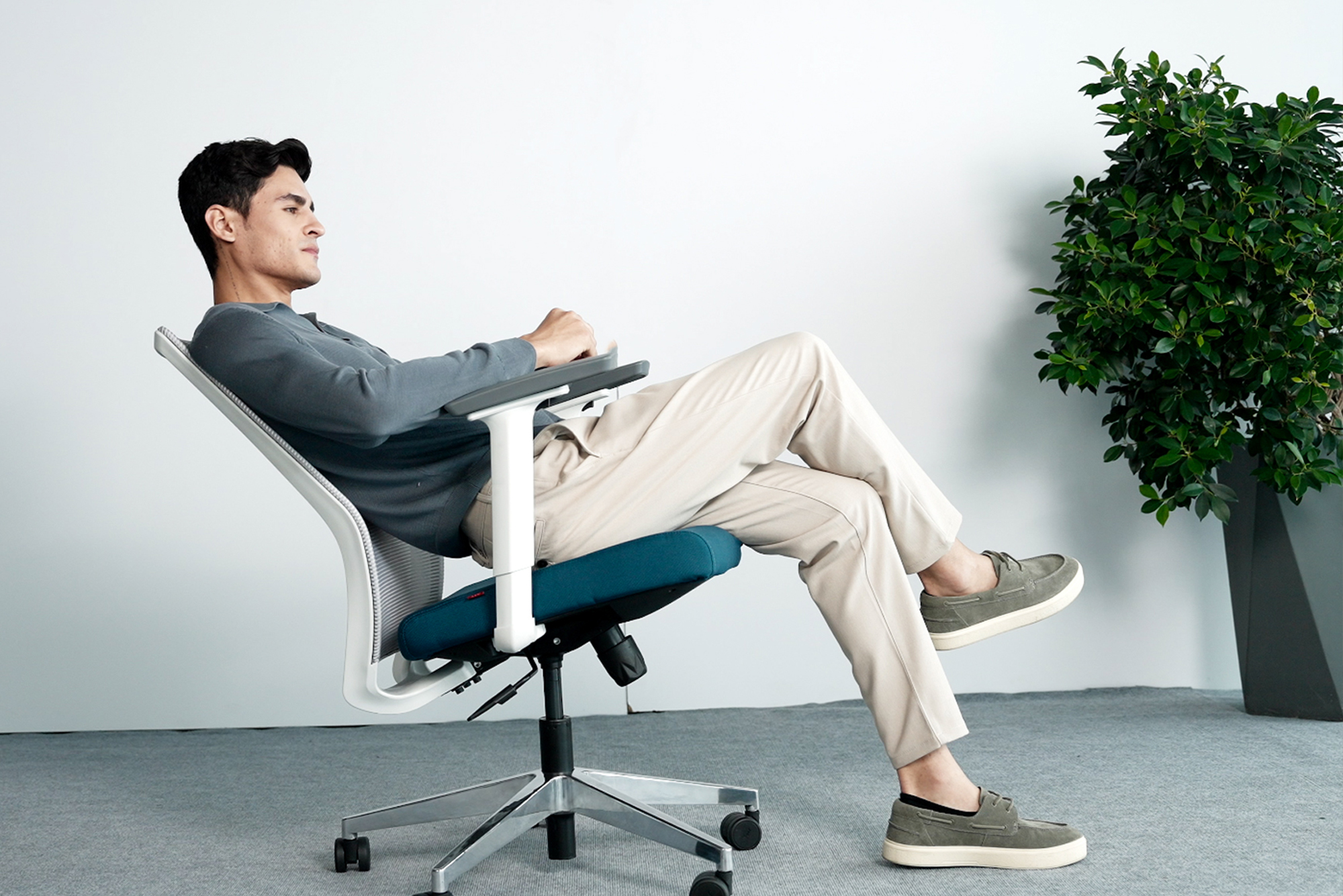
Office chairs are the single highest-priority purchase at any budget level. A chair that causes back pain after two hours is not saving money it is generating a hidden cost in reduced focus, increased fatigue, and eventual health issues. Mesh chairs are an excellent choice for budget-conscious buyers: they are generally more economically priced than leather alternatives, they perform well in India's warm climate by allowing air circulation, and they provide adequate ergonomic support for full working days.
For desks, open linear workstation layouts where team members share a continuous work surface are significantly more economical than individual workstations with panel dividers. They also suit the collaborative working style of most startup teams. Modular office furniture systems that can be extended as the team grows are worth the marginal additional upfront cost, as they eliminate the disruption and expense of a full furniture replacement when headcount increases.
Storage solutions at this stage should be minimal and purposeful. If your team works predominantly digitally, investing in extensive physical storage is an unnecessary expense. Under-desk pedestals for personal items and a shared locker bank for bags and valuables will serve most small teams adequately.
Mid-Range Office Furniture: The Best of Both Worlds
As a business matures and stabilises, a furniture upgrade typically becomes both justified and necessary. Staff numbers have grown, client visits are more frequent, and the first-generation furniture even if it has held up well may no longer reflect the organisation's cfurniture eveng.
Mid-range office furniture is where the majority of well-established Indian businesses operate, and for good reason. At this level, the product quality is meaningfully better than entry-level without approaching the price point of premium executive ranges.
Ergonomic quality increases substantially. Mid-range chairs offer genuine multi-point adjustability seat height, lumbar support depth, armrest positioning, and recline tension that entry-level products simply cannot deliver. For employees spending eight or more hours at a desk, this difference in adjustability translates into a measurable difference in comfort and health outcomes.
Acoustic management becomes viable. Panel-based workstation systems, which introduce fabric-covered dividers between work surfaces, serve two functions simultaneously: they provide individuals with a degree of visual privacy and psychological separation, and they absorb ambient sound in ways that open surfaces cannot. In a busy office of thirty or more people, the noise reduction from well-specified panel systems is immediately noticeable.
Cable management becomes standard. Mid-range desks typically include integrated cable management grommets, under-surface trays, and modesty panels that keep power and data cables completely out of sight. The visual difference between an office with managed cabling and one without is striking, and it shapes the impression clients and visitors form of the organisation's attention to detail.
Premium Office Furniture: For Executives and Established Brands
Premium office furniture serves a specific and legitimate purpose. For client-facing environments boardrooms, executive suites, reception areas the quality of the furniture is part of the service being delivered. A premium leather chair in a partner's office or a beautifully finished conference table in a boardroom communicates institutional confidence and respect for the people sitting in the room.
Material quality is the defining difference. Premium furniture uses genuine leather, solid wood veneers, polished metal hardware, and high-density seating foam that maintains its form and support over many years of heavy use. These are not cosmetic choices they translate into a product that looks and performs significantly better after five years than its mid-range counterpart.
Advanced functionality is standard. Motorised height-adjustable desks, wireless device charging integrated into work surfaces, and soft-close storage mechanisms are features that become standard at this level. For executives managing high workloads across long hours, these conveniences are genuinely meaningful.
Longevity justifies the investment. Premium furniture, properly maintained, routinely delivers fifteen to twenty years of service. When the cost is amortised over that period, the annual cost per user is often comparable to or lower than the replacement cycle of cheaper alternatives.
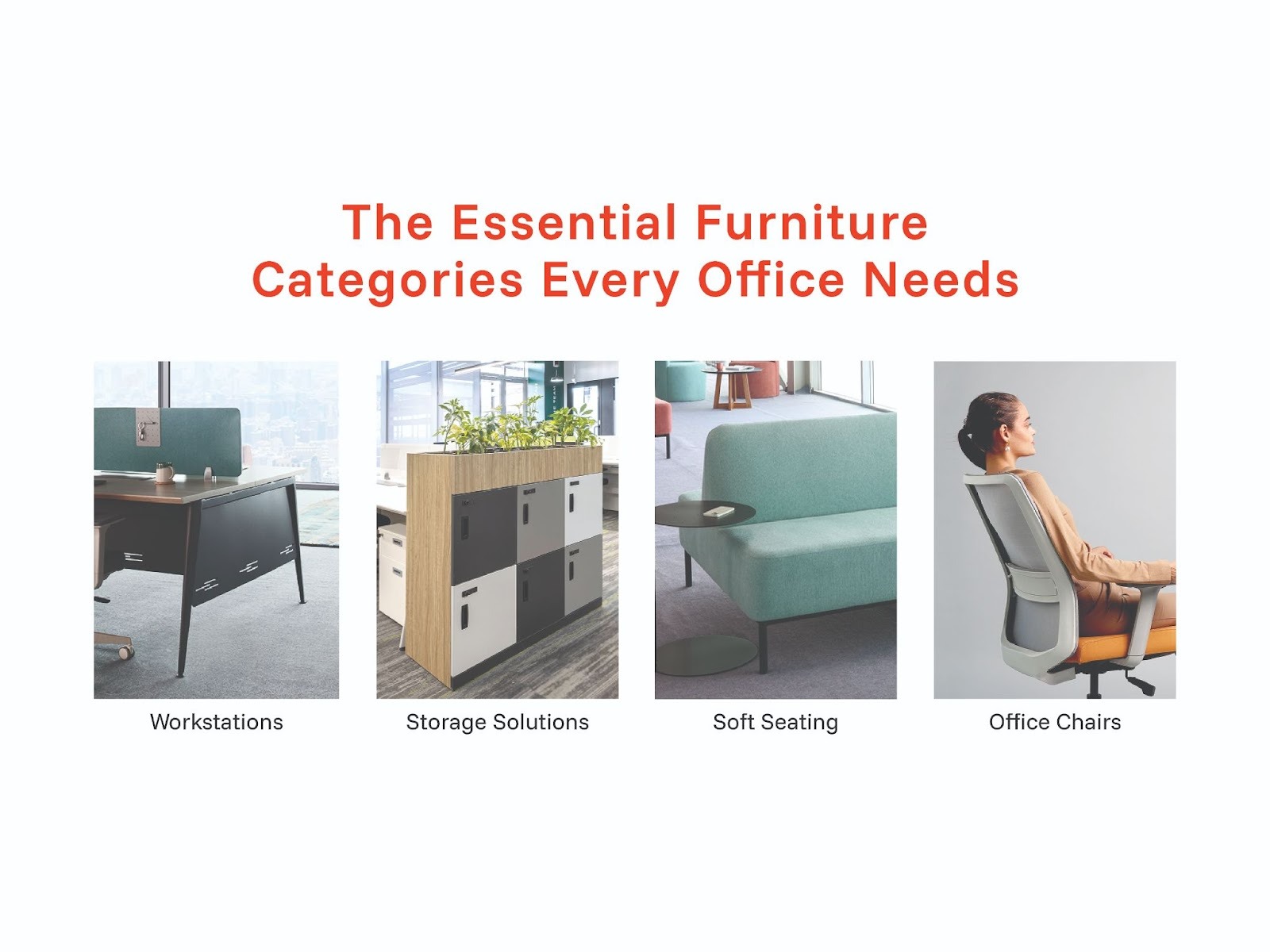
The Essential Furniture Categories Every Office Needs
Regardless of budget level, every office requires the same core categories of furniture. What changes across budget tiers is the specification, material quality, and feature depth within each category.
Workstations
The office workstation is the primary environment where productive work happens, and it deserves careful consideration. AFC Solutions offers workstation solutions across three distinct series the Height Adjustable Series for organisations prioritising employee health and movement, the Desking Series for clean, open-plan collaborative environments, and the Panel Series for offices that need to balance openness with individual privacy and noise management.
Height-adjustable desks in particular have moved from a premium niche to a mainstream consideration in Indian offices. The ability to alternate between sitting and standing throughout the day has well-documented benefits for circulation, energy levels, and long-term spinal health.
Office Chairs
The office chair is the single most consequential furniture purchase any office makes, and it is the one area where cutting costs most reliably creates downstream problems. The AFC Solutions Seating range covers mesh chairs suited to everyday staff use, leather chairs for executive and boardroom settings, and training chairs for flexible multi-use spaces each designed to deliver appropriate ergonomic support for their intended context.
When evaluating any chair, the key specifications to check are: adjustable lumbar support, seat height range, armrest adjustability, and the quality of the gas lift mechanism. A chair that cannot be properly adjusted to the individual using it is providing significantly less ergonomic benefit than its specification suggests.
Soft Seating and Breakout Zones
A well-designed office includes spaces for informal interaction that are distinct from primary work areas. Sofas, lounge chairs, and collaborative soft seating in reception areas, breakout zones, and informal meeting spaces serve both a functional and a cultural purpose they signal that the organisation values human interaction and provides space for it, not just heads-down individual work.
These areas are also among the most visible to clients and visitors, making them disproportionately influential in the impression the office environment makes.
Storage Solutions
Physical office storage needs vary significantly by industry and working style, but the principle is consistent: storage that is inadequate creates clutter, and clutter degrades both the visual quality of the environment and the cognitive experience of working in it. Under-desk pedestals, locker banks, and compactor systems for organisations with significant document storage requirements all serve specific needs that should be assessed individually rather than treated as standard purchases.
A Step-by-Step Guide to Choosing Office Furniture
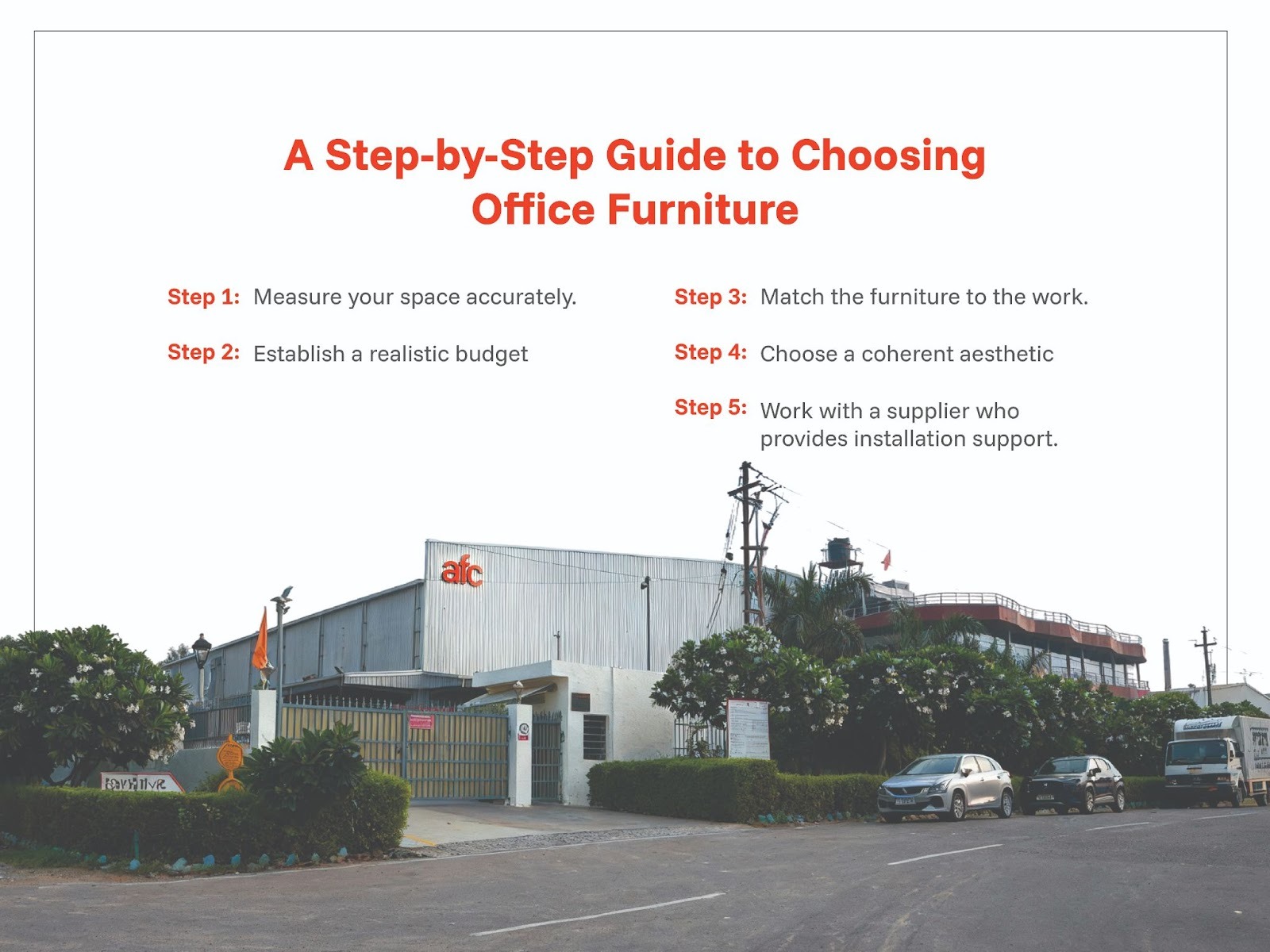
Step 1: Measure your space accurately.
Before any purchase decision, understand your floor area precisely. Account for door swing clearances, emergency exit paths, and natural traffic flows. A workspace layout that looks workable on paper can feel dangerously cramped when the furniture arrives.
Step 2: Establish a realistic budget.
Divide your total budget into the core categories and allocate in proportion to daily impact. Office chairs and primary work desks should receive the highest allocation. Decorative and accent pieces can be addressed with whatever remains.
Step 3: Match the furniture to the work.
A team that spends most of its time on phone calls needs different spatial arrangements than one doing collaborative design work. A legal or financial firm entertaining clients needs different meeting room furniture than a tech company doing internal sprint planning. The furniture should serve the specific nature of the work being done.
Step 4: Choose a coherent aesthetic.
A space that mixes multiple styles and colour palettes reads as unplanned and can undermine the professional impression you are trying to create. Choose a direction whether contemporary office design or structured executive style and apply it consistently across the floor.
Step 5: Work with a supplier who provides installation support.
Commercial office furniture is heavy, complex to assemble, and requires precise positioning to deliver the layout you planned. A reputable office furniture supplier will include professional installation as part of the service, ensuring that everything is correctly assembled, level, and safe from day one.
Ergonomics: A Priority at Every Price Point
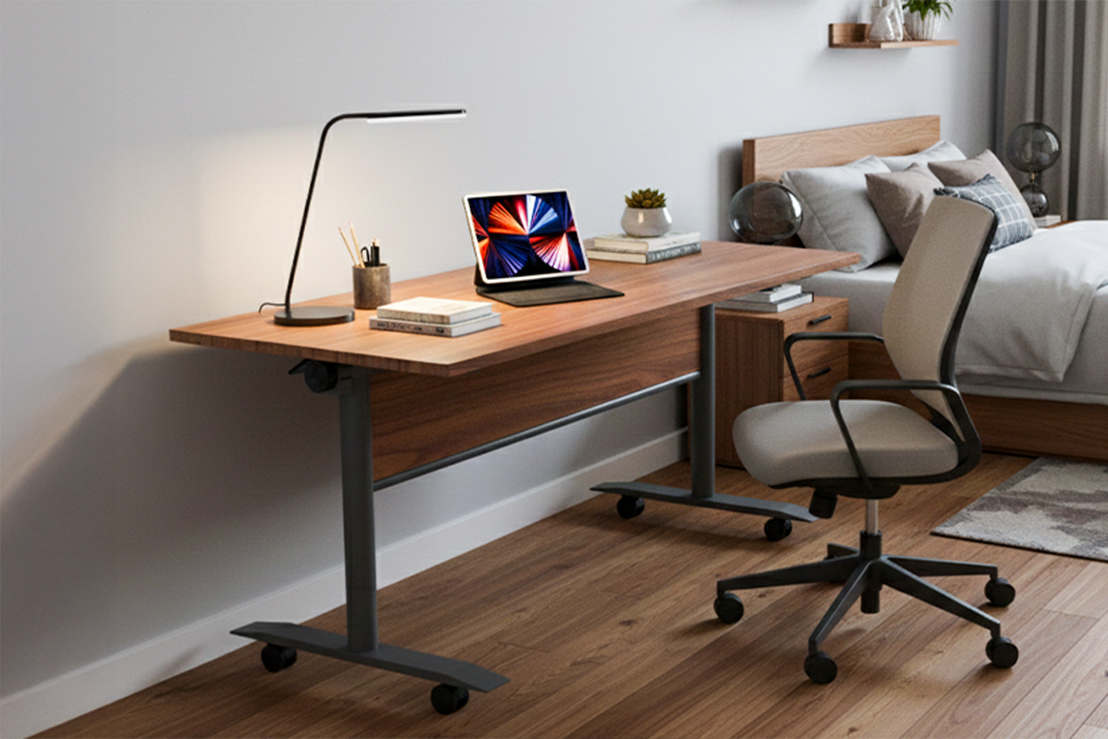
One of the most important things to understand about workplace ergonomics is that it is not a premium feature it is a fundamental requirement at every budget level. Poor posture sustained over months and years creates real, lasting physical damage, and the cost of that damage in sick leave, reduced productivity, and employee dissatisfaction far exceeds the incremental cost of ergonomically sound office furniture.
The four baseline ergonomic requirements for any workstation are straightforward. The chair should allow both feet to rest flat on the floor. The monitor should be positioned at eye level to avoid chronic neck strain. The chair's lumbar support should follow the natural inward curve of the lower spine. And the armrests should be positioned so that the forearms are horizontal while typing, reducing strain on the shoulders and wrists.
These requirements are achievable at every price point. What changes with budget is the precision and ease with which they can be achieved entry-level chairs offer basic adjustability, while premium ergonomic chairs offer highly granular, personalised adjustment across multiple dimensions.
Office Design Trends Shaping Indian Workspaces in 2026
The Indian office design landscape is evolving rapidly, and furniture choices are central to these shifts.
Sustainability is now a procurement criterion.
A growing number of Indian organisations driven by both genuine environmental commitment and the expectations of clients and employees are specifying sustainable office furniture with verifiable credentials. AFC Solutions holds BIFMA LEVEL 3 certification, the highest tier of sustainability performance in the industry, and produces furniture with up to 66% recyclable content. For organisations with LEED, WELL, or similar green building ambitions, this matters practically as well as symbolically.
Biophilic design is gaining momentum.
The integration of natural elements plants, natural light, organic material textures into office environments is supported by a substantial body of research showing reductions in stress and improvements in focus and mood. Furniture that accommodates living plants, uses natural wood finishes, or incorporates warm fabric tones contributes to this effect.
The boundary between work and comfort is softening.
The extended period of remote working fundamentally changed employee expectations of what an office environment should feel like. Spaces that incorporate the warmth and comfort of residential design softer fabrics, varied seating heights, informal gathering areas consistently score higher on employee satisfaction metrics than those that maintain a purely functional, institutional aesthetic.
Is Spending More on Office Furniture Always Worth It?
The honest answer is: it depends on where the additional spend is going.
Spending more on office chairs almost always delivers value, because the health and comfort benefits are continuous and experienced by every person in the organisation every day. Spending more on a premium reception sofa or executive boardroom table delivers value proportional to how often those spaces are used for client-facing purposes. Spending more on decorative elements in low-traffic back-office areas delivers very little value at all.
The most effective approach for most Indian businesses is a tiered one: allocate premium office furniture specifications to the spaces and items that have the greatest daily impact on health and the greatest visibility to clients, and apply sensible mid-range specifications everywhere else. This produces an environment that feels well-considered and professional without the full cost of a uniform premium fit-out.
What consistently does not deliver value is buying the cheapest available option across the board. Furniture that fails within two years generates replacement costs, procurement time, installation disruption, and a period of degraded environment that affects morale and client impressions. The economics of quality are straightforward once the full lifecycle cost is considered.
Frequently Asked Questions
Q1. How long should well-chosen office furniture last?
Commercial-grade office furniture from established manufacturers should deliver seven to ten years of reliable daily use. Premium products, with appropriate maintenance, routinely last fifteen years or more. The key variable is whether the furniture was built to commercial rather than residential standards from the outset.
Q2. Can I mix budget and premium pieces in the same office?
Absolutely, and this is often the most intelligent approach. Invest in premium specifications for your reception area, boardroom, and executive offices the spaces most visible to clients and where the furniture's quality directly shapes perceptions. Apply well-specified mid-range solutions to the main staff working areas, where comfort and durability matter more than visual status.
Q3. Why do quality office chairs cost significantly more than home chairs? Commercial office chairs are engineered to provide ergonomic support for eight or more hours of daily use, across multiple years and multiple users. This requires high-density foam, robust gas lift mechanisms, and multi-point adjustability. Home chairs are built to very different use specifications. The price differential reflects genuine engineering difference, not branding.
Q4. What is the best solution for a very small office space?
Linear workstation configurations continuous desk runs along walls or in the centre of a room — maximise usable surface area in constrained spaces. Pedestals on castors rather than fixed storage free up floor area when needed. Avoiding tall storage units also keeps the space feeling open and well-lit.
Q5. Is professional installation necessary for commercial furniture?
It is strongly recommended. Incorrectly assembled or poorly positioned commercial office furniture creates safety risks and rarely delivers the layout efficiency that was planned. A professional installation team will ensure everything is correctly assembled, properly levelled, and positioned to the agreed floor plan.
Q6. How should I clean and maintain office chairs?
Mesh chairs respond well to regular vacuuming and periodic spot cleaning with a lightly damp cloth. Leather and leatherette chairs benefit from a dedicated leather conditioner every few months to prevent surface cracking. In both cases, avoid harsh chemical cleaners, which accelerate surface wear.
Q7. Are height-adjustable desks genuinely beneficial, or are they a trend? T
he evidence strongly supports their benefit. Alternating between sitting and standing throughout the working day improves circulation, reduces the risk of musculoskeletal problems associated with prolonged static sitting, and is associated with higher reported energy levels in the afternoon. Height-adjustable desks are a sound investment for any organisation that takes employee health seriously.
Final Thoughts
Every office furniture decision is ultimately a decision about the people who will use it. Comfortable, well-designed office furniture does not make a business successful on its own but uncomfortable, poorly specified furniture creates a persistent friction that undermines the productivity and wellbeing of the team every single day.
Whether you are working within a tight startup office budget or planning a comprehensive premium corporate fit-out, the principles are the same: prioritise the items with the greatest daily impact, choose commercial-grade quality at whatever price point is accessible to you, and work with a supplier who brings genuine expertise to the process.
AFC Solutions has been helping businesses across India make these decisions for over 15 years, with an in-house manufacturing facility capable of supporting projects at any scale and a team of workspace consultants who can guide you from initial brief to completed installation.
Contact Us
📧 Email: customercare@afcindia.in
📞 Phone: +91 9999006933
🌐 Website: www.afcindia.in
Head Office: Plot No. 33, Ecotech 12, Greater Noida West, UP – 201310
Experience Centres: Noida · Gurugram · Mumbai · Bengaluru · Hyderabad· Pune
Explore Other Popular Blogs

Let’s build together
Tell us about your project and we’ll help you plan, design, and deliver at scale.
.jpg)
.svg)