.svg)
What Is an Ergonomic Chair and Why Does Every Indian Office Need One?

What is an ergonomic chair, and does your Indian office really need one? This complete guide covers features, benefits, and expert recommendations from AFC Furniture Solutions.
What Is an Ergonomic Chair?
An ergonomic chair is a professionally designed seating solution built around the physical requirements of the human body during sustained sitting. Unlike standard office chairs designed primarily for cost efficiency and visual appeal, an ergonomic chair is engineered to support the natural curves of the spine, maintain correct posture, and actively reduce the physical strain that accumulates during extended professional use.
The word ergonomic comes from the Greek words ergon, meaning work, and nomos, meaning natural laws. Ergonomics as a discipline applies scientific understanding of human anatomy and movement to the design of tools, environments, and furniture. An ergonomic chair is the direct application of this science to the most physically impactful piece of equipment in any desk-based professional environment.
Every feature in a genuine ergonomic chair serves a specific physical function. Nothing is decorative. Every adjustment mechanism, every contour, and every material choice is designed to support the body more effectively across the sustained sitting sessions that characterise professional desk work.
How Is an Ergonomic Chair Different from a Regular Office Chair?
A regular office chair provides a seat, a backrest, and usually some basic height adjustment. Beyond these fundamentals, it is typically designed to be produced at the lowest possible cost and to look acceptable in a standard office environment.
A genuine ergonomic chair provides adjustable lumbar support precisely positioned to the individual user's spinal anatomy, seat depth adjustment to prevent circulatory restriction in the thighs, 3D adjustable armrests that position the forearms correctly for varied working activities, a tilt mechanism with weight-balanced tension control, and in many models an adjustable headrest for cervical support.
The difference is not a matter of comfort preference. It is a difference in physical function. A regular chair presents a fixed surface to which the user must adapt. An ergonomic chair adapts to the user's body, maintaining correct anatomical alignment across the full working session without requiring constant conscious effort from the occupant.
What Are the Core Components of an Ergonomic Chair?
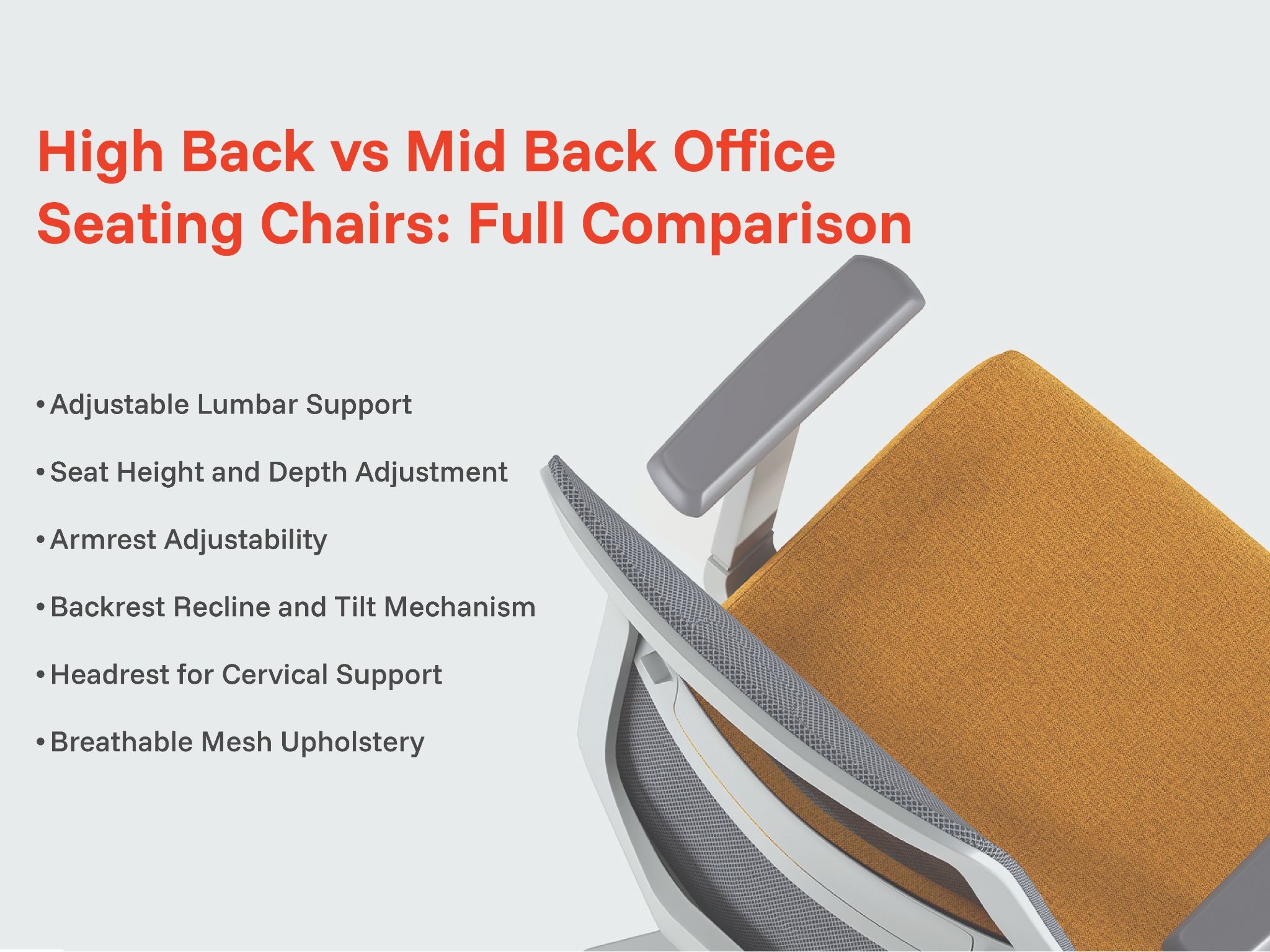
A complete ergonomic chair specification includes adjustable lumbar support in both height and depth, seat height and depth adjustment, height-adjustable armrests preferably with 3D lateral and forward-backward range, a backrest recline mechanism with adjustable tension and tilt lock, breathable upholstery suited to extended use, a five-point base with commercial-grade castors matched to the floor surface, and a gas lift column with a smooth height adjustment range appropriate for the desk height.
Each component addresses a specific physical risk of extended sitting. Together they create a seating environment that actively protects the body across the professional working day rather than simply providing a place to sit.
Why Is Ergonomic Seating a Growing Priority in Indian Offices?
How Has the Nature of Indian Office Work Changed?
India's corporate workforce has undergone a fundamental shift in working pattern over the past decade. The rapid growth of technology, financial services, consulting, e-commerce, and professional services sectors has created a large and growing population of desk-based knowledge workers who spend the majority of their professional lives seated.
India's IT sector alone employs over five million professionals, most of whom work at desks for eight to twelve hours daily. Add to this the financial services workforce, the legal profession, the media and content industry, and the administrative functions of India's growing corporate infrastructure, and the picture is of tens of millions of Indian professionals for whom the office chair is the primary physical tool of their working life.
The chair these professionals sit in for the majority of their waking hours deserves more careful specification than it typically receives in Indian workplace procurement decisions.
What Are the Health Costs of Poor Seating in Indian Workplaces?
According to a systematic review published in the National Center for Biotechnology Information, office workers globally report a rising incidence of musculoskeletal disorders in the neck, shoulders, and lower back due to prolonged sitting and poor workstation design. These disorders account for one-third of all workplace injuries worldwide, with direct and indirect costs including medical expenses, absenteeism, and reduced productivity running into billions annually.
In Indian workplaces specifically, back pain and neck stiffness are among the most commonly reported occupational health complaints. The combination of extended working hours, inadequate seating specification, and limited awareness of ergonomic adjustment practices creates a physical environment where musculoskeletal strain is the predictable rather than the exceptional outcome.
The cost is not borne only by the individual professional. Every organisation whose team members are managing chronic physical discomfort is bearing the productivity, attendance, and morale consequences of that discomfort daily without necessarily recognising it as a furniture specification problem with a furniture specification solution.
What Are the Key Features of a Good Ergonomic Chair?
Adjustable Lumbar Support
Lumbar support is the most important single feature of any ergonomic chair. The lower spine has a natural inward curve that must be actively maintained during extended sitting. Without support, this curve progressively flattens under the weight of the upper body, increasing compressive load on the intervertebral discs and creating the chronic lower back pain that is the most common occupational health complaint among Indian desk workers.
Adjustable lumbar support in both height and depth is the correct specification. Height adjustment aligns the support with each user's specific lumbar anatomy. Depth adjustment personalises the firmness of contact. A lumbar support that cannot be adjusted cannot be correctly positioned for any specific individual user.
Seat Height and Depth Adjustment
Correct seat height places both feet flat on the floor with the knees at approximately 90 degrees and the thighs roughly horizontal. This alignment maintains circulation in the thighs, keeps the pelvis in the neutral position that allows the lumbar support to function correctly, and eliminates the progressive leg fatigue that comes from sustained circulatory restriction.
Seat depth adjustment ensures a two to three finger gap between the front seat edge and the back of the knees. An excessively deep seat compresses the popliteal area and restricts venous return from the lower limbs. An excessively shallow seat reduces the supported surface area of the thighs and creates instability in the seated position.
Armrest Adjustability
Height-adjustable armrests that position the forearms at keyboard height with the shoulders completely relaxed eliminate the sustained upper trapezius load that creates neck and shoulder stiffness across long working days. Armrests set too high elevate the shoulders continuously. Armrests set too low create lateral leaning that disrupts spinal alignment.
3D adjustable armrests that also move in forward-backward position and lateral angle accommodate the varied arm positions required across different working activities including typing, reading, video calling, and mouse work. For professionals whose working day involves all of these activities, the flexibility of 3D adjustment is a meaningful daily comfort benefit.
Backrest Recline and Tilt Mechanism
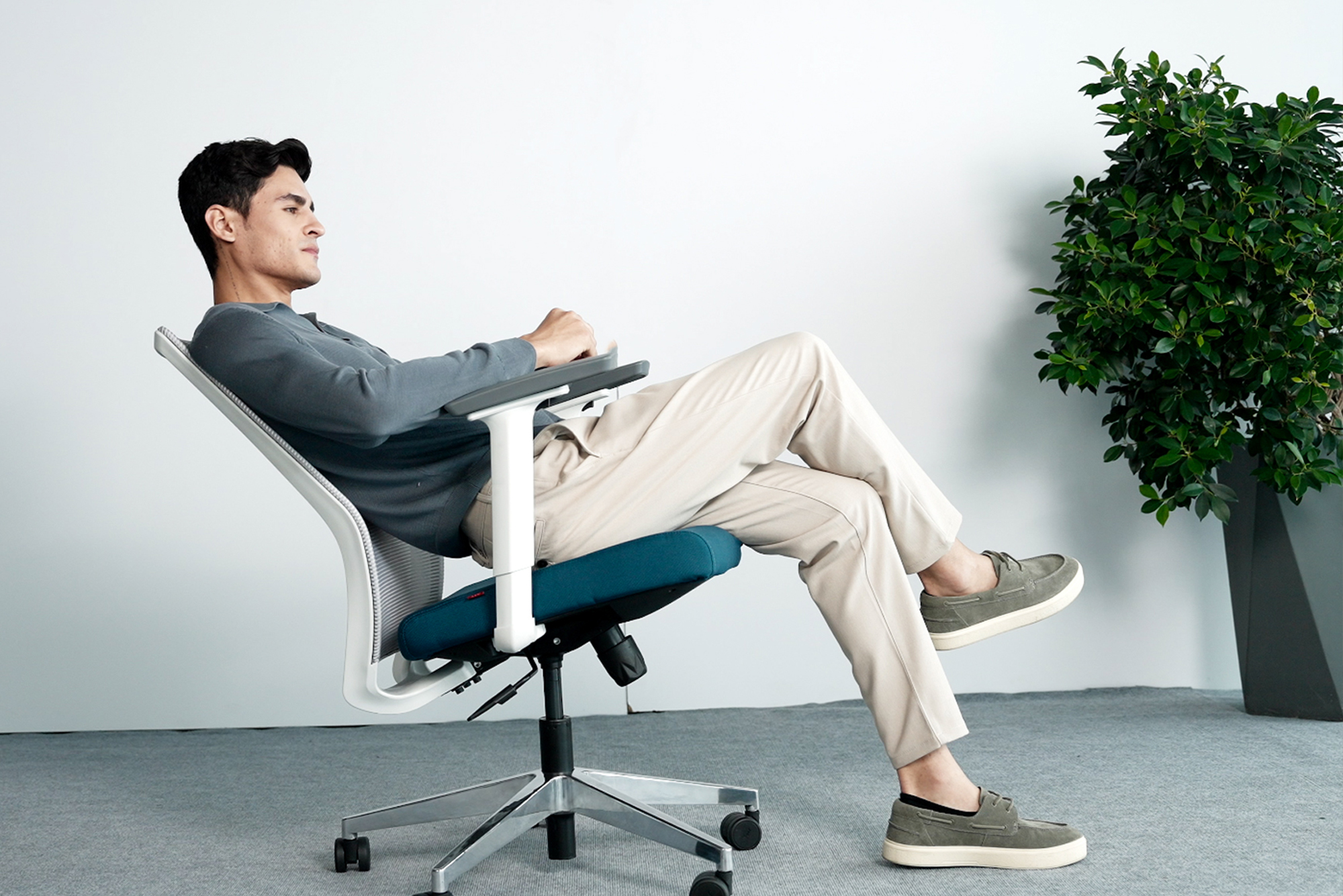
A weight-balanced tilt mechanism with adjustable tension control allows the chair to recline smoothly against resistance matched to each user's body weight. This synchronised recline reduces intervertebral disc pressure by shifting the body into a slight backward lean that distributes the load of the upper body more favourably than a rigidly upright position.
A tilt lock that holds the preferred working angle serves different activities across the working day. A slight recline for reading. A more upright position for active keyboard work. A comfortable intermediate position for video calls. Each activity is served by a different angle and the ability to hold that angle without continuous muscular effort is what distinguishes a quality tilt mechanism from a basic fixed-back alternative.
Headrest for Cervical Support
The cervical spine supports the weight of the head, approximately 4.5 to 5 kilograms in a neutral position, against significantly multiplied effective loads when the head tilts forward. For professionals working sustained long sessions, a properly adjusted headrest removes the sustained muscular effort required to maintain the neutral head position and directly reduces the end-of-day cervical stiffness that many Indian knowledge workers experience.
An adjustable headrest that can be positioned at the correct height and angle for each individual user is the specification that ensures the headrest delivers this benefit. A fixed headrest positioned for an assumed generic anatomy may not contact the cervical spine correctly for many users.
Breathable Mesh Upholstery
In Indian office conditions, the breathability of the chair's contact surfaces is a meaningful daily comfort factor for a significant portion of the working year. Even in air-conditioned offices, ambient temperatures in Indian buildings are higher than in the temperate markets where many chair specifications were originally developed.
Mesh upholstery allows continuous air circulation at every body-chair contact point, preventing the progressive heat and moisture buildup that makes solid-back chairs progressively less comfortable as the session extends. For professionals sitting six or more hours daily in Indian conditions, breathable mesh upholstery is not a preference. It is a practical daily requirement.
Tip: When evaluating ergonomic chairs for an office procurement decision, bring a checklist of the six core features above to any showroom visit and test each one specifically on the sample chair. Do not accept a general demonstration from a salesperson. Sit in the chair yourself, adjust each mechanism, and assess whether the adjustment delivers a genuine physical improvement for your specific body dimensions. A chair that cannot be correctly adjusted for your actual body is not an ergonomic chair for you regardless of its specification sheet.
What Are the Proven Benefits of Ergonomic Chairs?
Reduced Back and Neck Pain
The most immediate and consistently reported benefit of switching from a standard to a correctly specified ergonomic chair is a reduction in back and neck pain during and after the working day. The structural support provided by adjustable lumbar support, correct seat height, and a full-spine backrest removes the primary physical causes of the discomfort that accumulates across long sitting sessions.
For professionals who have managed chronic lower back or neck pain for years while attributing it to posture, stress, or simply the nature of desk work, the discovery that a significant proportion of that discomfort is attributable to the chair specification is both surprising and immediately actionable.
Better Posture Across the Working Day
A correctly adjusted ergonomic chair maintains proper spinal alignment without requiring continuous conscious effort from the occupant. The lumbar support maintains the lower back curve. The backrest supports the thoracic spine. The correctly positioned armrests keep the shoulders relaxed. The correct seat height maintains pelvic neutrality.
Posture maintained through structural support is sustainable across a full working day. Posture maintained through muscular effort and conscious attention degrades within an hour as concentration shifts to the work and away from the physical position. Only a correctly specified and adjusted ergonomic chair can maintain the postural quality that most professionals achieve only briefly when they consciously sit up straight.
Improved Focus and Productivity
Physical discomfort is a continuous low-level cognitive distraction. Every moment the brain is managing back pain, leg fatigue, or neck tension is a moment it is not fully available for the professional task at hand.
The cognitive cost of sustained physical discomfort is difficult to measure directly because it presents as tiredness, reduced decision quality, and afternoon mental fatigue rather than as an obviously physical symptom. But removing the physical distraction source consistently improves the quality and sustained performance of professional output across the afternoon hours when physical fatigue in inadequate seating most significantly affects cognitive performance.
Lower Long-Term Health Risk
The progressive spinal degeneration associated with sustained poor sitting posture is not reversible in the way that temporary discomfort is. Intervertebral disc degeneration, facet joint wear, and chronic muscular shortening in the hip flexors and posterior chain all develop gradually and silently under years of inadequate seating before manifesting as conditions that require medical intervention.
An ergonomic chair correctly specified and adjusted does not eliminate the risks of sustained sedentary work entirely. But it reduces them substantially by removing the most damaging elements of poor postural loading across the cumulative hours of a professional working life.
Who Needs an Ergonomic Chair Most in an Indian Office?
Technology and IT Professionals
Software developers, data scientists, system architects, QA engineers, and technology managers typically sit for eight to twelve hours daily in high-density open-plan environments. They represent the clearest and most consistent beneficiaries of correct ergonomic seating specification in Indian workplaces.
The combination of extreme sitting duration, sustained cognitive demands, warm open-plan environments, and the physical immobility of concentrated coding and analytical work makes every element of ergonomic chair specification a genuine daily health requirement for this professional category.
Finance and Legal Teams
Finance professionals, accountants, legal practitioners, and compliance officers maintain long sitting sessions characterised by sustained concentration on detailed screen and document-based work. The postural and breathability requirements of these roles are equivalent to those of technology teams.
The additional consideration for these professionals is the confidential nature of their work, which further limits the physical movement breaks that help manage the physical costs of extended sitting. For professionals who genuinely cannot step away from their desks during intensive deadline periods, the chair specification becomes even more important as the primary physical protection available during those periods.
Senior Managers and Executives
Senior leaders work some of the longest daily hours of any professional category. The sustained combination of screen work, video calls, document review, and visitor meetings across a twelve-hour day places physical demands on the chair that require a specification combining full ergonomic adjustability with the visual authority of executive seating.
A high-back ergonomic executive chair in leather or premium mesh provides both. The perception that ergonomic and executive are mutually exclusive specifications is a misconception that costs many Indian senior professionals years of avoidable physical discomfort.
Work from Home Professionals
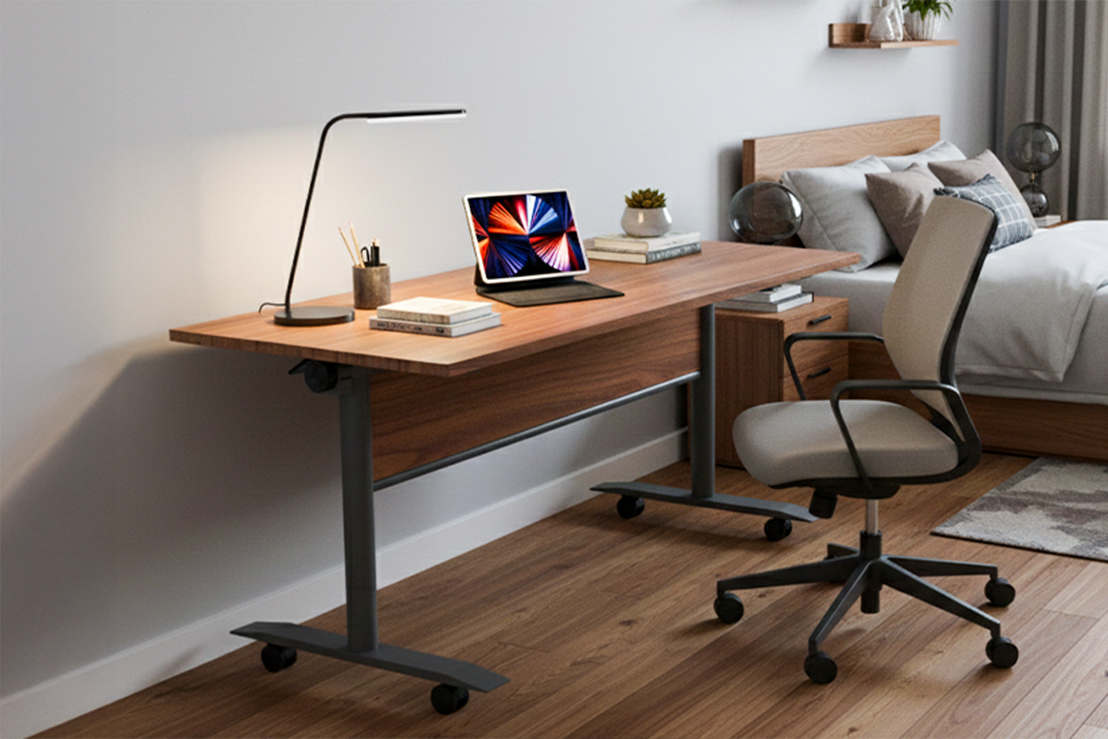
India's shift to hybrid and remote working has created a large population of professionals working from home offices that lack the ergonomic baseline of a well-specified corporate environment. Many home office professionals sit in dining chairs, sofas, or basic residential chairs that provide none of the ergonomic support of a commercial specification.
For home office professionals, an ergonomic chair is consistently the highest-return workspace investment available. It delivers more physical benefit per rupee than any other home office upgrade including desks, monitors, and lighting, because it addresses the most directly physical element of the daily working environment.
What Makes Indian Office Conditions Unique for Ergonomic Seating?
Climate and Breathability Requirements
India's climate creates office conditions that amplify the importance of chair breathability beyond what most international ergonomic specifications were originally designed to address. Summer temperatures across Delhi NCR, Mumbai, Pune, Bengaluru, and Chennai create thermal loading on the body that non-breathable seating surfaces intensify.
Even in air-conditioned Indian offices, the ambient temperature maintained for energy efficiency is typically higher than in equivalent European or North American buildings. Mesh upholstery that provides continuous air circulation across the full contact surface is the material specification most appropriate for Indian conditions across most of the working year.
Extended Working Hours in Indian Corporate Culture
Indian corporate culture across technology, financial services, consulting, and media sectors involves working hours that significantly exceed the standard eight-hour day in many roles. Twelve-hour working days are not unusual in these sectors, and the physical demands they place on the seating specification are correspondingly higher.
A chair that provides adequate comfort for eight hours may fail to maintain its physical support quality across twelve hours if the foam density, mechanism quality, and structural specification are not set to commercial rather than residential standards. For Indian professionals working extended hours, the commercial-grade specification of a genuine ergonomic chair is not a premium. It is a minimum standard.
The Rise of Hybrid Working in India
India's hybrid working model has created a situation where many professionals alternate between well-specified corporate environments and poorly specified home environments across the same working week. The physical contrast between a quality ergonomic chair in the office and an inadequate home chair is experienced directly as a physical wellbeing difference.
Organisations that provide ergonomic chair guidance or allowances for home office setup as part of their hybrid working policies protect their team members' physical wellbeing regardless of working location and maintain consistent productivity across both environments.
How to Choose the Right Ergonomic Chair for Your Office?
Match the Chair to the Working Duration
The most fundamental specification decision is matching the chair's ergonomic capability to the actual daily sitting duration of the primary user. For sessions of two to three hours, a well-specified mid-back chair with lumbar support is adequate. For sessions of six or more hours, a fully adjustable high-back ergonomic chair with headrest is the correct specification.
Overspecifying for very short sessions wastes budget without delivering proportional benefit. Underspecifying for long sessions is a health risk that the organisation bears the consequences of in employee wellbeing, attendance, and performance even when it is not identified as a seating specification problem.
Verify Adjustability Against Your Body Type
Every ergonomic chair has specific adjustment ranges for seat height, lumbar support position, armrest height, and tilt tension. These ranges must accommodate the actual body dimensions of the intended primary user.
A chair whose seat height range cannot achieve the correct knee angle for a very tall or very short user is not ergonomic for that user regardless of how complete its specification appears on paper. Always verify adjustment ranges against actual measurements before placing any order.
Check Certification and Build Quality
BIFMA certification is the most reliable independent quality indicator for commercial ergonomic chairs in India. It confirms that the chair has been independently tested to verified structural, ergonomic, and mechanism durability standards under sustained commercial daily use conditions.
A chair claiming ergonomic performance without BIFMA certification is relying entirely on self-reported quality claims. For a significant professional health investment, independent certification is the minimum quality assurance that responsible procurement should require.
For a complete guide to every feature that matters before making your ergonomic chair purchase decision, read our detailed guide on Top Features to Look for Before Buying an Ergonomic Office Chair.
Evaluate After-Sales Support
A quality ergonomic chair should deliver seven to twelve years of reliable commercial daily use. The gas lift, tilt mechanism, and lumbar adjustment are the components most likely to require attention over this period. A supplier with a documented warranty covering these components for at least three years and with local service capability in your city is the responsible procurement choice.
A supplier without local service presence cannot respond to mechanism failures within the timeframe that a busy corporate environment requires. Confirm specific response times and service coverage for your city before placing any large order.
How AFC Furniture Solutions Designs Ergonomic Chairs for Indian Professionals
What Ergonomic Chair Options Does AFC Offer?
AFC Furniture Solutions offers the most comprehensive ergonomic seating range in its product portfolio, manufactured at the Greater Noida facility to consistent BIFMA Level 3 certified quality standards specifically suited to the extended daily use demands and climate conditions of Indian professional environments.
The Myel is the flagship ergonomic specification with full multi-point adjustability including 3D armrests, adjustable lumbar depth and height, seat depth adjustment, and weight-balance tilt mechanism in a high-back mesh configuration tested for eight-plus hour professional working sessions.
The Spino features an adjustable headrest for full cervical support across extended continuous sessions. The Fluid and Fluid X deliver complete ergonomic adjustability in configurations balancing performance with a clean professional aesthetic suited to open-plan corporate floors.
The Sullion, Logica, Rock, Revoq, Flex, Nuvic, Breeze, X-Mesh, Orbit, and Toro provide additional ergonomic configurations across different back heights, adjustment profiles, and aesthetic specifications covering every professional context from open-plan workstations to executive cabins and meeting rooms.
For executive roles requiring ergonomic performance with premium visual authority, the Leather Chair range including the Grace, Pinnacle, Moonlight, and Rider combines full recline functionality and lumbar adjustability with the visual quality appropriate to senior professional environments.
AFC Furniture Solutions operates a 4 lakh square foot manufacturing facility in Greater Noida with a production capacity of up to 18,000 chairs per month, ensuring consistent quality and reliable supply for ergonomic chair orders at any corporate scale across India.
Explore the full AFC Furniture Solutions Seating range to compare every ergonomic chair option across mesh, leather, and training categories suited to every professional context in the modern Indian corporate office.
What Quality Standards Back AFC Ergonomic Chairs?
AFC Furniture Solutions holds BIFMA Level 3 certification, the highest internationally recognised standard for office furniture quality, sustainability, and safety. Every ergonomic chair in the range is independently tested to BIFMA-compliant structural, mechanism durability, foam density, and ergonomic adjustability standards before leaving the Greater Noida manufacturing facility.
AFC Furniture Solutions also holds ISO 9001, ISO 14001, and ISO 18001 certifications covering quality management, environmental responsibility, and occupational health and safety standards across the full manufacturing operation. Named institutional clients including Tata Consultancy Services, Air India, Maruti Suzuki, and DXC Technology confirm the scale capability and quality consistency AFC Furniture Solutions delivers across India's most demanding corporate environments.
Frequently Asked Questions
Q1. What is the simple definition of an ergonomic chair?
An ergonomic chair is a professionally designed seating solution built around the physical requirements of the human body during extended sitting. It provides adjustable support for the lumbar spine, adjustable seat dimensions for correct leg alignment, adjustable armrests for shoulder relief, and a recline mechanism for postural variation. Unlike a standard chair, it adapts to the user's body rather than requiring the user to adapt to a fixed surface.
Q2. Is an ergonomic chair really necessary or is it just a marketing term?
It is genuinely necessary for any professional sitting four or more hours daily. The structural support provided by a correctly adjusted ergonomic chair directly reduces the physical causes of the back pain, neck stiffness, and fatigue that accumulate in standard seating across extended professional sessions. The scientific evidence for ergonomic chair benefit is consistent and well-established across decades of occupational health research.
Q3. What is the most important feature to look for in an ergonomic chair in India?
Adjustable lumbar support is the single most important feature. Combined with breathable mesh upholstery for Indian climate conditions, it addresses the two most significant daily physical risks: spinal load from inadequate lower back support and thermal discomfort from non-breathable contact surfaces during extended sessions.
Q4. How long does it take to feel the benefits of an ergonomic chair?
Most professionals notice reduced physical discomfort within the first week of using a correctly adjusted ergonomic chair. The full benefit of improved postural alignment becomes apparent over two to four weeks as the body adapts to the correctly supported seated position and the muscular compensation patterns established by previous poor seating begin to resolve.
Q5. Can an ergonomic chair fix existing back pain?
A correctly specified and adjusted ergonomic chair significantly reduces the ongoing physical causes of sitting-related back pain and provides the conditions for existing strain to resolve. It is not a medical treatment for diagnosed conditions but it removes a primary daily cause of the postural loading that creates and perpetuates most occupational back and neck pain. For persistent or severe conditions, medical assessment alongside ergonomic improvement is the appropriate approach.
Q6. Does AFC Furniture Solutions provide ergonomic chair consultation before purchase?
Yes. AFC Furniture Solutions workspace consultants provide on-site ergonomic seating consultations for corporate clients across India, assessing the working patterns and physical requirements of the team before recommending specific chair specifications. Contact the AFC Furniture Solutions team to arrange a consultation for your office.
Final Thoughts
An ergonomic chair is not a premium upgrade for organisations with generous office budgets. It is the minimum appropriate specification for any professional who spends four or more hours daily at a desk.
For Indian offices specifically, where working hours are long, climate conditions make breathability essential, and the rapid growth of knowledge work industries has created millions of new desk-based professionals, correct ergonomic seating is one of the most impactful and most consistently underinvested workplace decisions available to any organisation.
AFC Furniture Solutions has been designing and supplying ergonomic seating for Indian professionals for over 15 years, with the most comprehensive chair range in its portfolio, BIFMA Level 3 and ISO-certified manufacturing quality, and pan-India supply and service capability from the Greater Noida facility.
Explore Other Popular Blogs

Let’s build together
Tell us about your project and we’ll help you plan, design, and deliver at scale.
.jpg)
.svg)