.svg)
How to Furnish Your Corporate Office Smartly

Planning to set up a corporate office? This practical guide helps you furnish smartly, prioritise quality, and avoid mistakes from day one.
Why Corporate Offices Need to Think Smartly About Office Furniture
With companies ranging from manufacturing headquarters to technology offices, the demand for quality office furniture has never been higher.
Setting up a corporate office is a significant investment. The furniture you choose will shape how your team performs, how clients perceive your business, and how much you spend on replacements over the next decade.
Getting this right from the beginning saves money, time, and a great deal of operational disruption down the line.
What Happens When You Prioritise Cost Over Quality?
Choosing low-cost office furniture may seem economical upfront, but it often leads to higher expenses over time. A chair that wears out within eighteen months ends up being replaced sooner; making two short-term purchases costlier than one durable, high-quality investment.
Beyond the financial cost, poor quality furniture creates physical discomfort, reduces focus, and sends the wrong message to both employees and visiting clients.
Commercial-grade furniture, on the other hand is designed and built for daily professional use. Budget alternatives simply are not engineered to the same standard, and the difference becomes painfully obvious within the first year.
How Does Good Office Furniture Impact Your Team?
When employees sit in well-designed ergonomic chairs at properly specified workstations, they experience less physical fatigue, better posture, and higher sustained concentration.
A clean, organised, and well-furnished office also signals that the organisation values its people. This directly influences morale, retention, and focus, which increases productivity.
The physical environment of a workplace is one of the most consistent predictors of employee satisfaction. Office furniture is not just a background detail. It is a daily experience for every person in the building.
How to Plan Your Office Before Buying Any Furniture?
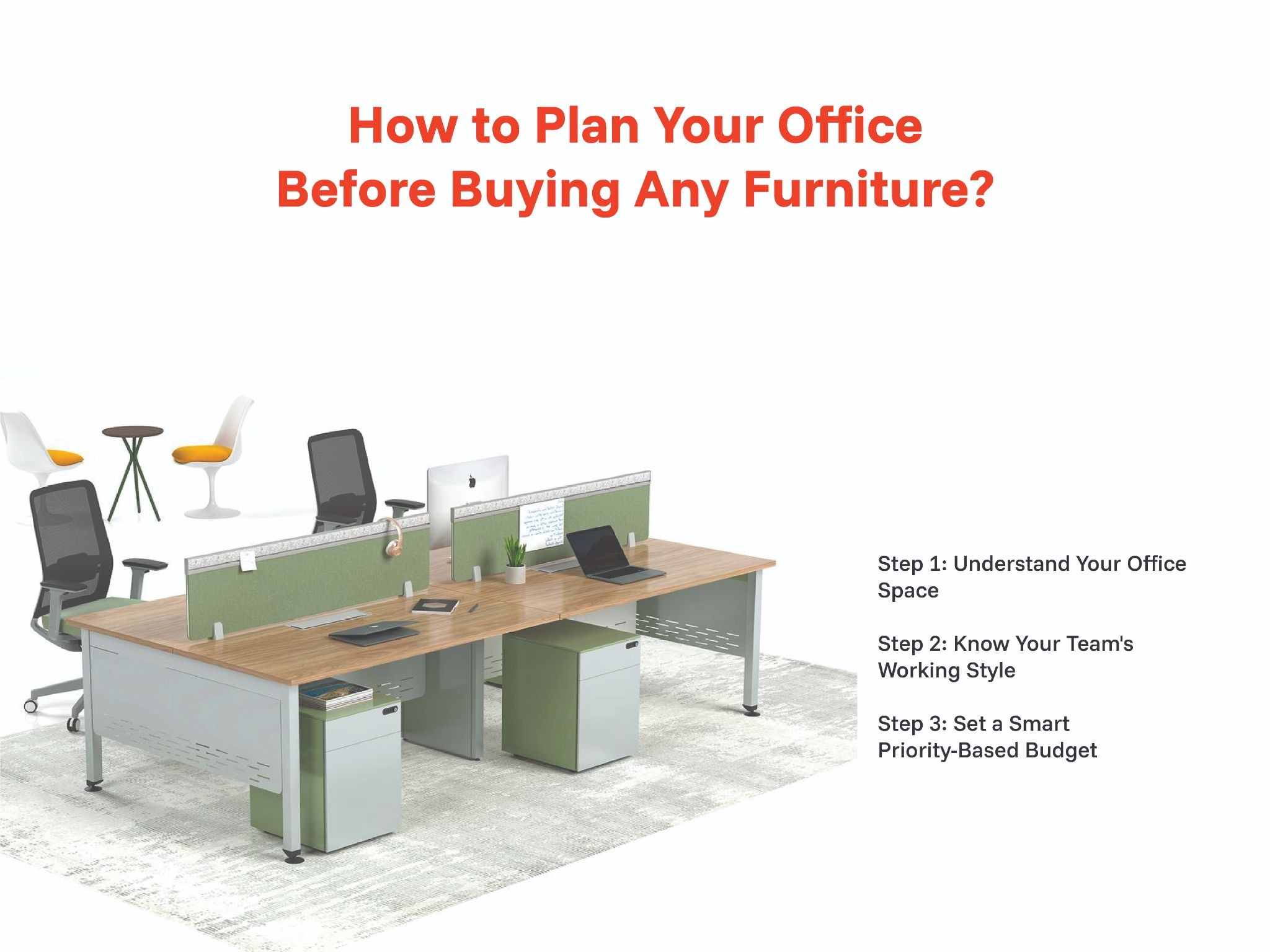
Step 1: Understand Your Office Space
Before approaching any supplier, draw a simple floor plan of your office. Mark the positions of doors, windows, columns, electrical sockets, and data points.
Each zone of your office has different furniture requirements. Knowing where everything sits before you buy prevents the most common and expensive procurement mistakes.
Tip: Always mark every electrical socket and data point on your floor plan before specifying any furniture. Cable management is far easier and cheaper to design in advance than to correct after the furniture has been installed.
Step 2: Know Your Team's Working Style
Does your team collaborate frequently or work mostly in focused individual tasks? Do clients visit your office regularly? Do employees have fixed seats or hot-desk?
These answers directly determine the workstation configuration, panel heights, and meeting room requirements that will actually serve your team rather than simply filling the floor.
A sales team, a development team, and a finance team all work differently and need different corporate office furniture setups to perform at their best.
Step 3: Set a Smart Priority-Based Budget
Divide your total budget across furniture categories in proportion to daily impact. Ergonomic seating and workstations should always receive the highest allocation because they affect everyone, every day.
Reception aesthetics, decorative elements, and breakout accessories can be phased in later once the core working environment is functioning well.
This approach ensures your money creates the most sustained value rather than being spread evenly across items with very different levels of daily importance.
What Furniture Does Every Corporate Office Actually Need?
Workstations
The office workstation is the foundation of your corporate setup. Every productive hour your team spends happens at a desk, which makes this the most critical furniture decision you will make.
Modular workstation systems are the right choice for most growing offices. They can be extended as the team grows without replacing the entire configuration.
Integrated cable management is essential. Visible wiring across a professional floor reduces the perceived quality of the environment and creates genuine safety risks.
Explore AFC Furniture Solutions' full Workstations range for modular, height-adjustable, and panel series options suited to corporate setups.
Ergonomic Office Chairs
No single piece of office furniture affects your team's health and daily output more directly than the chair. This is not an area to compromise on.
Ergonomic chairs with adjustable lumbar support, seat height, and armrests are essential for anyone sitting for six or more hours daily. Poor seating creates back pain, reduces focus, and increases sick days.
For offices in India where temperatures can be warm, mesh back chairs are particularly practical because they allow air circulation and stay comfortable across long working sessions.
Bonus Point: Before placing a bulk seating order, request sample units and have three to five team members of different heights and body types sit in them for a full working day. This one step prevents expensive bulk orders that do not work for your team's physical range.
Meeting Room Furniture
Every corporate office needs a dedicated space for client meetings and internal reviews. The furniture in this room creates the first impression your business makes on visitors.
A solid conference table with integrated power access, paired with comfortable and cohesive meeting chairs, communicates that the organisation takes quality seriously.
Specify the table size based on how the room is regularly used, not its maximum theoretical capacity. A room set up for twelve that is used by four feels poorly considered.
Office Storage and Lockers
Good office storage keeps the workspace visually clean and operationally efficient. A cluttered desk is not just an aesthetic problem. It fragments attention and reduces daily productivity.
Under-desk pedestals for personal items, locker banks for bags and valuables, and tall storage cabinets for shared team files are the three core storage requirements for most corporate offices.
Plan storage in proportion to genuine need. Under-specifying leads to desk clutter within weeks of moving in, while over-specifying wastes valuable floor space.
Breakout and Soft Seating Areas
Breakout areas are now an important part of any well-designed corporate office. They provide space for informal conversations, short mental breaks, and spontaneous collaboration.
Soft seating, lounge chairs, and high bar tables near the pantry area all contribute to a workspace that feels human and welcoming rather than purely transactional.
Explore the AFC Furniture Solutions. Seating range for breakout, lounge, and collaborative seating suited to modern corporate environments.
How to Balance Quality and Cost Without Compromising?
Striking the right balance isn’t about spending more everywhere; it’s about investing where it matters most.
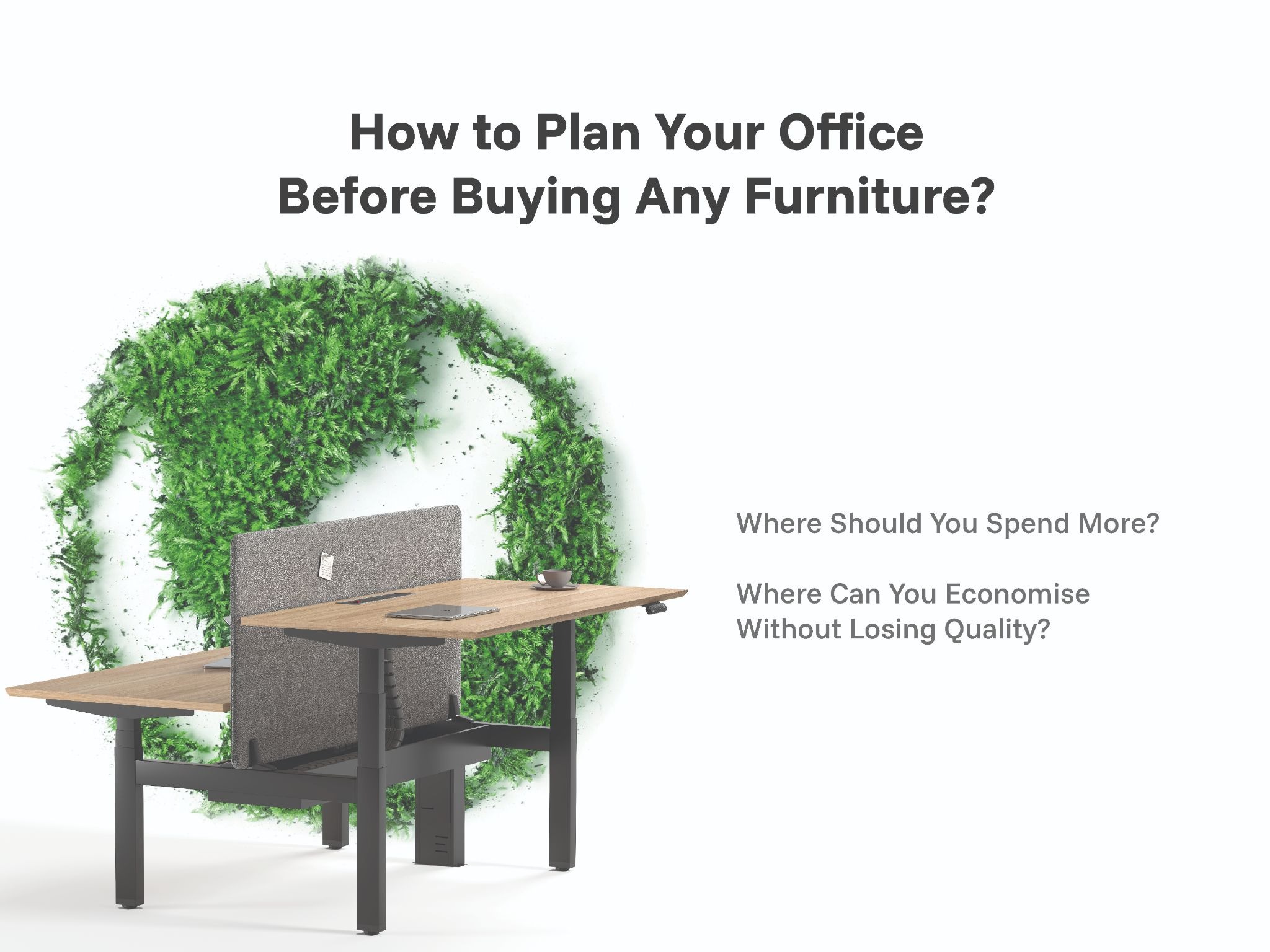
Where Should You Spend More?
Ergonomic chairs and workstations should receive your highest per-unit investment without exception. These are used most intensively by the most people for the longest daily duration.
Client-facing spaces, including the reception area and main meeting room, also warrant a higher specification because they directly shape how your business is perceived by visitors and partners.
Commercial-grade materials including powder-coated steel frames, high-pressure laminate worksurfaces, and high-density foam seating deliver the durability that justifies a higher upfront cost over a ten-year lifecycle.
Where Can You Economise Without Losing Quality?
Breakout furniture, accent seating, and decorative elements are appropriate areas for a more modest specification without undermining the overall quality of the environment.
Internal storage in back-office areas and secondary meeting rooms can also be specified at a lower level without any meaningful impact on daily working quality.
The guiding principle is simple. Invest on what is used most and optimise what is used occasionally.
What to Check Before Finalising Any Office Furniture Purchase?
Material Quality and Standards
For workstation surfaces, ask about the board grade. BWR (Boiling Water Resistant) grade engineered wood handles India's humidity far better than standard MDF. PVC edge banding on all worksurface edges prevents chipping and moisture damage over time.
For chair frames, powder-coated steel is the correct specification for commercial daily use. Plastic frames will not hold up under sustained professional use across multiple years.
For storage units, cold-rolled steel with a quality powder-coat finish is the most durable and termite-resistant option for any Indian commercial environment.
Warranty and After-Sales Support
For commercial office furniture, a warranty of three to five years covering all major structural components is a reasonable minimum expectation from any reputable supplier.
Read the warranty terms carefully. Some warranties exclude the most frequently failing components including gas lift mechanisms and castor assemblies, which makes them largely ineffective in practice.
Local after-sales support is equally important. A supplier with presence in Delhi NCR can dispatch a technician quickly when issues arise, which a distant supplier cannot match.
Scalability for Future Growth
If your operation is growing, always specify modular furniture systems that can be extended with matching components as headcount increases over time.
Confirm that the configuration and finish you are selecting will remain available for future orders over the next three to five years. Product range discontinuation mid-expansion is a common and avoidable problem.
Building scalability into the initial specification protects your investment and eliminates the cost and disruption of a full furniture replacement every time the team grows.
Tip: For businesses setting up office furniture in India for the first time, visit a manufacturer's experience centre in person before placing any order. Seeing and testing the products in a showroom reveals quality details that no brochure or website photograph can communicate.
Common Mistakes to Avoid When Furnishing a Corporate Office
Buying Without a Floor Plan
Purchasing furniture before the floor plan is finalised leads to sizing mismatches, blocked emergency exits, and layouts that do not reflect how the team actually works.
Always have a confirmed and approved floor plan with every measurement verified before placing any furniture order.
Choosing Looks Over Function
A visually impressive chair without proper lumbar support will cause back pain within weeks of daily use. A beautiful desk without cable management will look cluttered within days of occupation.
Evaluate functional specifications first and aesthetic quality second for every item that is used daily by your team.
Ignoring Ergonomics
Ergonomics is not a premium feature reserved for executive offices. It is a fundamental requirement for every person who sits at a desk for six or more hours a day.
Investing in ergonomic office furniture from the outset reduces sick days, improves focus, and prevents the chronic physical conditions that develop slowly from years of poor seating support.
Frequently Asked Questions
Q1. What is the most important furniture to get right in a corporate office?
Ergonomic seating and workstations are the highest priority. They affect every person on every working day and have the most direct impact on health, focus, and daily productivity.
Q2. How much space should I allow per person in a corporate office layout?
A general benchmark is 50 to 60 square feet per person, including the workstation and each individual's share of circulation space. A floor plan produced by your supplier will give a precise figure for your specific space.
Q3. Is modular furniture the right choice for a growing team?
Yes. Modular workstation systems can be extended with matching components as the team grows. This protects the initial investment and eliminates the need for a full furniture replacement every time headcount increases.
Q4. How long should good corporate office furniture last?
Commercial-grade office furniture from a reputable manufacturer should deliver seven to twelve years of reliable daily use. The key variable is whether the products were built to commercial rather than residential standards from the outset.
Q5. Can I get office furniture customised for a specific layout or brand colour?
Yes. Most reputable manufacturers offer customisation across frame colours, worksurface finishes, and configuration dimensions. Confirm customisation availability and lead times before placing any order.
Q6. What should I look for in an office furniture supplier near me?
Look for a supplier with a local experience centre, a clear warranty policy, installation support, and a product range that covers workstations, seating, storage, and meeting room furniture under one roof.
Final Thoughts
Furnishing a corporate office smartly is not about spending the least. It is about spending wisely on what genuinely matters and building a workspace that serves your team well for years to come.
Whether you are setting up a new office or upgrading an existing one, starting with quality priorities rather than cost targets produces a better result every time.
AFC Furniture Solutions has been helping organisations across India, including businesses looking for quality office furniture, furnish productive and well-designed corporate workspaces for over 15 years.
Explore Other Popular Blogs



Let’s build together
Tell us about your project and we’ll help you plan, design, and deliver at scale.
.jpg)
.svg)