.svg)
High Back vs Mid Back Office Chairs: Which Is Right for Corporate Use

High back vs mid-back office chair: which suits your corporate office best? This guide by AFC Furniture Solutions helps you decide.
The choice between a high-back vs. mid-back office chair is one of the most common seating specification decisions in corporate procurement. Both configurations are widely used in Indian offices, but they serve different roles, different working patterns, and different workspace environments. Choosing incorrectly, specifying a mid-back chair for a role that requires all-day support, or a high-back chair for an active role that involves frequent movement, results in either discomfort or wasted specification budget. This guide by AFC Furniture Solutions explains exactly how to match office chairs to the right roles and environments in your corporate workplace.
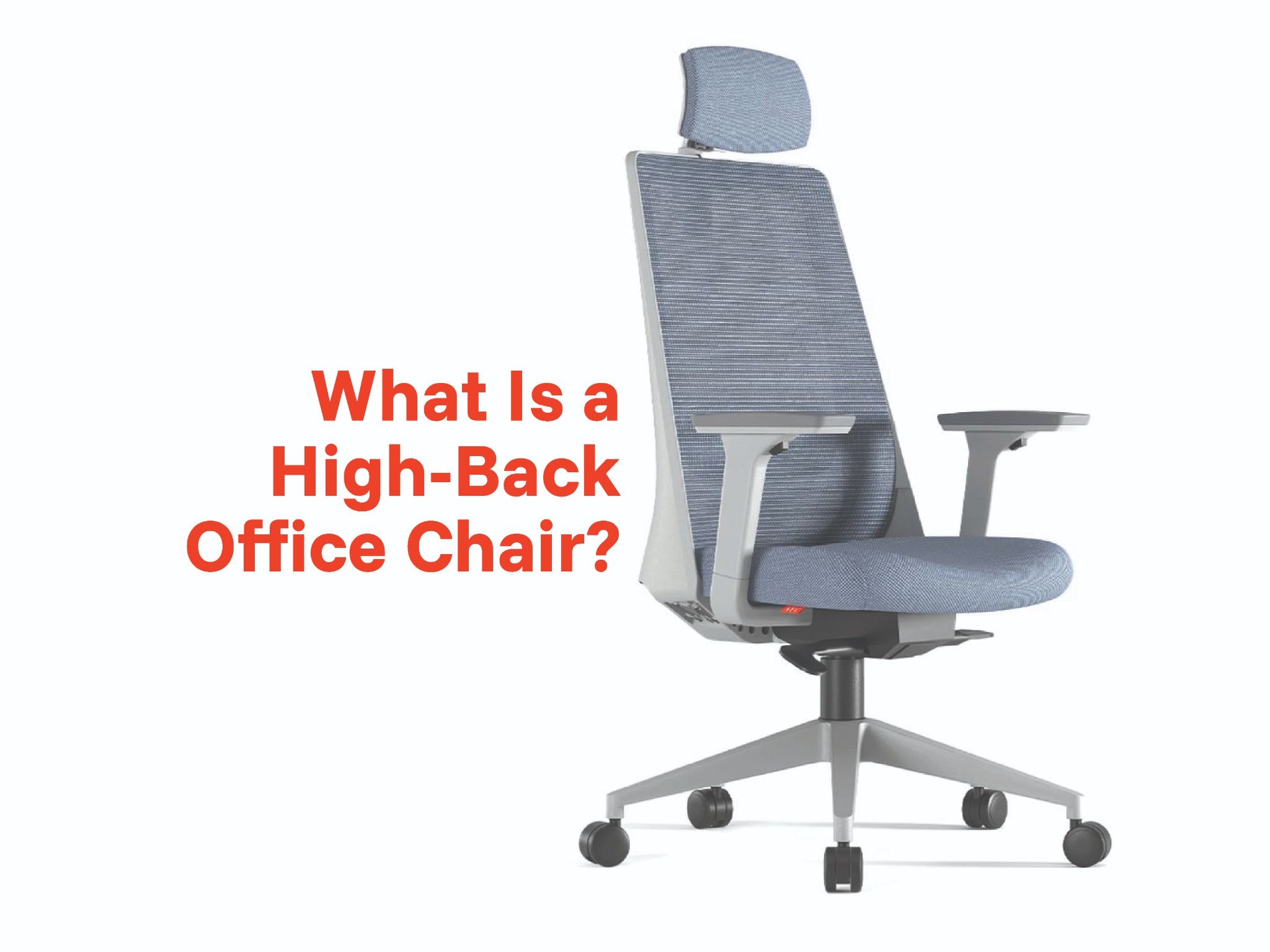
What Is a High-Back Office Chair?
A high-back office chair has a backrest that extends above the shoulder line to support the upper back, neck, and in most configurations the head. The backrest height typically ranges from 700mm to 850mm above the seat surface, reaching the crown of the head or the base of the skull for most adult users.
High-back chairs almost always include an integrated headrest, which provides neck and cervical spine support during reclined positions and extended sitting sessions. The tall backrest and headrest combination creates the characteristic visual profile associated with executive and director chairs in Indian corporate offices.
AFC Furniture Solutions manufactures high-back chairs across both the Mesh Chair range and the Leather Chair range, with models designed for open-plan workstation use as well as executive cabin and director office applications.
What Is a Mid-Back Office Chair?
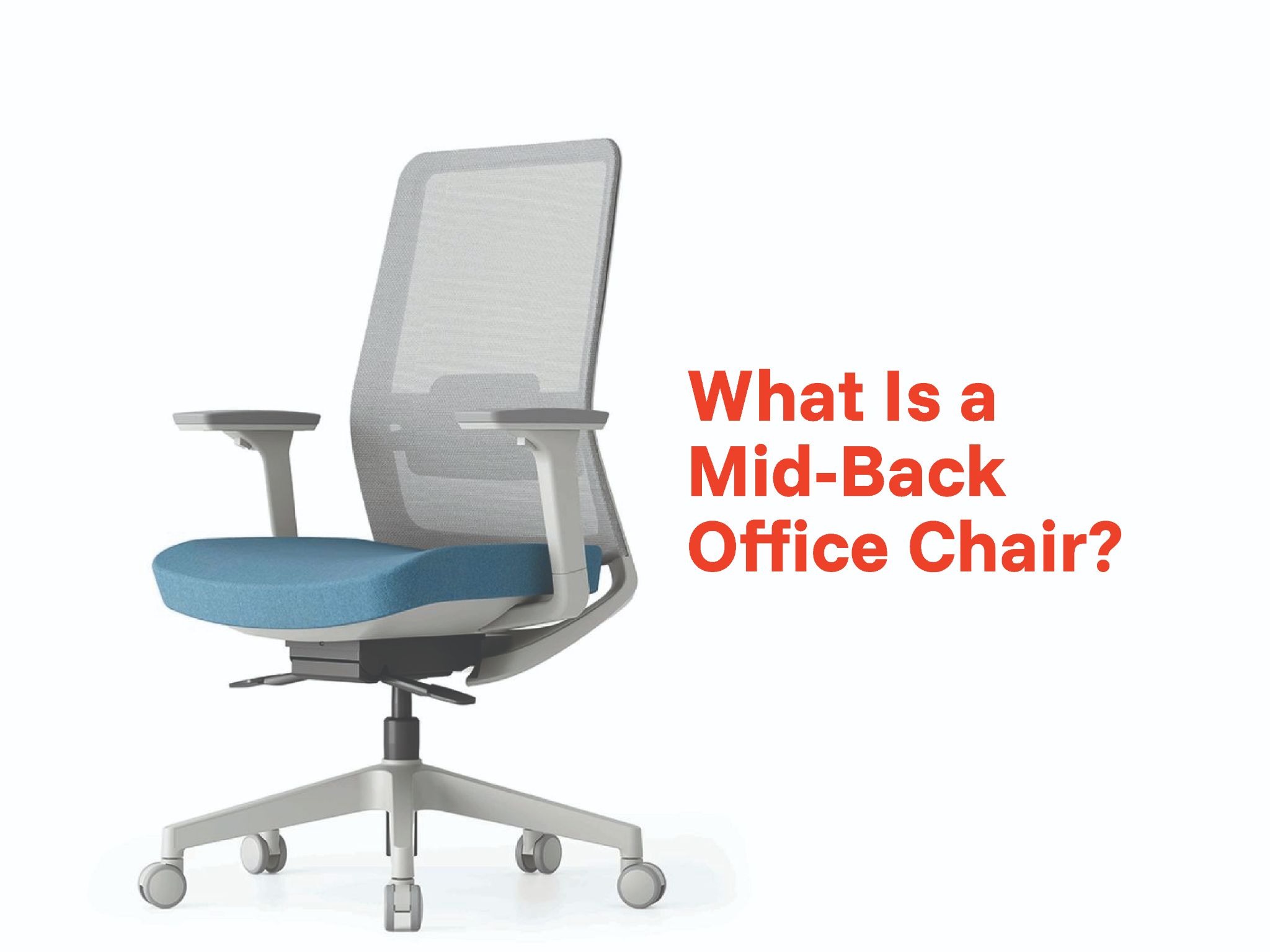
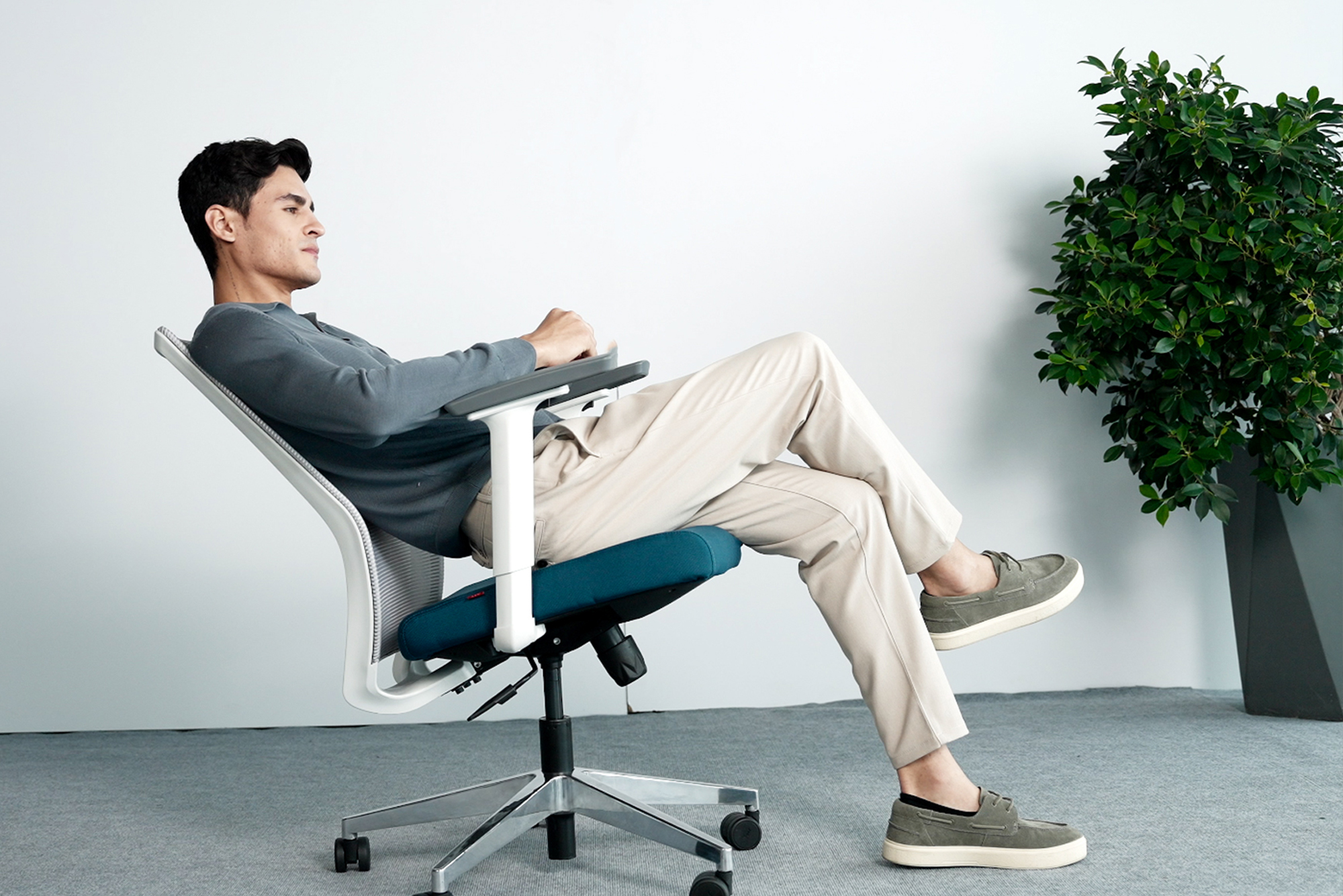
A mid-back office chair has a backrest that extends to approximately shoulder height or the base of the shoulder blades, providing lumbar and mid-spine support without covering the upper back or neck. The backrest height typically ranges from 450mm to 600mm above the seat surface.
Mid-back chairs do not include a headrest as a standard component. They are lighter in visual weight and physical footprint than high-back alternatives, making them a common specification for open-plan workstation environments where a less imposing chair profile is preferred.
The mid-back configuration is well suited to employees who move frequently between seated and standing positions, regularly leave their workstation, or work in roles that involve face-to-face interaction where a lower chair profile creates a more approachable visual environment.
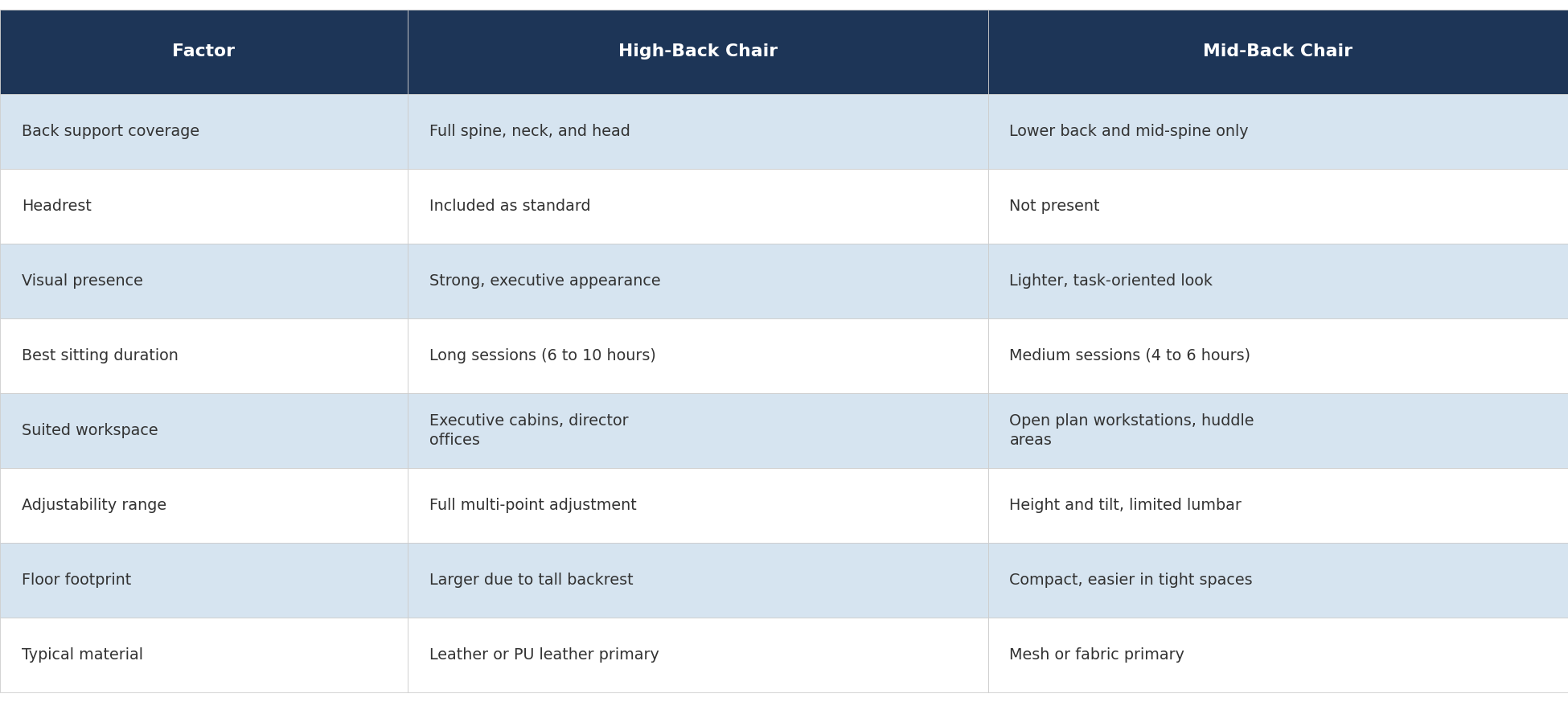
High Back vs Mid Back: Key Differences at a Glance
When to Choose a High-Back Chair
All-Day Desk-Based Roles
High-back chairs are the correct specification for employees who sit at a workstation for six to ten hours daily with minimal interruption. The extended backrest supports the full spine including the upper back and neck, which accumulates significant strain during long, static sitting sessions that a mid-back chair cannot address.
Research in occupational ergonomics consistently finds that unsupported cervical and upper thoracic spine loading is a primary cause of neck pain and upper back fatigue in desk-based workers, particularly those who use multiple monitors or maintain a fixed forward gaze for extended periods.
Video Call and Remote Meeting-Heavy Roles
Employees who spend a significant proportion of their day on video calls benefit from high-back chairs with headrests because the headrest provides a visual backdrop that appears professional and consistent on camera. More practically, the headrest supports the neck during the slight backward lean that many users adopt when speaking on a call, reducing the cervical fatigue that accumulates over multiple calls throughout a day.
Executive and Director Offices
High-back chairs are the standard specification for executive cabins and director offices because their visual profile communicates the professional status appropriate for senior leadership spaces. The tall backrest creates a commanding visual presence when the occupant is seated and provides the full-spine support appropriate for a senior leader who may be in their chair for extended periods between meetings.
When to Choose a Mid-Back Chair
Active and Mobile Roles
Mid-back chairs are better suited to employees in active roles who move between their desks, meeting rooms, and collaborative spaces multiple times a day. The lighter build and lower profile of a mid-back chair requires less physical effort to get in and out of, which is a meaningful practical consideration for roles involving frequent movement.
Sales teams, customer-facing roles, and project managers who are regularly away from their desks and return to their workstation for intermittent periods of work typically find mid-back chairs more practical than high-back alternatives for their working pattern.
Open Plan Collaborative Environments
Open-plan offices with a collaborative culture sometimes specify mid-back chairs across the floor to create a more visually open and approachable environment. The lower profile of a mid-back chair maintains sightlines across the floor when employees are seated, which contributes to the sense of openness in a collaborative workspace design.
Space-Constrained Workstations
In offices where workstation spacing is particularly tight, mid-back chairs have a slightly smaller physical footprint than high-back alternatives because the tall backrest of a high-back chair requires more clearance behind the chair when reclined. In very dense open-plan layouts, this difference can be a meaningful spatial consideration.
Which Roles Suit Which Chair Configurations?
The following role-based guidance applies to the majority of Indian corporate office environments. Specific individual requirements may vary, and a trial period is always recommended before bulk ordering for any single role type.
Data analysts and developers: High-back mesh chairs. These roles involve sustained, concentrated screen work with minimal interruption. Full upper back and neck support across long working sessions is the priority.
Sales and business development: Mid-back chairs. These roles involve frequent movement, client calls, and regular absence from the workstation. A lighter, more mobile chair configuration suits the working pattern better.
Finance, legal, and compliance: High-back chairs. These roles involve long periods of focused document and screen work with high concentration requirements. Neck and upper back support throughout the day is important.
HR and administration: mid-back or high-back, depending on the specific role. HR professionals who conduct regular interviews and in-person meetings may prefer a mid-back chair for its approachable visual profile. Those in primarily desk-based administrative roles benefit more from a high-back specification.
Executive and senior management: High-back leather or PU leather chairs as standard. The visual authority and full-spine support of a high-back chair are both appropriate for this role category.
Neck Support and the Case for High-Back Chairs
The cervical spine, the seven vertebrae that make up the neck, is the section of the spine that accumulates the most unaddressed strain in desk-based office work. Unlike the lumbar spine, which is addressed by lumbar support mechanisms in both high-back and mid-back chairs, the cervical spine is only supported when the chair backrest extends high enough to reach the neck and head.
For employees who sit for more than five hours daily, the cumulative cervical loading of an unsupported neck across a working week is significant. Neck pain and cervical stiffness are among the most commonly reported musculoskeletal complaints in Indian corporate offices, and inadequate chair support above the shoulder line is a primary contributing factor.
A high-back chair with an adjustable headrest addresses this directly by providing passive support to the cervical spine whenever the user leans back even slightly. For long-session desk workers, this is a meaningful health and productivity consideration, not just an ergonomic preference.
Ergonomics of Mid-Back Chairs for Active Roles
While high-back chairs provide greater coverage, mid-back chairs are not ergonomically inferior for the roles they are suited to. A well-specified mid-back chair with adjustable lumbar support, seat height adjustment, and correct seat depth addresses the primary ergonomic needs of employees who are not in extended static-sitting positions.
The key ergonomic specification to confirm in a mid-back chair is the lumbar support mechanism. Because the backrest does not extend to the upper back, the lumbar support in a mid-back chair carries more of the total postural support burden. Adjustable lumbar height is, therefore, even more important in a mid-back chair than in a high-back model where the overall backrest coverage partially compensates for a less-than-perfectly-positioned lumbar pad.
How Chair Height Relates to Desk and Monitor Setup
Whether you specify a high-back or mid-back chair, the ergonomic benefit of either is dependent on the chair being set at the correct height relative to the desk surface and monitor position. An ergonomic high-back leather chair specified at the wrong seat height for a user's desk creates posture problems that the chair's backrest coverage cannot correct. Always confirm that the chair height range is compatible with the desk height specification before finalising the bulk order for any chair type.
For high-back chairs with headrests, the headrest position should be checked at the time of installation for each user. A headrest set too low will push the head forward, which is worse for the cervical spine than no headrest at all. A correctly positioned headrest should contact the base of the skull in a neutral, slightly reclined position.
Common Mistakes When Choosing Between High-Back and Mid-Back
Specifying mid-back chairs to reduce cost across all roles: Mid-back chairs are generally less expensive than high-back alternatives at equivalent quality levels. Specifying mid-back chairs universally to manage budget results in under-specification for long-session roles where cervical and upper back support matters.
Specifying high-back chairs for all roles without considering mobility: High-back chairs are heavier and have a larger physical footprint. For active roles where employees frequently move between spaces, this approach creates practical friction that mid-back chairs avoid.
Ignoring the headrest adjustment at installation: High-back chairs with headrests that are never adjusted for the individual user provide no benefit. Correct headrest positioning takes under a minute per chair at installation and should be part of the onboarding process for every new chair deployment.
Choosing chair height configuration based on appearance alone: The visual difference between high and mid-back chairs is significant, and some procurement decisions are driven primarily by how the chair looks on the office floor rather than by the ergonomic needs of the people sitting in it. Role-based specification delivers better long-term outcomes.
Frequently Asked Questions (FAQs)
These are the most common questions asked when choosing between high-back and mid-back office chairs for corporate workplaces.
Q1. Is a high-back chair always better than a mid-back chair?
Not always. A high-back chair is better for roles involving extended, static, screen-based work where full spine support, including the neck, is needed throughout the day. A mid-back chair is better for active roles with frequent movement, face-to-face interactions, or regular absence from the workstation, where the lighter build and lower profile are more practical.
The right answer depends on the specific role and working pattern of the person using the chair, not on a general hierarchy of one configuration over the other.
Q2. Can a mid-back chair provide adequate support for long working hours?
A well-specified mid-back chair with adjustable lumbar support can adequately support the lower and mid-spine for users sitting up to five to six hours daily. For users sitting longer than six hours with minimal interruption, the absence of upper back and neck support in a mid-back chair becomes a meaningful ergonomic shortfall that a high-back chair addresses more effectively.
For document-intensive or screen-heavy roles involving sustained sitting beyond six hours, a high-back chair is the stronger recommendation.
Q3. Do high-back chairs take up more space in an open plan office?
Slightly, yes. A high-back chair requires more clearance behind the workstation when the user reclines because the tall backrest extends further back during recline than a mid-back chair. In a standard open plan workstation layout with adequate spacing between rows, this difference is minimal and rarely a binding constraint.
In very dense open plan layouts with tight row spacing, the difference becomes more noticeable and is worth considering when comparing high and mid-back options.
Q4. What is the correct headrest height for a high-back chair?
The headrest should be positioned at a height where it contacts the base of the skull when the user sits in their normal working posture with a slight backward lean. It should not push the head forward, which happens when the headrest is positioned too low or too far forward.
A correctly positioned headrest should feel like a gentle resting point rather than a forward pressure. Adjust the height and forward tilt of the headrest at installation for each individual user rather than leaving it at the factory default position.
Q5. Does AFC Furniture Solutions offer both high-back and mid-back chairs for corporate orders?
Yes. AFC Furniture Solutions manufactures both high-back and mid-back chairs across the Mesh Chair and Leather Chair ranges, designed for different roles and environments in Indian corporate offices. Both configurations are available for bulk procurement with volume pricing and pan-India installation support.
Contact AFC Furniture Solutions at +91 9999006933 or visit afcindia.in to discuss the right configuration mix for your specific office roles and headcount.
Tips for Choosing the Right Chair Configuration
- Tip 1: Audit your office roles before specifying a single chair model across the floor. Roles with different daily sitting patterns and working styles have genuinely different ergonomic needs that a single configuration cannot optimally serve.
- Tip 2: For roles involving more than six hours of sustained desk work daily, specify high-back chairs as the default. The cervical and upper back support benefit over a full working day is measurable in reduced fatigue and musculoskeletal complaints.
- Tip 3: Adjust headrests for each individual user at the time of installation. A headrest set at the wrong position provides no benefit and may actively cause discomfort, so this step should always be part of the chair setup process.
- Tip 4: Request trial units of both high-back and mid-back configurations before finalising a large bulk order. Users in the relevant roles should try each configuration for at least one full working day before the specification decision is confirmed.
Bonus Points
- Bonus 1: AFC Furniture Solutions offers both high-back and mid-back configurations across the Mesh Chair range (Myel, Fluid, Spino, and Breeze) all manufactured under BIFMA Level 3 certified production processes.
- Bonus 2: All AFC Furniture Solutions office chairs carry a warranty of up to 10 years on structural components, covering the tilt mechanism, pneumatic cylinder, and frame under normal commercial use conditions.
- Bonus 3: AFC Furniture Solutions provides pan-India delivery and installation support for all corporate seating orders. Contact our team at +91 9999006933 to discuss your chair configuration requirements.
Conclusion
The choice between a high-back and mid-back office chair is a role-based decision, not a quality or budget decision. High-back chairs provide the full-spine support and professional visual presence needed for long-session desk roles and executive spaces. Mid-back chairs provide the lighter build and active mobility suited to roles involving frequent movement and regular absence from the workstation. Matching the chair configuration to the actual working pattern of each role delivers better ergonomic outcomes and more efficient use of the furniture specification budget.
AFC Furniture Solutions offers both high-back and mid-back chair configurations across mesh and leather ranges, manufactured to BIFMA Level 3 standards with pan-India delivery and a warranty of up to 10 years.
Explore Other Popular Blogs

Let’s build together
Tell us about your project and we’ll help you plan, design, and deliver at scale.
.jpg)