.svg)
Why Smart Businesses Are Choosing Modular Office Furniture Over Custom-Built Options

Discover why smart businesses across India are choosing modular office furniture over custom-built options. Expert guidance from AFC Furniture Solutions.
Why Is Office Furniture a Strategic Business Decision?
What Has Changed in How Indian Businesses Think About Office Furniture?
Indian businesses have fundamentally changed how they approach office furniture over the past decade. It is no longer viewed simply as a one-time purchase to fill a floor. It is increasingly recognised as a strategic investment that shapes productivity, culture, and operational flexibility.
The shift toward hybrid working, rapid team growth, and frequent office relocations has made flexibility the defining requirement of any furniture decision. Furniture that cannot adapt to changing business conditions becomes a liability rather than an asset.
Smart businesses across India, from technology startups to large enterprises, are choosing modular office furniture because it serves the full range of their operational needs for many years, not just the day it is installed.
Why Does the Wrong Furniture Choice Cost More Than You Think?
The true cost of a poor office furniture decision is rarely visible at the point of purchase. It becomes apparent over the months and years that follow, in the form of replacement costs, installation disruption, and a working environment that no longer serves the team it was designed for.
Custom-built furniture that cannot be moved, extended, or reconfigured when the business grows creates a situation where the only options are expensive reconstruction or complete replacement. Neither is a good outcome for a growing business.
Modular office furniture eliminates this problem by design. It adapts as the business evolves, protecting the initial investment across the full life of the product rather than writing it off at the first significant organisational change.
What Is Modular Office Furniture and How Does It Work?
A modular office furniture system is an engineered collection of interchangeable, connectable components including work surfaces, frames, storage units, and panel screens that can be assembled, extended, or reconfigured as the organisation's needs change.
The defining principle is that every component is designed to work with every other component in the system. Any configuration built from a modular system today can be changed tomorrow without replacing any of the original components.
This interchangeability is what makes modular furniture fundamentally different from both custom-built and standard freestanding furniture, and it is the reason smart businesses consistently choose it when planning workspaces for growth.
What Makes Furniture Modular?
Furniture qualifies as truly modular when individual components can be added, removed, or rearranged without affecting the structural integrity or visual coherence of the remaining configuration.
A desk that can be extended by adding a matching bay, a storage system that can have additional units stacked on top, and a panel system where individual screens can be relocated without dismantling the entire run are all examples of genuine modularity.
True modular office furniture also maintains visual consistency across all configurations. Whether you have five workstations or fifty, they should look like a single coherent system rather than a collection of mismatched pieces added at different times.
How Is Modular Different from Custom-Built Furniture?
Custom-built furniture is manufactured and installed to a fixed specification for a specific space. Once installed, it cannot be extended, relocated, or reconfigured without significant additional construction work.
Modular office furniture is manufactured to a system specification that allows any configuration to be modified at any time. The components themselves are the same regardless of how they are arranged.
The practical consequence is that modular furniture grows and moves with the business while custom-built furniture remains fixed to the space and the layout that existed when it was originally designed.
What Is Custom-Built Office Furniture?
Custom-built office furniture is furniture that is designed and constructed specifically for a particular space, fabricated according to a specific brief.
It offers complete design freedom within the constraints of the space and can create visually impressive results that are unique to the environment. For this reason, it has traditionally been favoured for high-end executive spaces and reception areas.
However, the same characteristics that make it visually distinctive also make it operationally inflexible. Understanding both sides of this equation is essential to making the right decision for your organisation.
What Are the Advantages of Custom-Built Furniture?
Custom-built furniture can be designed to fit unusual spaces precisely, including rooms with structural columns, non-standard angles, or specific architectural features that standard modular systems cannot easily accommodate.
It offers complete freedom over materials, finishes, and aesthetic details, which can produce a result that is visually unique and highly specific to the organisation's brand identity.
For spaces where visual uniqueness and architectural fit are the primary requirements, such as flagship reception areas or executive boardrooms, custom-built furniture can deliver results that are difficult to replicate with standard modular systems.
Where Does Custom-Built Furniture Fall Short?
The most significant limitation of custom-built furniture is that it is permanent. It is fixed to the space in which it was built and cannot be relocated when the business moves, expanded when the team grows, or reconfigured when the working style changes.
The installation process involves on-site construction work that creates dust, noise, and operational disruption for extended periods. In an occupied office, this is a significant practical problem.
Custom-built furniture also has no residual value. If the organisation outgrows the space or moves to new premises, the furniture cannot move with it. The entire investment is written off at the point of relocation.
Modular vs Custom-Built Office Furniture: Direct Comparison
Cost and Budget
Custom-built furniture typically carries a higher upfront cost due to the design, material, and labour involved in bespoke fabrication. For large floor areas, this cost can be substantially higher than a comparable modular system.
Modular office furniture is produced at scale in controlled factory conditions, which delivers consistent quality at a lower per-unit cost. Volume pricing for larger orders makes it significantly more economical for organisations furnishing entire office floors.
Over a ten-year lifecycle that includes potential relocation, expansion, or reconfiguration, the total cost of ownership of modular furniture is almost always significantly lower than custom-built alternatives.
Installation Time and Disruption
Custom-built furniture requires on-site fabrication or prolonged installation work that can take weeks and creates significant operational disruption. In an occupied office, this level of disruption affects the working day of every employee on the floor.
Modular office furniture arrives pre-fabricated and is assembled by a professional installation team in one to two days for a complete office floor. Installation over a weekend allows the team to return to a fully functional new workspace on Monday morning.
For businesses that cannot afford extended downtime or disruption, the installation speed of modular furniture is not simply a convenience. It is a genuine operational advantage.
Flexibility and Scalability
Custom-built furniture cannot be extended, relocated, or reconfigured without commissioning entirely new construction work. Every change requires a new investment comparable to the original.
Modular office furniture can be extended by adding matching components, reconfigured by repositioning existing elements, and relocated to a new premises without any damage to the furniture or the building.
For any business that anticipates growth, change, or relocation over the next five to ten years, this flexibility is the single most compelling argument in favour of a modular system.
Quality and Durability
Custom-built furniture quality varies significantly depending on the skill of the contractor and the materials specified. There is often no independent quality verification and warranty terms are typically limited.
Commercial-grade modular office furniture from established manufacturers is produced to consistent specifications and tested to international standards. BIFMA certification provides independent verification of structural integrity and long-term durability.
For large institutional purchases where consistent quality across hundreds of workstations is a requirement, factory-manufactured modular furniture is inherently more reliable than site-built alternatives.
Relocation and Future-Proofing
Custom-built furniture has zero relocation value. When the business moves, it stays behind. The entire investment is written off, and the process begins again from scratch at the new location.

Modular office furniture is fully dismantlable and relocatable. Components can be packed, transported, and reassembled at a new location with minimal cost and no loss of quality. The original investment moves with the business.
This relocatability means that a modular furniture investment made today continues to deliver value through every future office move the organisation makes, rather than being a sunk cost tied to a single specific space.
Tip: When evaluating any modular office furniture system, always confirm with the supplier that the specific configuration and finish you are selecting will remain available for future orders over the next five years. The ability to add matching components later is only valuable if the product range remains in production when you need it.
Who Should Choose Modular Office Furniture?
Fast-Growing Startups and SMEs
For startups and growing businesses, the ability to scale furniture incrementally as the team grows is one of the most practically valuable features of a modular system. Starting with five workstations and adding five more matching units in six months is effortless with a modular system and very expensive with custom-built alternatives.
The lower upfront cost per seat also means that early-stage businesses can furnish a professional, well-specified workspace without allocating disproportionate capital to furniture at a stage when every rupee of investment counts.
Large Corporate Offices
For large organisations furnishing hundreds of workstations across single or multiple floors, the manufacturing consistency and volume pricing of modular office furniture delivers both quality assurance and significant cost efficiency.
The ability to reconfigure zones as team structures change, without replacing existing furniture, is particularly valuable in large corporate environments where departmental reorganisations are a regular feature of operational life.
Co-Working and Shared Spaces
Co-working operators need furniture that can be frequently rearranged to accommodate different members, different team sizes, and different event formats. Modular furniture supports this need directly. Custom-built furniture cannot.
The durability of commercial-grade modular systems under the intensive daily use of a co-working environment is also significantly more reliable than bespoke alternatives built to lower commercial specifications.
What Types of Modular Office Furniture Does Every Office Need?
Modular Workstations
The modular workstation is the foundation of any corporate office floor. Well-specified systems include integrated cable management, options for panel screens at varying heights, and the ability to extend with matching bays as the team grows.
Look for systems that offer height-adjustable options within the same modular family, allowing individual positions to be upgraded to sit-stand desks without changing the overall configuration of the floor.
Bonus Point: When specifying modular workstations for a new office floor, always order ten to fifteen percent more components than you currently need. Having matching spare components in storage means that minor damage or expansion can be addressed immediately without waiting for a new order or worrying about product discontinuation.
Ergonomic Seating
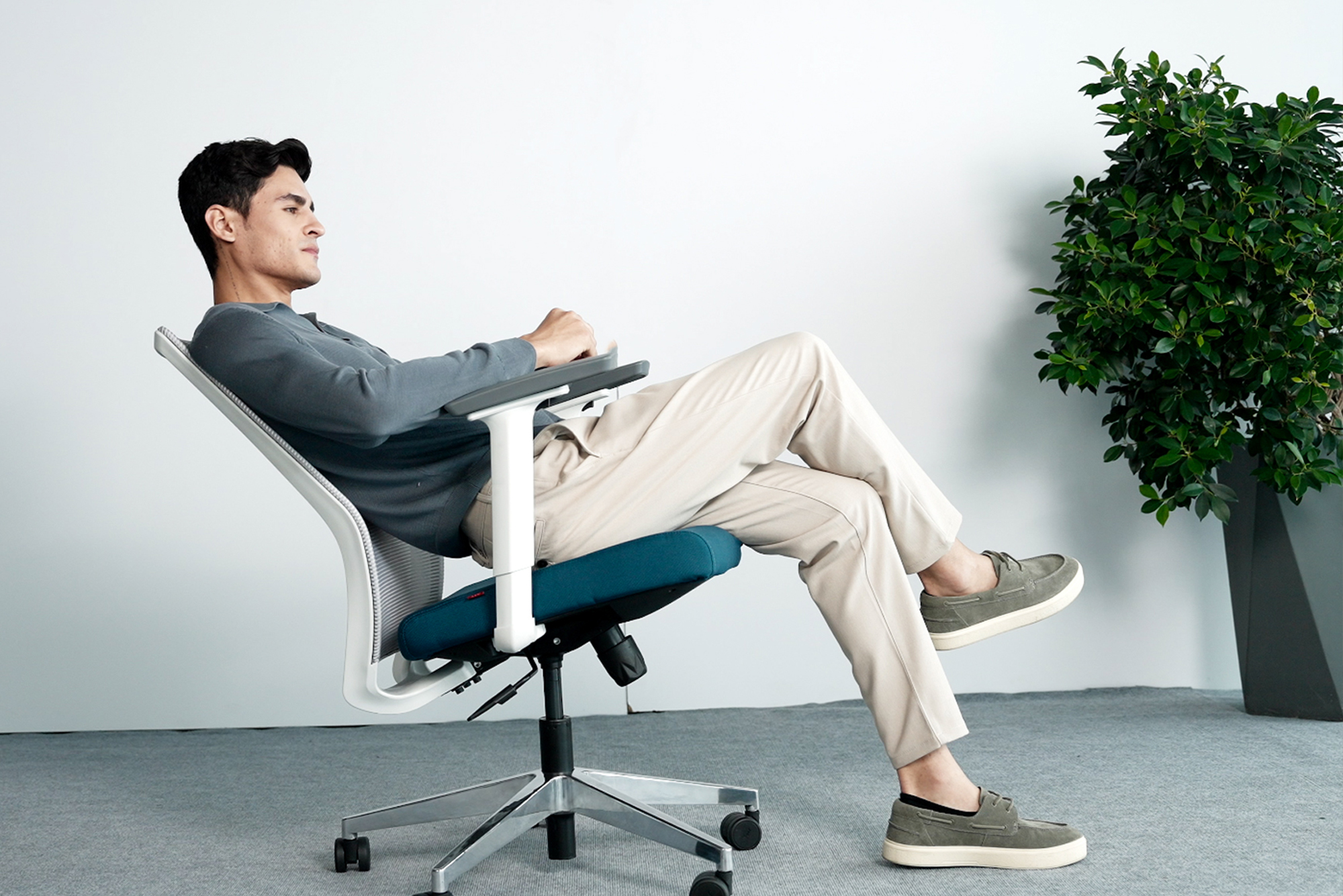
Ergonomic office chairs with adjustable lumbar support, seat height, and 3D armrests are essential for any professional sitting six or more hours daily. This is not an area to economise on, regardless of how tightly the overall furniture budget is managed.
For Indian offices, mesh back chairs are the most practical specification due to their breathability in warm conditions and their structural resilience under sustained commercial daily use.
Storage Solutions
Under-desk pedestals, locker banks, and tall storage cabinets keep the workspace visually clean and operationally efficient. Cluttered surfaces reduce focus and create a poor impression on clients and visitors.
Specify storage in proportion to genuine need. Too little storage leads to desk clutter within weeks. Too much storage wastes floor space that could be used more productively.
Meeting Room Furniture
Every corporate office needs at least one dedicated meeting space with a quality conference table and comfortable meeting chairs. The furniture in this room makes a direct impression on clients and shapes how visitors experience the organisation.
Integrated power access in the meeting table is now a standard expectation rather than a premium feature. A three-hour meeting with laptops and no charging access is a preventable frustration.
Soft Seating and Breakout Zones
Breakout seating and office lounge furniture serve the informal side of professional life that workstations alone cannot support. They provide space for brief mental resets, informal conversations, and the spontaneous team interactions that build workplace culture.
A well-specified breakout zone with a quality office sofa, lounge chairs, and occasional tables makes an office feel complete and communicates that the organisation values its people's experience beyond the desk.

What to Check Before Choosing an Office Furniture Supplier?
Manufacturing Capability and Quality Standards
Always ask whether the supplier manufactures their own products or sources them from third parties. A manufacturer with an in-house production facility has direct control over quality consistency across every component.
BIFMA certification is the most reliable independent indicator of product quality and safety. It confirms that the furniture has been tested against internationally recognised standards for structural integrity and long-term durability.
Customisation and Scalability Options
A good office furniture supplier should offer customisation across frame colours, worksurface finishes, and configuration dimensions without requiring entirely bespoke fabrication.
Confirm that the product range will remain available for future extensions over the next three to five years. The ability to add matching components later is only valuable if the supplier can actually provide them when needed.
Installation and After-Sales Support
Professional installation is essential for any significant modular office furniture project. Confirm that the supplier includes installation as part of their service and that their installation team has demonstrated experience with projects of a comparable scale.
Local after-sales support matters as much as the initial installation quality. A supplier with a presence in your city can respond to issues quickly. A distant supplier cannot, and the resulting delays affect the appearance and functionality of the workspace.
How AFC Furniture Solutions Helps Indian Businesses Furnish Smarter?
What Does AFC Offer for Corporate Offices?
AFC Furniture Solutions offers a complete range of modular office furniture covering every zone of the modern corporate workplace. The range includes modular workstations across the Height Adjustable, Desking, and Panel Series, ergonomic seating in mesh and leather configurations, storage solutions, meeting tables, and soft seating.
Every product in the range is designed for Indian working conditions and is available across a range of finishes and configurations to suit different corporate environments and brand requirements.
Explore the full AFC Furniture Solutions Workstations range to compare modular system options suited to different corporate environments across India.
What Quality Standards Back AFC Products?
AFC Furniture Solutions holds BIFMA Level 3 certification, the highest internationally recognised standard for furniture quality, sustainability, and safety performance. Every product is manufactured at AFC's facility in Greater Noida and tested to BIFMA-compliant standards before leaving the facility.
With an in-house manufacturing capacity of up to 18,000 workstations and 18,000 chairs per month, AFC Furniture Solutions has the scale to support large corporate fit-outs without compromising on lead times or quality consistency.
You can also explore the AFC Furniture Solutions Seating range for ergonomic chair options designed specifically for Indian working conditions and extended daily professional use.
Frequently Asked Questions
Q1. Is modular office furniture as durable as custom-built furniture?
Yes, and in most cases more so. Commercial-grade modular furniture from established manufacturers is produced to consistent factory specifications and tested to BIFMA standards. Custom-built furniture quality varies significantly depending on the contractor and materials used, with no independent quality verification in most cases.
Q2. Can modular office furniture be customised to fit unusual office spaces?
Yes. Most modular office furniture systems offer a range of component sizes that can accommodate non-standard floor plans, structural columns, and irregular room geometries. For genuinely unusual architectural constraints, suppliers can often provide modified components within the modular system framework.
Q3. How quickly can a modular office be installed compared to custom-built? A complete modular office furniture installation for a standard floor can typically be completed in one to two days. Custom-built furniture installation involves on-site construction work that can take several weeks, creating extended disruption to normal operations.
Q4. What happens to modular furniture when the business relocates? Modular office furniture can be fully dismantled, transported, and reassembled at a new location without any loss of quality or structural integrity. The entire investment moves with the business, unlike custom-built furniture which is permanently fixed to the original space.
Q5. Is modular furniture more cost-effective than custom-built for large offices? Yes, consistently. Modular furniture produced at factory scale carries a lower per-unit cost than bespoke fabrication, and the total cost of ownership over ten years including potential relocation and reconfiguration is almost always significantly lower than custom-built alternatives.
Q6. How do I find a reliable office furniture supplier near me? Look for a supplier with an in-house manufacturing facility, BIFMA certification, a demonstrated track record with comparable institutional clients, and local after-sales support. AFC Furniture Solutions serves organisations across India including businesses looking for quality office furniture in Navi Mumbai through its pan-India experience centre network.
Final Thoughts
The choice between modular office furniture and custom-built options is ultimately a choice between a workspace that adapts to your business and one that constrains it.
Smart businesses across India, including those seeking quality office furniture in Navi Mumbai, are consistently choosing modular systems because they deliver better value, greater flexibility, and lower total cost of ownership across the full lifecycle of the investment.
AFC Furniture Solutions has been helping Indian organisations make this transition for over 15 years, with an in-house manufacturing facility, BIFMA Level 3 certification, and a complete product range covering every zone of the modern corporate office.
Explore Other Popular Blogs

Let’s build together
Tell us about your project and we’ll help you plan, design, and deliver at scale.
.jpg)
.svg)