.svg)
Training Chair vs Auditorium Chair: Key Differences & Uses
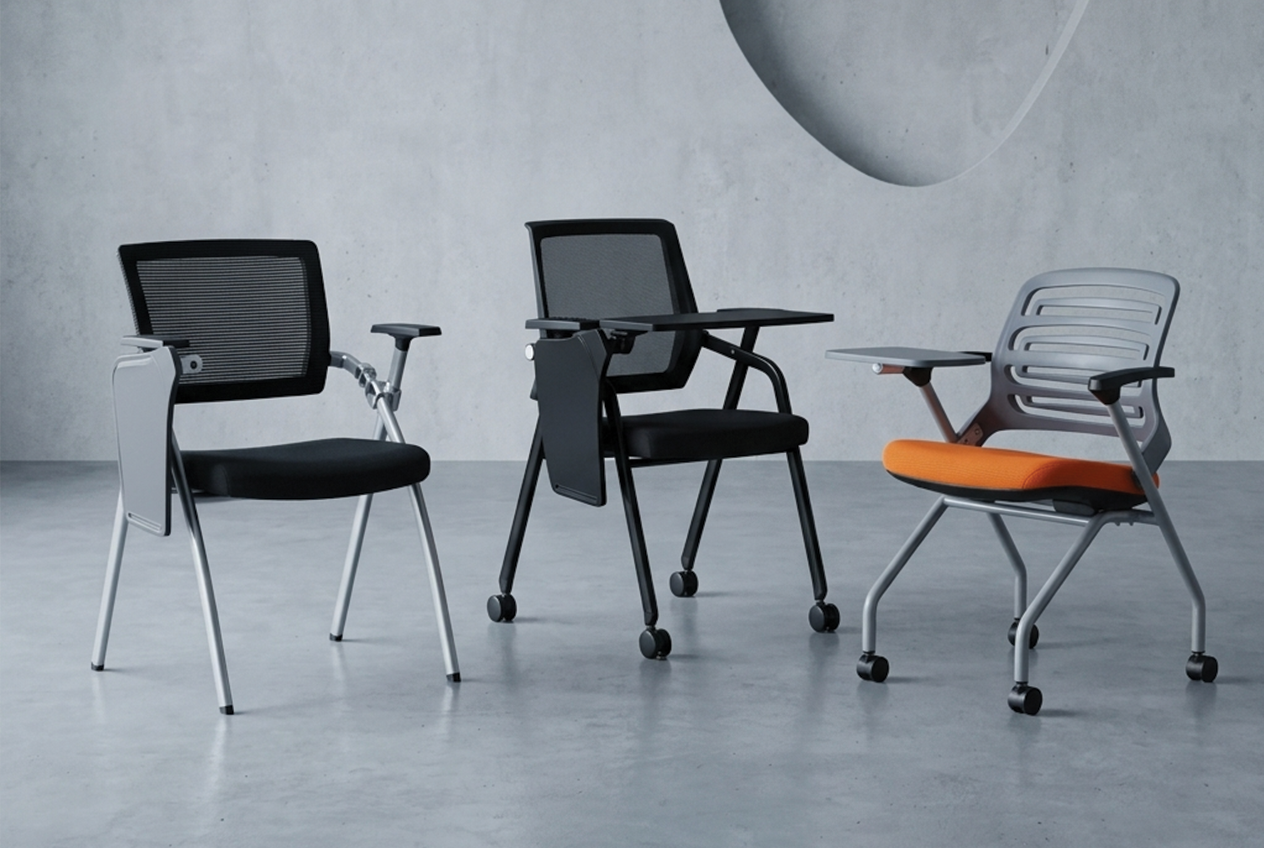
Compare training chairs and auditorium chairs by flexibility, seating capacity, comfort, writing surfaces, cost, durability and space needs.
Training Chair vs Auditorium Chair: Which Seating Fits Your Space?
The training chair vs auditorium chair decision often comes down to the same seating budget buying two very different things, and picking the wrong one either wastes flexibility or wastes floor capacity. This guide covers what each chair is, how they compare across flexibility, capacity, comfort, and cost, and how to choose between them for a specific room.
What Is a Training Chair?
A training chair is a mobile, commercial seat built for rooms that change through the day. Most versions are stackable, foldable, or nestable, and many include casters or a flip-up tablet writing arm for note-taking. Common types include four-leg, sled-base, nesting, swivel-on-wheels, flip-seat, and folding designs, each suited to slightly different reconfiguration needs. What they share is the ability to switch a room quickly between a lecture layout, breakout groups, an exam setup, or an open discussion circle. This flexibility comes with a trade-off: training room chairs tend to cost less per unit than fixed seating, but they offer less permanence and structural rigidity over time.
What Is an Auditorium Chair?
An auditorium chair is fixed, floor-mounted seating, typically linked in rows with a fold-up seat to allow movement along the row. It is built for permanent, high-capacity spaces such as lecture halls and auditoriums, where the seating layout does not need to change. Its strengths lie in structural rigidity, durability, low maintenance, and tiered sightlines that keep every seat facing the stage or screen. Auditorium chairs also allow a higher seat density within a fixed footprint than most reconfigurable options. This makes them the right choice wherever capacity and viewing angle matter more than the ability to rearrange the room, not an inferior alternative to training seating.
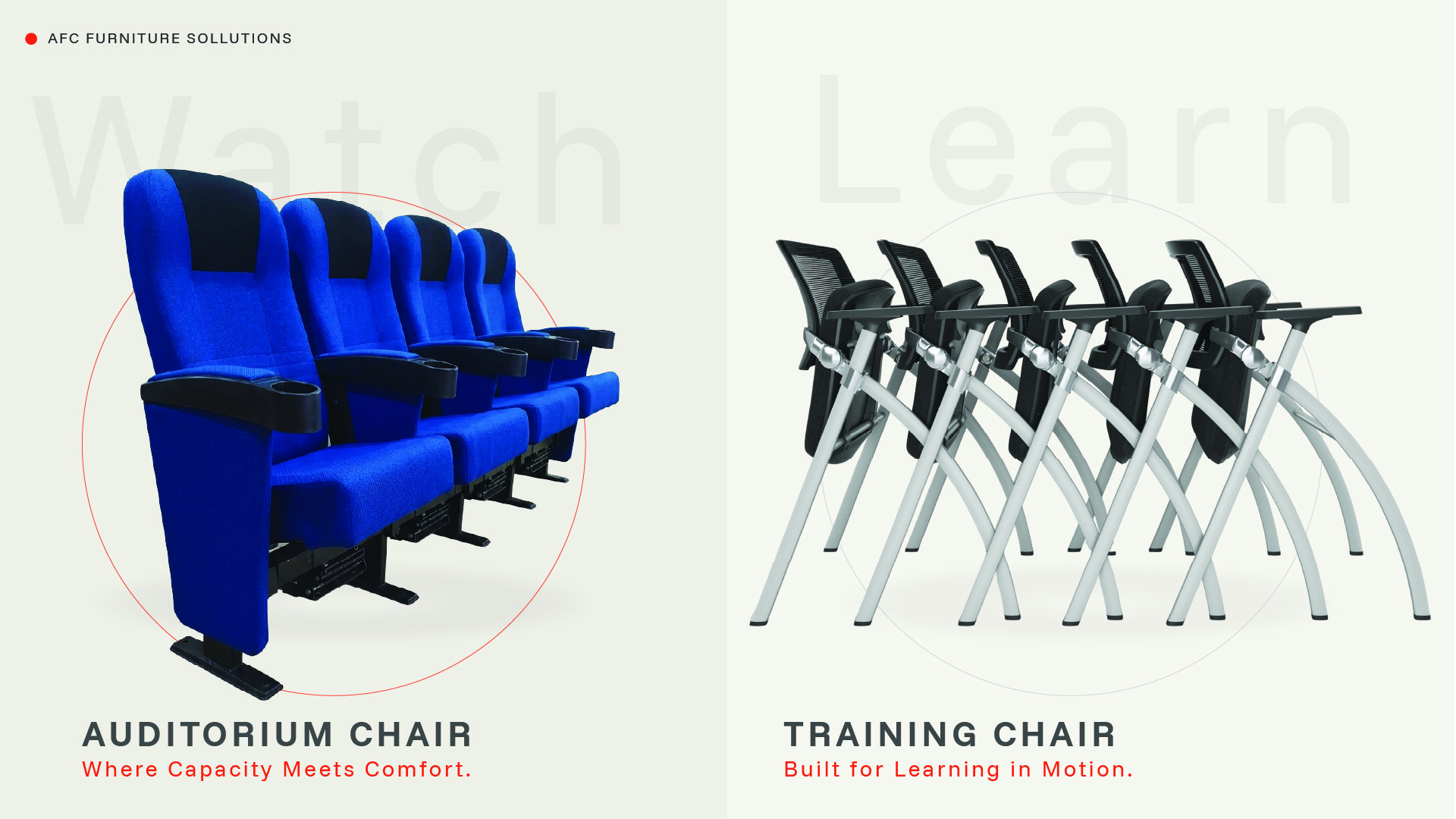
Training Chair vs Auditorium Chair: The Key Differences
Flexibility and mobility
Training chairs move, stack, and reconfigure to suit different room layouts through the day, while auditorium chairs remain fixed in place once installed.
Seating capacity and footprint
Auditorium rows can pack seats tightly, often around 36 inches front-to-back at roughly 20 inches on-centre, while training layouts need more room per person to allow movement and reconfiguration.
Comfort by session length
Training chairs suit shorter or half-day flexible use, while auditorium chairs are designed for listening-focused sessions that run longer without requiring the occupant to move around the room.
Writing surface
Training chairs commonly include a tablet arm for note-taking, while auditorium seats may offer a fixed or integrated surface, or none at all, depending on the model.
Cost and installation
Training chairs generally carry a lower unit cost and need no fixed installation, while auditorium seating involves a higher fixed installation cost in exchange for consistent, high-density seating.
Durability and maintenance
Training chairs include moving parts such as casters and folding mechanisms that need periodic upkeep, while auditorium rows are rigid and generally lower maintenance over time.
Space, Capacity and Layout: Training Room Seating vs Auditorium Seating
This is where the two options diverge most in practice. Training room seating flexes into classroom, pod, U-shape, and breakout formats, and typically needs around 1.8–2.2 m² per person once walkways are included, trading seating density for interaction and reconfiguration. Auditorium seating relies on fixed rows and tiering to reach far tighter figures, often 0.8–1.2 m² per seat, with strong sightlines throughout the room, but the layout is locked in once installed. The right choice depends on whether the room serves one fixed purpose or needs to support several different uses. Either way, local fire-safety occupancy limits should be checked before finalising seat count.
.png)
Which Seating Is Right for Your Space?
Choose office training chairs for multi-use corporate training rooms, seminar spaces, and any setting where the layout changes regularly or collaboration matters more than raw capacity. Choose auditorium seating for dedicated lecture halls, large-capacity briefing rooms, and listening-led events where density and sightlines take priority. A middle path also exists: a large multi-use hall can combine tiered auditorium seating in the main volume with mobile training chairs in adjacent flat-floor rooms. The right decision ultimately comes down to matching seating to the room's purpose and the length of the sessions it needs to support.
FAQs on Training Chairs vs Auditorium Chairs
What is the difference between a training chair and an auditorium chair?
A training chair is mobile and reconfigurable, suited to rooms that change layout through the day, while an auditorium chair is fixed in place, built for permanent, high-capacity spaces with tiered sightlines.
Which is better for a multi-purpose training room?
Training chairs are generally better for multi-purpose rooms, since they can be stacked, folded, or rearranged to support lectures, breakouts, exams, or discussion formats as needed.
Do auditorium chairs save more space than training chairs?
Yes, auditorium chairs typically achieve higher seat density in a fixed footprint, often around 0.8–1.2 m² per seat, compared with the extra space training layouts need for movement and reconfiguration.
Are training chairs comfortable for full-day sessions?
Training chairs suit shorter or half-day sessions well, but auditorium seating is generally better suited to longer, listening-focused sessions where occupants remain seated throughout.
Can training chairs have a writing tablet like auditorium seats?
Yes, many training chairs include a flip-up tablet arm for note-taking, while auditorium seats may have a fixed or integrated writing surface, or none, depending on the specific model.
Which lasts longer, training chairs or auditorium seating?
Auditorium seating generally has fewer moving parts and lower maintenance needs over time, while training chairs, due to casters and folding mechanisms, may require more regular upkeep.
Explore Other Popular Blogs


Let’s build together
Tell us about your project and we’ll help you plan, design, and deliver at scale.
.jpg)
.svg)