.svg)
Single Seater vs Linear Workstation Table: Which Works Better for Your Team?

Not sure whether to choose a single seater or linear workstation table for your office? This practical guide helps you decide based on your team size, working style, and space.
Why Does Choosing the Right Workstation Table Matter?
How Does a Workstation Table Affect Daily Productivity?
The workstation table is where your team spends most of their working day. Its design directly shapes how comfortably, efficiently, and collaboratively people are able to work.
A well-chosen office workstation table reduces physical clutter, supports good posture, and creates a working environment where people can focus without unnecessary distractions.
Getting this decision right from the beginning prevents costly reconfigurations later and creates a workspace that genuinely supports your team's performance every day.
What Happens When You Choose the Wrong Layout?
A layout that does not match your team's working style creates friction every single day. A team that needs to collaborate frequently placed in isolated single seater workstations will feel disconnected and inefficient.
Equally, a team requiring deep individual focus placed at a linear workstation table without adequate privacy panels will struggle with constant distraction.
The wrong workstation table choice is not just an aesthetic problem. It is a daily productivity problem that compounds across weeks, months, and years of use.
What Is a Single Seater Workstation Table?
A single seater workstation is an individual desk unit designed for one person. It is a self-contained workspace with its own defined boundaries, often accompanied by privacy panels on one or more sides.
It gives each employee a clearly personal space that belongs to them, which supports individual ownership, organisation, and focus.
Single seater workstations are common in roles requiring sustained concentration, confidential work, or a high degree of individual accountability.
What Are the Key Features of a Single Seater Workstation?
A single-seater workstation typically includes an individual worksurface, a modesty panel at the front, and optional privacy screens on the sides to reduce visual distractions.
Most configurations include integrated cable management to keep the personal workspace tidy and an under-desk pedestal for personal storage within arm's reach.
The self-contained design makes it easy to personalise and organise, helping employees develop a stronger sense of ownership over their workspace.
What Are the Limitations of a Single Seater Workstation?
A single-seater workstation typically uses more floor space per person than a linear workstation table configuration. This can be a significant constraint in smaller offices or high-density environments.
The individual unit cost is also generally higher than a comparable seat in a linear system because each workstation requires its own full set of structural components.
For teams that collaborate heavily throughout the day, the defined boundaries of a single-seater workstation can feel isolating and slow down the natural flow of communication.
What Is a Linear Workstation Table?
A linear workstation table is a continuous shared work surface where multiple employees sit side by side or back to back along a single extended desk structure.
It is the most space-efficient office workstation configuration available and is widely used in open-plan corporate offices across India.
Linear workstation tables are designed around shared infrastructure, including shared cable management channels, shared leg frames, and optional shared privacy screens between users.
What Are the Key Features of a Linear Workstation Table?
The defining feature of a linear workstation table is its ability to seat multiple people along a continuous surface while sharing structural components. This reduces both cost and floor space per person compared to individual units.
Modular linear workstation systems can be extended by adding additional bays to the existing run, making them naturally scalable as the team grows.
Most quality linear systems include integrated cable raceways along the desk spine and optional screen dividers between individual positions to provide a degree of visual separation.
Tip: When specifying a linear workstation table, always plan the cable management route before installation. Identify where floor boxes and wall sockets are located and ensure the desk run aligns with these points. Retrofitting cable management after installation is significantly more disruptive and expensive.
What Are the Limitations of a Linear Workstation Table?
A linear workstation provides less individual privacy than a single seater configuration, particularly in layouts without divider screens. This can create distraction in environments where focused work is the priority.
The shared nature of the structure also means that one person's movement or vibration can sometimes be felt by adjacent colleagues, particularly on longer runs without adequate leg supports.
Individual personalisation of the workspace is more limited in a linear system because the boundaries between positions are less clearly defined than in a single seater workstation setup.
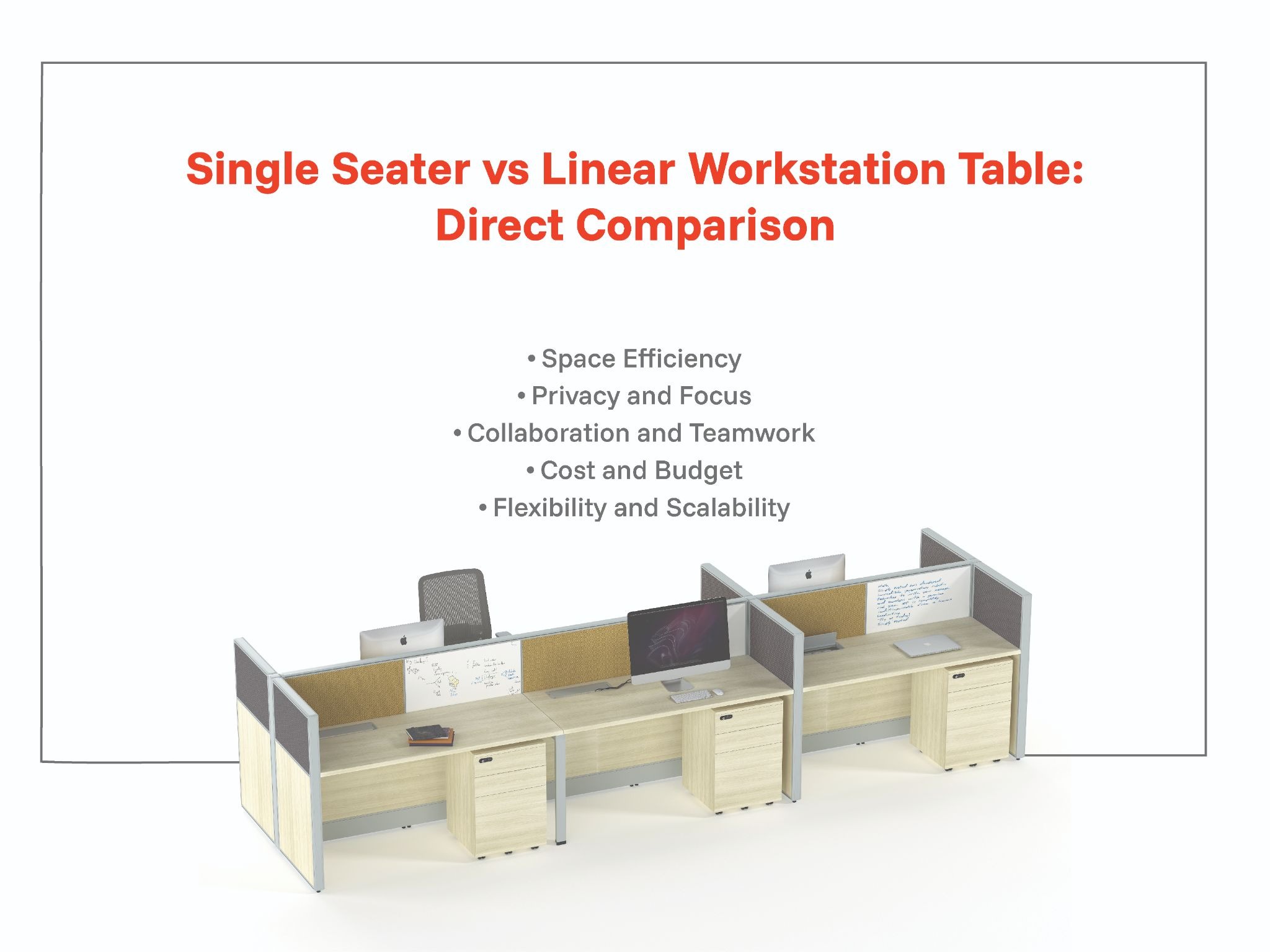
Single Seater vs Linear Workstation Table: Direct Comparison
Space Efficiency
A linear workstation table is significantly more space-efficient than an equivalent number of single seater workstations. Shared frames and shared panel infrastructure reduce the floor footprint per person considerably.
For offices in high-rent cities like Mumbai, Delhi NCR, or Bangalore where every square metre carries a real cost, this space efficiency is a genuine financial advantage.
Single-seater workstations require more space per person but provide a more defined individual territory that many employees find more comfortable for sustained daily use.
Privacy and Focus
Single seater workstations with side and front privacy panels provide the highest level of visual separation in an open-plan environment. This makes them well suited to roles requiring concentration and confidentiality.
A linear workstation table can be fitted with screen dividers between positions to improve privacy, but the level of separation remains less complete than a fully panelled single seater configuration.
For teams that handle sensitive information or need sustained deep-focus work, the privacy advantage of a single seater workstation is a meaningful consideration.
Collaboration and Teamwork
A linear workstation table naturally facilitates communication between adjacent colleagues. The open, shared structure makes it easy to turn and speak without physical barriers in the way.
Single seater workstations with high privacy panels can actually impede casual communication, which slows down teams that rely on frequent spontaneous interaction throughout the day.
For collaborative, fast-moving teams such as sales, customer service, or creative functions, a linear workstation configuration almost always produces a more effective working environment.
Cost and Budget
A linear workstation table is generally more cost-effective per seat than an equivalent number of single-seater workstations. Shared components reduce both material cost and installation time.
For organisations furnishing a large floor and managing a tight budget per head, linear workstations deliver a professional and functional result at a lower per-person cost.
Single seater workstations carry a higher per-unit cost but deliver individual workspace quality that justifies the investment for roles where privacy, focus, and personal organisation are daily requirements.
Bonus Point: Many growing offices use a hybrid approach. Linear workstation tables for the main open-plan floor and single seater workstations for specific roles requiring higher privacy. This combination delivers space efficiency where it matters most while protecting focus quality where it is genuinely needed.
Flexibility and Scalability
Modular linear workstation systems are among the easiest office workstation configurations to extend. Adding a new bay to an existing run takes a fraction of the time and cost of installing individual single seater units.
Single seater workstations can also be added incrementally, but each addition requires more time and generates more installation disruption than extending a linear run.
Both configurations are relocatable when the office moves, which is a meaningful advantage over built-in carpentry for any growing organisation.
Which Workstation Table Is Right for Your Team?
When Should You Choose a Single Seater Workstation?
Choose a single seater workstation when your team's roles require sustained individual focus, handling of confidential information, or a high degree of personal organisation and workspace ownership.
Finance teams, legal professionals, HR departments, and senior individual contributors all benefit from the defined personal space that a single seater workstation provides.
It is also the right choice when employees work independently for the majority of the day and collaboration is planned and scheduled rather than spontaneous and frequent.
When Should You Choose a Linear Workstation Table?
Choose a linear workstation table when your team collaborates frequently, communicates openly throughout the day, or operates in a fast-paced environment where speed of communication is a competitive advantage.
Sales floors, customer service operations, development teams working in agile sprints, and creative agencies all benefit from the open, connected environment that a linear workstation system enables.
It is also the right choice when space efficiency is a priority and the budget per head needs to be managed carefully without compromising on the quality of the working environment.
What About Mixed Team Environments?
Most real offices contain a mix of working styles across different teams and functions. A single workstation table type rarely serves the entire floor equally well.
The most effective approach is to zone the floor. Use a linear workstation table configuration for collaborative open-plan areas and introduce single seater workstations for roles and departments that genuinely need higher privacy and focus.
This zoned approach creates a workspace that serves the full range of working styles within the organisation without forcing a single configuration on everyone.
Explore AFC Furniture Solutions' full Workstations range including single seater, linear, and panel series options suited to different team environments.
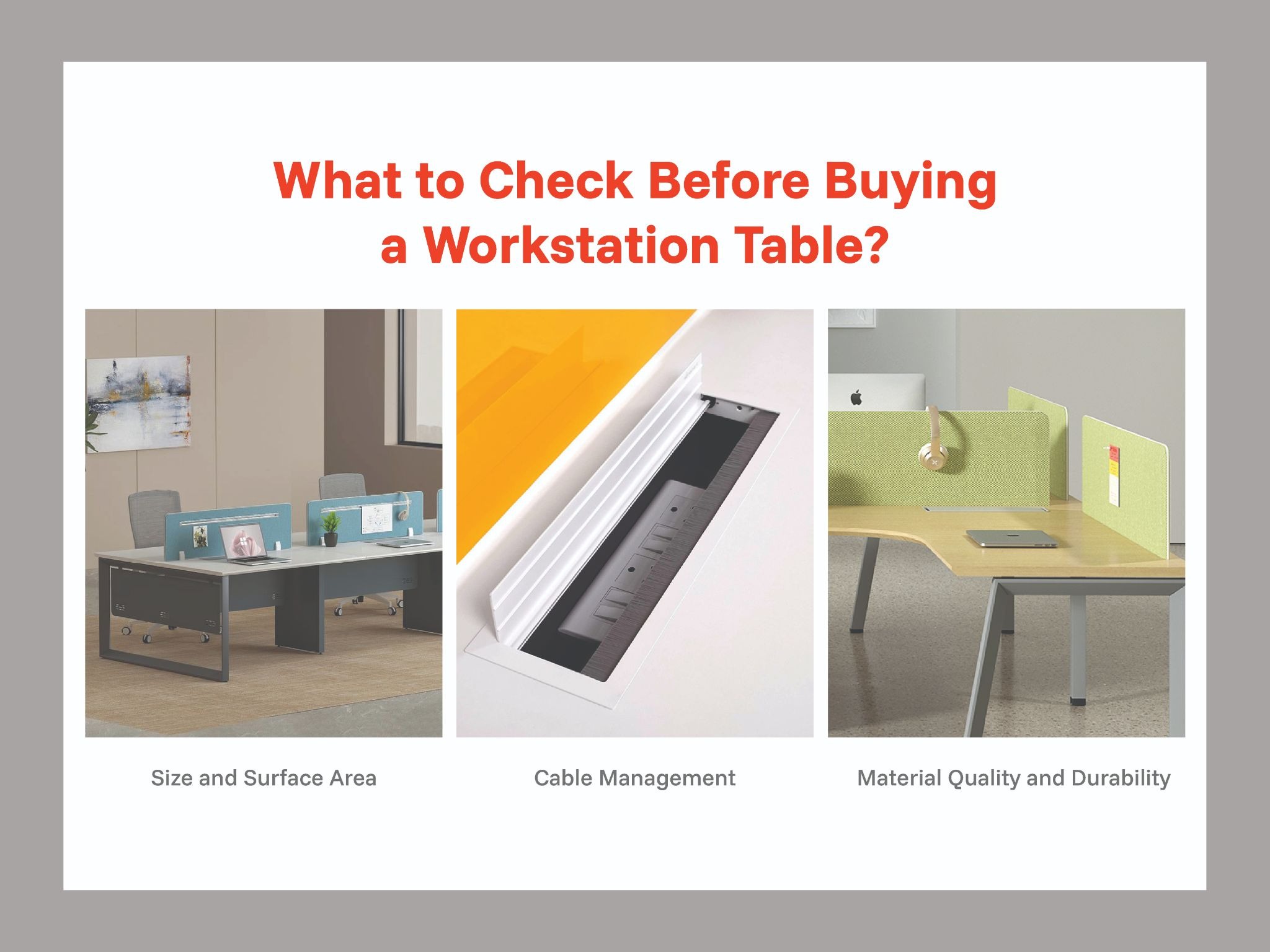
What to Check Before Buying a Workstation Table?
Size and Surface Area
The worksurface area must be sufficient for the actual tasks performed at the desk. A standard single position on a linear workstation table should offer enough space for a monitor, keyboard, notebook, and personal items without crowding.
For roles using dual monitors or large reference materials, a deeper or wider surface should be specified. Verify the actual dimensions rather than relying on general descriptions.
A surface that is too small creates daily frustration and forces poor organisation habits that undermine the entire purpose of investing in quality office workstations.
Cable Management
Integrated cable management is non-negotiable in any quality workstation table. Every position needs clean, accessible routing for power and data cables from the floor or wall to the desktop.
Ask specifically about the cable routing path, the position of grommets or access ports, and how the system handles the transition from the building's floor boxes to the desk surface.
Visible cabling across a professional office floor immediately reduces the quality of the environment and creates genuine safety risks that are difficult and expensive to address after installation.
Material Quality and Durability
For the worksurface, high-pressure laminate (HPL) over BWR grade engineered wood with PVC edge banding is the correct specification for Indian commercial environments. It resists scratching, moisture, and daily wear effectively.
For the frame, powder-coated steel is the appropriate specification for any commercial workstation table. It provides the structural rigidity needed to support sustained daily use without flex or deformation.
Explore AFC Furniture Solutions' Desking Series for linear and modular workstation configurations built to commercial quality standards for Indian office environments.
Tip: Before placing a bulk workstation table order for a large office, request a single sample unit and have it installed in your space for one to two weeks. Real daily use reveals fit-out details, cable routing challenges, and comfort considerations that no showroom visit or specification sheet can fully replicate.
Frequently Asked Questions
Q1. What is the main difference between a single seater and a linear workstation table?
A single seater workstation is an individual self-contained desk unit providing personal space and privacy. A linear workstation table is a shared continuous surface where multiple people sit together. The right choice depends on your team's working style and space requirements.
Q2. Which workstation table is more space efficient?
A linear workstation table is more space efficient per person. Shared structural components reduce the floor footprint compared to individual single seater workstations, making it the better choice for high-density offices.
Q3. Can I mix single seater and linear workstations in the same office?
Yes, and this is often the most effective approach. Use linear workstations for collaborative open-plan areas and single seater workstations for departments requiring higher privacy and individual focus.
Q4. How much surface area does each person need at a workstation table?
A minimum of 1200mm x 600mm per person is the standard recommendation for a single position at a linear workstation. Roles using dual monitors or extensive physical materials should be allocated a deeper or wider surface.
Q5. Are linear workstation tables easy to extend as the team grows?
Yes. Modular linear workstation systems are specifically designed to be extended by adding matching bays to an existing run. This scalability is one of their most significant practical advantages for growing organisations.
Q6. What is the right frame material for a commercial workstation table? Powder-coated steel is the correct specification for any commercial workstation table in India. It provides the structural strength, finish durability, and resistance to daily wear that aluminium and plastic frame alternatives cannot match in a high-use office environment.
Final Thoughts
Choosing between a single seater workstation and a linear workstation table is fundamentally a decision about how your team works and what they need from their physical environment every day.
Neither configuration is universally better. The right answer depends on your team's working style, your space constraints, your budget, and the specific roles that will be using the desks.
AFC Furniture Solutions has been helping organisations across India specify and install the right workstation table configurations for their specific teams for over 15 years. Our workspace consultants are available to guide you from initial floor plan through to completed installation.
Explore Other Popular Blogs



Let’s build together
Tell us about your project and we’ll help you plan, design, and deliver at scale.
.jpg)
.svg)