.svg)
Modular Table vs Fixed Table: Which Office Table Is Right?
Compare modular table vs fixed table for flexibility, cost, durability, design, and maintenance to choose the right office table for your workspace.
Modular Table vs Fixed Table: Which Office Table Fits Your Workspace?
Choosing between a modular table vs fixed table can influence how easily your office adapts, how much you spend over time, and how the workspace looks and feels. This guide explains what modular and fixed office tables are, compares their key differences, and helps you decide which option suits your office layout, team structure, and long-term plans.
What Is a Modular Office Table?
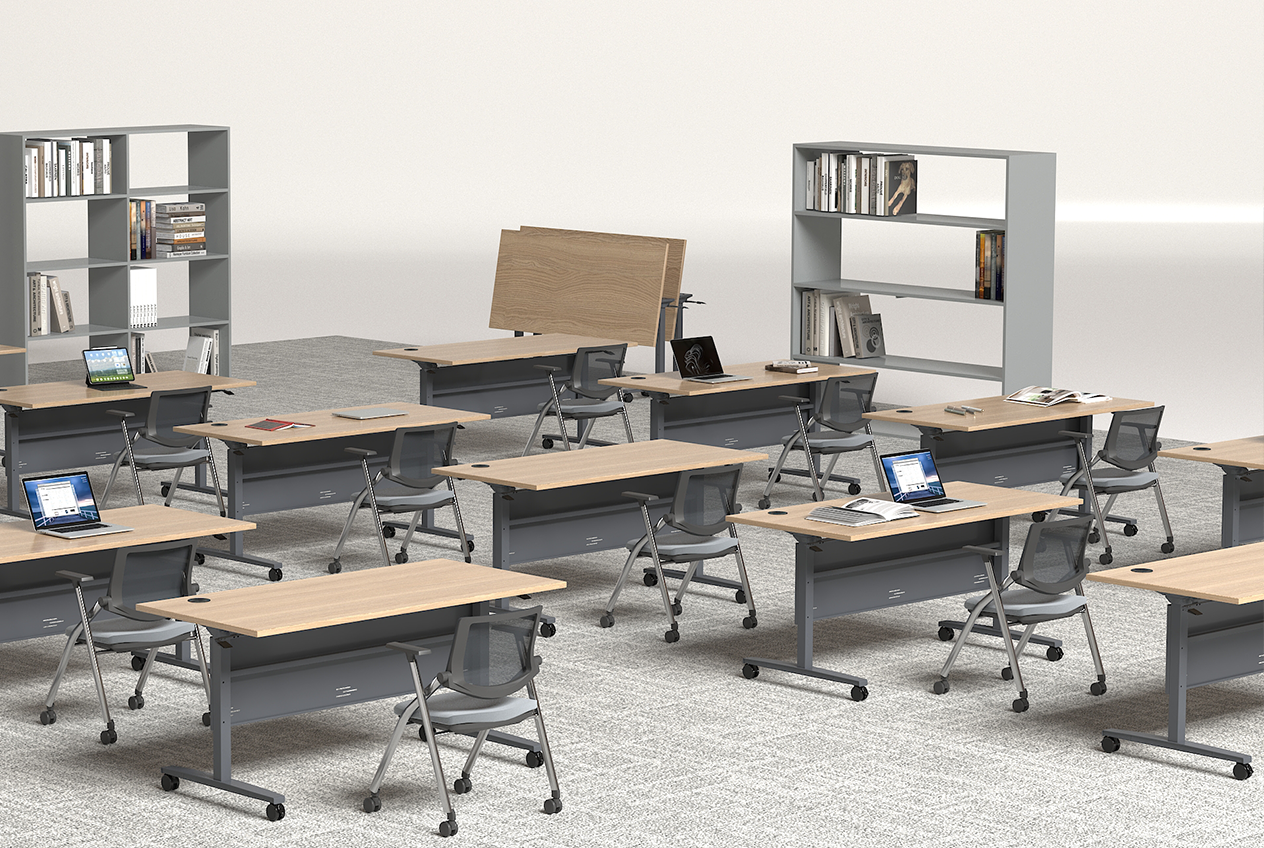
A modular office table is built using configurable components that can be assembled, rearranged, added to, or separated as workspace needs change. Examples include modular meeting tables that can be joined or split, connected workstation tops, and desks with add-on returns or storage units.
Many modular systems can also integrate cable management, storage, screens, and accessories. Because individual components can often be replaced or upgraded, the entire table may not need replacing if one part becomes damaged. This makes modular tables particularly useful in open-plan offices, startups, collaborative workplaces, and hybrid offices where teams or layouts may change frequently.
What Is a Fixed Office Table?
A fixed office table has a set size, configuration, and position within the workspace. It may be freestanding, built-in, or custom-made for a particular area. Executive desks, permanent conference tables, and fitted reception counters are common examples.
Fixed tables work especially well where the office layout is unlikely to change frequently. They can be designed around specific dimensions, materials, finishes, and architectural details, creating a seamless appearance.
For executive offices, boardrooms, reception areas, banks, legal offices, and other formal spaces, fixed tables can also help create a sense of permanence and visual consistency.
Modular Table vs Fixed Table: The Key Differences
The right option depends on how you plan to use the space today and how much you expect it to change.
Flexibility And Reconfiguration
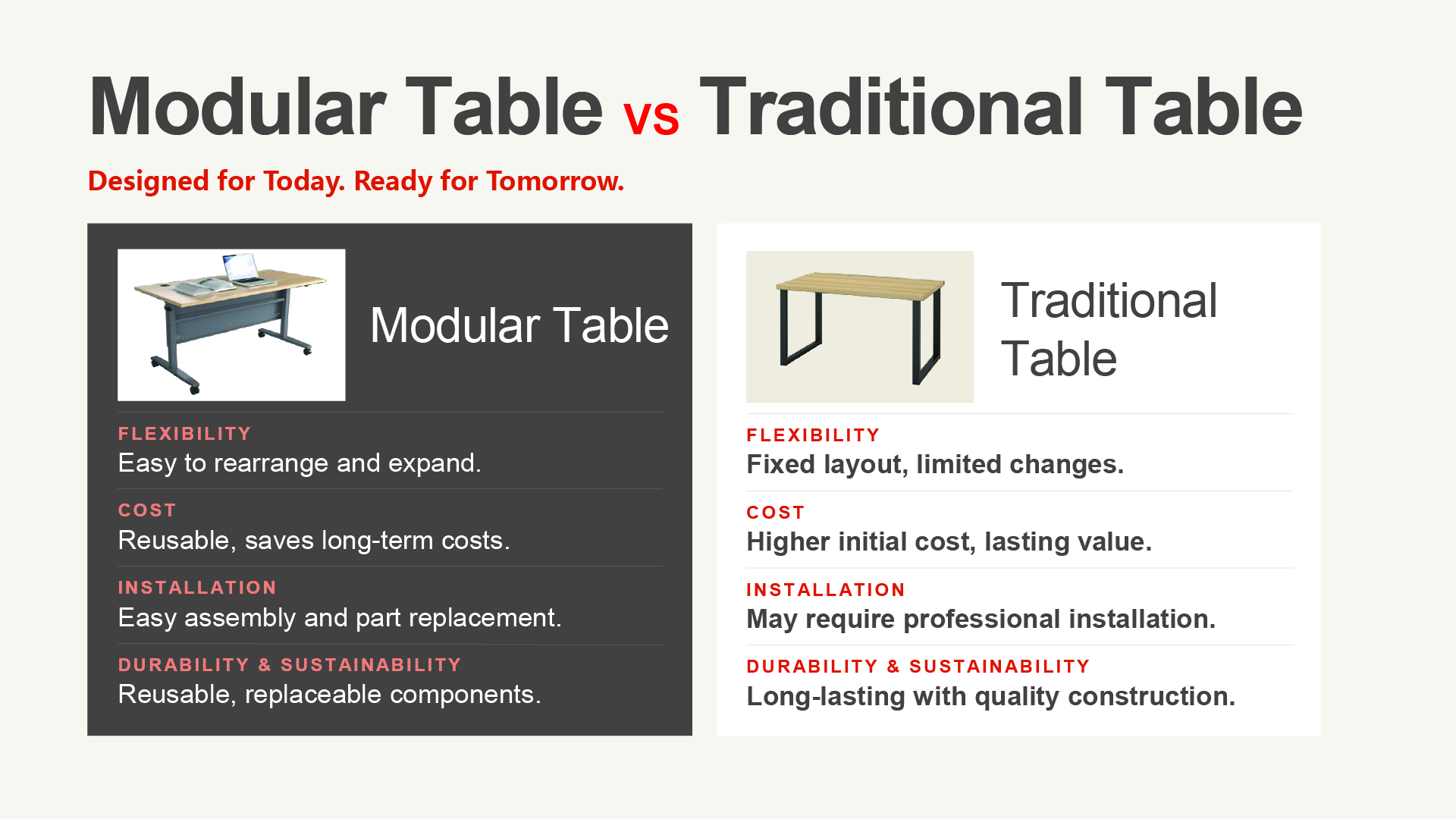
Modular tables can be moved, rearranged, combined, or expanded as teams and layouts change. Fixed tables remain in a defined configuration, making them better suited to spaces with stable requirements.
Cost And Investment
Modular systems may help control long-term costs when furniture can be reused after office moves or layout changes. Fixed tables, particularly custom-built options, can require a higher initial investment but may offer lasting value in permanent spaces.
Actual costs depend on materials, size, construction quality, accessories, and installation.
Installation And Maintenance
Modular tables usually use pre-designed components, which can simplify installation and make individual parts easier to replace.
Fixed tables may require professional installation, especially when they are built into walls, flooring, electrical points, or other architectural features.
Durability And Sustainability
Modular furniture can reduce unnecessary replacement because components may be reused, rearranged, or replaced individually. Fixed tables can also be a sustainable choice when high-quality construction allows them to remain in service for many years.
Durability ultimately depends more on materials, hardware, build quality, usage, and maintenance than on whether the table is modular or fixed.
Office Table Design And Aesthetics
Your office table design influences both functionality and the impression your workspace creates. Modular tables generally suit contemporary offices because their coordinated finishes and flexible configurations make it easier to maintain a consistent appearance as layouts evolve. Different shapes and combinations can support individual work, meetings, teamwork, or collaborative zones.
A fixed table design, meanwhile, allows greater integration with a specific interior concept. Designers can customise the tabletop, edges, dimensions, materials, and finishes to complement walls, lighting, flooring, and brand elements. In simple terms, modular designs suit offices that need to evolve, while fixed designs work well when the table is intended to become a permanent visual feature of the room.
Which Office Table Is Right for You?
Choose flexible office furniture such as modular tables when your team is growing, employees follow hybrid working patterns, departments frequently change, or work areas need regular reconfiguration. Solutions from AFC Furniture Solutions can support such evolving workplaces by offering modular configurations that can adapt as teams, layouts, and space requirements change.
Fixed tables are more suitable for stable spaces such as executive cabins, reception areas, formal meeting rooms, and boardrooms where consistency and a tailored appearance are priorities. You do not necessarily need to choose only one type. AFC Furniture Solutions offers options suited to both flexible work areas and more permanent executive settings, allowing businesses to combine modular tables in collaborative zones with fixed-format tables in reception, executive, and formal meeting spaces. This creates flexibility where layouts change and permanence where consistency matters.
FAQs On Modular Vs Fixed Office Tables
What Is The Difference Between A Modular And A Fixed Office Table?
A modular office table uses components that can often be rearranged, added to, or separated. A fixed office table has a predetermined size and configuration and is generally intended to remain unchanged.
Is A Modular Office Table Cheaper Than A Fixed One?
Not always. A modular office table may reduce future replacement or reconfiguration costs, but the purchase price depends on materials, specifications, accessories, size, and manufacturing quality.
Can A Modular Table Be Reconfigured Or Expanded Later?
Many modular systems are designed for future reconfiguration or expansion. However, available options depend on the specific furniture system and whether compatible components remain available.
Which Office Table Is Better For A Growing Or Hybrid Office?
Modular tables are generally better suited to growing and hybrid workplaces because they can accommodate changing teams, seating arrangements, and collaborative requirements without requiring an entirely new furniture layout.
Do Fixed Office Tables Last Longer Than Modular Ones?
Not necessarily. The lifespan of either type depends primarily on material quality, construction, hardware, usage, installation, and maintenance rather than whether the table is fixed or modular.
Can I Mix Modular And Fixed Tables In The Same Office?
Yes. A mixed approach can work well, with modular tables in flexible work zones and fixed tables in reception areas, executive cabins, boardrooms, or other spaces that are unlikely to change frequently.
Explore Other Popular Blogs



Let’s build together
Tell us about your project and we’ll help you plan, design, and deliver at scale.
.jpg)
.svg)