.svg)
Mesh vs Foam Office Chairs: Which Is Better for Your Corporate Workplace

Comparing mesh vs foam office chairs for your corporate workplace? This guide by AFC Furniture Solutions covers comfort, durability, support, and cost to help you decide.
What Are Mesh Office Chairs?
A mesh office chair uses a woven fabric stretched over a frame to form the backrest, and in some models the seat as well. The open weave structure allows air to circulate freely across the user's back during use, which is the defining advantage of this material type.
Mesh chairs are built around a rigid or semi-rigid frame, typically made from nylon or reinforced plastic, with the mesh tensioned across it. The quality of the mesh and the tension calibration directly affects how well the chair supports the user's back over long working sessions.
High-quality mesh chairs from manufacturers like AFC Furniture Solutions use multi-zone mesh tensioning, where different areas of the backrest have different tension levels to match the natural pressure points of the spine.
What Are Foam Office Chairs?
A foam office chair uses high-density foam padding covered in fabric, leather, or PU leather to form both the seat and backrest. The foam provides a firm, structured feel that many users associate with traditional executive seating.
The quality of foam seating is largely determined by the density of the foam used. Commercial-grade office chairs use high-density foam rated at 40kg per cubic metre or higher. Standard or economy foam at lower densities compresses quickly and loses its support within 12 to 18 months of daily use.
Foam chairs are available in a wide range of upholstery options, making them a common choice for executive cabins, reception areas, and meeting rooms where the visual appearance of the chair matters alongside its functional performance.

Comfort and Breathability
Breathability is the most significant practical difference between mesh and foam chairs in the Indian corporate context. Office environments across India experience warm temperatures for a large part of the year, and even air-conditioned offices maintain temperatures between 22 and 26 degrees Celsius.
Mesh backrests allow consistent airflow across the user's back throughout the working day. This prevents heat and moisture build-up that occurs when a foam or padded backrest traps body heat against the skin, causing discomfort during long sitting sessions.
Foam seats and backrests absorb and retain body heat. In a temperature-controlled office, this is less of a concern. In offices that rely on ceiling fans or where the AC system does not reach all areas uniformly, foam chairs become noticeably uncomfortable after two to three hours of continuous use.
For the majority of Indian corporate offices, mesh backrests with a high-density foam seat cushion represent the most practical combination — airflow at the back where heat build-up is greatest, with firm cushioned support under the seat where pressure is highest.
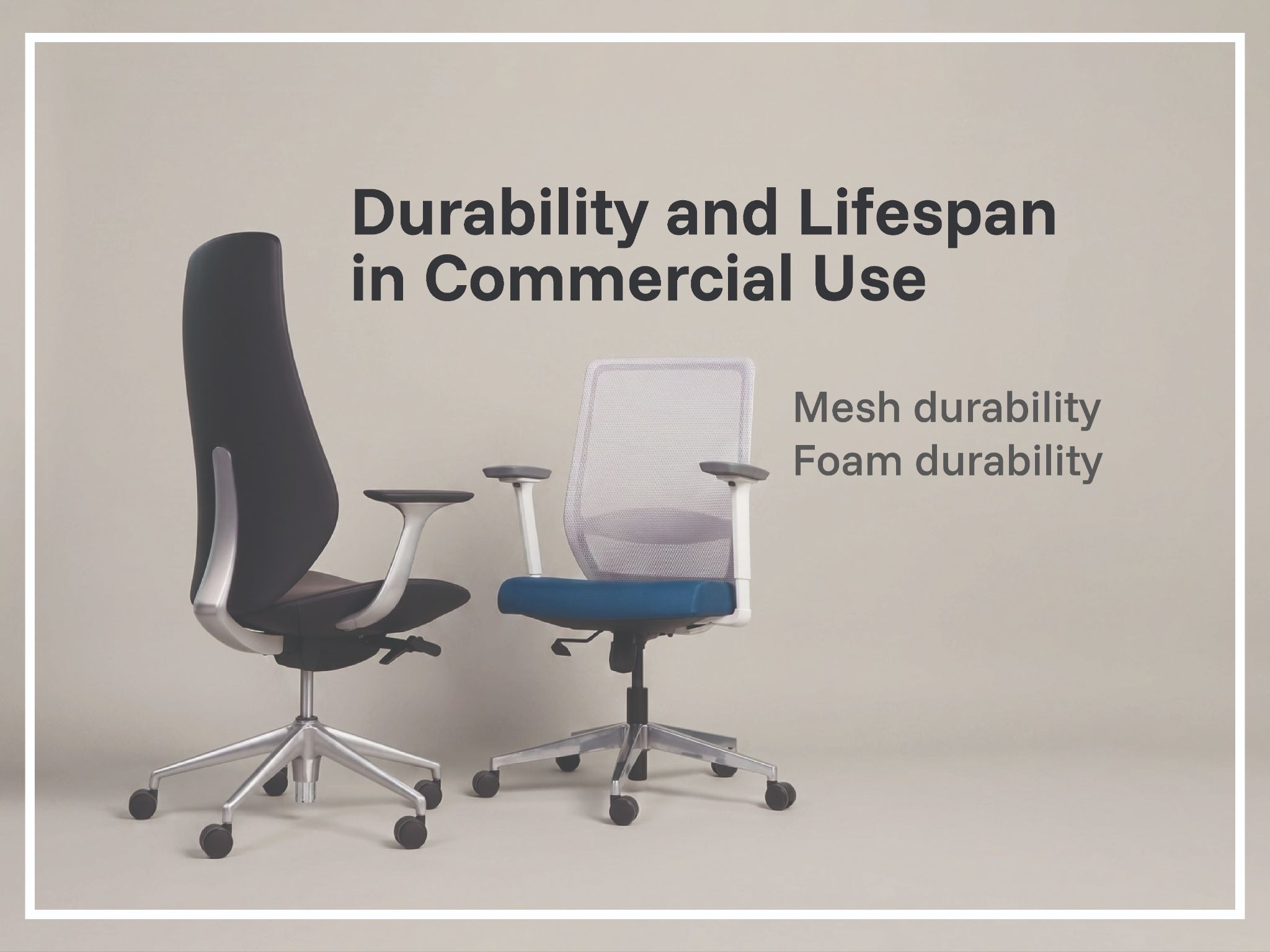
Durability and Lifespan in Commercial Use
Both mesh and foam chairs can be durable in commercial environments, provided the correct grade of material is specified. The key difference is where each material fails over time.
Mesh durability
High-quality commercial mesh retains its tension and support for 5 to 8 years under daily use. Lower-quality mesh begins to sag and lose tension within 2 to 3 years, at which point the backrest provides inadequate support and the chair needs replacing.
When purchasing mesh chairs for corporate bulk orders, always ask the supplier for the mesh grade and the frame material. Commercial-grade mesh chairs use nylon or fibreglass-reinforced frames that hold the mesh tension consistently over time.
Foam durability
Commercial-grade foam at 40kg per cubic metre or above retains its shape and support for 4 to 6 years under daily use. Standard foam at lower densities compresses permanently within 12 to 18 months, leaving a chair that looks intact but provides no meaningful cushioning or support.
PU leather and fabric upholstery on foam chairs can crack, peel, or wear through at high-contact points such as the seat front edge and armrests. For high-use corporate environments, fabric upholstery is more durable than PU leather over a 3 to 5 year commercial lifecycle.
Back Support and Ergonomic Performance
Both mesh and foam backrests can provide good lumbar support when designed correctly, but they deliver support in different ways.
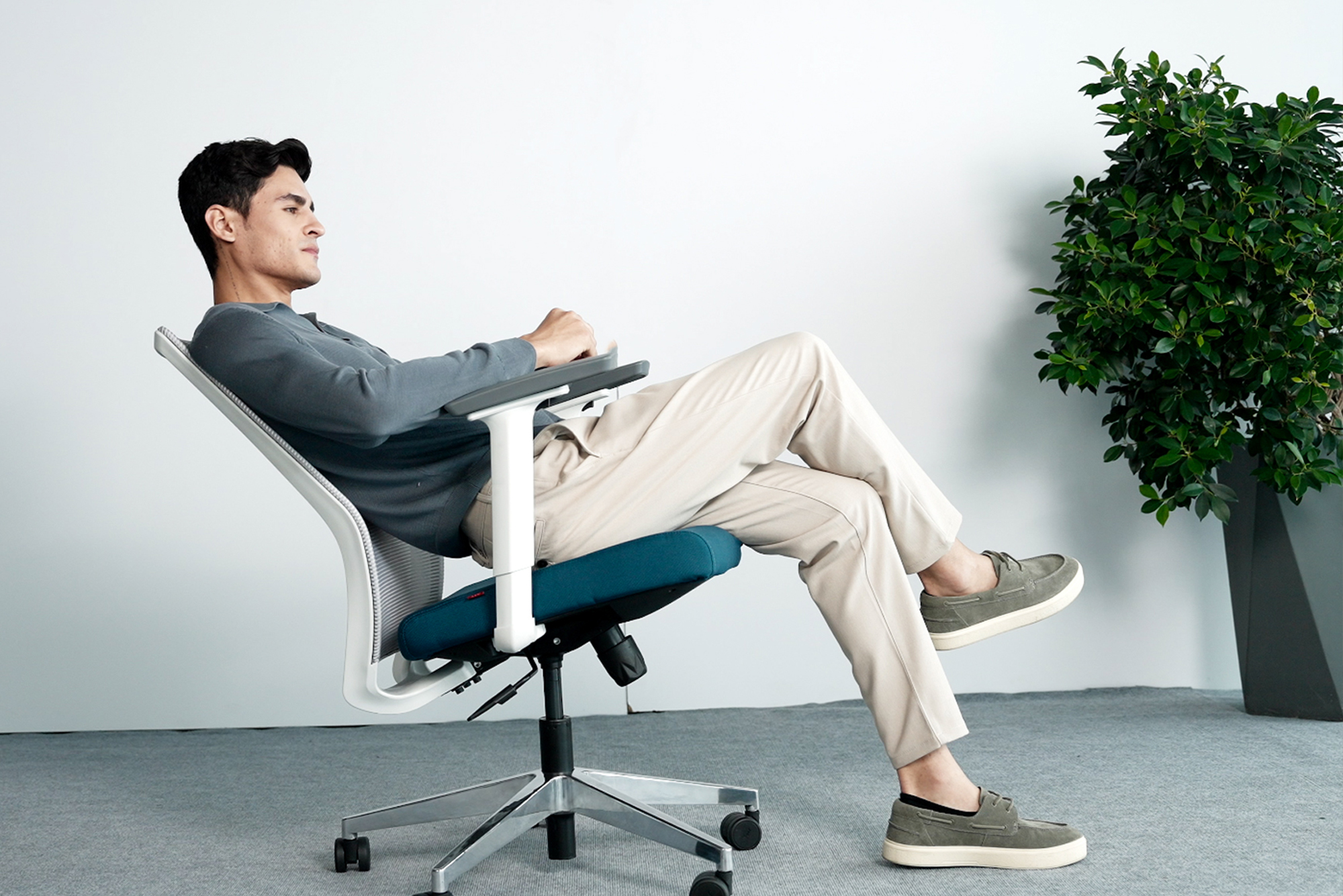
Mesh backrests are adaptive. The tension of the mesh responds to the shape and pressure of the user's back, distributing support across the entire contact area rather than at fixed points. This makes mesh naturally well-suited to users who shift posture throughout the day, as the backrest follows their movement.
Foam backrests are fixed in their contour. A well-designed foam backrest with a built-in lumbar curve will support the user correctly when they sit in the intended upright position. However, as users recline, lean sideways, or shift posture, the foam contour no longer aligns with their back and the support benefit is reduced.
For long working hours in a corporate environment, mesh with an adjustable lumbar support component is generally the higher-performing ergonomic choice. For shorter duration seating in meeting rooms, visitor chairs, and executive cabins, contoured foam provides a premium feel with adequate support.
Maintenance and Cleaning
Office chairs in a corporate environment need to be maintained regularly, particularly in high-use areas. The ease of cleaning is a practical consideration that is often overlooked at the procurement stage.
Mesh chairs are straightforward to maintain. Dust and debris can be removed with a vacuum or a soft brush. Spills on mesh can be blotted and dried without leaving residue. The open weave structure means that liquids pass through rather than soaking into the material, which reduces staining risk significantly.
Foam chairs with fabric upholstery require more careful cleaning. Spills need to be blotted immediately to prevent soaking into the foam beneath the cover. Deep cleaning typically requires specialist upholstery cleaning equipment and is not practical for in-house facilities teams in most corporate offices.
Foam chairs with PU leather upholstery are easier to wipe clean than fabric but are susceptible to cracking and peeling when cleaned with harsh chemicals. This limits the cleaning products that can safely be used on them.
Cost Comparison for Corporate Procurement
The initial purchase price of mesh and foam chairs at equivalent quality levels is broadly comparable. The difference in total cost of ownership becomes apparent over a 3 to 5 year lifecycle.
High-quality mesh chairs maintain their performance for longer than standard foam chairs without requiring replacement or refurbishment. In a bulk corporate procurement scenario where hundreds of chairs are being specified, this lifecycle difference translates into a significant cost saving over the full replacement cycle.
Foam chairs specified for executive cabins and meeting rooms carry a higher upfront cost in executive grades but are purchased in lower volumes, making their total cost of ownership manageable even if individual unit prices are higher.
Which Is Better for Indian Corporate Offices?
For open plan corporate office environments across India, mesh-back chairs with high-density foam seats are the recommended specification. They address the primary practical challenges of the Indian office environment, including warm temperatures, long working hours, and the need for durable, low-maintenance seating at scale.
Foam chairs remain the preferred choice for executive cabins, boardrooms, visitor seating, and reception areas where the visual premium of upholstered seating is important and usage duration per day is lower than at a primary workstation.
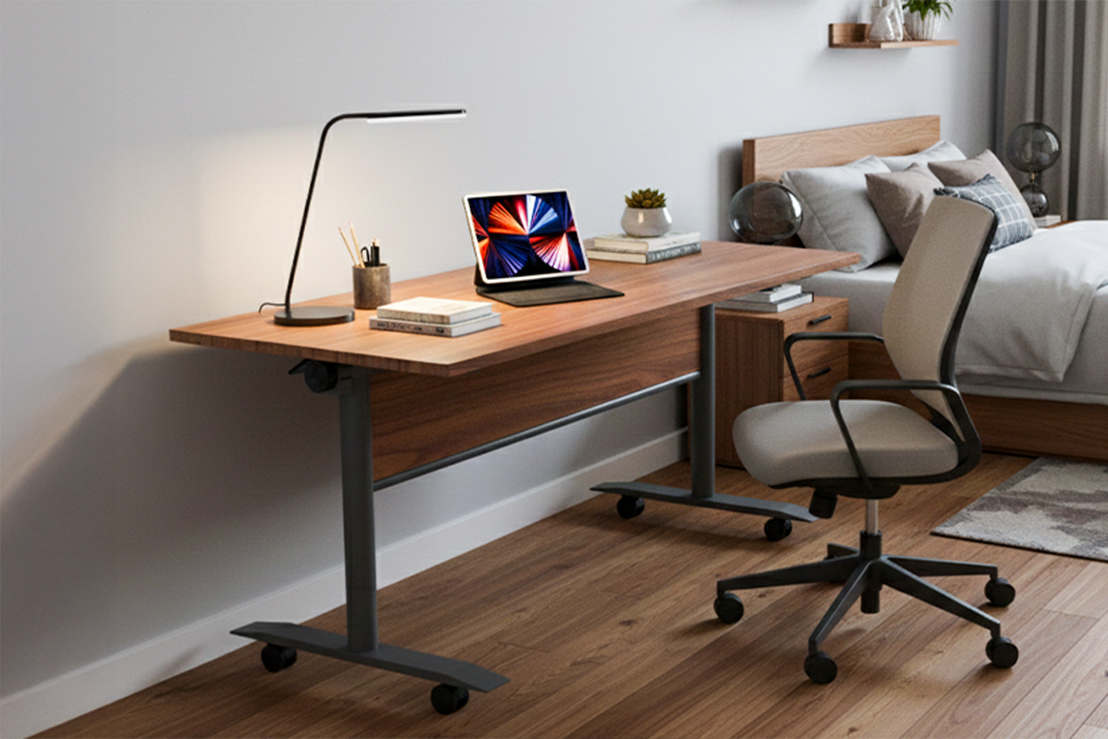
Pairing the right chair type with a correctly specified ergonomic office workstation is equally important. A good mesh chair at an incorrectly sized desk will not deliver the ergonomic benefits it is designed for. AFC Furniture Solutions offers both seating and workstation systems designed to work together for a fully aligned workspace.
Frequently Asked Questions (FAQs)
These are the most common questions corporate buyers ask when comparing mesh and foam office chairs.
Q1. Which lasts longer: mesh or foam office chairs?
High-quality mesh chairs typically outlast standard foam chairs in commercial environments. Good commercial-grade mesh retains its tension and back support for 5 to 8 years. Standard foam at lower densities compresses permanently within 12 to 18 months.
Commercial-grade foam at 40kg per cubic metre or above performs comparably to mesh over a 4 to 6 year lifecycle. The key factor is the grade of material, not the material type alone.
Q2. Are mesh chairs better for hot climates?
Yes. Mesh chairs are significantly more comfortable in warm climates because the open weave structure allows constant airflow across the user's back. This prevents the heat and moisture build-up that occurs with foam or padded backrests during long sitting sessions.
For Indian corporate offices, particularly in cities with warm temperatures or in office areas with uneven air conditioning coverage, mesh is the strongly recommended backrest material.
Q3. Can foam chairs be ergonomic?
Yes. Foam chairs can be fully ergonomic when designed with adjustable lumbar support, seat height adjustment, and a correctly contoured backrest. The material type does not determine ergonomic quality; the design and adjustability of the chair does.
The limitation of foam versus mesh in ergonomic terms is that foam provides fixed contour support, while mesh adapts dynamically to the user's posture. For users who shift position frequently during long working hours, mesh is generally more effective.
Q4. What is the best office chair material for an executive cabin?
For executive cabins, high-density foam with PU leather or genuine leather upholstery is the standard specification. This combination provides a premium visual appearance appropriate for senior management spaces and offers firm, structured support for meetings and focused work sessions.
Mesh chairs are increasingly used in executive cabins as well, particularly in modern corporate environments where a contemporary aesthetic is preferred over traditional executive styling.
Q5. Does AFC Furniture Solutions offer both mesh and foam office chairs for corporate orders?
Yes. AFC Furniture Solutions manufactures and supplies both mesh and foam office chairs for corporate procurement across India. Our range includes ergonomic mesh chairs for open plan office use, foam executive chairs for cabin and boardroom use, and visitor seating in both materials.
Contact the AFC Furniture Solutions team at +91 9999006933 or visit afcindia.in to explore the full seating range and request a trial unit before placing a bulk order.
Tips for Choosing Between Mesh and Foam Office Chairs
- Tip 1: For open plan offices with more than 20 workstations, specify mesh-back chairs as the primary seating. Reserve foam chairs for meeting rooms, cabins, and visitor areas.
- Tip 2: Always check the foam density specification before ordering foam chairs in volume. Commercial-grade foam should be rated at 40kg per cubic metre or higher for sustained daily use.
- Tip 3: For mesh chairs, ask for the mesh grade and frame material in writing before confirming a bulk order. Commercial mesh should be nylon-reinforced and warranted for a minimum of two years.
- Tip 4: Request trial units of both types before finalising your specification. Sit in each chair for at least 15 minutes to evaluate real-world comfort rather than relying on showroom impressions.
Bonus Points
- Bonus 1: The best specification for most Indian corporate open plan offices is a mesh-back chair with a high-density foam seat cushion. This combines back breathability with firm, durable seat support.
- Bonus 2: Mesh chairs are significantly easier for facilities teams to maintain at scale. A vacuum and a damp cloth are sufficient for routine cleaning, with no risk of staining or upholstery damage.
- Bonus 3: AFC Furniture Solutions provides pan-India delivery and installation support for corporate seating orders. Contact our team at +91 9999006933 to discuss volume pricing and trial unit availability.
Conclusion
The mesh office chair vs foam office chair decision depends primarily on where the chair will be used, how long employees will sit in it each day, and the climate conditions of your office environment. For all-day use in open plan corporate offices across India, mesh is the stronger choice. For executive cabins, boardrooms, and visitor seating where visual premium and shorter usage periods matter more, foam remains the preferred specification.
AFC Furniture Solutions offers both mesh and foam office chair ranges designed for the demands of Indian corporate environments, with full support from specification through to installation and after-sales service.
Explore Other Popular Blogs

Let’s build together
Tell us about your project and we’ll help you plan, design, and deliver at scale.
.jpg)
.svg)