.svg)
Leather vs Fabric Executive Chair: What Works Best for Your Workspace?
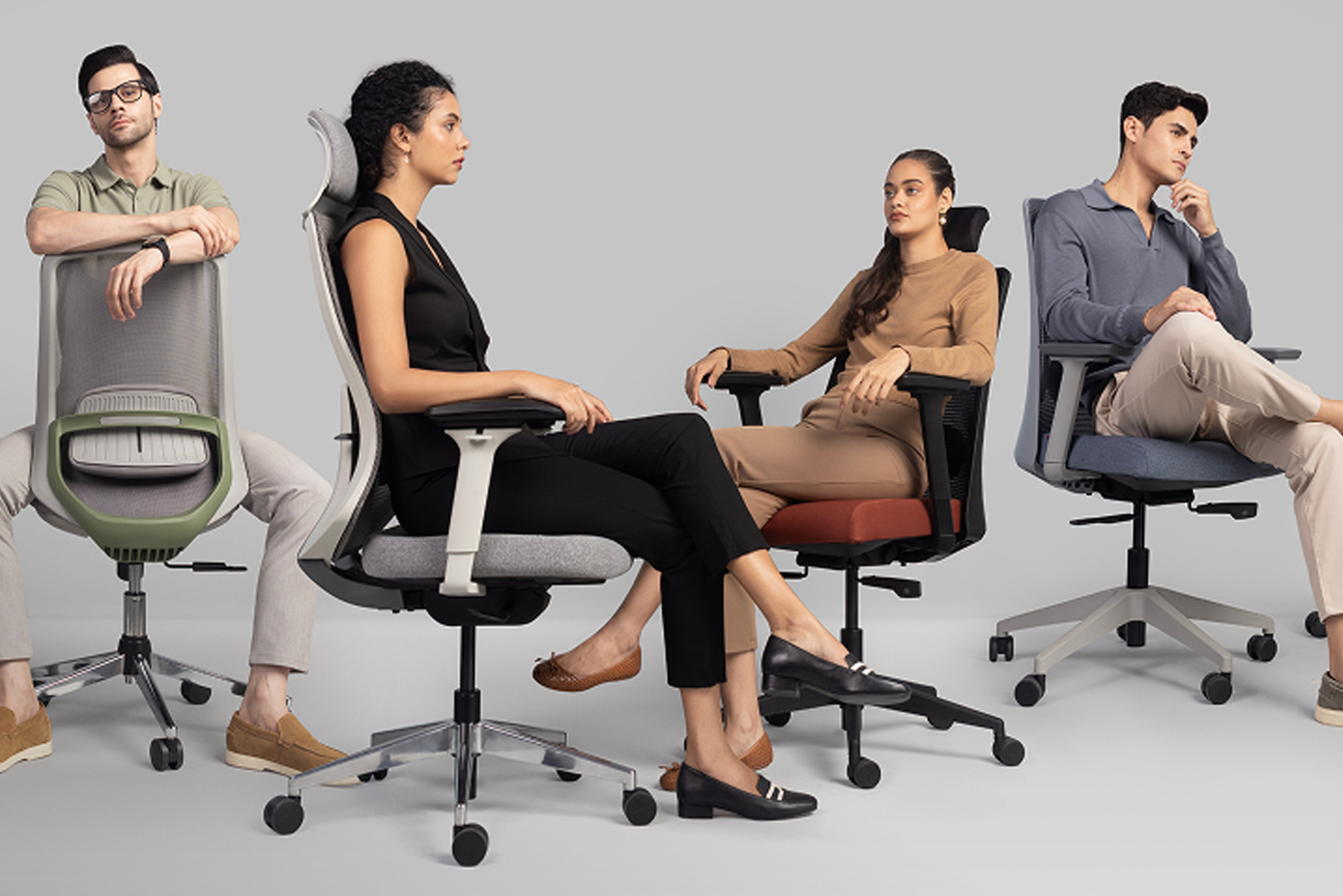
Choosing between a leather and fabric executive chair? This practical guide covers comfort, durability, maintenance, and what suits Indian office conditions best.
Why Does the Upholstery of Your Executive Chair Matter?
When most professionals choose a chair for their cabin, the upholstery decision often comes down to what looks impressive in a catalogue. Leather looks premium. Fabric looks approachable. The decision gets made on aesthetics and the practical consequences are discovered later.
The reality is that upholstery choice has a direct and daily impact on physical comfort, maintenance requirements, and how the chair performs in the specific conditions of an Indian office environment.
Getting this decision right means the chair serves you well for the next decade. Getting it wrong means a beautiful-looking chair that becomes uncomfortable, difficult to maintain, or visually worn within a few years.
How Does Chair Material Affect Daily Comfort?
The surface your body contacts for eight or more hours a day has a measurable effect on your physical experience of that time. Different materials respond differently to body heat, moisture, and the sustained pressure of sitting.
Leather and leatherette surfaces retain heat and create a warmer, less breathable contact zone that becomes increasingly noticeable during long sitting sessions, particularly in warm conditions. Fabric surfaces breathe more freely and maintain a more consistent temperature across the working day.
For professionals in well-air-conditioned spaces who spend moderate durations at their desk, this difference may be minimal. For those in warmer environments or longer sitting sessions, it becomes a meaningful daily comfort factor.
What Does Your Chair Communicate to Visitors?
The chair behind a senior professional's desk is part of the visual language of the cabin. It communicates something about the person occupying it before a word is spoken.
A high-back leather office chair in a dark tone has long been associated with senior authority in Indian corporate culture. It projects formality, experience, and institutional weight. A fabric chair in a contemporary design projects a different quality, one of considered modernism and approachable professionalism.
Neither is universally superior. Both communicate something specific, and the right choice depends on what the professional and the organisation want that communication to say.
What Is a Leather Executive Chair?
A leather office chair uses genuine leather, bonded leather, or leatherette (PU leather) upholstery over a foam-padded seat and backrest. It is the most traditional form of premium seating in Indian executive offices and remains the most commonly specified choice for senior professional spaces.
The material projects a sense of permanence, quality, and institutional authority that has made it the default choice for director cabins and boardrooms across India for decades.
What Are the Key Features of a Leather Chair?
Quality leather chairs for executive use typically feature a high backrest that supports the full length of the spine including the upper back and neck, generous seat cushioning with high-density foam that holds its shape under sustained daily use, and a polished chrome or powder-coated steel base.
Most executive leather chairs include a reclining mechanism with a tilt lock, adjustable seat height, and fixed or adjustable armrests in matching leather trim. The overall form tends toward a substantial, commanding presence that is well suited to the visual standards of senior professional spaces.
The surface finish of the leather or leatherette should be consistent across the entire chair with no visible texture variation, stitching irregularities, or colour differences between panels. These details reveal the manufacturing quality that determines how the chair looks after two years of daily use.
What Are the Advantages of Leather Upholstery?
Leather and quality leatherette surfaces are significantly easier to clean than fabric. A damp cloth removes most marks and spills immediately without any residual staining, which makes the chair practical in environments where food or drink is occasionally present at the desk.
The surface also maintains its visual quality for longer in a correctly air-conditioned environment. A well-maintained leather chair in a temperature-controlled cabin can look essentially new after five years of daily use, which is difficult to achieve with fabric alternatives.
Leather upholstery also develops a subtle patina over time that many professionals associate with quality and character. Genuine leather in particular improves in visual depth with age in a way that synthetic alternatives cannot replicate.
What Are the Limitations of Leather Chairs in Indian Offices?
The most significant limitation of leather upholstery in Indian conditions is heat retention. Leather and leatherette do not allow air circulation, which means body heat accumulates at the contact points between the user and the chair surface during extended sitting sessions.
In offices without consistent air conditioning, this creates genuine discomfort during the warmer months that affects the perceived comfort of an otherwise well-specified chair. Even in air-conditioned cabins, some professionals find leather upholstery noticeably warmer than fabric alternatives after three or more hours of continuous sitting.
Genuine leather also requires periodic conditioning to prevent surface cracking, which adds a maintenance commitment that leatherette alternatives do not require. In very dry indoor environments created by continuous air conditioning, this conditioning frequency increases.
What Is a Fabric Executive Chair?
A fabric office chair uses woven upholstery over foam padding, providing a softer, more breathable contact surface than leather alternatives. In the context of premium office seating, fabric chairs have evolved significantly from the basic task chair aesthetic and are now available in configurations that are entirely appropriate for senior professional spaces.
The contemporary Indian corporate market has seen a meaningful shift toward fabric upholstery in executive settings, driven by increasing awareness of comfort during long working hours and a broader move toward modern, less traditionally formal workplace aesthetics.
What Are the Key Features of a Fabric Chair?
Quality fabric executive chairs for senior professional use retain the high backrest, generous cushioning, and substantial base of their leather counterparts. The primary difference is the upholstery material and the resulting effect on breathability, texture, and visual character.
The fabric specification matters significantly in a commercial context. Commercial-grade upholstery fabric should have a Martindale abrasion rating of at least 30,000 cycles, which ensures the surface maintains its appearance under sustained daily professional use without visible wear developing within the first few years.
Colour and texture options are considerably wider in fabric than in leather, which allows the chair to be matched more precisely to the interior design of the cabin and the broader office colour scheme.
What Are the Advantages of Fabric Upholstery?
Fabric allows air circulation through its woven structure, which prevents the heat buildup that leather surfaces create during extended sitting. This makes fabric upholstery significantly more comfortable for long working sessions, particularly in the warm conditions common across much of India.
The softer, more textured surface of fabric also creates a warmer, more approachable aesthetic that suits the contemporary corporate environments that many Indian organisations are moving toward. For professionals whose role involves frequent informal conversations in their cabin, a fabric chair creates a less intimidating visual dynamic than a large traditional leather boss chair.
Fabric upholstery also does not require conditioning or specialist cleaning products. Regular vacuuming and prompt spot cleaning with a damp cloth maintain the surface adequately for most professional use contexts.
What Are the Limitations of Fabric Chairs?
Fabric upholstery is more susceptible to staining than leather, and spills that are not addressed immediately can leave permanent marks. In environments where food or drink is regularly present at the desk, this requires a degree of care that leather does not.
The surface also absorbs dust more readily than leather, which means regular vacuuming is necessary to maintain both the appearance and the hygiene standard of the chair in a shared professional environment.
Fabric colour can fade over extended periods of exposure to direct sunlight, which is a relevant consideration for cabins with large windows and limited UV filtering.
Tip: If your cabin receives direct sunlight through a window for several hours each day, choose a fabric colour in a medium to dark tone rather than a light one. Lighter fabric upholstery shows both fading and soiling significantly more quickly in sun-exposed positions, which can make a relatively new chair look old within eighteen months.
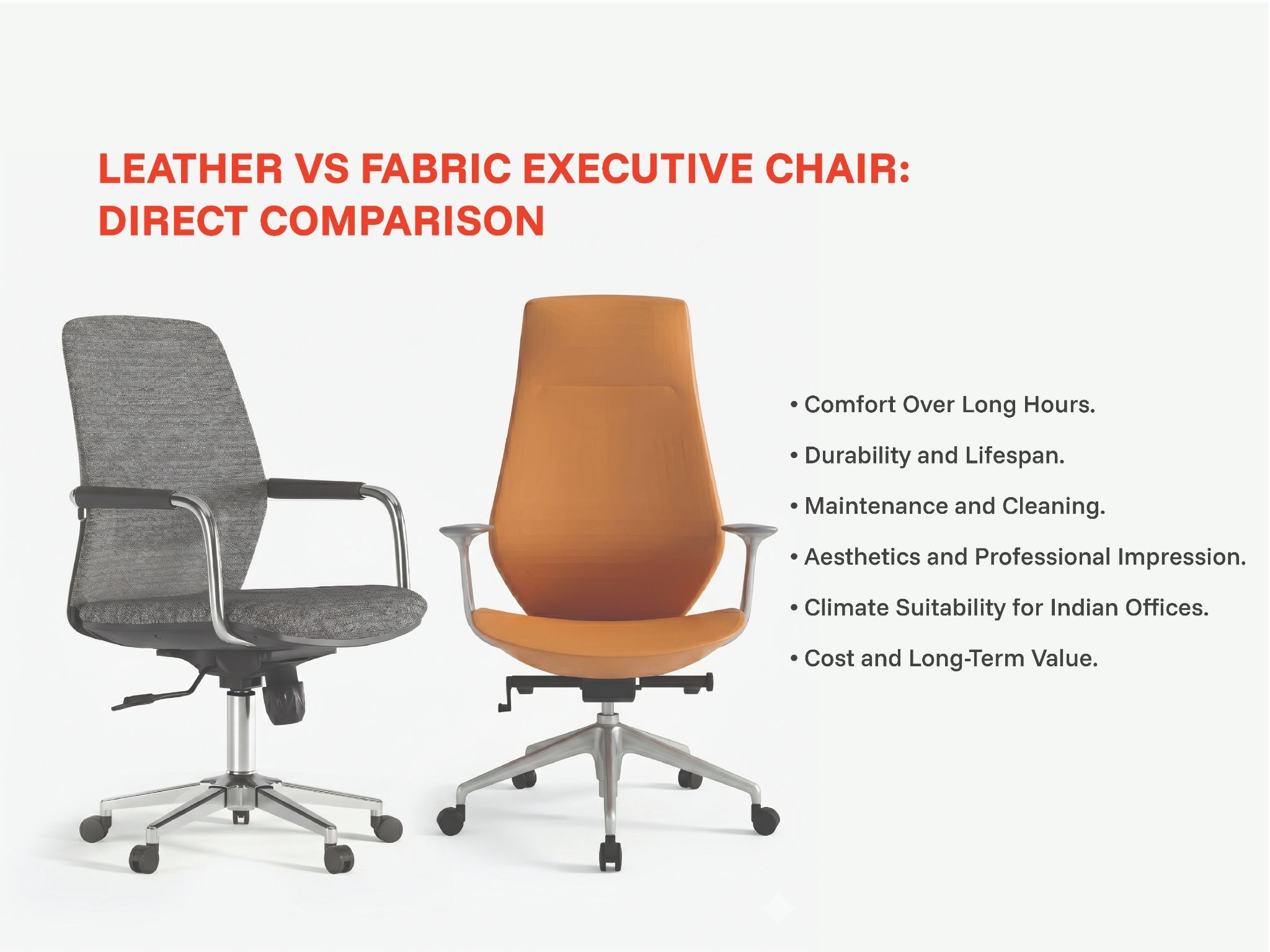
Leather vs Fabric Executive Chair: Direct Comparison
Comfort Over Long Hours
For sitting sessions of less than four hours in a well air-conditioned environment, the comfort difference between leather and fabric is minimal for most professionals. Both materials provide adequate contact surface comfort when the underlying foam density is correctly specified.
For sessions of four hours or more, particularly in environments without consistent temperature control, fabric upholstery maintains a more comfortable surface temperature. The breathability advantage becomes increasingly noticeable the longer and warmer the sitting session.
Durability and Lifespan
Quality leather and leatherette upholstery in a correctly maintained environment maintains its visual quality and structural integrity for seven to ten years of daily commercial use. Genuine leather, properly conditioned, can exceed this.
Commercial-grade fabric upholstery with a Martindale rating appropriate for professional use maintains its appearance for a comparable period. The key variable is whether the fabric specification was genuinely commercial-grade at the point of purchase, which requires verification of the specific rating rather than reliance on the supplier's general claims.
Maintenance and Cleaning
Leather and leatherette win clearly on day-to-day cleaning ease. Surface marks and spills are addressed with a damp cloth in seconds and leave no residue. This low-maintenance characteristic is a genuine practical advantage in a busy professional cabin.
Fabric requires more regular attention. Vacuuming, prompt stain treatment, and periodic deeper cleaning are all part of maintaining a fabric chair to a professional standard. For professionals who prefer a low-maintenance working environment, this difference matters.
Aesthetics and Professional Impression
A high-back leather office chair in a director's cabin creates a visual impression that has decades of cultural association behind it in Indian corporate settings. It projects authority, experience, and institutional seriousness that many senior professionals and their organisations value.
A well-specified fabric chair in a contemporary design projects modern professionalism and considered quality. It is increasingly the choice of progressive Indian organisations that want their senior spaces to feel current rather than traditional.
Climate Suitability for Indian Offices
This is the category where the difference between leather and fabric is most practically significant for Indian offices. India's climate, even in air-conditioned urban offices, creates conditions where the breathability of upholstery affects daily comfort in a way that temperate climates do not.
For cabins with reliable, consistent air conditioning throughout the working day, leather is a practical choice. For cabins where the air conditioning is intermittent, delayed in the morning, or variable across the year, fabric upholstery will provide meaningfully better comfort.
Cost and Long-Term Value
Genuine leather upholstery commands a premium over both leatherette and fabric alternatives. Quality leatherette sits between genuine leather and fabric in price. Commercial-grade fabric in a contemporary design can be specified at a price comparable to mid-range leatherette.
The relevant comparison is not upfront cost but total cost of ownership including maintenance, any conditioning products required for leather, and the likelihood of upholstery replacement before the chair frame reaches the end of its service life.
How to Choose Between Leather and Fabric for Your Workspace?
Consider Your Office Environment
The most important environmental factor is air conditioning reliability. If your cabin has consistent, high-quality climate control throughout the working day and year, leather upholstery is a practical and appropriate choice.
If climate control is inconsistent, if your cabin receives significant direct sunlight, or if temperatures in your office building vary meaningfully across seasons, fabric upholstery will provide better sustained comfort regardless of how impressive the leather option looks.
Consider How Long You Sit Each Day
For professionals who spend the majority of their working day at their desk, comfort across long sessions should be the primary consideration in the upholstery decision. The breathability advantage of fabric becomes more significant the longer the sitting duration.
For professionals who spend much of their day in meetings, site visits, or away from their desk, the aesthetic impression of a leather chair may be more relevant than its extended sitting comfort because the chair is seen more than it is sat in for long periods.
Consider Who Uses the Chair
If the chair is used exclusively by a single senior professional, the choice can be made based entirely on that person's preferences and working conditions. If the cabin is occasionally used by different people, or if the chair serves a reception or meeting function as well as a working one, the easier maintenance of leather becomes a more relevant factor.
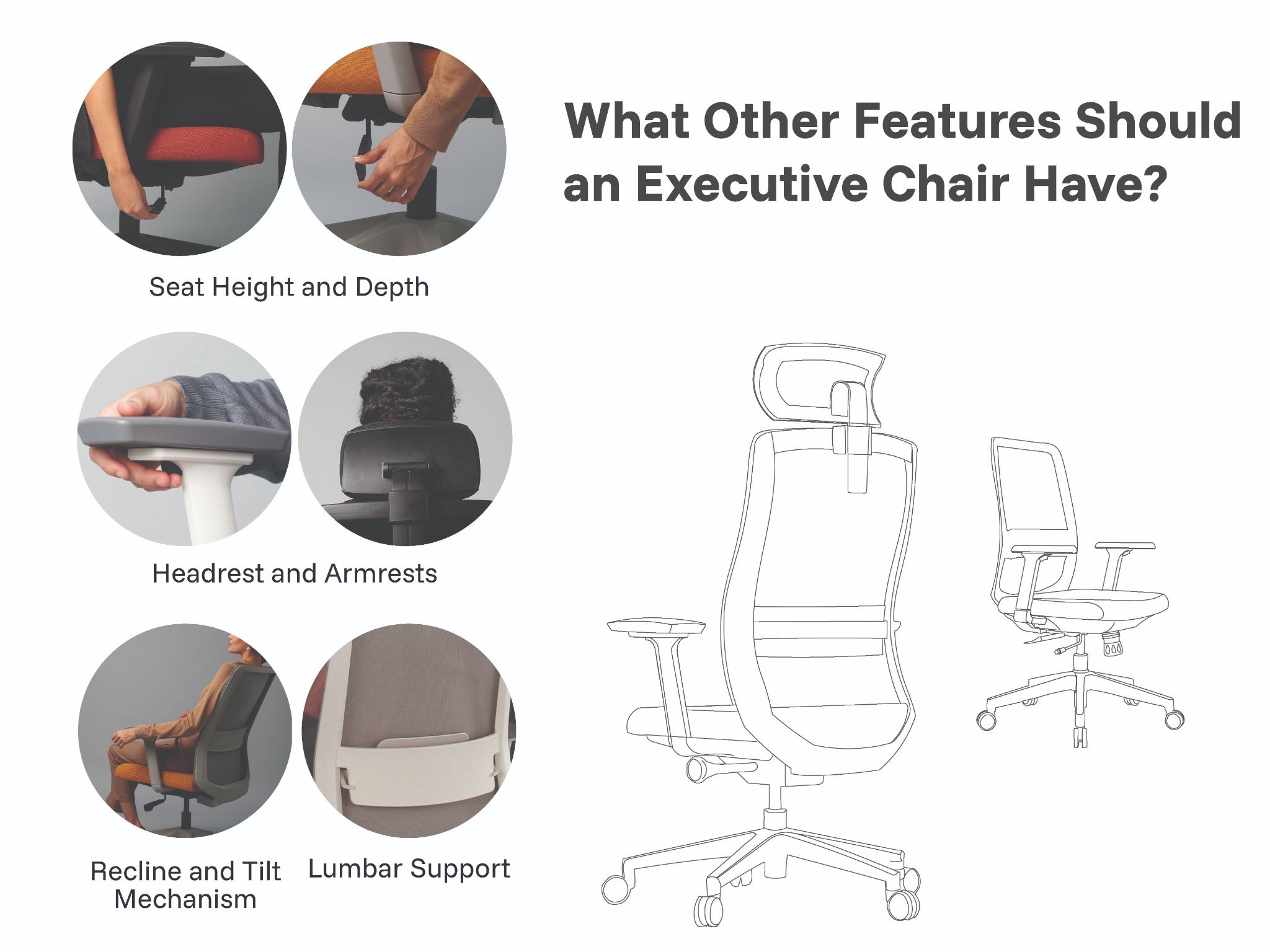
What Other Features Should an Executive Chair Have?
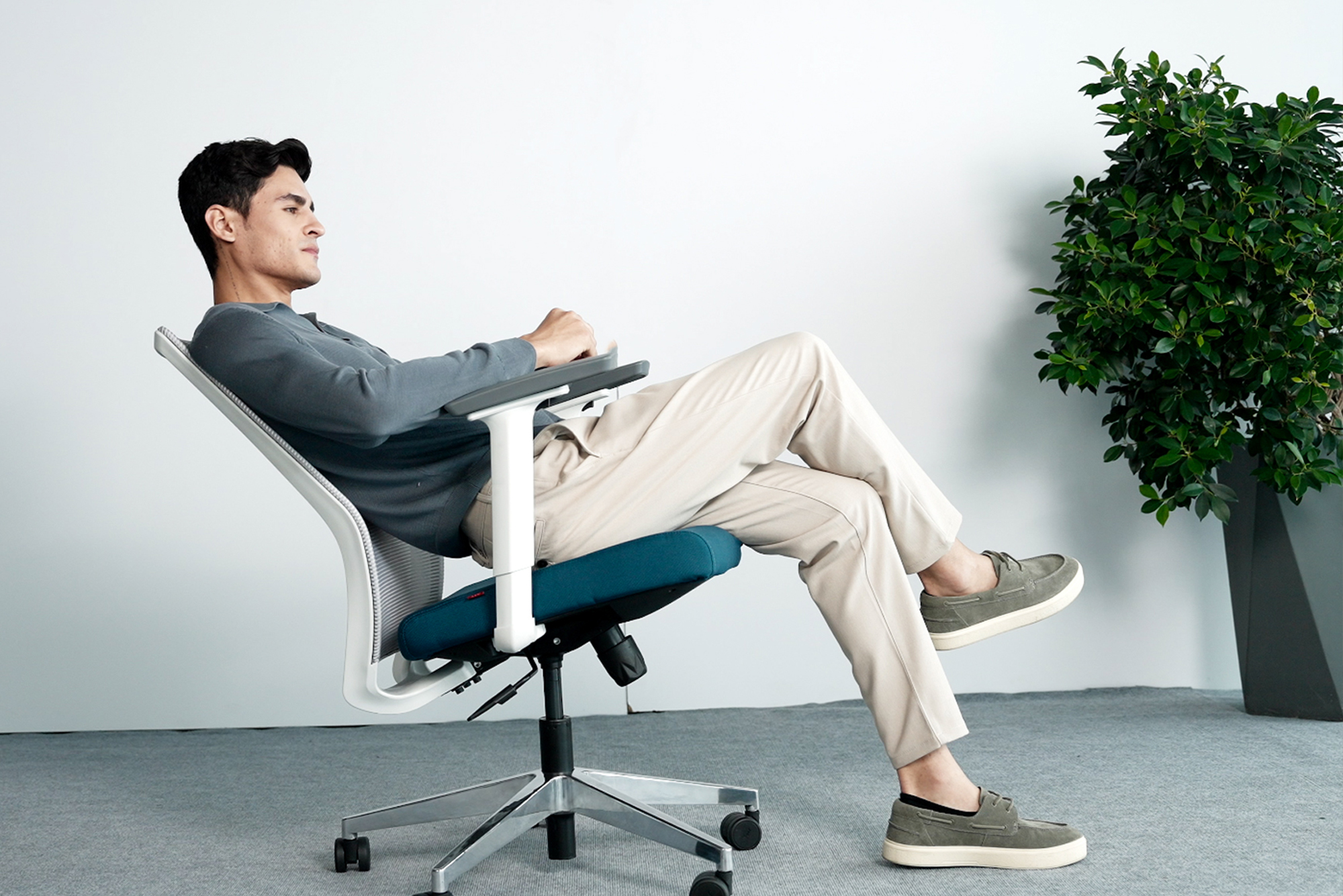
Lumbar Support
Any premium office seating specified for extended professional use must include meaningful lumbar support. The lower back requires active support during sustained sitting to maintain its natural inward curve and prevent the progressive flattening that causes chronic pain.
Adjustable lumbar support that can be positioned precisely for the individual user is the correct specification. A fixed lumbar insert positioned for an assumed average anatomy is significantly less effective and should not be accepted as adequate for a senior professional chair.
Seat Height and Depth
The seat height should allow both feet to rest flat on the floor with the knees at approximately 90 degrees. For senior professionals, a wide seat height adjustment range accommodates different body proportions and different working postures across the day.
Seat depth should allow the user to sit fully back against the lumbar support while leaving a small clearance between the front seat edge and the back of the knees. A seat that is too deep forces the user to sit forward away from the lumbar support, defeating its purpose.
Recline and Tilt Mechanism
A quality recline mechanism allows the backrest to move through a controlled range from upright to slightly reclined, with adjustable tilt tension matched to the user's body weight. The ability to recline slightly during reading or phone calls reduces pressure on the spinal discs meaningfully compared to holding a rigid upright posture.
A tilt lock that holds the preferred recline angle for different tasks rounds out the recline specification for a chair used across varied professional activities throughout the day.
Headrest and Armrests
A height-adjustable headrest provides meaningful neck and upper spine support during the reclined postures associated with reading, calls, and reflection. For a chair that is used for long sessions, the headrest reduces the muscular load on the cervical spine significantly.
Adjustable armrests that allow the forearms to rest naturally at keyboard height with the shoulders relaxed are the correct specification. Fixed armrests that cannot be positioned correctly for the individual user create the shoulder tension that accounts for much of the upper body discomfort associated with extended desk work.
Bonus Point: When testing any premium office seating in a showroom, sit in the chair for at least twenty minutes rather than the thirty seconds most people spend on a showroom evaluation. Set up the lumbar support, seat height, and armrests correctly for your body before forming any opinion about the comfort quality. A chair that is correctly configured and then evaluated over twenty minutes will reveal its real quality far more accurately than an unconfigured thirty-second test.
Common Myths About Executive Chairs Debunked
Myth 1: Leather Always Means Better Quality
Leather upholstery is associated with premium quality in Indian corporate culture, but the upholstery material is only one dimension of chair quality. A genuine leather chair with a poor-quality foam core, an inadequate lumbar system, and a substandard recline mechanism is a significantly lower-quality product than a well-specified fabric chair with commercial-grade foam, proper lumbar adjustability, and a smooth tilt mechanism.
Evaluate the complete specification of any chair rather than using the upholstery material as a quality proxy. The foam density, the lumbar system, the mechanism quality, and the frame construction matter at least as much as what the surface is made of.
Myth 2: Fabric Chairs Are Only for Regular Staff
This association belongs to an earlier era of Indian corporate furniture. Contemporary premium office seating in fabric is entirely appropriate for the most senior professional spaces and is increasingly the preferred choice for directors and founders of progressive Indian organisations who want their workspace to reflect modern values rather than traditional hierarchy signals.
The quality of a fabric chair is determined by the fabric specification, the foam density, the mechanism quality, and the overall design, not by the category it has historically been associated with.
Myth 3: An Expensive Chair Is Always a Good Chair
Price is a signal of quality in premium office seating, but it is not a guarantee. Some chairs are priced at premium levels on the strength of brand positioning or visual design rather than the ergonomic specification and material quality that actually determine how the chair performs over years of daily professional use.
Always evaluate the specific features that determine real quality: adjustable lumbar support, commercial-grade foam density, smooth and reliable mechanism operation, and a verified warranty covering the components that are most likely to require attention over the chair's service life.
How AFC Furniture Solutions Designs Executive Chairs for Indian Workplaces?
What Executive Chair Options Does AFC Offer?
AFC Furniture Solutions offers a comprehensive range of premium office seating covering both leather and fabric configurations for senior professional environments across Indian corporate offices.
The Leather Chair range provides high-back seating in genuine leather and quality leatherette finishes, with full reclining functionality, adjustable lumbar support, and polished base options suited to director cabins, boardrooms, and senior management spaces.
The range also covers fabric configurations in contemporary designs that are appropriate for senior professional environments where a modern aesthetic is preferred over traditional executive styling.
Explore the full AFC Furniture Solutions Leather Chair range to compare configurations, finishes, and specifications suited to different senior professional environments.
What Quality Standards Back AFC Seating?
AFC Furniture Solutions holds BIFMA Level 3 certification, the highest internationally recognised standard for furniture quality, safety, and sustainability. Every chair in the executive seating range is manufactured at the Greater Noida facility and tested to BIFMA-compliant standards covering structural integrity, mechanism durability, and foam performance under sustained commercial daily use.
You can also explore the complete AFC Furniture Solutions Seating range for mesh, leather, training, and cafe chair options covering every seating requirement across the modern Indian corporate office.
Frequently Asked Questions
Q1. Is a leather executive chair suitable for long working hours in India?
In a well air-conditioned cabin with consistent temperature control, a quality leather chair is comfortable for extended working sessions. In environments with variable or intermittent air conditioning, the heat retention of leather upholstery becomes increasingly noticeable during long sessions and fabric upholstery provides better sustained comfort.
Q2. How do I maintain a leather executive chair in an Indian climate?
Wipe the surface regularly with a clean, lightly damp cloth to remove dust and surface marks. Apply a leather conditioner every three to four months to prevent the surface from drying and cracking, particularly in environments with continuous air conditioning that reduces ambient humidity. Avoid harsh chemical cleaners that strip the surface finish.
Q3. Can a fabric chair look as professional as a leather one in a director's cabin?
Yes, when the fabric chair is well specified in terms of design, form, and upholstery quality. A high-back fabric chair in a contemporary design with quality trim and a polished base is entirely appropriate for senior professional spaces and is increasingly chosen by directors and founders of leading Indian organisations.
Q4. What foam density should a premium executive chair have?
High-density foam rated for commercial daily use is the correct specification. This means foam that maintains its form and support under sustained body weight across years of daily use without compressing permanently. Ask suppliers to specify the foam density in kilograms per cubic metre rather than accepting general descriptions of comfort level.
Q5. How long does a quality executive chair typically last?
A well-specified premium office seating product with quality foam, a robust mechanism, and appropriate upholstery for the environment should deliver seven to twelve years of reliable daily professional use. The mechanism and foam are typically the first components to require attention. A warranty of at least three years covering these components is a reasonable minimum quality indicator.
Q6. Is genuine leather worth the extra cost over leatherette for an executive chair?
For most Indian corporate office environments, quality leatherette provides a visual and tactile experience that is comparable to genuine leather at a lower upfront cost and without the conditioning requirement. Genuine leather rewards the investment most clearly in spaces where very long-term visual quality and the subtle patina of ageing leather are genuine priorities.
Final Thoughts
The choice between leather and fabric for a senior professional chair is not a decision about which material is objectively better. It is a decision about which material serves the specific conditions of your office, your working hours, and the impression you want to create in your professional space.
Leather projects traditional authority and cleans easily. Fabric breathes better and suits modern aesthetics. Both are entirely appropriate for senior professional environments when correctly specified and matched to the conditions in which they will be used.
AFC Furniture Solutions has been designing and supplying premium office seating for Indian professionals for over 15 years, with a complete range covering both configurations and the quality certification to back every product in it.
Explore Other Popular Blogs

Let’s build together
Tell us about your project and we’ll help you plan, design, and deliver at scale.
.jpg)
.svg)