.svg)
L-Shape vs Straight Executive Tables: Which One Should You Choose?
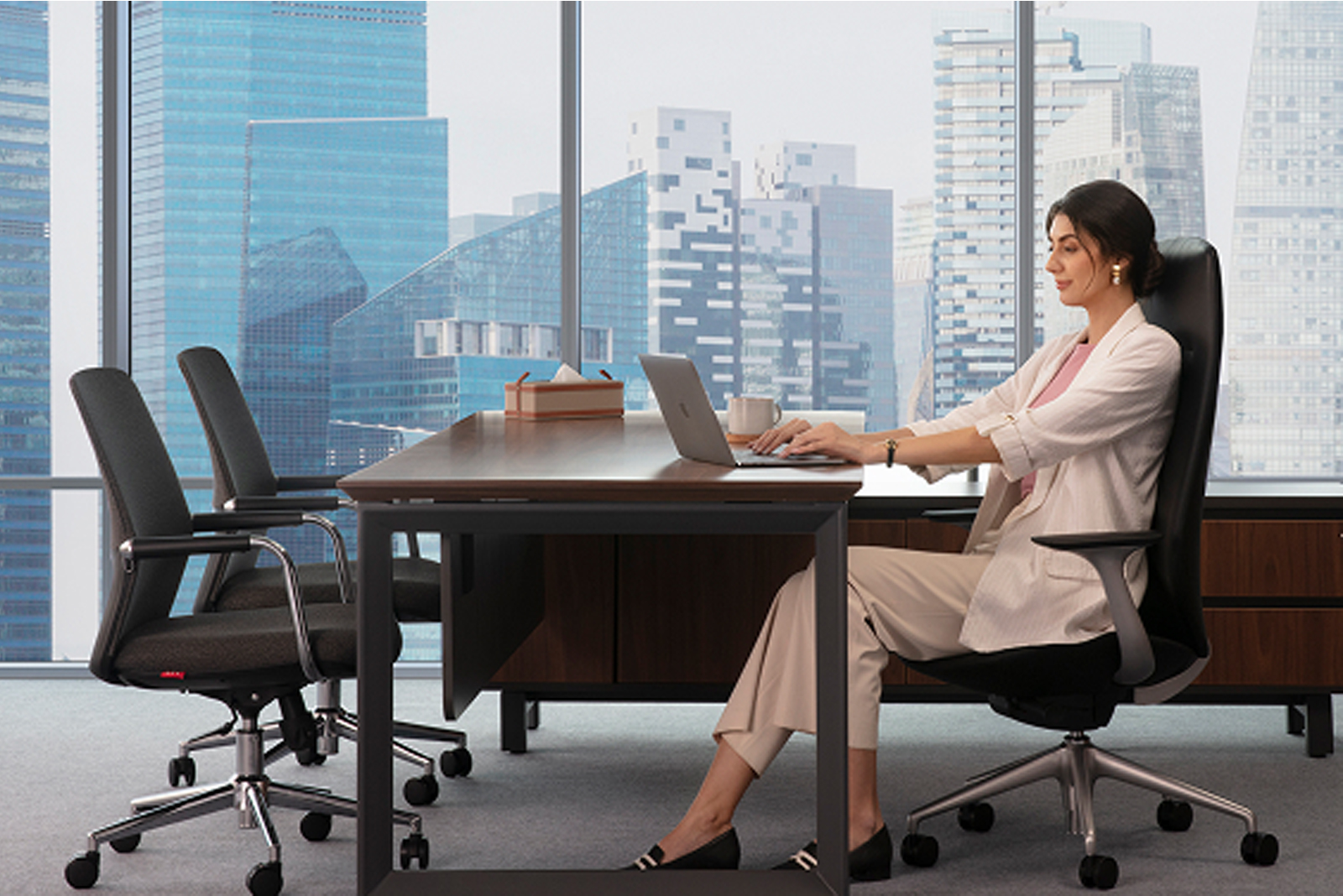
Not sure whether to choose an L-shaped or straight executive table for your office cabin? This practical guide covers space, functionality, aesthetics, and what suits your work style best.
Why Does the Shape of Your Executive Table Actually Matter?
Most people spend more time choosing the colour of their cabin walls than the shape of the desk they will use for eight hours every working day. The desk shape, however, has a far greater impact on how comfortably and efficiently that time is spent.
The two most common choices for senior professionals and managers in India are the L-shaped desk and the straight desk. Both serve the same basic purpose but create very different working experiences depending on the person, the role, and the room.
Understanding the practical difference between them before making a decision saves both money and the frustration of realising the wrong choice was made only after installation.
How Does Desk Shape Affect Your Daily Work?
The shape of a desk determines how much surface area you have, how easily you can reach different parts of your workspace, and how naturally your working materials, screens, and meeting space are organised around you.
A shape that does not match your working pattern creates friction every day. Reaching awkwardly for a second monitor, running out of surface space during a client meeting, or feeling cramped in a corner that was not designed for your workflow are all consequences of choosing shape based on appearance rather than function.
The right shape makes daily work feel effortless. The wrong one creates a series of small irritations that compound into genuine dissatisfaction over time.
What Does Your Desk Choice Say About Your Office?
A well-chosen desk communicates something about how the person behind it works and what they value. A large, organised L-shaped desk in a spacious cabin suggests a multi-tasking senior professional who handles complex work across multiple streams simultaneously.
A clean, well-finished straight desk in a compact cabin suggests a focused, decisive professional who values clarity and efficiency over volume of surface area.
Neither communicates inferiority. Both communicate a considered, intentional choice that reflects professional self-awareness. The wrong desk for the person using it, however, simply looks like a mismatch.
What Is an L-Shaped Executive Table?
An L-shaped office desk is a desk configuration where two work surfaces meet at a right angle, creating an L shape when viewed from above. One arm of the L typically serves as the primary working surface and the other as a secondary surface for additional equipment, reference materials, or visitor-facing space.
The configuration makes highly efficient use of a corner position in a room, turning what is often the least useful part of a cabin into its most functional zone. This is one of the primary reasons L-shaped desks are popular in Indian corporate cabins where space efficiency is a genuine daily priority.
What Are the Key Features of an L-Shaped Desk?
The defining feature is the extended total surface area achieved without a proportionally larger room footprint. An L-shaped desk provides significantly more usable workspace than a straight desk of comparable length because the corner position allows two directions of working surface to coexist efficiently.
Most quality L-shaped desks include a modesty panel on both arms, integrated cable management channels running along both surfaces, and under-desk storage in the form of pedestals on one or both sides.
The return arm, which is the shorter arm of the L, typically serves as the secondary surface for a second monitor, a printer, printed documents, or the meeting side of the desk where a visitor sits across from the professional.
Who Uses an L-Shaped Executive Table the Most?
Senior managers and directors who handle multiple simultaneous workstreams benefit most from the extended surface area. A primary screen for active work, a secondary screen for reference, physical documents to one side, and clear space for a visitor across the desk are all comfortably accommodated.
It also suits professionals who regularly have one-on-one meetings in their cabin. The return arm naturally creates a meeting zone that is separate from the primary working surface, so a visitor can sit across the desk without the professional's working materials cluttering the conversation space.
What Is a Straight Executive Table?
A straight office desk is a single, linear work surface with no return arm. It is the most direct and uncluttered desk form and has been the standard configuration for professional cabins in India for decades.
It works well in rectangular rooms where the desk is positioned centrally, facing the door, which is the most common cabin layout in Indian corporate offices. The clean, symmetrical appearance creates a formal, authoritative setting that many senior professionals prefer for the impression it creates on visitors.
What Are the Key Features of a Straight Desk?
A straight desk provides a single continuous work surface, typically between 1500mm and 1800mm in length, with a modesty panel at the front and storage options including a pedestal on one or both sides underneath.
The simplicity of the form means it is easier to position flexibly within a room and easier to relocate when the office moves. There are no corner fittings or return connections to manage, which makes installation and reconfiguration straightforward.
Quality straight desks for executive use include integrated cable management, a premium worksurface finish in wood veneer or high-quality laminate, and solid structural frames that communicate quality and permanence to anyone sitting across the desk.
Who Uses a Straight Executive Table the Most?
Professionals whose work is primarily screen-based and document-focused, without the need for simultaneous multi-surface working, find the straight desk entirely adequate. A single large monitor, a keyboard, a notebook, and a phone are all comfortably accommodated on a well-specified straight surface.
It is also the preferred choice for professionals who receive many visitors in their cabin and want a clear, uncluttered desk surface to face them across. The symmetry and formality of a straight desk creates a meeting dynamic that many senior professionals in legal, financial, and consulting roles consider appropriate for the nature of their client interactions.
Tip: Before deciding between L-shaped and straight configurations, spend one working day noting every task you perform and where you naturally reach to perform it. If you find yourself turning more than 30 degrees from your primary monitor more than ten times during the day, an L-shaped configuration will serve you significantly better than a straight one.
L-Shape vs Straight Executive Table: Direct Comparison
Space and Room Layout
An L-shaped desk fits most naturally into a corner position and works best in square or near-square rooms where two walls can anchor the L configuration. In a narrow rectangular room, an L-shaped desk can feel forced and may obstruct movement around the cabin.
A straight desk is more flexible in terms of room positioning. It works equally well facing a wall, facing the door, or positioned centrally in a room of almost any shape. For cabins with an unusual layout or limited floor area, the straight desk is almost always the more adaptable choice.
The L-shaped configuration uses corner space that would otherwise be wasted. In a well-proportioned cabin, this makes the room feel more completely furnished and functional rather than leaving dead space in the corner.
Work Surface and Multitasking
The L-shaped desk offers significantly more total work surface than a straight desk of comparable primary arm length. This additional surface is genuinely useful for professionals managing multiple monitors, frequent reference to physical documents, or simultaneous work across different projects.
A straight desk provides a defined, focused work area that suits professionals who prefer to work on one thing at a time. The limited surface also imposes a kind of organisational discipline, since there is less room to accumulate materials that are not relevant to the current task.
If your daily work involves frequent context switching between different tasks, screens, or materials, the L-shaped configuration will feel more naturally aligned with the way you work.
Aesthetics and Professional Impression
Both configurations can achieve an excellent professional aesthetic when specified with quality materials and finished consistently with the cabin's interior. The difference is in the character of the impression each creates.
An L-shaped desk in a well-proportioned cabin creates a powerful, commanding presence. It fills the room purposefully and signals that the person behind it manages complex, multi-faceted work.
A straight desk creates a cleaner, more symmetrical aesthetic that emphasises directness and formality. For roles where client-facing authority and professional clarity are the primary impression priorities, the straight desk often communicates these qualities more directly.
Cable Management and Technology Setup
An L-shaped desk creates more cable management complexity because power and data need to be routed to two connected surfaces rather than one. Quality L-shaped desks address this with integrated channels running along both arms and a central junction point at the corner.
A straight desk has a simpler cable management requirement. Power and data routes connect to a single surface and the cable path is more straightforward to plan during installation.
For heavily technology-dependent setups with multiple monitors, docking stations, and charging devices, ensure that the L-shaped desk you are specifying has sufficient cable management provision for the full equipment load before finalising the choice.
Cost and Value
An L-shaped desk typically costs more than a comparable straight desk because it uses more material and involves more complex manufacturing. The price difference varies depending on the worksurface finish, the frame material, and the storage configuration specified.
The additional cost is justified when the extra surface area is genuinely used. A professional who uses both arms of the L productively every day is getting strong value from the investment. A professional who uses one arm and keeps the other as overflow storage is paying for surface area they do not actually need.
Bonus Point: If you are unsure whether an L-shaped configuration will genuinely suit your working pattern, temporarily arrange your current desk materials into an L formation using a portable table for one week before ordering. This practical test will tell you more about whether the configuration matches how you actually work than any amount of showroom evaluation.

How to Decide Which Executive Table Is Right for You?
Consider Your Room Size and Shape
Measure your cabin accurately before approaching any supplier. Note the room dimensions, the position of the door, the position of windows, and the location of electrical sockets and data points.
An L-shaped desk in a room that is too small creates a cramped, oppressive environment. A straight desk in a room that is too large can feel underwhelming and leave the space feeling incomplete. Matching the desk configuration to the room proportions is the most important single decision in cabin furniture planning.
Consider Your Daily Work Pattern
Think honestly about what you do at your desk for the majority of each working day. If most of your time involves focused work on a single screen with occasional reference to documents, a straight desk serves this pattern well.
If your day involves regular switching between different tasks, simultaneous use of multiple screens, frequent visitor meetings at the desk, and regular reference to printed materials, an L-shaped configuration will support this pattern far more comfortably.
Consider Who Visits Your Cabin
If your cabin is used regularly for one-on-one meetings with clients, direct reports, or senior management, consider how your desk configuration affects the meeting experience for the person sitting across from you.
An L-shaped desk with a clear return arm creates a natural meeting zone that separates the conversation space from your personal working area. A straight desk creates a more direct, face-to-face meeting dynamic that some professionals find more appropriate for their role and communication style.
What Features Should Every Executive Table Have?
Work Surface Quality and Finish
The worksurface finish is the most visible quality indicator of any executive desk. High-quality laminate with a smooth, consistent finish that resists scratching and heat should be the minimum specification. Wood veneer or premium textured laminate finishes project a higher quality aesthetic for senior executive spaces.
The surface should be completely smooth with no texture variation, bubbling, or edge separation. Any of these defects in a showroom sample indicate manufacturing quality that will only become more apparent under daily use.
Storage Integration
Most executive desks include one or two under-desk pedestals providing drawer storage for personal items and filing. The quality of the drawer slide mechanism and the lock system are the details that distinguish a quality pedestal from a standard one.
Drawers should extend fully, operate smoothly and quietly, and lock securely with a mechanism that engages cleanly. These are high-frequency use components that reveal quality differences very clearly after a few months of daily use.
Cable Management
Every executive desk should include integrated cable management that routes power and data cables completely out of sight. Visible cabling on a senior professional's desk undermines the quality impression of even a beautifully finished surface.
Cable management grommets, under-surface cable trays, and modesty panel entry points should all be included as standard in any desk specified for a senior professional environment.
Build Quality and Frame Material
The frame should be constructed from materials that will not flex, sag, or develop instability under the weight of professional equipment and sustained daily use. Powder-coated steel or solid engineered wood frames are the appropriate specification for commercial executive furniture.
Press firmly on the worksurface at different points and verify that there is no flex or movement in the frame beneath. Any flex under moderate pressure indicates a structural specification that will develop into a visible problem under sustained daily load.

Common Mistakes to Avoid When Choosing an Executive Table
Buying Without Measuring the Room
This is the most common and most costly mistake in cabin furniture procurement. A desk that looks ideal in a showroom or catalogue can arrive and either dominate a room that is too small for it or look lost in a space that is too large.
Always measure the room precisely before approaching any supplier and verify that the desk dimensions you are considering leave adequate clearance for the door to open fully, for a visitor chair to be positioned comfortably across the desk, and for movement around the cabin.
Prioritising Looks Over Functionality
An executive desk should look impressive. It should also function as an effective working environment for the specific work patterns of the person using it. These two requirements are not in conflict, but when forced to choose between them, function should always take priority.
A desk that looks extraordinary but does not support the way you actually work will become a daily source of frustration. A desk that functions perfectly and looks professional will remain satisfying for the full decade or more of its service life.
Ignoring Storage Requirements
Many professionals underestimate how much physical storage their daily work actually requires until they are sitting at a desk with insufficient provision and nowhere to put the items that accumulate in normal professional use.
Think specifically about what needs to be within arm's reach at the desk, what needs to be accessible within the cabin, and what needs to be secure. Then verify that the desk and pedestal configuration you are considering provides adequate provision for all three before committing to the order.
How AFC Furniture Solutions Designs Executive Tables for Indian Offices?
What Executive Table Options Does AFC Offer?
AFC Furniture Solutions offers a range of cabin tables designed for senior professional environments across Indian corporate offices. The Cabin Tables range covers both straight and L-shaped configurations in finishes suited to the aesthetic requirements of executive spaces, from warm wood tones to contemporary dark laminates and two-tone combinations.
Every desk in the range includes integrated cable management, modesty panel provision, and under-desk pedestal compatibility. Customisation across worksurface finish, frame colour, and dimensional configuration is available to suit specific cabin layouts and individual preferences.
Explore the full AFC Furniture Solutions Cabin Tables range to compare straight and L-shaped configurations suited to different cabin sizes and professional requirements.
What Quality Standards Back AFC Tables?
AFC Furniture Solutions holds BIFMA Level 3 certification, the highest internationally recognised standard for office furniture quality, safety, and sustainability. Every desk in the Cabin Tables range is manufactured at the Greater Noida facility to consistent commercial specifications and tested before delivery.
Worksurface materials used across the range meet commercial durability standards appropriate for daily professional use, with PVC edge banding on all exposed edges and frame specifications designed for the sustained load of fully equipped professional workstations.
You can also explore the AFC Furniture Solutions Tables range for a broader view of meeting, training, and cabin table options suited to different zones of the modern Indian corporate office.
Frequently Asked Questions
Q1. Which is better for a small cabin: L-shaped or straight desk?
For a small cabin, a straight desk is almost always the better choice. An L-shaped configuration requires sufficient room to accommodate both arms of the L comfortably without making the cabin feel cramped. If the cabin is below approximately 10 square metres, a straight desk will serve the space and the professional more effectively.
Q2. Can an L-shaped desk be split into two straight desks if needed?
In most cases, yes. Quality L-shaped desks are manufactured as two connected but structurally independent units that can be separated and used individually. Verify this with your supplier before ordering if future flexibility is a consideration for your procurement decision.
Q3. What is the ideal length for a straight executive desk?
For most senior professionals in Indian corporate cabins, a straight desk of 1600mm to 1800mm in length provides adequate working surface for a primary monitor, keyboard, phone, and working documents without overwhelming a standard cabin space.
Q4. Does an L-shaped desk always need to be positioned in a corner?
Not necessarily, but a corner position makes the most effective use of the L configuration. Positioning an L-shaped desk away from a corner leaves the outer angle of the L as dead space that cannot be used productively and occupies floor area without contributing usable surface.
Q5. How do I choose between a wood veneer and a laminate finish for an executive desk?
Wood veneer offers a richer, more premium aesthetic that is appropriate for very senior executive spaces where visual quality is a priority. High-quality laminate provides a more consistent, easier-to-maintain surface that is appropriate for most senior professional cabins. The choice should reflect the visual standard of the broader office environment rather than personal preference alone.
Q6. What is the standard height for an executive desk in India?
Standard executive desk height in India is typically 750mm from the floor, which is appropriate for most adult users in a seated working position. For taller professionals or those who prefer a slightly higher working surface, desks at 760mm to 780mm are also available and can be specified as a customisation option.
Final Thoughts
Choosing between an L-shaped and straight desk is not a decision about which configuration looks better. It is a decision about which one will make your working day easier, more comfortable, and more productive across the many years you will spend at it.
The L-shaped configuration serves professionals who manage complex, multi-surface work and value the extended workspace. The straight desk serves professionals who prioritise focus, formality, and a clean, uncluttered working environment. Neither is universally better. Both are right for the right person in the right room.
AFC Furniture Solutions has been designing and supplying cabin furniture for senior professionals across Indian corporate offices for over 15 years, with a complete range covering both configurations and the quality standards to back every product in it.
Explore Other Popular Blogs

Let’s build together
Tell us about your project and we’ll help you plan, design, and deliver at scale.
.jpg)
.svg)