.svg)
How to Choose the Right Mesh Chairs for Your Office in India

Looking for the right mesh chairs for your Indian office? This complete guide covers key features, health benefits, types, and expert guidance from AFC Furniture Solutions.
Why Are Mesh Chairs the Preferred Choice for Indian Offices?
Walk into any well-designed Indian corporate office today and mesh seating dominates the working floor. Technology companies, financial services firms, consulting organisations, and fast-growing startups across Delhi NCR, Bengaluru, Mumbai, and Hyderabad have made mesh the default seating specification for professional workstations.
This shift did not happen by accident. It reflects a growing understanding among Indian organisations that the chair beneath each employee is a daily health and productivity investment, not just a procurement line item.
The rise of mesh seating in India reflects a direct response to the specific conditions of Indian professional environments, where climate, working hours, and occupational health awareness have all converged to make breathability, support, and adjustability the three most important chair selection criteria.
What Makes Mesh Chairs Different from Other Office Chairs?
A mesh chair uses a taut woven fabric stretched across the backrest frame, and in many models across the seat as well, rather than the foam-padded upholstery used in conventional office chairs. This open-weave structure is the defining characteristic that makes mesh chairs fundamentally different in both function and daily experience.
The structure of the mesh allows air to circulate freely through the chair surface at every contact point between the user and the chair. This continuous air circulation prevents the heat and moisture buildup that makes foam-back chairs progressively less comfortable as a working session extends.
Beyond breathability, quality mesh also conforms to the shape of the user's back dynamically rather than presenting a fixed surface that the user adapts to. This responsive conforming quality is what gives a well-specified mesh backrest its characteristic feeling of natural support.
Why Does Breathability Matter in Indian Office Conditions?
India's climate creates office conditions that are more thermally demanding than those in the temperate markets where many chair specifications were originally developed. Even in air-conditioned Indian offices, ambient temperatures are higher than in equivalent European or North American environments for significant portions of the year.
The gap between outdoor temperatures and indoor air-conditioned temperatures in Indian summer creates a thermal loading on the human body that non-breathable seating surfaces amplify. A foam-back chair in an Indian office retains body heat at the contact surface and creates a warm, humid microclimate that becomes noticeably uncomfortable after two to three hours of continuous sitting.
A mesh back chair eliminates this entirely. The open weave maintains the same surface temperature as the ambient room air throughout the session, regardless of duration. In Indian conditions, this is not a marginal comfort benefit. It is a meaningful daily wellbeing advantage that compounds across every working hour of every working day.
What Are the Key Features to Look for in a Mesh Chair?
Mesh Quality and Tension
Not all mesh is the same. The quality of the mesh fabric, its weave density, and the tension at which it is mounted on the frame collectively determine whether the backrest provides genuine dynamic support or simply presents a surface that sags and deforms under body weight over time.
High-quality commercial mesh maintains consistent tension across the full backrest surface under body weight and continues to maintain that tension across years of commercial daily use without progressive sagging. Press firmly on the backrest of any mesh chair you are evaluating and assess whether the surface feels consistently taut or whether it deforms significantly under moderate pressure.
Budget mesh stretches under sustained load and loses its support properties within months of commercial use. Once mesh sags, it cannot be restored to its original tension and the chair provides neither the postural support nor the breathability benefit that justified its selection.
Lumbar Support Design
Lumbar support in a mesh chair must work in conjunction with the dynamic conforming properties of the mesh rather than against them. The best lumbar systems in mesh chairs provide an adjustable zone of additional support within the lower portion of the backrest that maintains the spine's natural inward curve without creating a pressure point.
Height-adjustable lumbar support is the minimum specification for any mesh chair intended for extended professional use. Depth-adjustable lumbar support adds a further dimension of personalisation that allows the support to follow each user's individual lower back anatomy precisely.
A mesh chair without adjustable lumbar support relies entirely on the mesh tension to provide lower back support. For sessions of two hours or less this may be adequate. For sessions of six or more hours daily, dedicated adjustable lumbar support is a health requirement rather than a feature preference.
Seat Cushion and Depth
The seat cushion in a mesh chair must maintain its support density across years of commercial daily use. High-density foam that resists compression under body weight and returns to its original form after each session is the correct commercial specification. Low-density foam that compresses quickly effectively converts the seat surface from a supportive cushion to a hard platform within months.
Seat depth adjustment ensuring a two to three finger gap between the front seat edge and the back of the knees is essential for preventing the circulatory restriction that causes leg fatigue during long working sessions. For a chair used by multiple users across hot-desking arrangements, seat depth adjustability is particularly important because different users have significantly different leg lengths.
Armrest Adjustability
3D adjustable armrests that move in height, forward-backward position, and lateral angle allow the most precise forearm support alignment for individual users across different working activities. The shoulders must remain completely relaxed and dropped when the forearms rest on the armrests. Any elevation of the shoulders indicates that the armrests are set too high and are creating the sustained upper trapezius tension that causes neck pain.
For open-plan offices where multiple users share chairs across hot-desking arrangements, armrests that can be quickly and intuitively adjusted without tools are essential for ensuring that every user can achieve correct posture configuration from the moment they sit down.
Tilt Mechanism and Recline
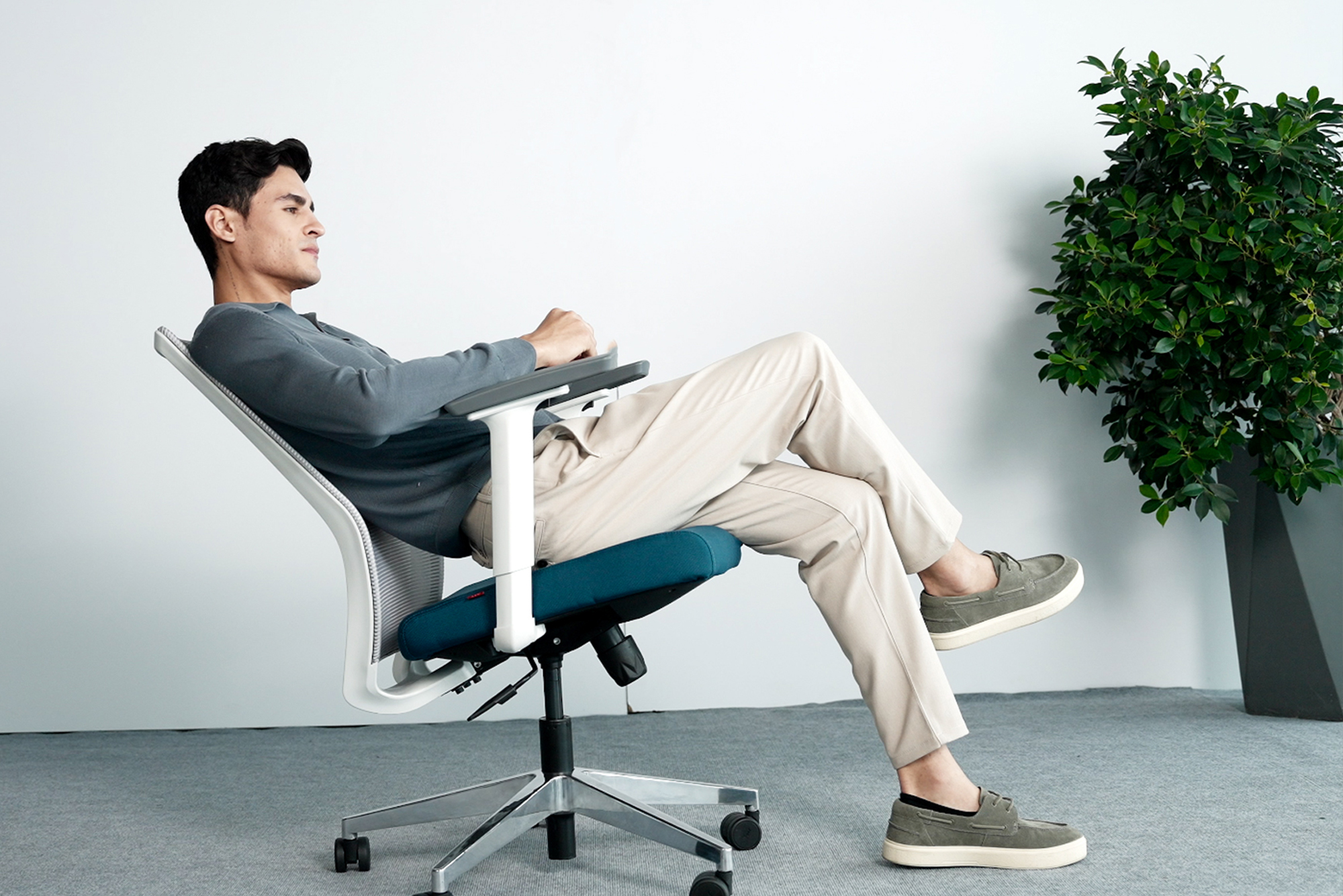
A weight-balance tilt mechanism with adjustable tension control allows the chair to recline smoothly against resistance matched to each individual user's body weight. This synchronised recline keeps the seat and backrest moving together in a way that maintains correct postural alignment throughout the recline range.
The tilt mechanism is one of the most significant quality differentiators between commercial-grade and budget mesh chairs. A quality commercial mechanism operates smoothly, holds the selected tension setting reliably over time, and reclines without any jarring transitions. A budget mechanism feels rough from the start, loses its tension adjustment quickly, and creates the unpredictable reclining behaviour that becomes a daily source of frustration.
Base and Castor Quality
A five-point nylon or polished aluminium base is the standard specification for commercial mesh chairs. It provides the widest stability footprint under the lateral loads created when reaching across the desk or rotating to address a colleague.
Castor type must match the floor surface. For the tiled and polished concrete floors common across Indian commercial offices, soft-wheel hard-floor castors are the correct specification. They roll smoothly without marking, scratching, or creating the drag resistance that makes chair movement effortful.
Tip: When comparing mesh chairs across different price points, test the mesh tension specifically by pressing your hand firmly against the centre of the backrest and moving it to the edges. High-quality commercial mesh maintains consistent resistance across the full backrest surface. Budget mesh feels firmer at the edges where it is attached to the frame and softer in the centre where tension is lowest. This inconsistency means the centre of the back, where lumbar support is most needed, receives the least support from the mesh itself.
What Health Benefits Do Mesh Chairs Offer?
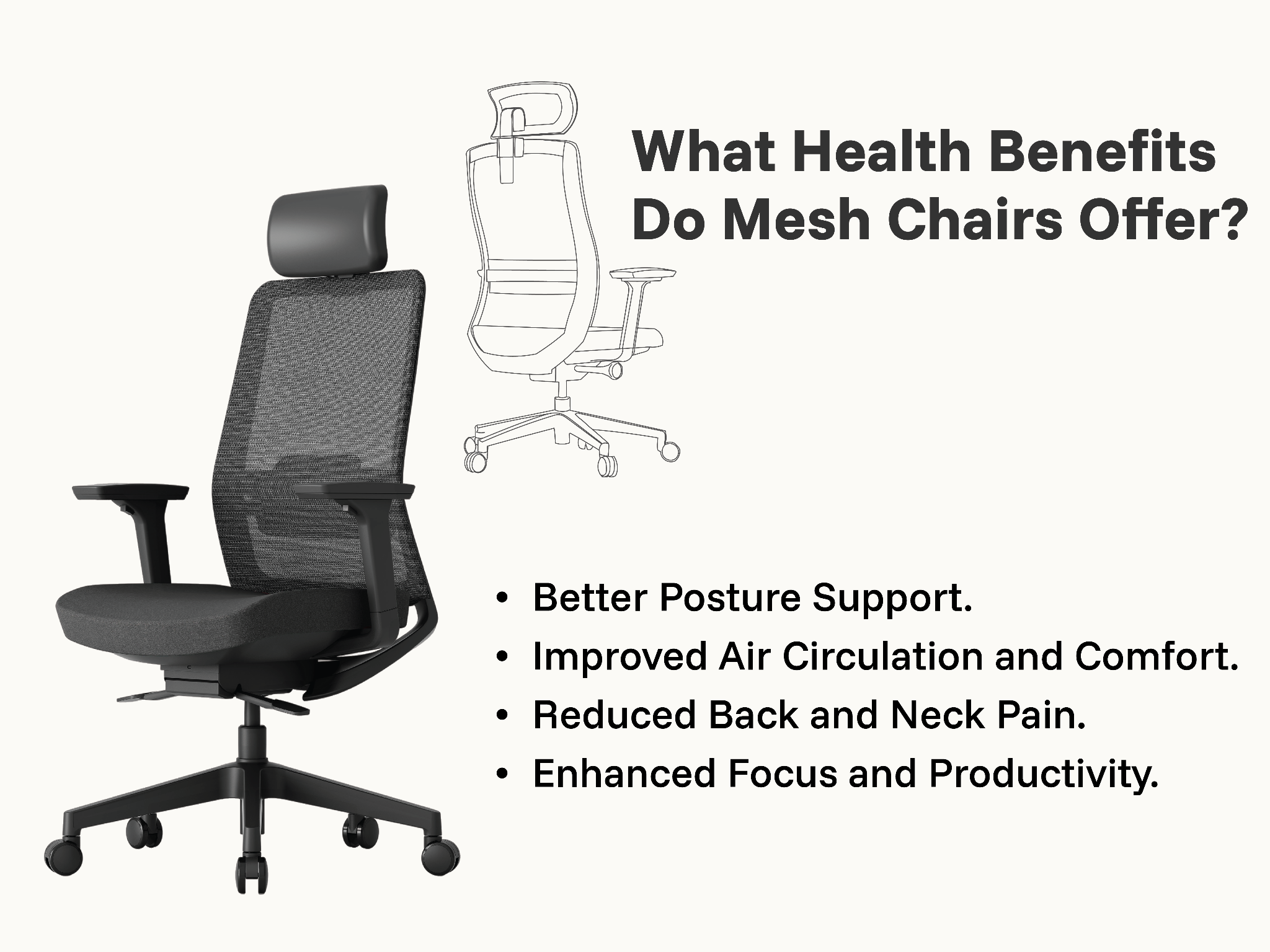
Better Posture Support
A well-specified mesh backrest conforms dynamically to the shape of the user's back, distributing the contact load evenly across the full backrest surface rather than concentrating it at specific pressure points the way a rigid foam-back chair does.
This distributed contact supports a more natural spinal alignment during extended sitting by allowing the backrest to follow the user's actual spinal contours rather than imposing a single fixed surface shape. Combined with adjustable lumbar support, quality mesh promotes healthier seated posture without requiring constant conscious effort from the user.
Improved Air Circulation and Comfort
According to OSHA, ergonomic improvements in workplace seating significantly reduce physical strain, lessen fatigue, and lower the risk of musculoskeletal disorders among desk-based workers. Thermal discomfort from non-breathable seating is one of the most consistent contributors to the sustained physical fatigue that reduces afternoon productivity.
Mesh upholstery eliminates this thermal discomfort source entirely. The open weave maintains consistent surface temperature and moisture levels at the body-chair interface throughout the full working session. Employees in well-specified mesh seating consistently report lower end-of-day physical fatigue levels compared to those using foam-back alternatives in comparable working conditions.
Reduced Back and Neck Pain
OSHA data indicates that approximately 1.8 million workers report work-related musculoskeletal disorders annually, with lower back pain and cervical strain among the most prevalent categories. A significant proportion of these conditions are directly attributable to inadequate workplace seating.
Quality mesh chairs with adjustable lumbar support reduce the compressive load on the intervertebral discs by maintaining the spine's natural curve during extended sitting. The dynamic conforming of the mesh backrest also reduces the static pressure on specific spinal contact points that causes the localised discomfort that many foam-back chair users experience during long working sessions.
Enhanced Focus and Productivity
Physical discomfort is a continuous low-level cognitive distraction. Every moment a professional is managing heat buildup, back discomfort, or postural strain is a moment their mental bandwidth is divided between the work and their body.
A well-specified mesh chair removes these physical distractions, allowing the brain to direct its full cognitive capacity to the task at hand. The productivity benefit compounds across the afternoon hours when physical fatigue in inadequate seating most significantly reduces the quality and speed of professional output.
Who Should Use a Mesh Chair?
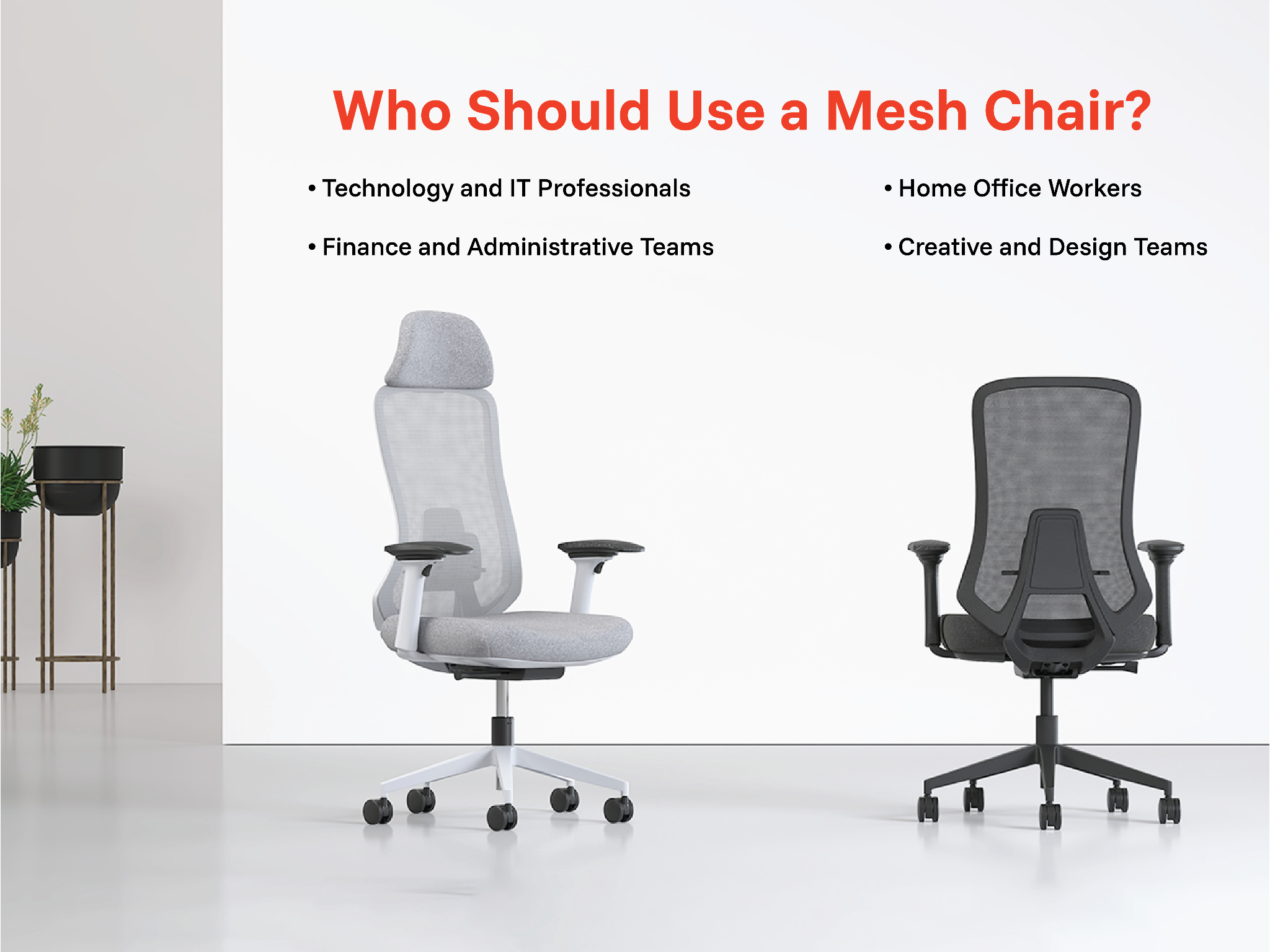
Technology and IT Professionals
Software developers, data analysts, system architects, and technology managers typically sit for eight to twelve hours daily in high-density open-plan environments. They represent the clearest and most consistent beneficiaries of quality ergonomic mesh seating in Indian workplaces.
The combination of extended sitting duration, warm open-plan environments, and the sustained cognitive demands of technology work makes breathable, fully adjustable mesh seating a functional health and productivity requirement for this professional category.
Finance and Administrative Teams
Finance professionals, accountants, compliance officers, and administrative teams maintain long seated working sessions characterised by sustained concentration on detailed screen-based work. The postural support and breathability requirements of these roles are equivalent to those of technology teams, making mesh seating the appropriate specification across these functions.
For finance teams handling sensitive documents and data, lockable storage appropriate to the role's confidentiality requirements is the complementary workplace specification that pairs with quality seating to create a genuinely well-equipped professional environment.
Home Office Workers
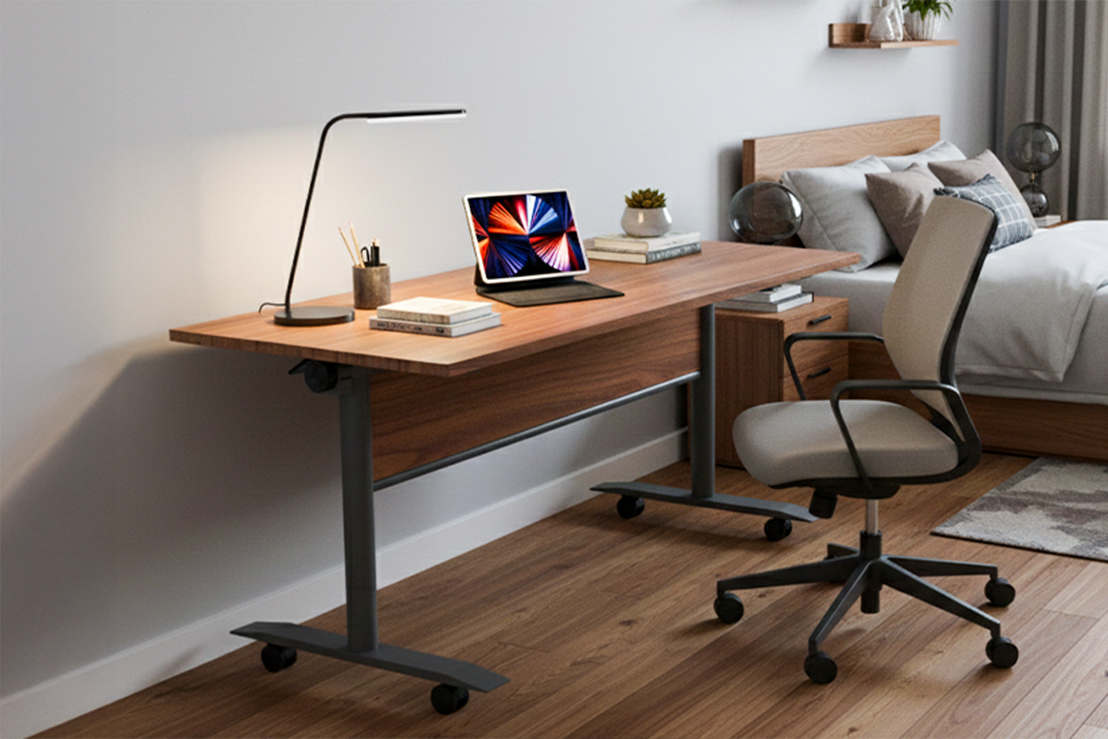
India's permanent shift to hybrid and remote working has created a large population of professionals working from home offices that lack the ergonomic baseline of a well-specified corporate environment. A quality mesh chair is consistently the single highest-return home office upgrade available to this group.
The breathability advantage of mesh is particularly important for home office workers in Indian conditions where air conditioning is less consistent than in corporate environments. A mesh chair that maintains comfort without reliable climate control delivers significantly better daily performance than any solid-back alternative for home office use across Indian seasonal conditions.
Creative and Design Teams
Designers, content creators, art directors, and creative professionals work in dynamic, multi-directional working patterns that involve frequent rotation, reaching, and position changes. The combination of a quality swivel mechanism and responsive mesh conforming makes mesh seating particularly well suited to the physically varied working style of creative roles.
The visual quality of contemporary mesh chairs also aligns well with the aesthetic sensibility of creative working environments, where the visual character of the workspace is understood as part of the creative culture rather than a neutral backdrop.
High Back vs Mid Back Mesh Chairs: Which Is Right for You?
When to Choose a High Back Mesh Chair
A high back mesh chair supporting the full length of the spine including the upper back and cervical region is the correct specification for any professional sitting six or more hours daily. The additional backrest height eliminates the muscular effort required to maintain correct head and neck position throughout the session.
High back mesh chairs with adjustable headrests provide cervical support that makes a full working day significantly less physically demanding on the neck and upper back. For technology professionals, financial analysts, and any role involving sustained focused screen work for extended periods, a high back specification with headrest is the recommended choice.
When to Choose a Mid Back Mesh Chair
Mid back mesh chairs are appropriate for sessions of two to four hours, for meeting room and shared space applications where different users require a simpler configuration, and for roles where physical movement and standing are frequent enough that the user is not seated continuously for extended periods.
They also suit home office environments where space constraints make the smaller visual profile of a mid back chair more appropriate, and professional contexts where a less commanding chair aesthetic is preferred.
How to Test a Mesh Chair Before Buying?
What to Check on the Mesh Surface
Press firmly on the backrest centre and assess the tension consistency across the full surface from centre to edge. Consistent resistance throughout indicates quality mesh construction. Soft centre with firm edges indicates budget mesh that will sag under sustained body weight.
Examine the mesh attachment at the frame border. Quality mesh is securely bonded or clamped at consistent tension throughout. Loose or uneven attachment at any point indicates manufacturing quality inadequate for commercial daily use.
What to Check on the Support System
Sit fully in the chair and move the lumbar support through its full adjustment range. It should move smoothly with a clear height increment and hold its position firmly once set. A lumbar support that slides freely when body weight is applied is not providing the consistent support it appears to offer.
Adjust the seat depth and height and assess whether the mechanisms operate cleanly and hold their positions reliably. Any mechanism that requires multiple attempts to engage or that drifts from its set position will become a daily frustration within weeks of commercial use.
What to Check on the Adjustment Mechanisms
Sit in the chair and rotate through a full 360 degrees slowly. Completely smooth rotation throughout confirms a quality swivel bearing. Any catching, resistance variation, or wobble at any rotational position indicates a bearing assembly that will deteriorate under commercial daily use.
Test the tilt mechanism under your full body weight by leaning back deliberately and assessing the resistance consistency and the smoothness of the recline. A quality mechanism feels controlled and progressive. A budget mechanism feels either too loose or too stiff and creates a jarring transition between positions.
Bonus Point: When conducting a bulk mesh chair evaluation for a large corporate floor, always include at least two users who are at the extremes of the height range in your team, the shortest and the tallest, in the sample trial group. A chair that adjusts correctly for average-height users may not accommodate very short or very tall users within its adjustment range. Discovering this after the bulk order is delivered is a significantly more expensive problem than discovering it during the sample evaluation.
How AFC Furniture Solutions Designs Mesh Chairs for Indian Offices
What Mesh Chair Options Does AFC Offer?
AFC Furniture Solutions offers the most comprehensive mesh chair range in its product portfolio, designed specifically for the extended daily use demands and climate conditions of Indian professional environments. Every model is manufactured at the Greater Noida facility to consistent commercial quality standards.
The Myel is AFC Furniture Solutions' flagship mesh chair, designed for eight-plus hour professional working sessions with full multi-point adjustability including 3D armrests, adjustable lumbar depth and height, seat depth adjustment, and a weight-balance tilt mechanism. The Sway provides a contemporary ergonomic profile in a high-back configuration suited to open-plan corporate floors.
The Fluid and Fluid X deliver complete adjustability in configurations that balance ergonomic performance with a clean professional aesthetic. The Spino features an adjustable headrest making it particularly suited to professionals working extended continuous sessions. The Revoq and Flex provide robust commercial-grade specifications for intensive daily use environments.
The Logica and Sullion offer additional high-back configurations suited to varied professional working contexts. The Nuvic and Rock provide strong mid to high back specifications for open-plan floor applications. The Breeze, X-Mesh, Orbit, and Toro complete the range with diverse ergonomic configurations across different back heights, adjustment profiles, and aesthetic specifications suited to different corporate environments and budget levels.
AFC Furniture Solutions operates a 150,000 square foot manufacturing facility in Greater Noida with a production capacity of up to 18,000 chairs per month, ensuring consistent quality and reliable supply for mesh chair orders of any scale across India.
Explore the full AFC Furniture Solutions Mesh Chair range to compare ergonomic specifications, back heights, and adjustment options across the complete range suited to different professional contexts.
What Quality Standards Back AFC Mesh Chairs?
AFC Furniture Solutions holds BIFMA Level 3 certification, the highest internationally recognised standard for office furniture quality, sustainability, and safety. Every mesh chair in the range is manufactured at the Greater Noida facility and independently tested to BIFMA-compliant standards covering mesh tension performance, structural integrity, mechanism durability, and ergonomic adjustability range under sustained commercial daily use conditions.
AFC Furniture Solutions also holds ISO 9001, ISO 14001, and ISO 18001 certifications covering quality management, environmental responsibility, and occupational health and safety standards across the full manufacturing operation. These combined certifications provide the most comprehensive independent quality assurance available for mesh office seating in the Indian market.
You can also explore the full AFC Furniture Solutions Seating range for mesh, leather, training, and cafe chair options covering every seating requirement across the modern Indian corporate office.
Frequently Asked Questions
Q1. Why are mesh chairs better than foam-back chairs for Indian offices?
Breathability is the primary advantage in Indian conditions. Mesh maintains consistent surface temperature at the body-chair interface throughout the working session, preventing the heat buildup that makes foam-back chairs uncomfortable after two to three hours. Combined with dynamic conforming support and comparable ergonomic adjustability, mesh delivers a better sustained comfort experience for most Indian office professionals.
Q2. How do I know if a mesh chair's backrest is high quality?
Press firmly on the backrest centre and assess whether the tension is consistent from centre to edge. Quality mesh maintains firm, even resistance across the full surface. Also sit in the chair for at least fifteen minutes and assess whether the support quality remains consistent or whether the centre of the back begins to feel insufficiently supported as the mesh stretches under body weight.
Q3. Is a high back or mid back mesh chair better for extended working hours?
For professionals sitting six or more hours daily, a high back mesh chair with adjustable headrest is the more appropriate specification. The additional backrest height eliminates the sustained muscular effort required to maintain correct head and neck position during long sessions. Mid back chairs are suitable for sessions of two to four hours and for shared spaces where multiple users need a simpler configuration.
Q4. How long does a commercial-grade mesh chair last?
A commercial-grade mesh chair from a reputable manufacturer should deliver seven to twelve years of reliable daily professional use under normal commercial conditions. The mesh fabric, tilt mechanism, and gas lift are the components most likely to require attention over this period. A manufacturer warranty of at least three years covering these components is the minimum quality indicator for any serious commercial mesh chair procurement.
Q5. Can mesh chairs be used in executive cabins?
Yes. Contemporary high-back mesh chairs in premium configurations are entirely appropriate for executive cabins and senior professional spaces. The perception that executive spaces require leather seating is a cultural convention rather than a functional requirement. Many directors and founders of progressive Indian organisations specifically choose high-back mesh for their cabins because of its ergonomic performance advantage during long working days.
Q6. Does AFC Furniture Solutions offer mesh chairs for bulk corporate orders across India?
Yes. AFC Furniture Solutions serves corporate organisations across India through its pan-India network covering Noida, Gurugram, Mumbai, Pune, Bengaluru, Hyderabad, and Chennai. Bulk mesh chair orders are manufactured at the Greater Noida facility with consistent quality across every unit and coordinated delivery and installation management across all locations.
Final Thoughts
Choosing the right mesh chair for an Indian office is a decision that directly shapes the daily physical comfort, postural health, and cognitive performance of every professional who uses it. In Indian conditions specifically, the breathability advantage of quality mesh seating is not a marginal comfort improvement. It is a meaningful daily wellbeing benefit that compounds across every working hour.
Getting the specification right, from mesh tension quality and lumbar support adjustability through to tilt mechanism performance and castor suitability for Indian floor types, is what separates a chair that genuinely improves professional life from one that merely appears to do so.
AFC Furniture Solutions has been designing and supplying mesh office seating for Indian professionals for over 15 years, with the most comprehensive mesh chair range in its portfolio, BIFMA Level 3 and ISO certified manufacturing quality, and pan-India supply and service capability.
Explore Other Popular Blogs

Let’s build together
Tell us about your project and we’ll help you plan, design, and deliver at scale.
.jpg)
.svg)