How to Choose a Conference Table: Size, Shape & More
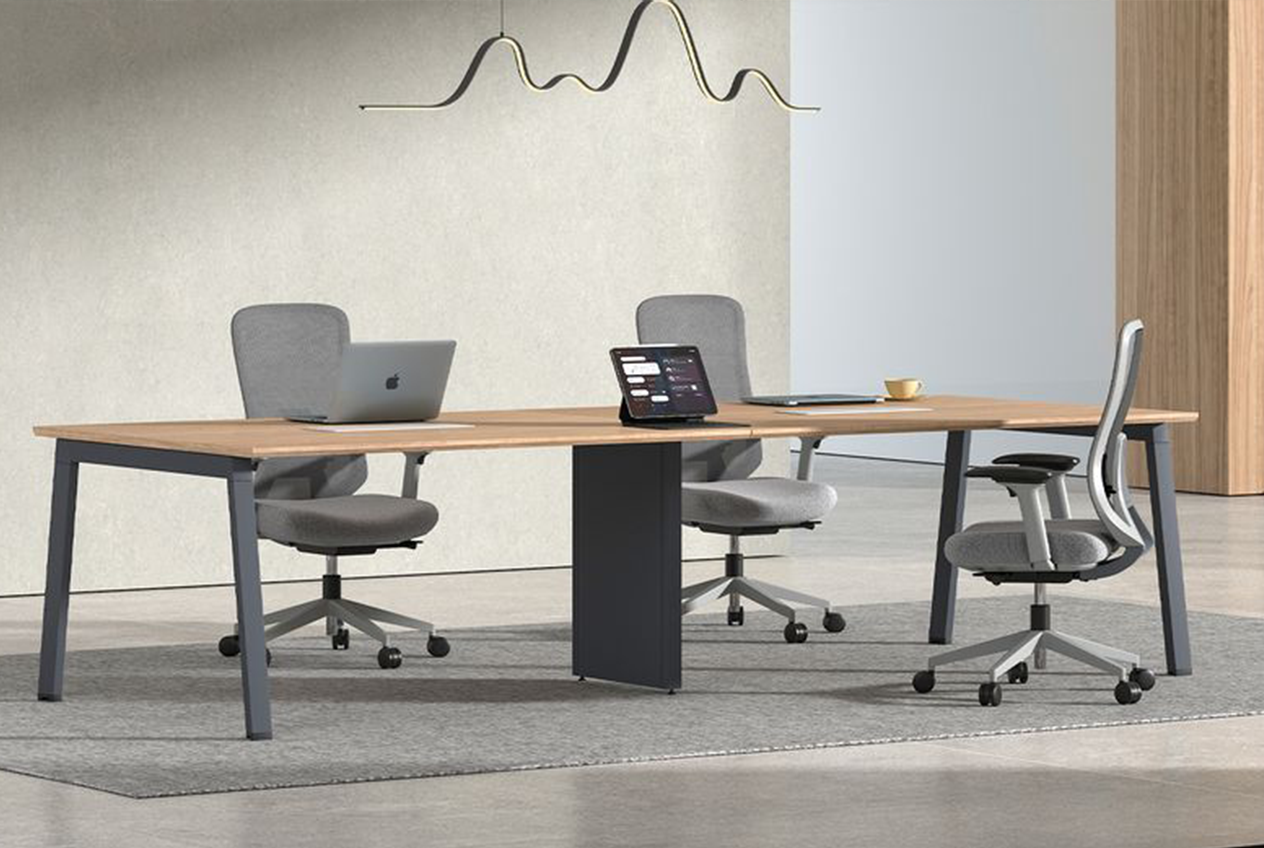
Learn how to choose a conference table based on room size, seating capacity, shape, materials, connectivity, clearance and future workspace needs.
How to Choose a Conference Table That Fits Your Office and Team
Knowing how to choose a conference table matters because the table anchors the meeting room and may remain in daily use for years. The wrong size or shape can reduce circulation space, restrict sightlines, and make collaboration uncomfortable. This guide explains how to assess your room and team, choose the right size and shape, compare materials, plan connectivity, and consider modular options for future needs.
Start With Your Meeting Room Size and Team
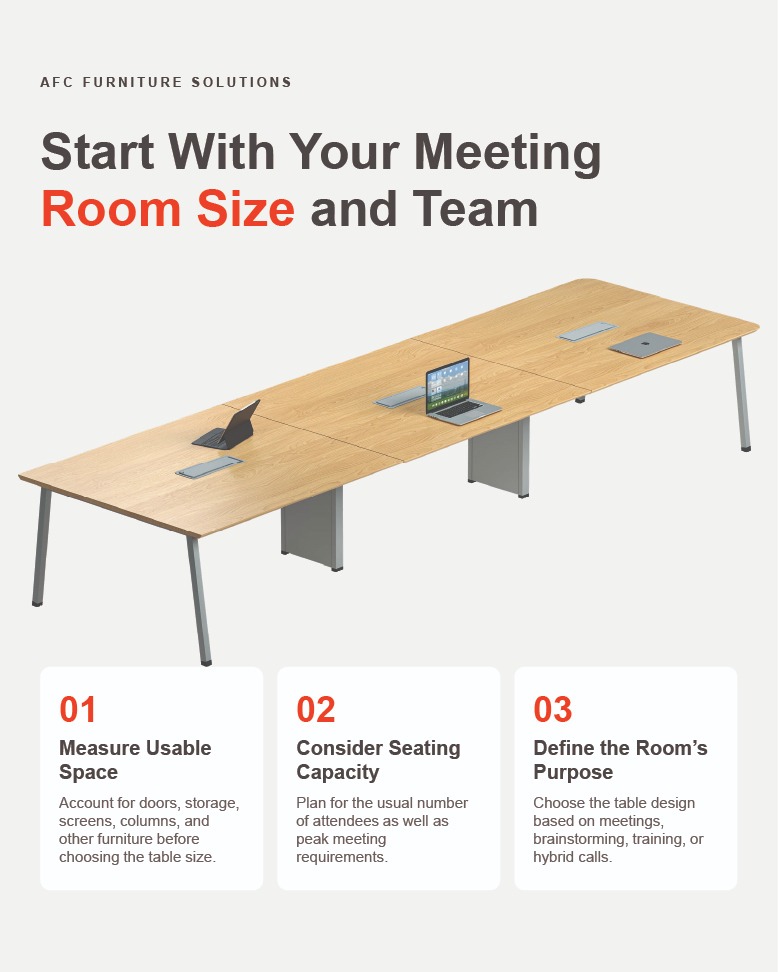
Before selecting a meeting room table, measure the usable room rather than relying only on its overall dimensions. Account for doors, storage units, credenzas, display screens, columns, and other furniture that reduces usable floor space.
Next, consider how many people normally attend meetings and how many need seats during peak use. A four-person project discussion has different requirements from a 12-person board meeting.
Also identify the room's main purpose. Formal board meetings, brainstorming sessions, employee training, and hybrid video calls place different demands on table size, shape, seating, and technology. In short, let the room and the people using it establish the limits before choosing a design.
Get the Table Size and Seating Capacity Right
A practical conference table buying guide should start with seating capacity. A common planning rule is to allow approximately 30 inches (76 cm) of table edge per person, although 36–42 inches provides more room for laptops and documents.
These are planning ranges rather than guarantees because chair width, table legs, shape, and end seating affect actual capacity.
Allow roughly 42–48 inches (107–122 cm) of clear floor around the table where possible so chairs can move and people can circulate. A useful starting method is therefore to subtract about 8 feet from the room's length and width to estimate the maximum table footprint. Standard conference-table height is approximately 30 inches or 75 cm; AFC Furniture Solutions' Desk-Meet and Curvivo-Meet ranges, for example, use a 750 mm height.
Pick the Right Shape for Your Meetings
Understanding how to choose a meeting table also means matching its shape to the way people interact.
- Rectangular: Maximises seating along straight sides and works well for formal boardrooms and structured meetings.
- Oval or boat-shaped: Softened or tapered sides can improve sightlines between participants, making them useful for larger discussions and video-enabled rooms.
- Round: Creates a more equal seating arrangement and suits small collaborative groups or discussion rooms.
- U-shaped: Leaves an open centre and front-facing area, making the format useful for presentations, training, and facilitator-led sessions.
AFC Furniture Solutions currently offers meeting-table formats including rectangular, boat-shaped, circular, and modular configurations, allowing the layout to be matched to room size and meeting style.
Choose Material and Build Quality
An office meeting table used every day needs a surface and frame that can cope with repeated use. Laminate or pre-laminated surfaces are practical where durability, easy maintenance, and budget control are priorities. Veneer and solid-wood finishes can create a more premium appearance for executive boardrooms and client-facing spaces.
Look beyond the surface finish. Edge quality affects resistance to everyday knocks and wear, while a sturdy frame or base helps prevent movement and instability.
It is often more useful to assess cost over the table's expected working life rather than choosing solely on purchase price. AFC Furniture Solutions meeting ranges offer multiple laminate and finish options, giving planners scope to coordinate tables with wider office interiors.
Plan for Power, Data and Cable Management
Modern conference rooms need more than a large tabletop. Laptops, displays, video-conferencing systems, chargers, and presentation equipment all require convenient connectivity.
Look for in-table or easily accessible power and data points, with USB or other connections selected according to the technology used in your meeting rooms. Cable routing should keep wires below or within the table rather than across circulation paths.
For example, AFC Furniture Solutions' Desk-Meet, Sleek-Meet, X-Meet, and Opus meeting-table ranges include integrated or accessible wire-management options. This can help maintain a cleaner surface while supporting technology-heavy and hybrid meetings.
Consider Modular and Future-Ready Options
A modular conference table can be useful when one room serves several purposes. Reconfigurable tables may be combined for a full-team meeting and separated for training, workshops, or smaller group discussions.
Plan for likely team requirements over the next three to five years rather than buying only for today's headcount. This can reduce the need to replace furniture when working patterns change.
AFC Furniture Solutions' Desk-Meet range is designed for multiple discussion, meeting, and conference configurations, making flexibility a practical consideration for multipurpose rooms and growing teams.
Match the Table to Your Space and Budget
Before buying, check the final table footprint against chair movement, doors, AV equipment, credenzas, and circulation routes. Then balance the budget with expected usage: laminate-based options may suit high-use everyday rooms, while premium finishes can be reserved for executive or client-facing spaces.
Avoid spending on a larger table simply because the room appears spacious. The best option leaves enough room for people to sit, move, connect devices, and communicate comfortably.
You can explore AFC Furniture Solutions' meeting and conference tables to compare sizes, configurations, finishes, and designs suited to different office environments.
FAQs on Choosing a Conference Table
What Size Conference Table Do I Need for 8 People?
An 8-foot (about 244 cm) conference table commonly accommodates around six to eight people. A 10-foot table may provide greater personal space if laptops and documents are used extensively.
How Much Clearance Should I Leave Around a Conference Table?
Around 42–48 inches, or approximately 107–122 cm, of clear space around the table is a useful planning range. More clearance may be needed on major circulation routes.
Which Conference Table Shape Is Best for Video Meetings?
Boat-shaped, oval, or tapered tables can improve sightlines towards other participants and displays. The ideal shape also depends on camera position, room dimensions, and screen placement.
What Is the Best Material for an Office Conference Table?
Laminate is practical for durability and regular office use, while veneer or solid-wood finishes offer a more premium appearance. The best choice depends on budget, usage, maintenance, and interior design.
Are Modular Conference Tables Worth It for a Growing Office?
Yes, particularly when team size or room use changes regularly. Modular tables can support different meeting formats without requiring an entirely new table for each setup.
What Is the Standard Height of a Conference Table?
Most conference tables are around 30 inches or 75 cm high. This height works with commonly used office and meeting chairs.
Explore Other Popular Blogs

Let’s build together
Tell us about your project and we’ll help you plan, design, and deliver at scale.