.svg)
Elevate Your Office Space with Smart Seating: Why an Office Sofa Matters

Discover how the right office sofa and smart seating can transform your workspace, improve employee wellbeing, and create a more collaborative office environment.
Why Is Smart Seating Becoming a Priority in Indian Offices?
What Has Changed in How Indian Professionals Use Office Space?
The Indian corporate office has changed dramatically over the past few years. Employees no longer just come to the office to sit at a desk and work. They come to collaborate, connect, and think creatively in ways that a workstation alone cannot support.
This shift has created a genuine need for office soft seating that serves the informal, human side of professional life. A well-placed soft seating or lounge chair creates the kind of environment where people want to spend time and where good ideas happen naturally.
Organisations that recognise this are investing in smart seating as a strategic workspace decision, not just a decorative one.
Why Is a Sofa No Longer Just a Reception Piece?
For a long time, the sofa was considered a reception-only item. Its role was to make visitors comfortable while they waited, and its position was fixed near the entrance.
That thinking has changed. Modern Indian offices use soft seating throughout the workspace, from breakout zones and collaborative areas to private cabins and open floor lounges.
Collaborative seating has evolved into a versatile workspace tool that supports informal meetings, creative thinking, brief mental breaks, and the kind of spontaneous conversations that formal meeting rooms cannot accommodate.
What Is Smart Seating and How Is It Different from Regular Office Furniture?
What Makes Seating Smart?
Smart seating is not about technology. It is about furniture that has been chosen with deliberate intent to serve a specific human need in a specific part of the office.
A smart sofa is placed where employees naturally gather for informal conversations. A smart lounge chair is positioned near a window where someone can step away from their desk for a few minutes of quiet reflection.
Every piece of smart seating has a defined purpose in the workflow of the office. It is the opposite of furniture that simply fills a space without serving the people in it.
How Does Smart Seating Serve Multiple Office Functions?
A well-chosen soft seating serves as an informal meeting space, a brief rest zone, a creative thinking area, and a visual anchor that makes the office feel welcoming and considered.
Collaborative seating in a breakout zone can replace a formal meeting room for quick team discussions, reducing pressure on scheduled meeting room availability.
Lounge seating near the pantry area creates a natural gathering point that facilitates the casual cross-team interactions that contribute significantly to workplace culture and innovation.
Where Should You Place an Office Sofa in Your Workspace?
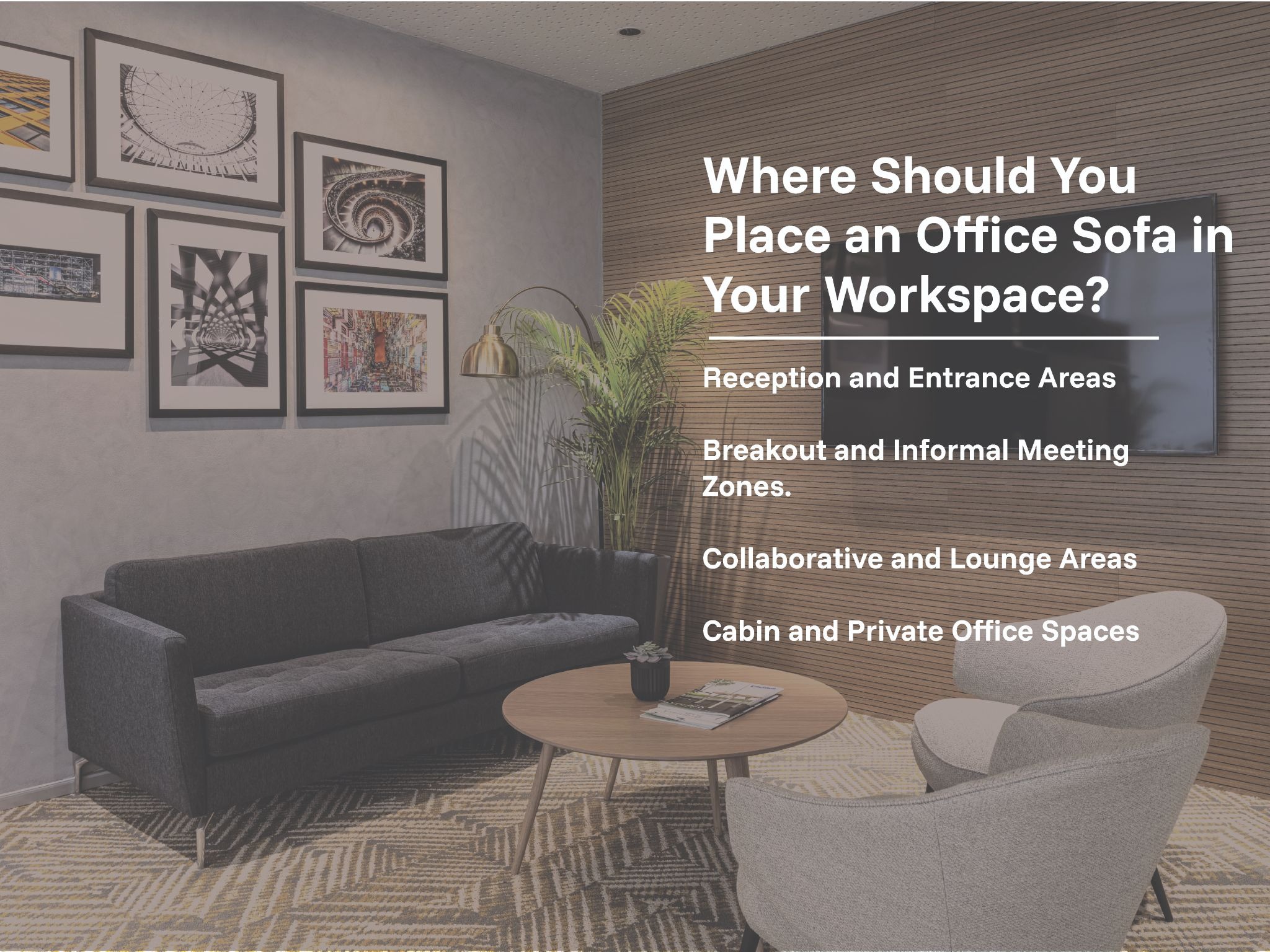
Reception and Entrance Areas
The reception area is the first impression your office makes on every visitor, client, and new hire who walks through the door. The seating placed here communicates directly about the quality and culture of the organisation.
A well-specified reception sofa should be visually impressive, physically comfortable for waiting durations of up to thirty minutes, and cleanable enough to maintain its appearance under regular use.
The size and configuration of the reception sofa should also reflect the typical number of simultaneous visitors the organisation receives, without overcrowding the entrance area.
Breakout and Informal Meeting Zones
Breakout zones are now one of the most actively used spaces in any well-designed Indian corporate office. They provide an alternative to the formal meeting room for quick team discussions, one-on-one conversations, and brief creative sessions.
A two or three seater sofa paired with an occasional table creates a self-contained informal meeting space that can be used spontaneously without booking or scheduling.
These zones are also where employees decompress briefly during the working day. Comfortable breakout seating that invites a ten-minute mental reset supports sustained focus and reduces the cumulative fatigue that builds across a long working day.
Tip: When planning breakout zones, position the office sofa away from the main workstation floor and near natural light where possible. Employees are more likely to use a breakout space that feels genuinely separate from the working environment, even if it is only a few metres away.
Collaborative and Lounge Areas
Collaborative soft seating in a dedicated lounge zone supports the kind of creative, freewheeling team discussions that rigid meeting room chairs cannot. The physical relaxation of comfortable seating directly influences the openness of thinking.
Modular collaborative seating configurations that can be rearranged into different groupings give the space ongoing flexibility as the nature of team interactions evolves.
Pairing lounge seating with occasional tables at the right height creates a functional working surface for laptop use while maintaining the relaxed, informal atmosphere of the zone.
Cabin and Private Office Spaces
A single seater lounge chair or a compact two seater sofa in a senior executive's cabin transforms the space from a purely transactional desk environment into one that can also host informal one-on-one conversations.
This addition signals that the occupant is accessible and open to informal interaction, which directly influences how team members and visitors experience the relationship.
A well-chosen sofa in a cabin also adds visual warmth and balance to a space that might otherwise feel austere or purely functional.
What Are the Different Types of Office Sofas Available?
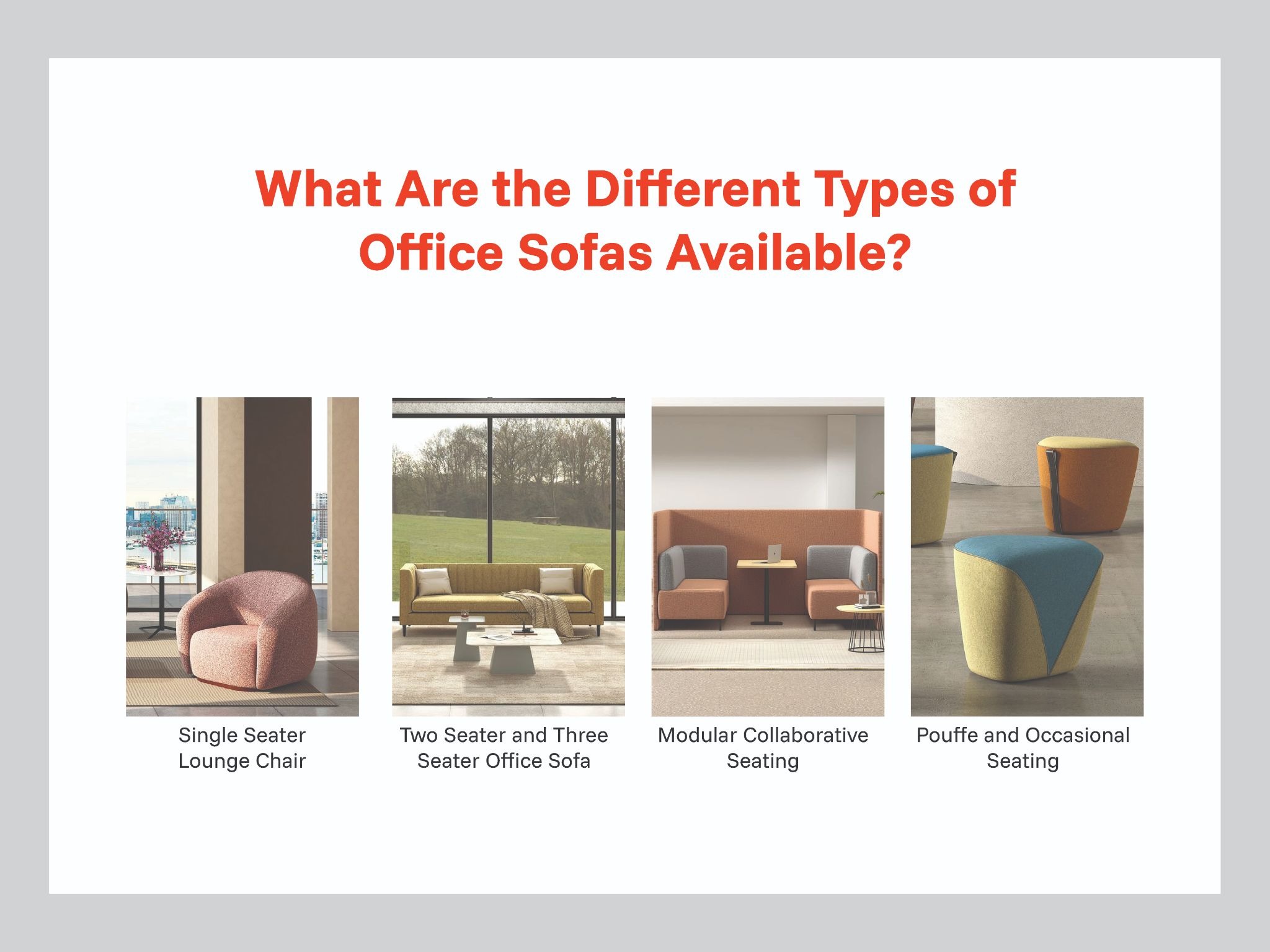
Single Seater Lounge Chair
A single seater lounge chair is the most versatile unit in any office soft seating range. It can be placed independently in corners, near windows, or alongside larger sofa configurations to create flexible groupings.
It suits both contemplative solo use and face-to-face conversation when paired with another chair or a small sofa. Its compact footprint makes it the right choice for offices where floor space is limited.
Quality single seater lounge chairs use high-density foam that holds its shape across years of commercial daily use. The upholstery should be durable enough for frequent use and cleanable enough for a shared office environment.
Two Seater and Three Seater Sofa
A two or three-seater soft seating is the anchor piece in any breakout or reception zone. It provides enough seating for a small informal meeting while creating a visual focal point that makes the space feel considered and complete.
The three-seater sofa suits reception areas and larger breakout zones where multiple visitors or team members may be seated simultaneously. The two-seater is more appropriate for compact breakout corners or cabin spaces.
Both configurations should be specified with commercial-grade upholstery and a robust internal frame that maintains its form and support across the intensity of daily office use.
Modular Collaborative Seating
Modular collaborative seating consists of individual units that can be connected, angled, or grouped into a wide variety of configurations. This makes it the most flexible office soft seating option for organisations whose space requirements change regularly.
A modular system can be arranged as a linear sofa, an L-shape, a U-shape, or a series of individual units, depending on the activity or event the space needs to support on a given day.
For organisations that use their collaborative zones for everything from team brainstorming to client presentations to all-hands gatherings, modular seating provides the adaptability that fixed sofa configurations cannot match.
Bonus Point: When specifying modular collaborative seating, choose a system where individual modules can be reupholstered separately if one unit sustains damage or wear. This avoids replacing the entire configuration for a single worn piece and significantly reduces the long-term maintenance cost of the seating investment.
Pouffe and Occasional Seating
Pouffes are compact, lightweight, and highly versatile seating pieces that can be moved easily to wherever they are needed in the office. They suit informal overflow seating, creative floor-level discussions, and breakout areas with a relaxed aesthetic.
They are particularly effective in office environments that want to project a contemporary, non-hierarchical culture. A cluster of pouffes around a low occasional table creates an accessible, informal gathering space with minimal floor space requirement.
Occasional tables paired with any soft seating configuration serve as the functional anchor that allows laptop use, coffee placement, and document review in an otherwise relaxed seating zone.
How to Choose the Right Sofa for Your Office Space
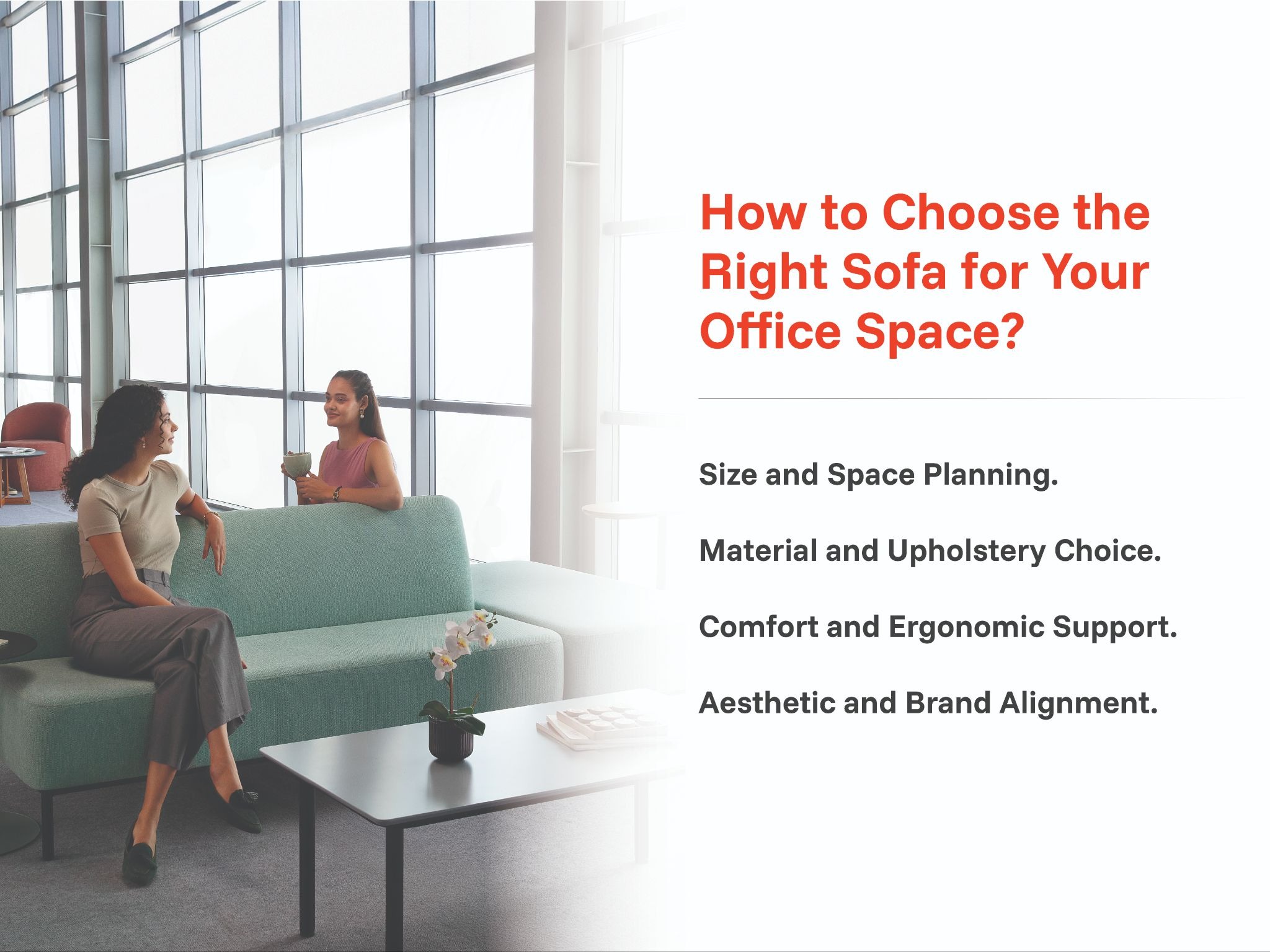
Size and Space Planning
The size must be proportional to the zone it occupies. A large three-seater sofa in a compact breakout corner overwhelms the space; a small two-seater in a spacious reception area looks underwhelming.
As a general guideline, allow at least 60 cm of clearance around the sofa for comfortable movement, and ensure the occasional table placed alongside it is accessible from the seated position without requiring the user to lean forward significantly.
Always verify the dimensions of the sofa against your actual floor plan before ordering. Furniture that looks right in a showroom may not fit the proportions of your specific space as expected.
Material and Upholstery Choice
Fabric upholstery offers the widest range of colours and textures and creates the warmest, most welcoming aesthetic. It is the most appropriate choice for most Indian office interiors.
Leatherette upholstery is more resistant to staining and easier to wipe clean, which makes it a practical choice for high-traffic areas like reception zones where the sofa is used by many different people throughout the day.
For Indian offices where temperatures can be warm, avoid full leather upholstery in spaces without consistent air conditioning. Fabric or leatherette options maintain comfort across varied temperature conditions more effectively.
Comfort and Ergonomic Support
Soft seating used for informal meetings needs to support an upright seated posture long enough for a thirty-minute conversation. A sofa that is too deep or too soft causes users to slump into a reclined position that is uncomfortable for extended discussion.
High-density foam that holds its form across years of commercial use is the correct specification for any office soft seating used in a shared professional environment.
The seat height should allow most users to sit with their feet flat on the floor. A sofa that is too low forces an awkward posture; one that is too high leaves the legs unsupported.
Aesthetic and Brand Alignment
It contributes more to the visual character of a space than almost any other single piece of furniture. Its colour, form, and material speak directly about the organisation's culture and values.
Contemporary Indian corporate offices increasingly use soft seating as a deliberate design statement, choosing colours and forms that align with brand identity and communicate the kind of workplace culture the organisation wants to project.
A well-chosen sofa does not need to match every other piece of furniture in the space exactly. It needs to feel intentional, coherent, and appropriate to the zone it occupies.
How Does an Office Sofa Improve Employee Well-being and Productivity?
How Does Informal Seating Reduce Stress?
Physical environment has a direct and measurable effect on stress levels. A workspace that offers only hard task chairs and formal meeting rooms creates a sense of relentlessness that accumulates into burnout over time.
Office soft seating creates physical and psychological permission to step out of task mode briefly. A ten-minute break on a comfortable lounge sofa is more restorative than the same ten minutes at a workstation because the change in physical context signals to the brain that a genuine rest is occurring.
Organisations that provide quality breakout seating consistently report higher employee satisfaction scores and lower self-reported stress levels compared to those that do not.
How Does It Encourage Collaboration?
Formal meeting rooms create a psychological framework that encourages structured, agenda-driven interaction. Informal soft seating areas create a very different dynamic where conversation flows more freely and ideas emerge more naturally.
Research in workplace psychology shows that some of the most valuable team interactions happen in informal settings where the physical relaxation of comfortable seating reduces the social friction that formal environments can generate.
A strategic placement of soft seating in a collaborative zone is not just a comfort feature. It is a tool for creating the conditions in which spontaneous innovation and genuine team connection are more likely to occur.
What to Check Before Buying an Office Sofa in India?
Frame and Build Quality
The internal frame of any commercial sofa should be constructed from solid hardwood or steel, depending on the design. A frame that flexes or creaks under normal use will deteriorate quickly in a busy office environment.
Press firmly on the seat and back cushions and assess whether the frame beneath them feels solid and rigid. Any movement or noise from the frame under moderate pressure indicates a construction quality that will not hold up under sustained daily commercial use.
Leg material and fixing should also be checked. Legs that are screwed into the frame rather than load-bearing components of it are a common quality compromise in lower-specification products.
Fabric Durability and Cleanability
In a shared commercial environment, specify upholstery with a Martindale abrasion rating of at least 30,000 cycles. This is the minimum standard for commercial-grade fabric in a professional setting.
The fabric should also be stain-resistant or treated with a protective finish. In an office where the sofa is used for informal meals, coffee breaks, and working sessions, spillage is inevitable. Fabric that cannot be spot-cleaned easily will deteriorate visually within months.
Check with the supplier whether the upholstery is replaceable on the specific product you are considering. Removable and replaceable upholstery significantly extends the useful life of any office soft seating investment.
Tip: Always request a fabric swatch from the supplier before committing to an upholstery colour for a large sofa order. Colours on screen and in brochures frequently differ from the actual fabric in natural office lighting. Seeing the swatch in your actual space under your specific lighting conditions is the only reliable way to confirm the final colour decision.
Warranty and After-Sales Support
For commercial office soft seating, a warranty of three to five years covering the frame and mechanism is a reasonable minimum expectation from any reputable supplier.
Verify that the warranty covers the frame separately from the upholstery, as these components have different expected service lives and failure modes.
Local after-sales support matters as much as the warranty itself. A supplier with a presence in your city can address issues quickly. A distant supplier cannot, and the resulting delays in resolution affect the appearance and functionality of high-visibility areas like reception zones.
How AFC Furniture Solutions Designs Soft Seating for Indian Workspaces?
What Soft Seating Options Does AFC Offer?
AFC Furniture Solutions offers a comprehensive range of office soft seating covering every zone of the modern Indian corporate office.
The Lounge range provides single seater and multi-seater lounge chairs designed for breakout zones, informal meeting areas, and corporate lounges. The Sofa range covers two and three-seater configurations suited to reception areas, collaborative zones, and executive cabins.
The Collaborative seating range offers modular configurations that can be arranged into multiple groupings to serve different team interaction formats. Pouffes provide flexible, lightweight supplementary seating for casual zones and overflow seating needs.
Explore the full AFC Furniture Solutions Soft Seating covering lounge, sofa, collaborative, and pouffe options for every zone of the modern Indian office.
What Makes AFC Soft Seating Suited for Indian Offices?
AFC Furniture Solutions designs every soft seating product specifically for the demands of Indian corporate environments, including climate conditions, usage intensity, and the aesthetic preferences of modern Indian workspaces.
All upholstery options are specified for commercial-grade durability and cleanability under the conditions of daily shared professional use. Frame construction uses materials and joinery methods appropriate for sustained heavy commercial use rather than residential specifications.
You can also explore AFC Furniture Solutions' Collaborative seating range for modular configurations specifically designed to support team interaction and creative collaboration in Indian office environments.
Frequently Asked Questions
Q1. What is the difference between an office sofa and a regular home sofa?
A commercial office sofa is built to a higher durability standard than a residential sofa. The internal frame, foam density, and upholstery abrasion rating are all specified for sustained daily use by multiple users rather than occasional residential use by a household.
Q2. Where is the best place to put an office sofa?
The most effective placements are reception areas, breakout zones near the pantry, and informal collaborative spaces away from the main workstation floor. Each placement should serve a specific purpose in the daily workflow of the people using the space.
Q3. What upholstery is best for an office sofa in India?
Fabric with a minimum Martindale rating of 30,000 cycles is the appropriate specification for most Indian office environments. For high-traffic reception areas, leatherette offers easier daily cleaning and higher resistance to surface wear.
Q4. How do I know if an office sofa is the right size for my space?
Measure the zone carefully and allow a minimum of 60cm of clearance on all accessible sides. Verify the sofa dimensions against your floor plan before ordering. A scaled 2D floor plan with the sofa drawn in accurately is the most reliable way to confirm proportional fit.
Q5. Can office sofas be customised in colour to match our brand?
Yes. AFC Furniture Solutions offers a wide range of upholstery colours and fabric options that can be selected to align with brand guidelines and interior design requirements. Confirm available options and lead times with the team before placing any order.
Q6. How long should a commercial office sofa last?
A well-specified commercial office sofa with a quality frame and high-density foam should maintain its structural integrity and visual appearance for seven to ten years under normal daily professional use with appropriate maintenance.
Final Thoughts
The soft seating has earned its place as a serious workspace tool in the modern Indian corporate office. It is not decoration. It is an environment-shaping investment that influences how employees feel, how teams collaborate, and how visitors perceive the organisation from the moment they walk through the door.
Smart seating choices create workspaces where people genuinely want to spend time, informal conversations become the foundation of a strong team culture, and the physical environment actively supports the human work of the organization.
AFC Furniture Solutions has been designing and supplying soft office seating for Indian organisations for over 15 years. Our team is available to guide you through every seating decision from initial planning through to completed installation.
Explore Other Popular Blogs

Let’s build together
Tell us about your project and we’ll help you plan, design, and deliver at scale.
.jpg)
.svg)