.svg)
Best Work from Home Chairs: A Complete Buying Guide
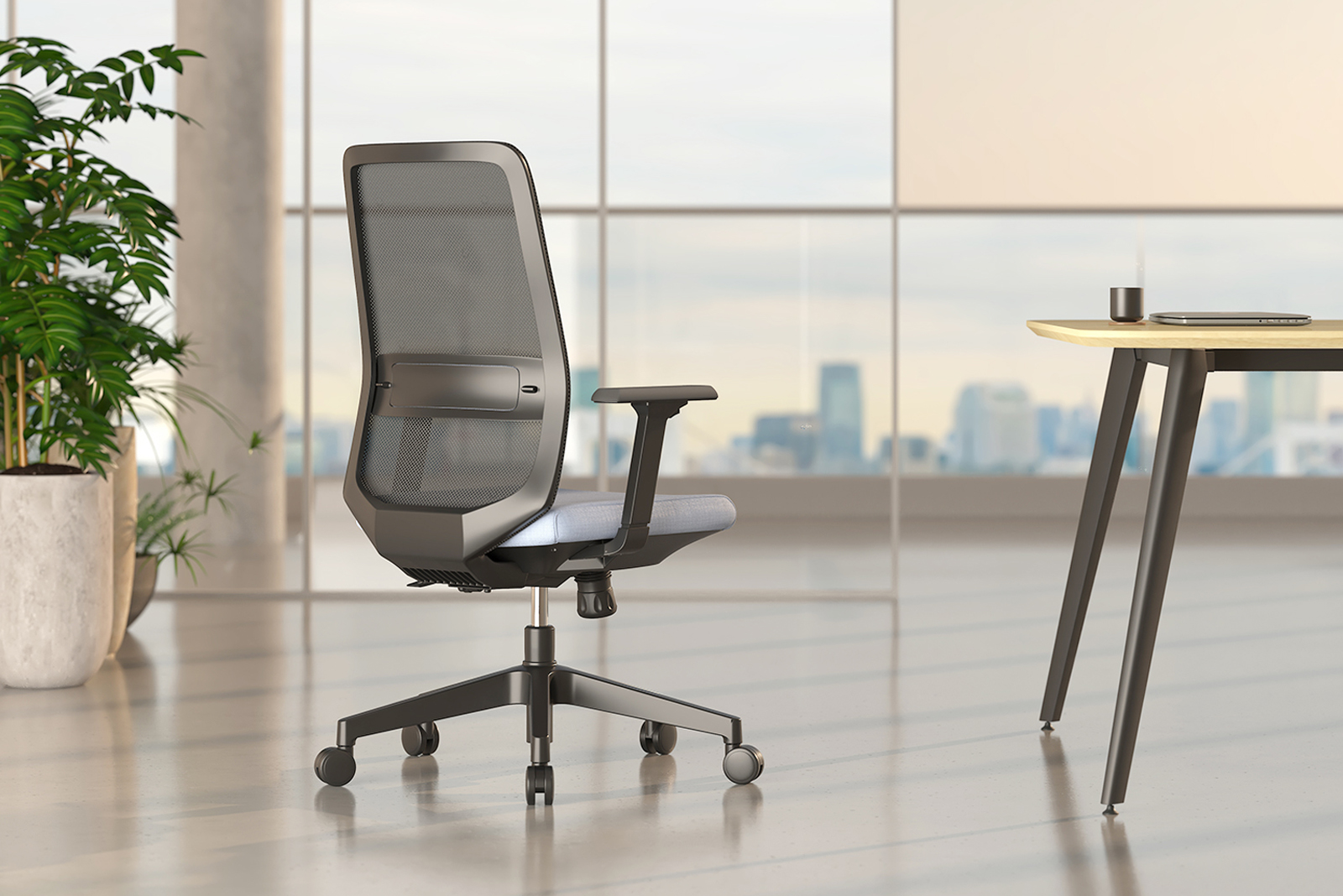
Looking for the best work-from-home chairs in India? This complete guide covers ergonomic features, setup tips, climate suitability, and expert guidance from AFC Furniture Solutions.
Why Your Home Office Chair Is More Important Than You Realise
Most people working from home spend significant time and money upgrading their laptop, monitor, and internet connection. The chair, however, is almost always the last thing on the list.
That oversight has real consequences. The chair is the only piece of equipment in your home workspace that is in direct physical contact with your body for every working hour of every working day.
Getting it right is not just about comfort. It is about your health, your focus, and your ability to sustain productive work across the full professional day.
How Is Working from Home Different from a Corporate Office?
In a well-designed corporate office, the ergonomic baseline is already established. Desks are at the right height, chairs are commercially specified, and the physical environment has been planned by professionals.
At home, none of these defaults exist. The chair is usually whatever was available, a dining chair, a basic task seat, or a folding option that was never intended for professional daily use.
Remote workers bear the full physical cost of this gap every single working day, and most do not connect their afternoon fatigue or back pain to the chair they have been sitting in since morning.
What Does Poor Home Seating Actually Cost You?
According to the World Health Organisation, musculoskeletal conditions affect more than 1.71 billion people globally, with lower back pain being the leading cause of disability in most countries. A significant proportion of these conditions are directly linked to prolonged sitting in poorly designed seating.
The daily cost of poor home seating shows up in reduced afternoon focus, persistent back and neck discomfort, and the kind of accumulated fatigue that makes the end of a working day feel far more draining than it should.
Research from Cornell University's Human Factors and Ergonomics Laboratory found that ergonomically adjusted workstations reduced musculoskeletal discomfort by up to 40% and increased work performance by approximately 17.5% among participants.
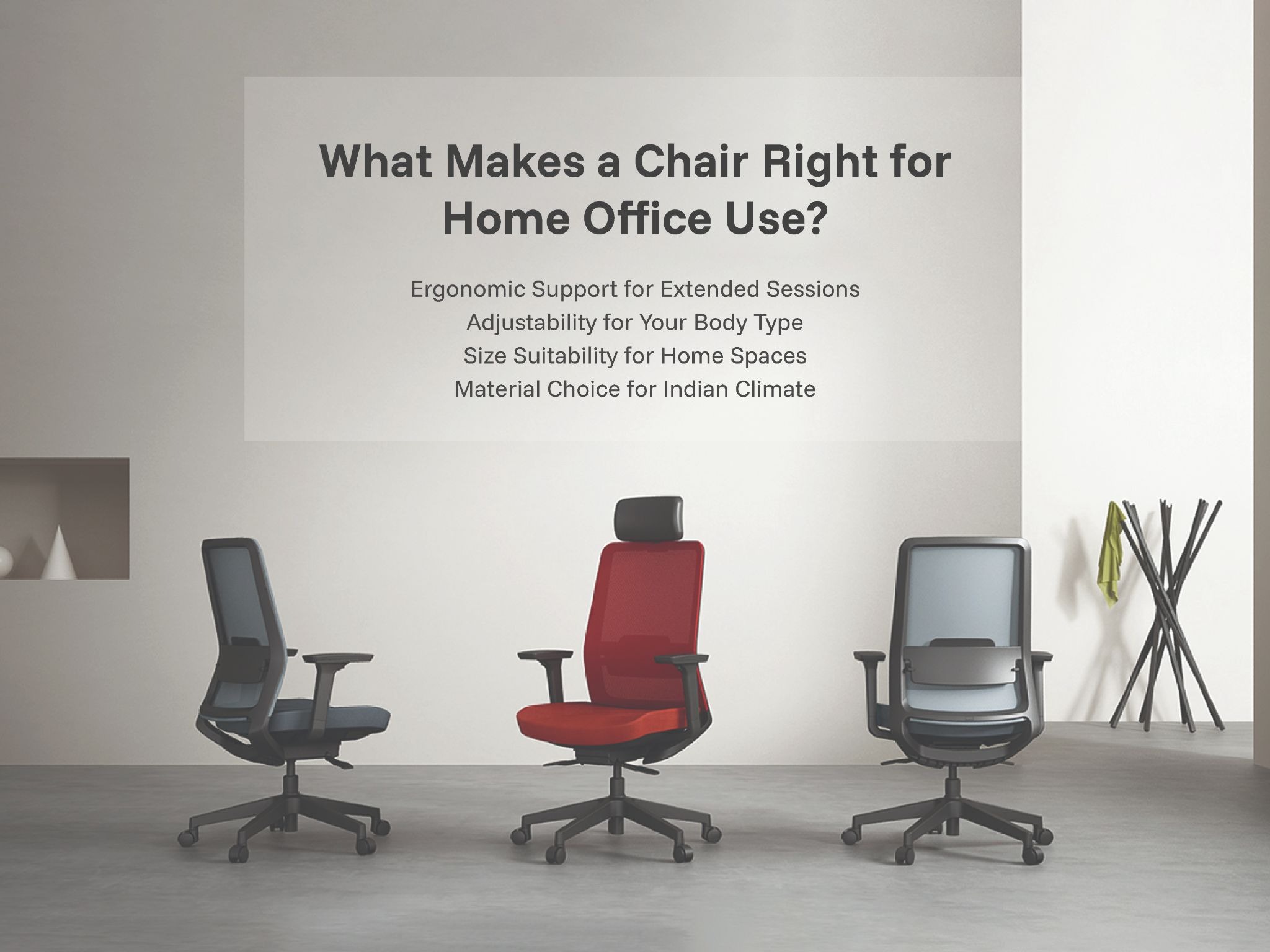
What Makes a Chair Right for Home Office Use?
Ergonomic Support for Extended Sessions
Home office workers often sit for longer, uninterrupted periods than corporate workers. The informal movement cues of a shared office, colleagues stopping by, brief walks to meeting rooms, and building exits simply do not exist at home.
This makes ergonomic support more critical for home office seating, not less. A chair that performs adequately for four hours in an office environment will fail more visibly across eight uninterrupted hours at a home desk.
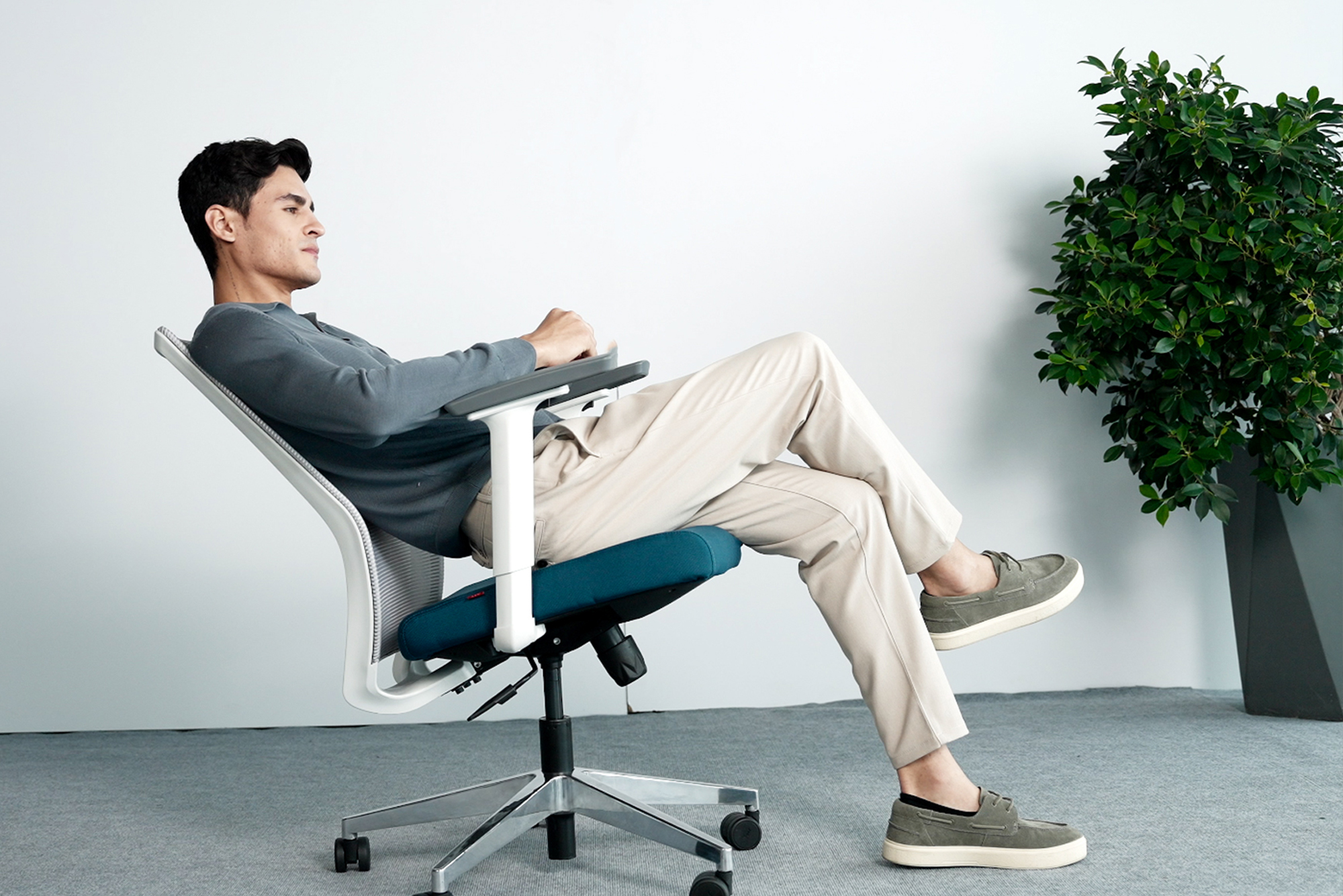
Adjustable lumbar support, a contoured seat shell, and a backrest that follows the spine's natural curve are the minimum requirements for any chair intended for full-day home office use.
Adjustability for Your Body Type
No two people sit in exactly the same way or share the same body proportions. A chair that cannot be adjusted to match the individual user's dimensions will not deliver its ergonomic intent, regardless of how well it is designed.
Seat height, lumbar support height and depth, and armrest position are the three adjustments that make the difference between a chair that genuinely supports the body and one that merely looks like it should.
For home office use, where the chair is used by one person consistently, taking the time to configure each adjustment correctly from the beginning protects against the gradual postural deterioration that accumulates from sustained use in an incorrectly set chair.
Size Suitability for Home Spaces
Many commercial chairs are designed for large corporate floors where floor space is not a constraint. Home offices are typically smaller, and an oversized chair can make a compact workspace feel difficult to move around in.
Look for chairs that deliver complete ergonomic functionality without unnecessarily large dimensions. A well-specified home office chair should fit comfortably within a 70cm by 70cm floor area without compromising any of its ergonomic features.
Material Choice for Indian Climate
India's climate, even in urban areas with air conditioning, is significantly warmer than the temperate environments that many chair upholstery specifications were originally designed for.
Home air conditioning is also less consistent than corporate environments, and many Indian home offices operate in variable temperature conditions across the working day and across the year.
Breathable mesh upholstery is the most practical choice for Indian home office conditions. Its open-weave structure allows continuous air circulation across the contact surfaces, maintaining comfort through long working sessions regardless of ambient temperature.
Key Features to Look for Before You Decide
Lumbar Support
The lower back has a natural inward curve that requires active support during sustained sitting. Without it, this curve gradually flattens as the session lengthens, placing progressive compressive load on the intervertebral discs.
This is the primary mechanism through which long hours in a poorly designed chair create the chronic lower back pain that is the most commonly reported physical complaint among Indian remote workers.
Look specifically for lumbar support that is adjustable in height so it can be aligned with your individual spinal anatomy rather than a generic assumed position.
Seat Height and Depth
The correct seat height allows both feet to rest completely flat on the floor with the knees at approximately 90 degrees and the thighs roughly horizontal. For home office users working at a dining table or a non-standard desk, the adjustment range of the seat height matters significantly.
Seat depth should allow a two to three finger gap between the front seat edge and the back of the knees. This gap prevents the seat edge from restricting circulation in the thighs, which is the cause of the leg numbness and heaviness that many remote workers experience during long sessions.
Armrest Adjustability
Correctly positioned armrests reduce the sustained muscular tension in the shoulders and neck that builds across a full working day of typing and mouse use.
Height-adjustable armrests that allow the forearms to rest naturally at keyboard height with the shoulders fully dropped and relaxed are the correct specification for any chair used for extended desk work.
Breathable Upholstery
Breathable mesh upholstery prevents the heat buildup that makes solid-back chairs uncomfortable after extended sitting in warm Indian home environments. This is not simply a comfort preference for a home office context. It is a functional daily requirement.
The breathability benefit becomes most noticeable during the second half of the working day when ambient temperatures in Indian homes typically peak and when sustained physical discomfort most directly reduces focus and output.
Base and Castor Quality
A five-point base provides the widest possible stability footprint, which matters particularly when leaning sideways to reach across a home desk that may be smaller than a standard corporate workstation.
For the tiled and wooden floors common in Indian homes, soft-wheel castors that roll smoothly without scratching or marking the surface are essential. Using the wrong castor type on hard floors either damages the surface or creates rolling resistance that makes every small movement unnecessarily effortful.
Tip: Before finalising any home office chair purchase, measure the height of your home desk and confirm that the chair's seat height adjustment range can place your elbows at desk height with your feet completely flat on the floor. A chair that cannot achieve this specific alignment for your particular desk and body combination will not deliver the health benefits it is designed to provide.
Which Chair Type Suits a Home Office Best?
Mesh Chairs
Mesh chairs are the most practical and widely recommended home office seating choice for Indian conditions. The breathability advantage is particularly relevant in homes without consistent climate control, and commercial-grade mesh maintains its structural form and support across years of daily use.
The AFC Furniture Solutions Mesh Chair range includes models such as the Myel, Fluid, Spino, Breeze, and Orbit, each designed to deliver full ergonomic adjustability with breathable comfort suited to Indian home office environments.
For home workers sitting six or more hours daily, a quality mesh chair with adjustable lumbar support is the single highest-return upgrade available to any home workspace in India.
Leather Chairs
For home workers who conduct frequent video calls or client meetings from their home office, a quality leather chair communicates visual professionalism in a way that mesh alternatives do not always project on camera.
The AFC Furniture Solutions Leather Chair range, including the Grace and Pinnacle models, provides the premium aesthetic appropriate for senior professionals whose home workspace is also a client-facing environment.
Leather chairs work best in home spaces with reliable air conditioning, where heat retention is not a daily discomfort factor during extended working sessions.
Task Chairs for Compact Spaces
For very compact home setups where space is genuinely limited, a mid-back task chair with a smaller physical footprint can deliver adequate ergonomic support without overwhelming the available floor area.
The non-negotiable requirement is that even a compact task chair must provide adjustable lumbar support, seat height adjustment, and adjustable armrests. Any task chair that lacks these three features will not adequately support a full working day, regardless of how well it manages the space constraint.
How to Set Up Your Chair Correctly at Home
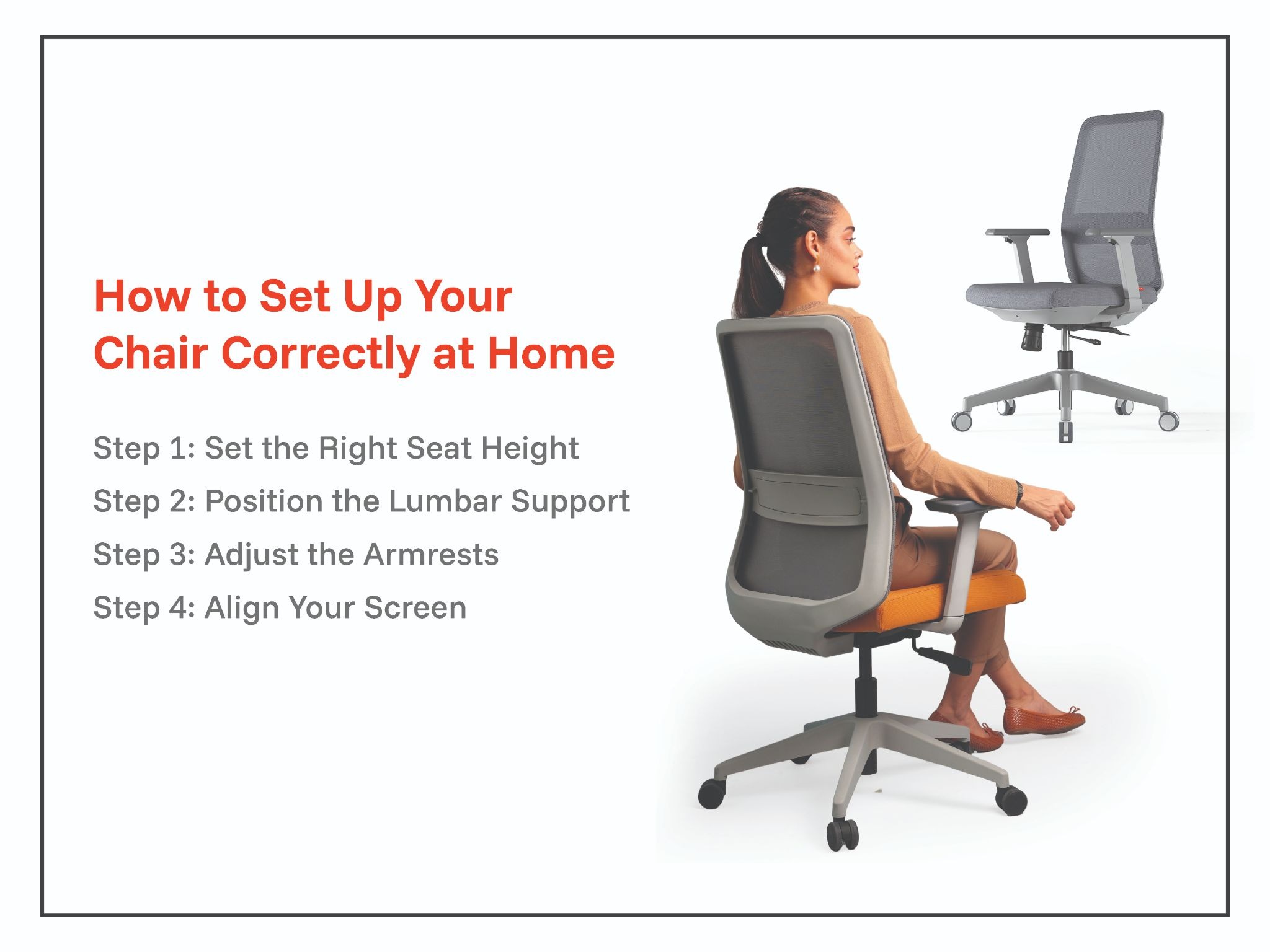
Step 1: Set the Right Seat Height
Adjust the seat height until both feet rest completely flat on the floor. The knees should sit at approximately 90 degrees with the thighs roughly parallel to the floor.
If your home desk is positioned at a height that makes this impossible without raising the chair and leaving your feet unsupported, use a footrest to maintain foot contact with a flat surface. Unsupported feet restrict thigh circulation and contribute meaningfully to the lower body fatigue that many remote workers experience by the afternoon.
Step 2: Position the Lumbar Support
Move the lumbar support up or down until it makes gentle, consistent contact with the inward curve of your lower back. It should feel like quiet, steady support rather than a pressure point pushing you forward out of the chair.
If the lumbar depth is also adjustable, set it to follow the contour of your lower back without pushing the pelvis forward or creating any discomfort at the contact zone.
Step 3: Adjust the Armrests
Raise or lower the armrests until your elbows sit at approximately 90 degrees with your shoulders completely relaxed and dropped. The forearms should rest lightly on the armrests without bearing significant weight.
If your armrests adjust laterally, move them inward until they sit close to your sides. Armrests set too far apart encourage a widened upper body posture that places sustained strain on the outer shoulders throughout the working day.
Step 4: Align Your Screen
Once the chair is correctly configured, the top of your monitor should be at approximately eye level when you are seated in your natural working posture. A monitor positioned noticeably below eye level creates the forward head posture that is one of the most common sources of neck pain among home office workers.
Check that your forearms are roughly horizontal and your wrists level when typing. If the desk surface is too high for this after setting the chair correctly, a keyboard tray or wrist rest can help manage the height differential effectively.
Bonus Point: Set up your home office chair adjustments once, carefully and methodically, and then mark or note each setting so you can return to it quickly if the chair is moved or used by someone else. Many home workers adjust their chair in the morning and then readjust it throughout the day without ever landing on the configuration that actually supports their body correctly.
Common Mistakes to Avoid
Using a Dining Chair or Sofa for Work
Dining chairs are designed for meal durations of thirty to sixty minutes. Sofas are designed for relaxed, reclined postures that are entirely unsuitable for focused desk-based professional work.
Neither provides the postural support needed for a full professional working day. The physical cost accumulates quietly across weeks and months until the symptoms, back pain, neck stiffness, and persistent fatigue, become severe enough to prompt the chair upgrade that should have happened on day one.
Choosing by Appearance Alone
A home office chair that photographs well but lacks adjustable lumbar support, adequate seat depth, or a meaningful height adjustment range will cause physical discomfort within a few hours of sustained use. This is true regardless of how good it looks in a home interior context or how many positive reviews it has received for aesthetic quality.
The features that determine genuine suitability for extended professional use are not visible in photographs or catalogue images. They require sitting in the chair with all adjustments correctly configured and assessing the support quality over a real working session.
Ignoring Weight Capacity and Adjustment Range
Every chair has a specified weight capacity and a specific seat height range. Both must match the actual user before any purchase decision is made.
A chair whose height range cannot accommodate your leg length relative to your desk height will produce poor posture regardless of any other quality it may have. A chair used consistently beyond its weight capacity will deteriorate rapidly and create safety risks well before the end of its designed service life.
How AFC Furniture Solutions Supports Home Office Workers Across India
What Seating Options Does AFC Offer?
AFC Furniture Solutions offers a comprehensive range of ergonomic home office seating through its commercial Mesh Chair and Leather Chair ranges, each manufactured to deliver genuine professional-grade support in home environments.
The Mesh Chair range includes the Myel, Sway, Fluid, Fluid X, Spino, Rock, Breeze, Orbit, and several other models, providing options across different back heights, ergonomic specifications, and home office contexts. Every chair is manufactured at the Greater Noida facility to consistent commercial quality standards.
Explore the full AFC Furniture Solutions Seating range to compare mesh and leather options suited to different home office environments and working patterns across India.
What Quality Standards Back AFC Chairs?
AFC Furniture Solutions holds BIFMA Level 3 certification, the highest internationally recognised standard for office furniture quality, safety, and sustainability. Every chair in the range is tested to BIFMA-compliant standards covering structural integrity, foam performance, mechanism durability, and full ergonomic adjustability range.
This certification provides the same quality assurance whether the chair is installed on a corporate floor of two hundred workstations or in a single home office setup in any city across India.
You can also explore the AFC Furniture Solutions Mesh Chair range specifically for breathable ergonomic seating options suited to Indian home office conditions and extended daily professional use.
Frequently Asked Questions
Q1. What is the most important feature in a work from home chair for Indian conditions?
Breathable mesh upholstery combined with adjustable lumbar support are the two most important features for Indian home office use. Mesh maintains comfort during warm working conditions, and lumbar support prevents the lower back pain that is the most commonly reported physical complaint among remote workers in India.
Q2. Can I use a gaming chair for work from home?
Gaming chairs are designed for recreational use in a reclined posture and are not optimised for the upright, forward-engaged posture that professional desk work requires. Most gaming chairs lack properly adjustable lumbar support and have seat proportions that are not suited to sustained focused work. A commercial ergonomic chair is significantly better suited to home office use.
Q3. How much should I invest in a home office chair?
The most practical way to think about this is the daily cost over the chair's full service life. A commercial-grade chair that costs more upfront but lasts seven to ten years costs less per working day than a budget chair replaced every eighteen months. The health and productivity difference between the two is felt every single working day across that entire period.
Q4. Is mesh better than fabric for an Indian home office?
For most Indian home environments, mesh is the more practical choice. Its breathability maintains comfort across variable temperature conditions without relying on consistent air conditioning. Fabric chairs feel softer initially but retain heat and require more regular maintenance in daily shared use.
Q5. How do I know if a chair is genuinely ergonomic?
A genuinely ergonomic chair provides independent adjustment of at minimum seat height, lumbar support, and armrests. It should have a documented weight capacity and a manufacturer warranty covering the main mechanical components. A chair that only adjusts in seat height is a basic task chair and not a genuine ergonomic product regardless of how it is marketed.
Q6. Does AFC Furniture Solutions serve individual home office buyers?
AFC Furniture Solutions operates experience centres across Noida, Gurugram, Mumbai, Pune, Bengaluru, Hyderabad, and Chennai. For home office seating enquiries, contact the team directly through the website or by phone for guidance on the most practical procurement route for your location.
Final Thoughts
Choosing the right work from home chairs is one of the most practical investments a remote worker can make for their health, daily focus, and long-term physical wellbeing. It is also one of the most consistently overlooked upgrades in the Indian home office setup.
The chair affects how you feel, how well you concentrate, and how your body holds up through every hour of the working day. Getting it right means ending the day with energy rather than pain. Getting it wrong means accepting a physical cost that compounds quietly across every working year.
AFC Furniture Solutions has been designing and supplying ergonomic seating for Indian professionals for over 15 years, with a complete range suited to both corporate and home office environments, backed by BIFMA Level 3 certification and verified commercial-grade quality standards.
Explore Other Popular Blogs

Let’s build together
Tell us about your project and we’ll help you plan, design, and deliver at scale.
.jpg)
.svg)