.svg)
The Secret to All-Day Comfort? Your Chair’s Design
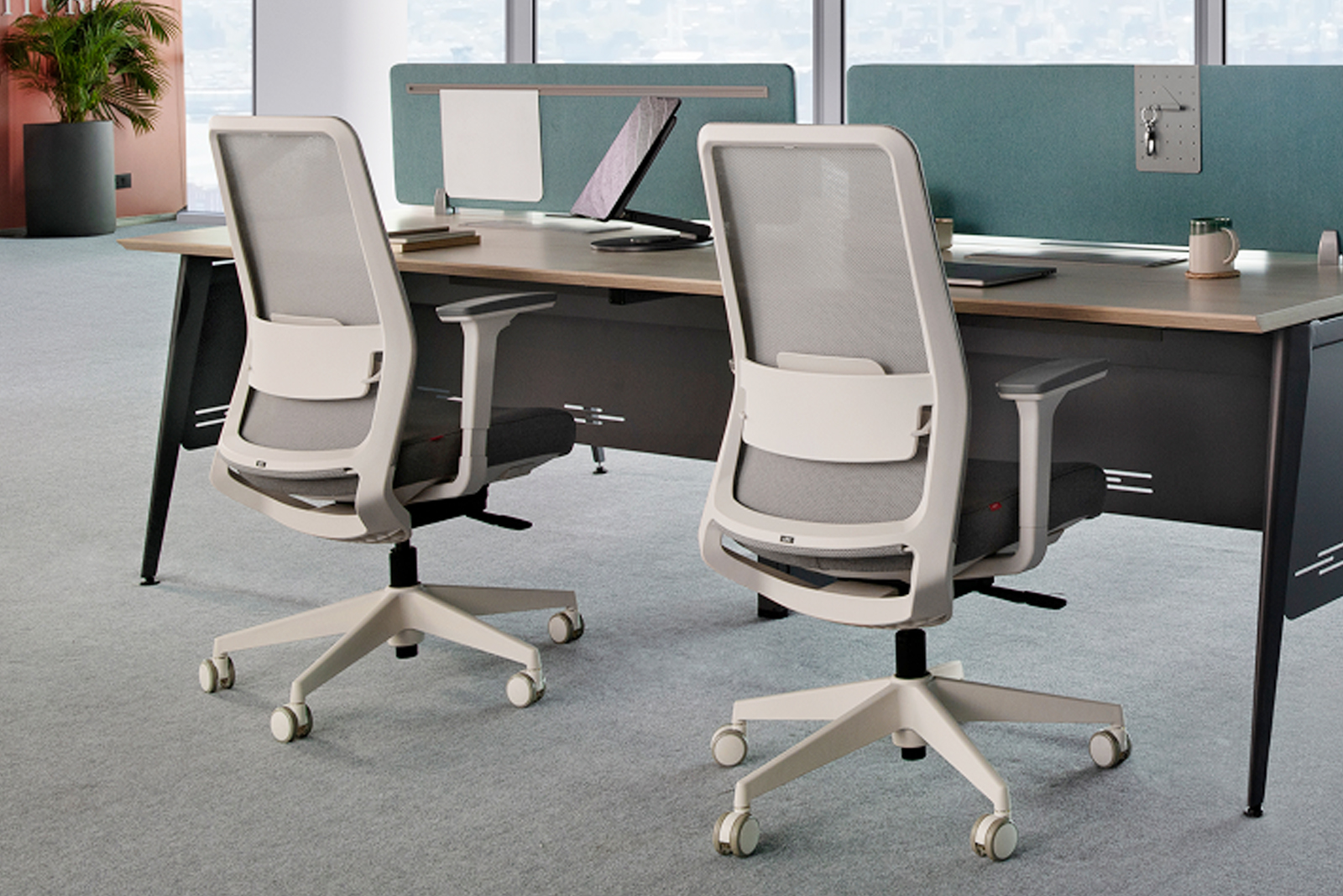
Discover why your chair's design is the key to all-day comfort, better posture, and improved focus at work. Expert guidance from AFC Business Solutions.
Why Chair Design Affects How You Feel All Day
Is Discomfort Normal After a Long Work Day?
Many people finish the day with a sore back, stiff neck, or heavy legs and assume it is simply the result of working hard. In most cases, the chair is the real cause.
A poorly designed chair forces the body into unnatural positions for hours at a time. The physical strain builds gradually and becomes familiar enough to feel normal.
Discomfort at the end of a working day is not inevitable. It is usually a design problem with a straightforward solution.
What Role Does Chair Design Play?
Chair design determines how your body is supported, how weight is distributed, and how much muscular effort you need just to stay seated.
A well-designed chair reduces the physical work of sitting. A poorly designed one increases it, quietly draining your energy and attention throughout the day.
The difference between feeling fresh at 5pm and feeling exhausted often comes down entirely to the chair you started the day in.
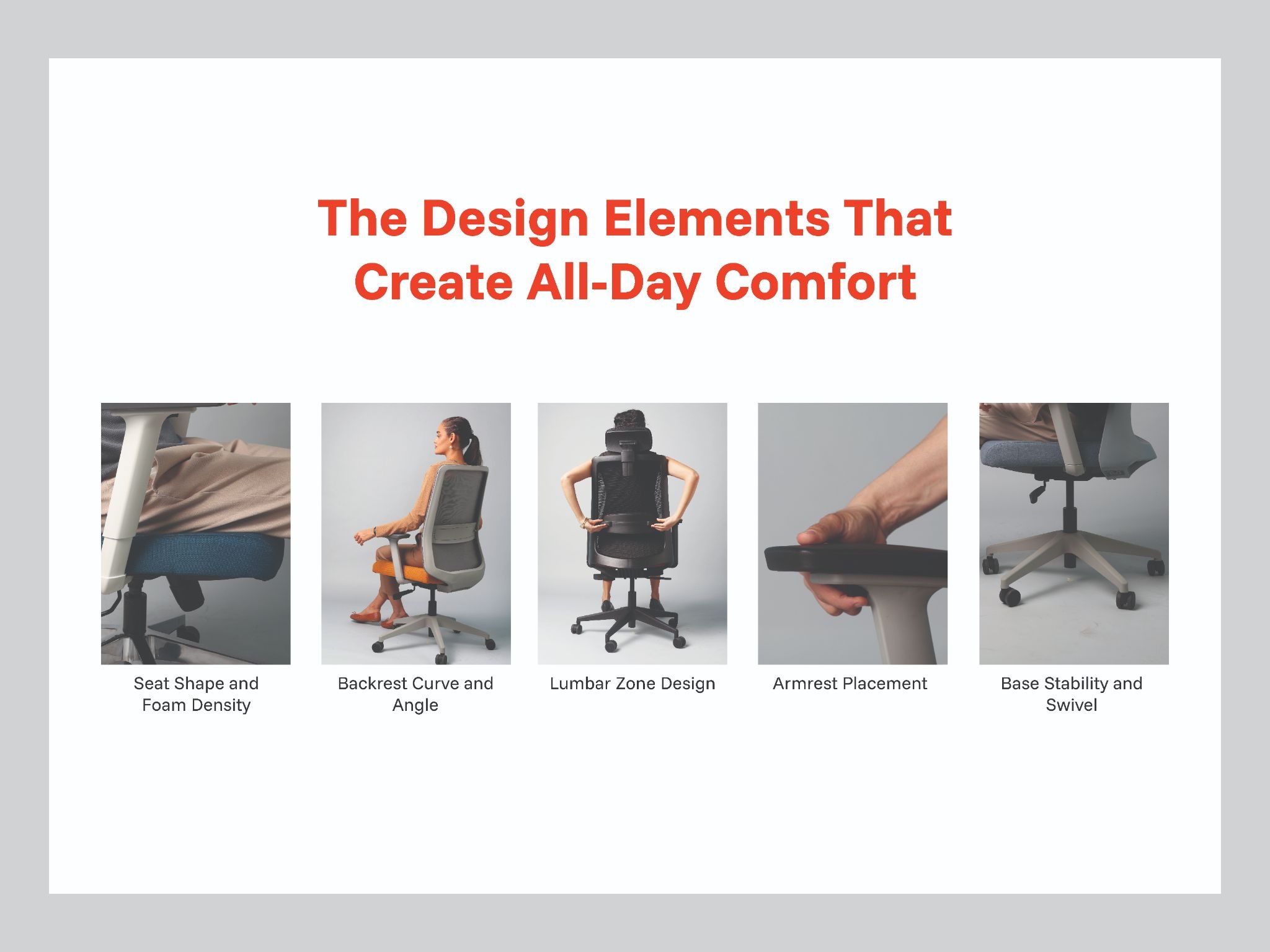
The Design Elements That Create All-Day Comfort
Seat Shape and Foam Density
The seat surface is the first point of contact between the body and the chair. A flat, uniform seat distributes weight unevenly and creates pressure points under the thighs and tailbone.
A well-designed seat is contoured to match the natural shape of the pelvis. High-density foam that holds its form under sustained body weight is essential for lasting support.
Foam that compresses quickly feels comfortable in the showroom and becomes flat and painful within months of daily use.
Backrest Curve and Angle
The backrest needs to follow the natural S-curve of the spine rather than presenting a flat surface that forces the back to adapt to it.
A correctly curved backrest supports the thoracic spine in its natural upright position and the lumbar region in its natural inward curve simultaneously.
The angle of the backrest also matters. A slight backward tilt reduces pressure on the intervertebral discs and makes sustained sitting far less physically demanding.
Lumbar Zone Design
The lumbar zone is the lower portion of the backrest that supports the inward curve of the lower back. It is the single most consequential design detail in any chair intended for long-hour use.
When this zone is missing, poorly positioned, or fixed in place, the lower back gradually rounds outward under the weight of the upper body. This is where most chronic desk-related back pain originates.
The best implementations allow the lumbar zone to be adjusted in both height and depth so it can be positioned precisely for each individual user.
Tip: When testing a chair in a showroom, sit fully back and press your lower back gently against the backrest. If there is a clear gap between your lumbar curve and the chair, the lumbar design does not match your body. Try a different model before deciding.
Armrest Placement
Armrests that sit too high push the shoulders upward throughout the day. This creates sustained tension across the upper back and neck that accumulates into pain by afternoon.
Armrests placed too low cause the user to lean sideways or forward to compensate, disrupting the alignment of the entire upper body.
Well-designed armrests are positioned so the shoulders rest in a fully relaxed, neutral position while the forearms are supported at keyboard height.
Base Stability and Swivel
A five-point base distributes the chair's load across the widest possible footprint, making it resistant to tipping when the user reaches sideways or leans back.
The swivel mechanism should allow smooth, full rotation without resistance so the user can turn to access different areas of the desk without twisting the spine.
Caster quality matters more than it appears. Castors that suit the floor type roll quietly and smoothly and protect the surface from scratching over years of daily movement.
How Material Choice Changes the Experience
Mesh vs Foam vs Leather
Each upholstery type creates a different physical experience across a full working day. Understanding the differences helps you match the material to your actual working conditions.
Mesh allows continuous air circulation and stays cool across long sessions. High-density foam provides deep cushioning but retains heat. Leather projects a premium appearance and cleans easily but can become uncomfortable in warm conditions.
Which Material Works Best in Indian Offices?
For most Indian office environments, mesh upholstery is the most practical choice. India's climate makes breathability a genuine daily comfort factor rather than a minor preference.
Leather chairs work well in well air-conditioned executive settings where appearance is a priority. For open-plan floors and home offices, mesh is almost always the more comfortable long-term choice.
Explore the AFC Business Solutions Seating collection to compare mesh, leather, and task chair options designed for Indian working environments.
Bonus Point: In shared offices where multiple people use the same chair throughout the day, mesh is also far more hygienic. It does not absorb perspiration the way fabric and foam do, and it can be cleaned quickly with a soft brush or damp cloth.
The Link Between Chair Design and Body Health
What Happens to Your Spine in a Poorly Designed Chair?
In a chair without adequate lumbar support, the lower back loses its natural inward curve within minutes of sitting down. The resulting flat or rounded posture places sustained pressure on the spinal discs.
Over months and years of daily exposure, this pressure contributes to disc compression, muscle fatigue, and the kind of chronic lower back pain that becomes increasingly difficult to reverse.
The neck follows a similar pattern. Without proper backrest support, the head drifts forward to compensate, adding several kilograms of effective load to the cervical spine with every inch of forward displacement.
How Good Design Prevents Long-Term Damage?
A well-designed chair maintains the spine's natural curves throughout the working day without requiring the user to actively hold themselves in position.
This reduces the muscular effort needed just to sit, which translates directly into lower physical fatigue, better concentration, and less pain at the end of the day.
Good chair design does not simply make sitting comfortable. It reduces the cumulative physical cost of sitting across a professional lifetime.
How to Know If Your Chair Design Is Right for You
The Five-Minute Comfort Test
Sit fully back in the chair and place both feet flat on the floor. Note whether the lumbar zone makes gentle contact with your lower back without requiring you to adjust your posture to find it.
Check whether your shoulders are relaxed and whether your forearms rest naturally on the armrests at keyboard height. Look for two to three finger-widths of clearance between the front seat edge and the back of your knees.
If all three conditions are met without adjusting your own posture to compensate, the chair design is working with your body rather than against it.
Signs a Chair Fits Your Body Well
The first clear sign is that you stop noticing the chair within the first few minutes of sitting. When a chair fits well, it disappears from your awareness completely.
You should be able to maintain a natural upright position without consciously holding yourself there. The chair does the work so your muscles do not have to.
At the end of a full working day, the absence of back, neck, or leg discomfort is the most reliable confirmation that the chair design was right for you.
Tip: Always sit in a chair for at least ten to fifteen minutes before forming any opinion about it. Many design problems only become apparent after the initial comfort impression fades and the sustained support quality becomes the determining factor.
What Makes AFC Business Solutions Chairs Different
AFC Business Solutions designs every chair around the principles of neutral body posture, where the spine holds its natural curves with minimal muscular effort from the user.
Every product in the range undergoes BIFMA-compliant testing, the internationally recognised standard for office furniture safety and performance. AFC Business Solutions holds BIFMA Level 3 certification, the highest tier of quality and sustainability performance in the commercial furniture industry.
The range is designed specifically for Indian professionals, accounting for body proportions, working habits, and the climate conditions of Indian offices. You can explore the full Workstations and Seating range to find complementary desk and chair combinations suited to your working environment.
Frequently Asked Questions
Q1. What is the most important design feature in a chair for long hours?
Lumbar support is the single most important feature. Without it, the lower back gradually rounds under sustained sitting, creating the chronic pain that most desk workers experience over time.
Q2. Why does my chair feel comfortable at first but painful after a few hours?
This is almost always a foam density or backrest design issue. Cheap foam compresses quickly and loses its support. The chair feels fine for the first thirty minutes and fails you for the remaining seven hours.
Q3. How does chair design affect neck pain specifically?
When the backrest does not support the thoracic spine correctly, the head drifts forward to compensate. This forward head posture adds significant load to the cervical spine and is the primary cause of the neck stiffness that desk workers experience by mid-afternoon.
Q4. Is an expensive chair always better designed?
Not necessarily. Price reflects materials and brand positioning but not always ergonomic quality. Evaluate the actual design features: lumbar adjustability, seat contouring, foam density, and backrest curve rather than the price point alone.
Q5. How often should I replace my office chair?
A well-made commercial-grade chair should last seven to ten years under daily professional use. The signs that replacement is needed are visible foam compression, loss of gas-lift function, and structural instability in the base or backrest.
Final Thoughts
The chair you sit in every day is one of the most consequential design decisions in your working life. Its design either supports your body or asks your body to compensate for its shortcomings hour after hour.
Getting the design right means less pain, less fatigue, and more of your energy directed toward the work you are actually there to do.
AFC Business Solutions designs every chair with one question in mind: does this truly support the person sitting in it through a full working day and across years of daily use?
Explore Other Popular Blogs

Let’s build together
Tell us about your project and we’ll help you plan, design, and deliver at scale.
.jpg)
.svg)